Map of Germany showing where the Hamai arms are recorded
The Hamai arms were recorded in Ostfrise, c. 1765.
This is where the arms were entered in the register. Families often moved to other parts of the country, so the same name can turn up in more than one region.
The body that granted and recorded arms in Germany in this period.
Francis I, Holy Roman Emperor
Sovereign of the period
Francis I, Holy Roman Emperor
1745–1765
Reigning in Germany when the Hamai arms are first recorded.
How Arms Worked in Germany
In the Holy Roman Empire, coats of arms were often granted to individuals by the Emperor or his representatives. These arms were then passed down through the generations to all legitimate descendants of the original holder. Younger branches of a family usually kept the same shield design without needing to change it, as the arms belonged to the entire lineage.
Granting authority
The Holy Roman Emperor held the sole power to grant new coats of arms throughout his vast imperial territories.
How they got arms
Families typically obtained their coats of arms through a formal imperial grant or by proving their noble status to the authorities.
Where arms were recorded
These grants were officially recorded in the Imperial Chancery registers, which began keeping formal records of such honors during the Middle Ages.
The family's standing
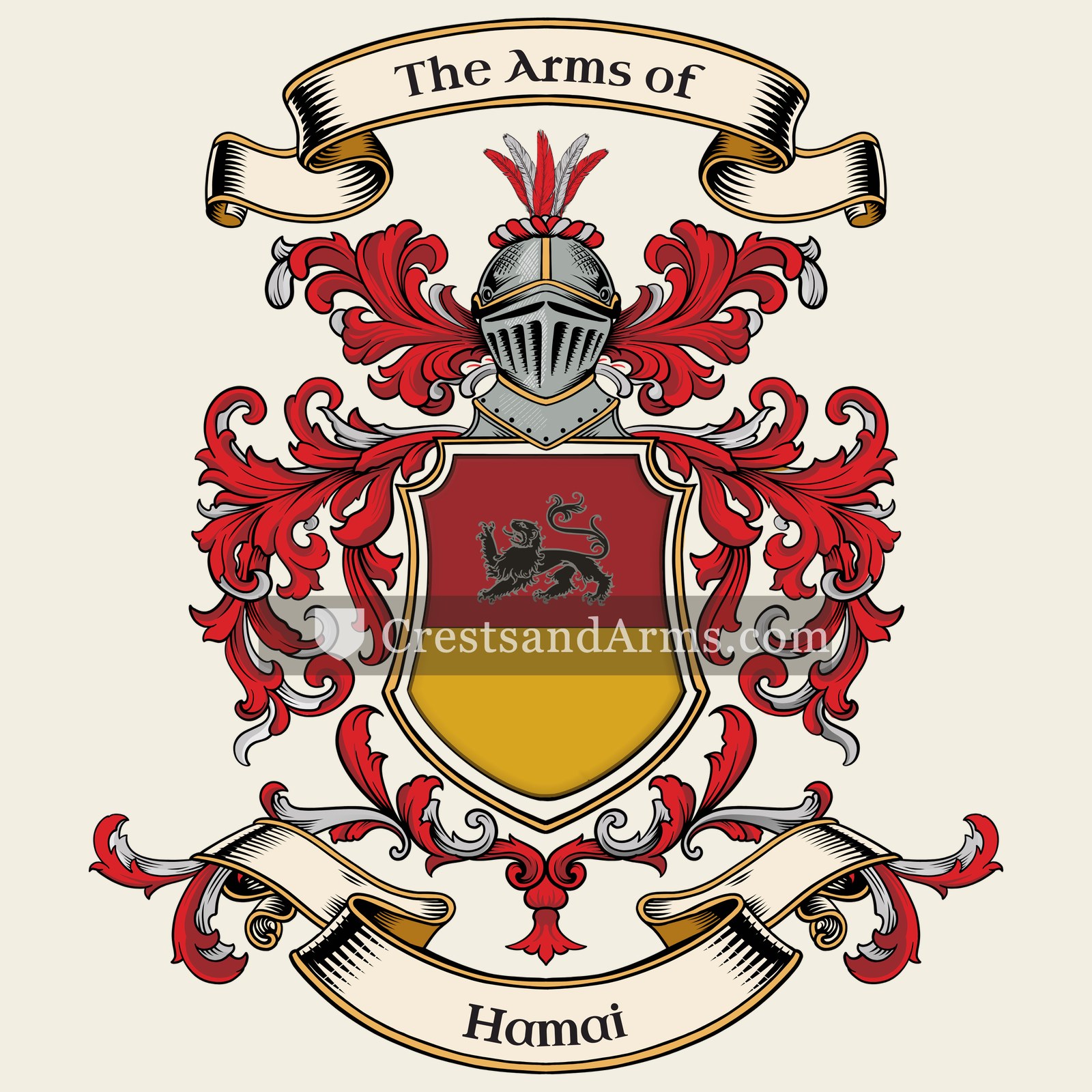
Recorded among the armigerous families of Germany.
Origin & History of the Hamai Family in Germany
The family name Hamai holds deep roots in the region of East Frisia, which is known in German as Ostfriesland. Historical records confirm that members of the family were living in this coastal area by the year 1765. During this period, East Frisia was a territory defined by its unique geography of marshes and dikes, which shaped the daily lives of its inhabitants. Families like the Hamais often lived in small, tight-knit farming communities where the local Frisian culture and language played a central role in their identity. Because the region was frequently influenced by trade and shifting political boundaries, families in this area were often resilient and deeply connected to the land. The name itself reflects the linguistic traditions of the northern German coast, serving as a link to the ancestors who navigated the challenges of life in the eighteenth century.
Related Branches & Arms
Root word
Hame
A Middle High German term referring to a horse collar.
This name
HamaiAn occupational name for a maker or user of horse collars.
also spelled
Hyma
Documented Sources
J. B. Rietstap, Armorial Général, Gouda: G. B. van Goor Zonen, 1884–87
Niedersächsisches Landesarchiv (Aurich), Kirchenbücher der evangelisch-lutherischen Kirchengemeinden in Ostfriesland
Niedersächsisches Landesarchiv (Aurich), Hof- und Steuerregister des Fürstentums Ostfriesland
Kramer, Hans, Ostfriesland: Eine historische Landschaft, 1965


 lionCourage, strength and royalty
 lionCourage, strength and royalty