Map of Netherlands showing where the Hamel arms are recorded
The Hamel arms were recorded in Amsterdam, c. 1815.
This is where the arms were entered in the register. Families often moved to other parts of the country, so the same name can turn up in more than one region.
Region
Amsterdam
Town
Amsterdam
First recorded
1815
Granting Authority for the Hamel Arms
Hoge Raad van Adel
Photograph made by me · CC BY-SA 3.0
The body that granted and recorded arms in Netherlands in this period.
William I of the Netherlands
Sovereign of the period
William I of the Netherlands
1815–1840
Reigning in Netherlands when the Hamel arms are first recorded.
How Arms Worked in Netherlands
In the Netherlands, coats of arms were often used by noble families and those who held specific public offices. These arms were passed down through the generations to legitimate descendants. Younger branches of a family usually kept the original design without needing to add special marks. This system ensured that the family identity remained clear and consistent over many years.
Granting authority
The Hoge Raad van Adel is the official body that regulates and manages noble titles and coats of arms in the Netherlands.
How they got arms
Families typically obtained their coats of arms through official royal grants or by proving their long-standing historical use of the symbols.
Where arms were recorded
Coats of arms are officially recorded in the registers held by the Hoge Raad van Adel, which began its work in 1814.
The family's standing
Recorded among the armigerous families of Netherlands.
Origin & History of the Hamel Family in Netherlands
The name Hamel has deep roots in the Netherlands, where it functioned as a topographic surname for families living near a "ham," which was an old term for a piece of land tucked into a river bend or a fenced-in enclosure. By the early 19th century, the family was well-established in the bustling urban landscape of Amsterdam. During this period, Amsterdam was a major center for trade and industry, and families like the Hamels often integrated into the city’s growing merchant and artisan classes. As the city expanded following the end of the Napoleonic era in 1815, these individuals contributed to the local economy through various trades and civic roles. The name itself reflects a history of people who were deeply connected to the geography of the Dutch landscape, transitioning from rural land-based identities to the organized life of one of Europe’s most important port cities.
Meaning of the Hamel family crest colors & symbols
Symbols on this shield
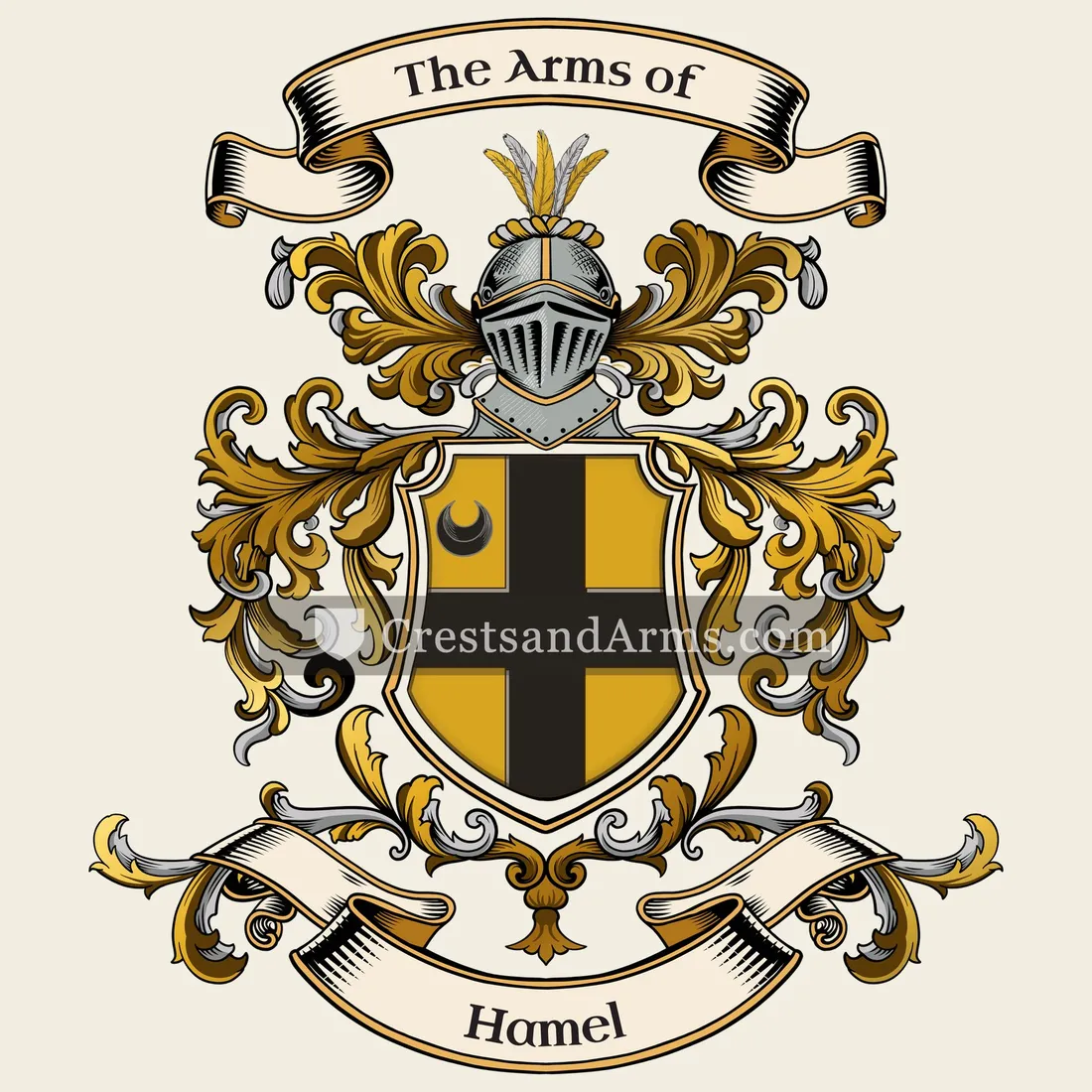
cross symbolChristian faith and service
crescentHonour by the sovereign, and the second son
Colours
Gold (Or)Means: Generosity
Black (Sable)Means: Constancy
Historical info
Source
J. B. Rietstap, Armorial Général, Gouda: G. B. van Goor Zonen, 1884–87
Blazon (the actual original written record)
“D'or à la croix engr. de sa., acc. au 1 d'un croiss. du même. Cri: ESCAILLON-DENAING !”
FranceCambr, c. 1663
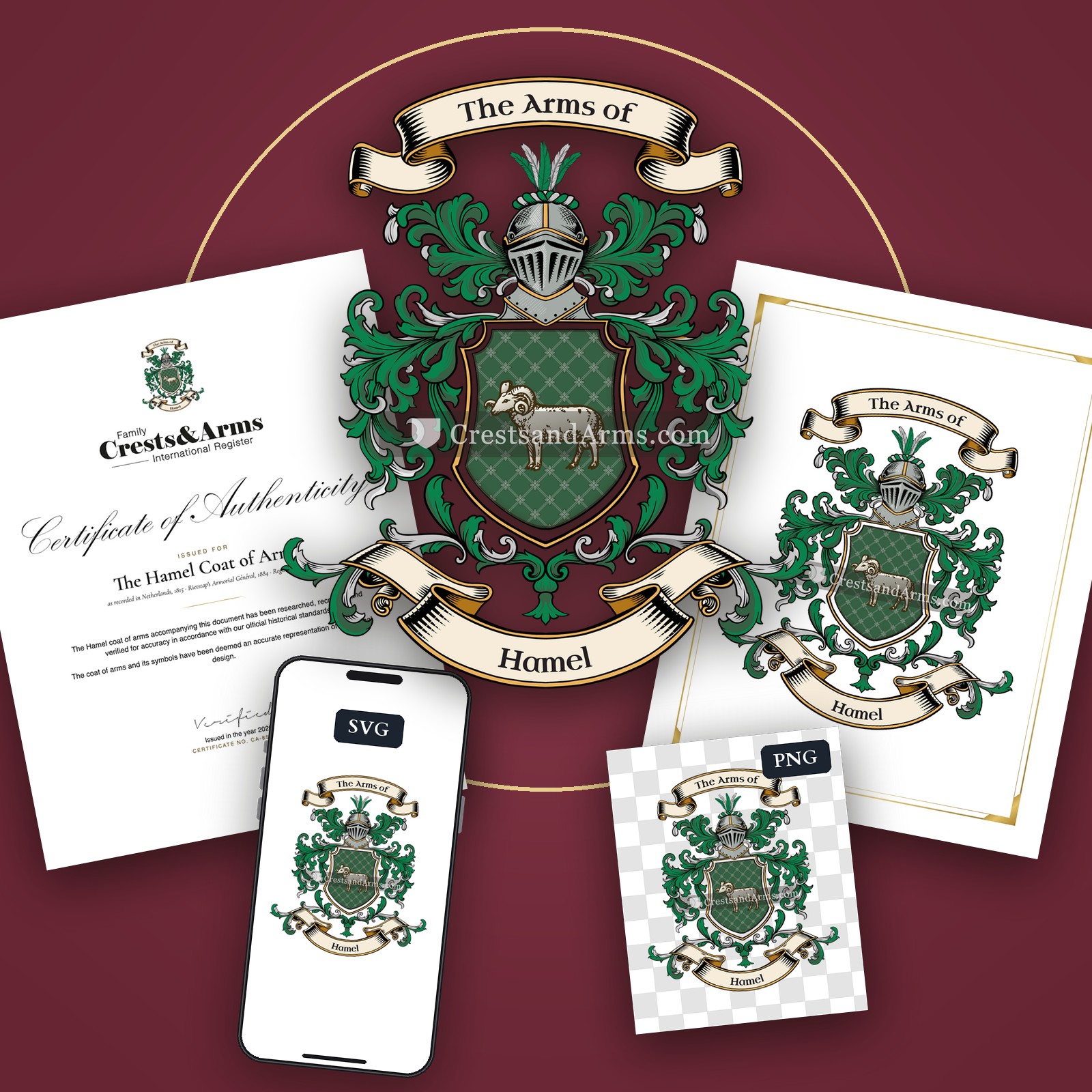
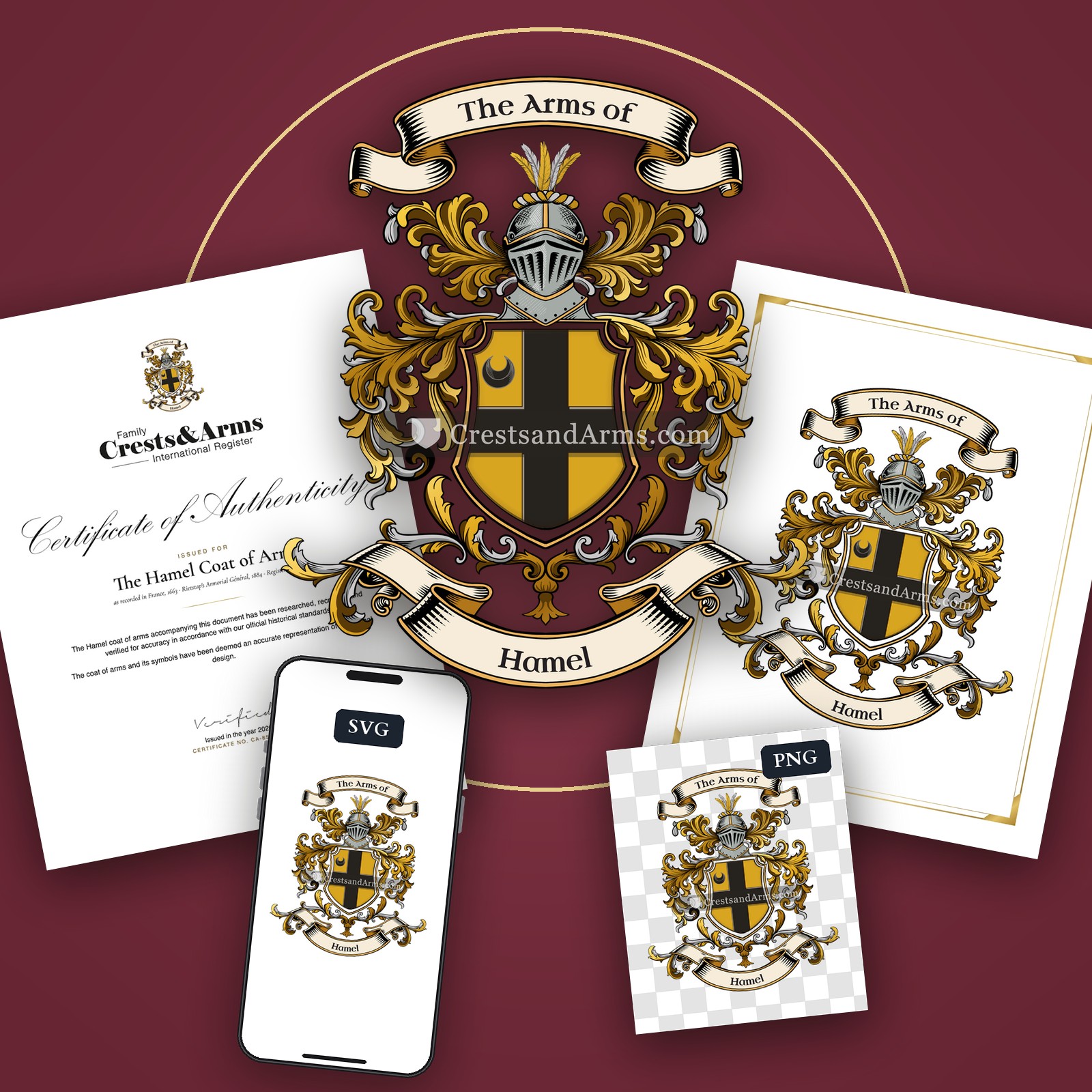
Digital archive packCoat of arms PNG, gold border print PDF, vector SVG and the certificate of authenticity. Sent to your email in minutes.
Map of France showing where the Hamel arms are recorded
The Hamel arms were recorded in Cambr, c. 1663.
This is where the arms were entered in the register. Families often moved to other parts of the country, so the same name can turn up in more than one region.
The body that granted and recorded arms in France in this period.
Louis XIV of France
Sovereign of the period
Louis XIV of France
1643–1715
Reigning in Netherlands when the Hamel arms are first recorded.
How Arms Worked in France
In France, a coat of arms was a mark of honor that passed down through the male line to all legitimate descendants. Families often used the same shield without changes to show their shared heritage. If a branch wanted to stand out, they could add a small mark to their shield to show their specific place in the family tree.
Granting authority
The Juge d'armes de France acted as the official authority that regulated and verified coats of arms across the country.
How they got arms
Families typically inherited their arms from ancestors, though they could also receive them through royal grants or by proving their noble status.
Where arms were recorded
Coats of arms were officially recorded in the Armorial Général de France, which began its main collection in the year 1696.
The family's standing
Recorded among the armigerous families of France.
Origin & History of the Hamel Family in France
The surname Hamel originates from the Old French word *hamel*, which refers to a small village or a cluster of houses. During the Middle Ages, this name was often given to individuals who lived in or came from these modest rural settlements in northern France, particularly in the regions of Normandy and Picardy. As families began to adopt permanent surnames to distinguish themselves, those living in these specific hamlets became known by the location of their homes. By the time members of the family arrived in the French colony of Canada in 1663, the name was already well-established in their homeland as a descriptor of their connection to the land. These early settlers brought this tradition of rural identity with them across the Atlantic, helping to preserve a naming convention that had been used in France for several centuries.
Hamel Meaning & Related Branches
Root word
Ham
A Germanic word referring to a home, settlement, or enclosed land.
This name
HamelA topographic name for someone who lived in or near a home or enclosed pasture.
also spelled
Hammel
Related arms
Chauvel de la Martinièresimilar arms
Hammelvariant spelling
Documented Sources
J. B. Rietstap, Armorial Général, Gouda: G. B. van Goor Zonen, 1884–87
Leendert Brouwer, Nederlandse Familienamen Databank, 2005
P.J. Meertens, De betekenis van Nederlandse familienamen, 1965
Stadsarchief Amsterdam, Bevolkingsregister 1815
Nationaal Archief, Burgerlijke Stand van de provincie Noord-Holland
Digital archive packCoat of arms PNG, gold border print PDF, vector SVG and the certificate of authenticity. Sent to your email in minutes.


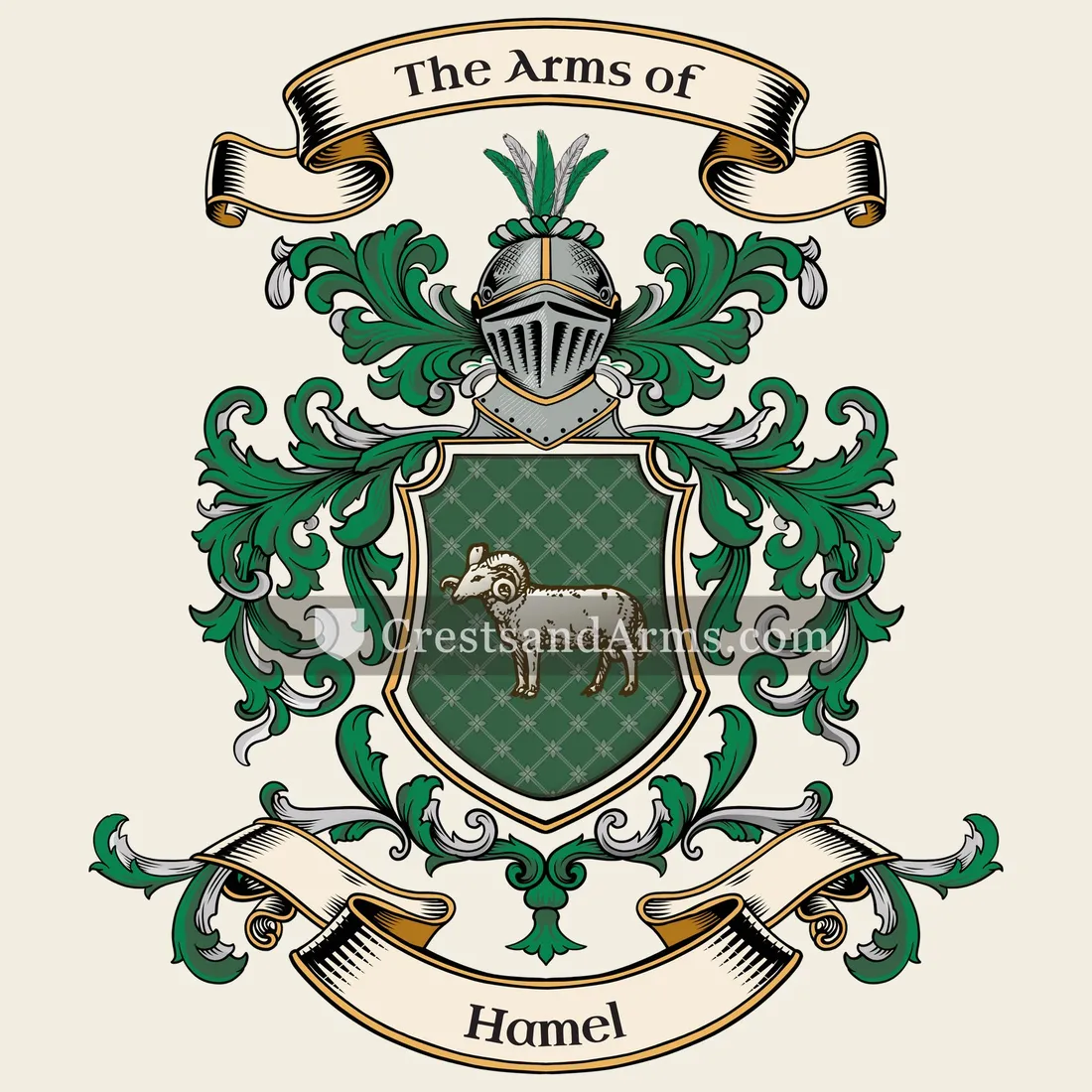
 ramLeadership and authority
 ramLeadership and authority


 cross symbolChristian faith and service
 crescentHonour by the sovereign, and the second son