Map of Germany showing where the Hammonds arms are recorded
The Hammonds arms were recorded in Germany, c. 1775.
Arms such as these were typically recorded in Bavaria.
Bavaria was a country of old landed families and walled market towns. Estates passed down the same line for centuries, and both the landowners and the leading townsmen kept arms, which is why so many Bavarian names sit in the registers.
This is where the arms were entered in the register. Families often moved to other parts of the country, so the same name can turn up in more than one region.
The body that granted and recorded arms in Germany in this period.
Joseph II, Holy Roman Emperor
Sovereign of the period
Joseph II, Holy Roman Emperor
1765–1790
Reigning in Germany when the Hammonds arms are first recorded.
How Arms Worked in Germany
In the Holy Roman Empire, coats of arms were often granted to individuals by the Emperor or his representatives. These arms were then passed down through the generations to all legitimate descendants of the original holder. Younger branches of a family usually kept the same shield design without needing to change it, as the arms belonged to the entire lineage.
Granting authority
The Holy Roman Emperor held the sole power to grant new coats of arms throughout his vast imperial territories.
How they got arms
Families typically obtained their coats of arms through a formal imperial grant or by proving their noble status to the authorities.
Where arms were recorded
These grants were officially recorded in the Imperial Chancery registers, which began keeping formal records of such honors during the Middle Ages.
The family's standing
Recorded among the armigerous families of Germany.
Origin & History of the Hammonds Family in Germany
The family name Hammonds, often appearing in German records as Hammonds or Hammond, finds its roots in the Germanic naming tradition that combined personal names with descriptive identifiers. By the time the family was firmly established in the region of Bavaria in 1775, they were part of a society deeply influenced by the Holy Roman Empire and the local customs of the Bavarian Electorate. During this period, the name likely functioned as a patronymic, meaning it was derived from the given name Hamo or Hamon, which was common among Germanic tribes. Families with this name were often involved in the agricultural and trade-based economy that defined rural Bavarian life in the late 18th century. As the family grew, they navigated the complex social hierarchies of the time, moving through a landscape shaped by the transition from feudal traditions to the early modern administrative systems of the German states. Their presence in Bavaria suggests a long-standing connection to the local community and the specific cultural heritage of southern Germany.
Meaning of the Hammonds family crest colors & symbols
Symbols on this shield
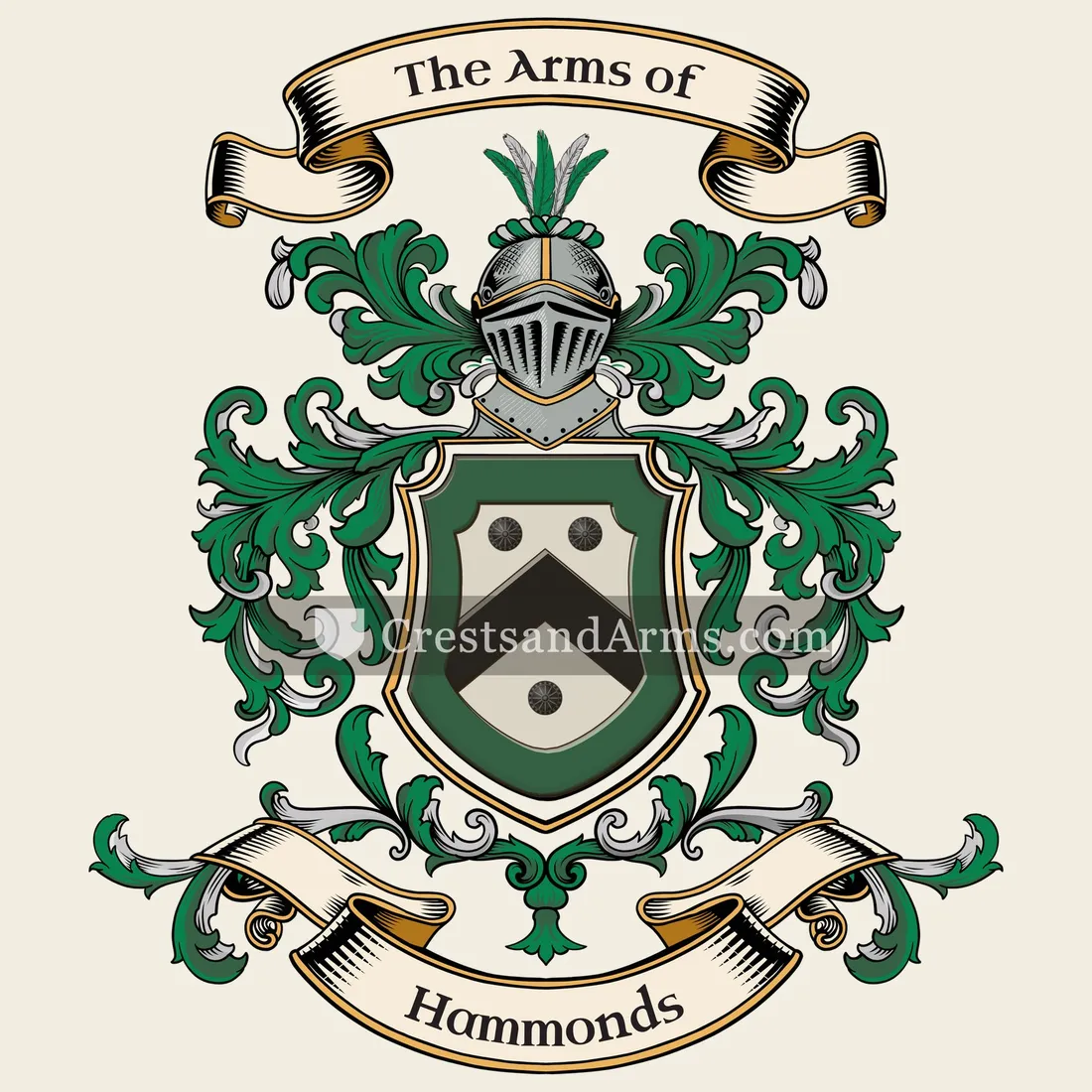
chevronProtection, and faithful service completed
bordureA difference between branches of one family
roundelA coin, and one who has been to the crusades
Colours
Silver (Argent)Means: Peace and sincerity
Black (Sable)Means: Constancy
Green (Vert)Means: Hope
Historical info
Source
Sir Bernard Burke, The General Armory of England, Scotland, Ireland and Wales, London: Harrison & Sons, 1884
Blazon (the actual original written record)
“Ar. on a chev. sa. betw. three pellets, each charged with a martlet of the field, as many escallops or, a bordure engr. vert”
KentKent, c. 1551
Digital archive packCoat of arms PNG, gold border print PDF, vector SVG and the certificate of authenticity. Sent to your email in minutes.
Map of England showing where the Hammonds arms are recorded
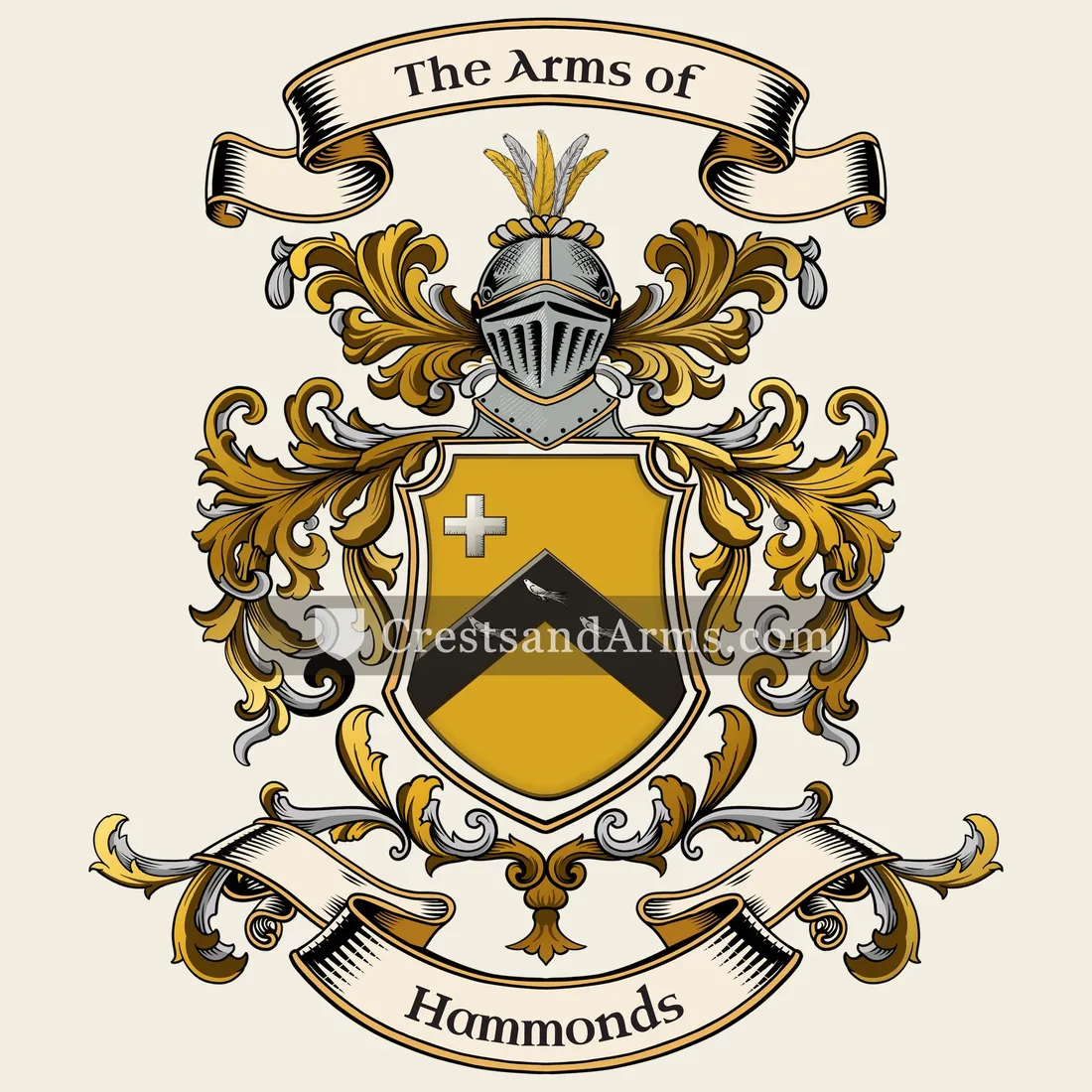
The Hammonds arms were recorded in Kent, c. 1551.
Kent sits between London and the short crossing to Europe, and the trade passing through made it wealthy. Merchant families bought land with that money, and it was landowners who took coats of arms.
This is where the arms were entered in the register. Families often moved to other parts of the country, so the same name can turn up in more than one region.
The body that granted and recorded arms in England in this period.
Edward VI of England
Sovereign of the period
Edward VI of England
1547–1553
Reigning in Germany when the Hammonds arms are first recorded.
How Arms Worked in England
English heraldry allowed arms to be shared by all legitimate descendants of the original owner. These symbols were treated as personal property that moved through the generations to all children. While the eldest son kept the original design, other family members could use the same shield without needing to change it or register their own unique versions.
Granting authority
The College of Arms in London has regulated the use of coats of arms throughout England and Wales since 1484.
How they got arms
Families typically obtained their coats of arms through a formal grant from the Crown or by proving their ancient right to them.
Where arms were recorded
All official coats of arms are recorded in the registers kept at the College of Arms, which date back to the fifteenth century.
The family's standing
Recorded among the armigerous families of Kent.
Origin & History of the Hammonds Family in England
The surname Hammonds is a patronymic name, which means it originated from the given name Hamo or Hamon. This name was brought to England by the Normans following the conquest of 1066. Over several centuries, the name evolved through various spellings as it spread across the English countryside. By the middle of the sixteenth century, the family had established a notable presence in the county of Kent. Records from 1551 confirm that members of the Hammonds family were living in this region during the reign of King Edward VI. During this period, families in Kent were often involved in local agriculture and the growing trade industries that defined the economy of southeastern England. As the family grew, they became deeply rooted in the local community, contributing to the social and administrative life of their parishes for generations.
Meaning of the Hammonds family crest colors & symbols
Symbols on this shield
chevronProtection, and faithful service completed
cross symbolChristian faith and service
martletA younger son, who must win his own land
Colours
Gold (Or)Means: Generosity
Black (Sable)Means: Constancy
Silver (Argent)Means: Peace and sincerity
Historical info
Source
Sir Bernard Burke, The General Armory of England, Scotland, Ireland and Wales, London: Harrison & Sons, 1884
Blazon (the actual original written record)
“Or, on a chev. sa. three martlets ar. in chief a cross crosslet fitchée of the second”
WexfordMount Hanover · Wexford, c. 1622
Digital archive packCoat of arms PNG, gold border print PDF, vector SVG and the certificate of authenticity. Sent to your email in minutes.
Map of Ireland showing where the Hammonds arms are recorded
The Hammonds arms were recorded in Wexford, c. 1622.
Wexford was the corner of Ireland closest to Wales, settled early by Norman families. They held their land under arms and kept it for generations, which is why so many Wexford names carry recorded shields.
This is where the arms were entered in the register. Families often moved to other parts of the country, so the same name can turn up in more than one region.
The body that granted and recorded arms in Ireland in this period.
James VI and I
Sovereign of the period
James VI and I
1603–1625
Reigning in Germany when the Hammonds arms are first recorded.
How Arms Worked in Ireland
The Ulster King of Arms granted coats of arms to individuals who proved their social standing and good character. These symbols were typically inherited by all legitimate descendants of the original holder. If a family branch wanted a unique look, they could apply for a specific change to their design through the office to ensure their identity remained distinct.
Granting authority
The Ulster King of Arms acted as the official body that regulated and issued all coats of arms throughout Ireland.
How they got arms
Families obtained their arms through formal grants issued by the office after proving their eligibility and paying the required fees.
Where arms were recorded
All official grants were recorded in the registers held by the Ulster King of Arms starting from the year 1552.
The family's standing
Recorded among the armigerous families of Wexford.
Origin & History of the Hammonds Family in Ireland
The Hammonds family name has roots in Ireland that stretch back to the early seventeenth century, particularly within the coastal county of Wexford. By 1622, records confirm that members of the family were already established in this region, likely arriving as part of the broader patterns of migration and land settlement that defined the era. The name itself is of Anglo-Norman origin, derived from the personal name Hamo, which was brought to the British Isles and subsequently to Ireland following the medieval period. As these families settled in Wexford, they integrated into the local social and economic landscape, often taking on roles as landowners or tradespeople in the developing towns. Over time, the family became a part of the local history of the southeast, adapting to the changing political climate of Ireland while maintaining their presence in the region for generations.
Hammonds Meaning & Related Branches
Root word
Haimo
A Germanic element meaning home or enclosure.
This name
HammondsA patronymic surname derived from the personal name Haimo, signifying son of the home protector.
also spelled
Hamond
Hammon
Hamon
Documented Sources
J. B. Rietstap, Armorial Général, Gouda: G. B. van Goor Zonen, 1884–87
Bahlow, Hans, Deutsches Namenlexikon: Familien- und Vornamen nach Ursprung und Sinn erklärt, 1967
Bayerisches Hauptstaatsarchiv, Kurbayern Hofkammer: Steuer- und Katasterwesen, 1775
Gottschald, Max, Deutsche Namenkunde: Unsere Familiennamen nach ihrer Entstehung und Bedeutung, 1971
Digital archive packCoat of arms PNG, gold border print PDF, vector SVG and the certificate of authenticity. Sent to your email in minutes.


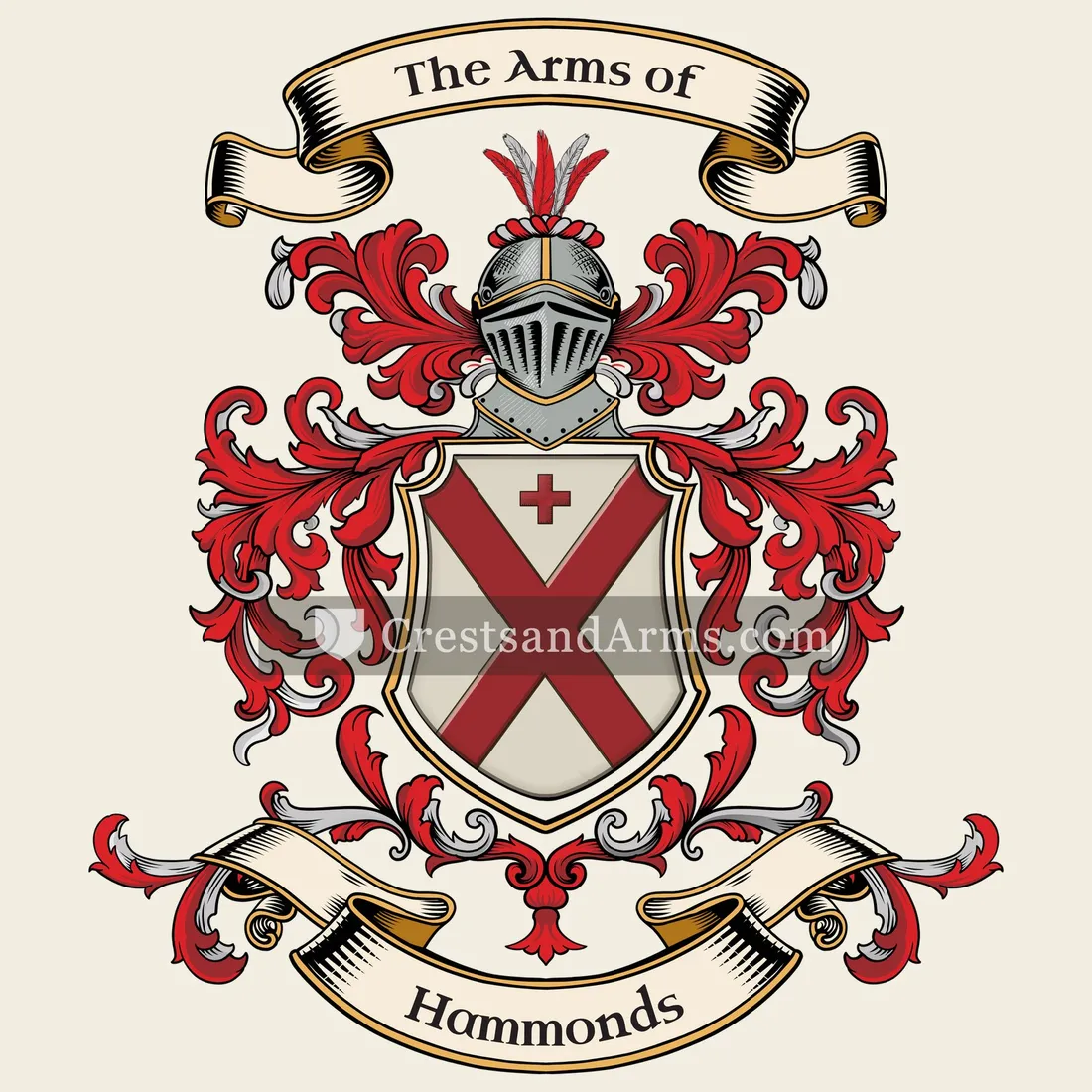
 saltireResolution, and St Andrew's cross
 cross symbolChristian faith and service
 saltireResolution, and St Andrew's cross
 cross symbolChristian faith and service


 chevronProtection, and faithful service completed
 bordureA difference between branches of one family
 roundelA coin, and one who has been to the crusades


 martletA younger son, who must win his own land