A record of documented arms, meaning and origin, researched for the Hane family lines. Documented in 3 countries.
Reg. 4992 · German, G–I
Coat of Arms & Family Crest Details
Symbols on this shield
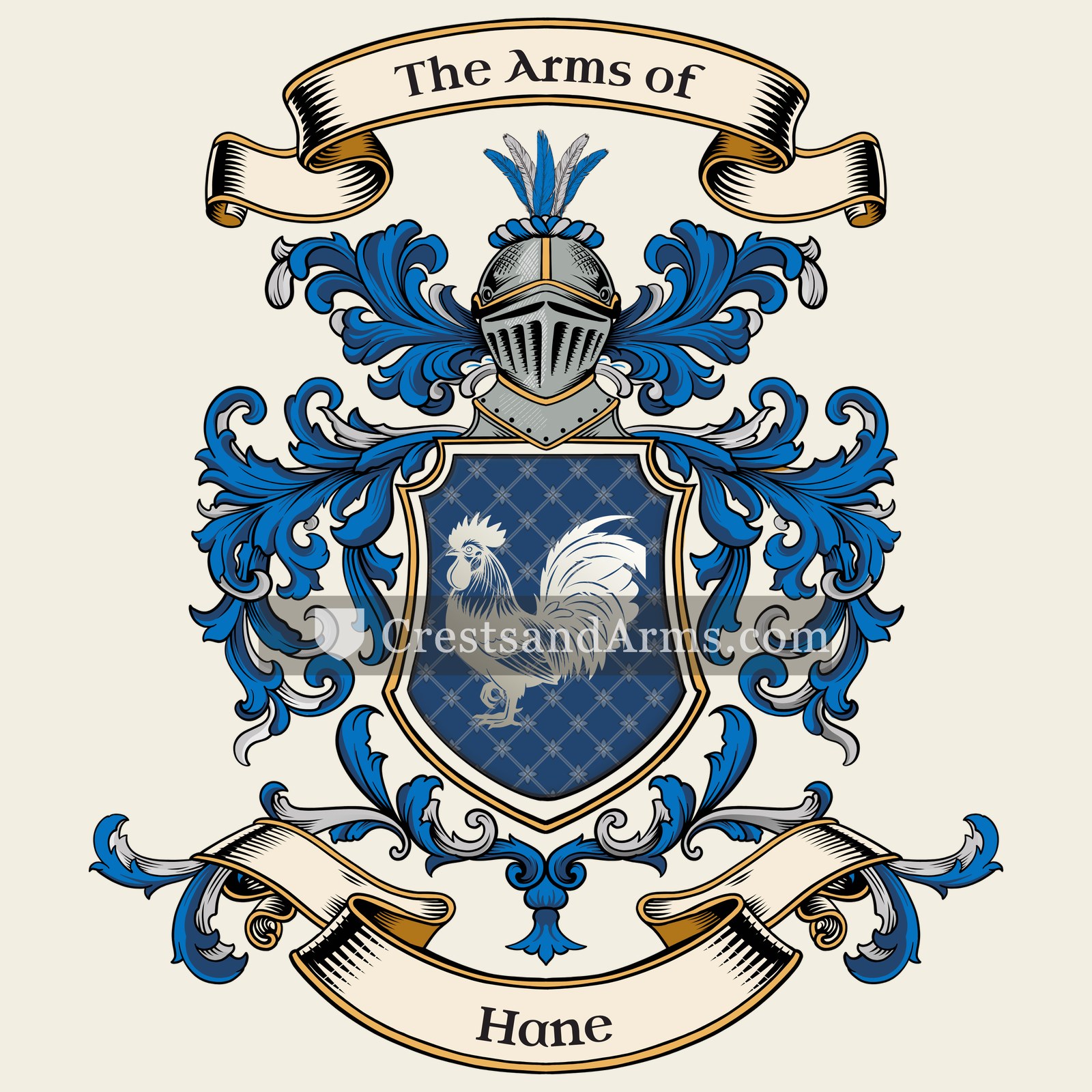
cockCourage, vigilance and readiness for battle
Colours
Blue (Azure)Means: Loyalty and truth
Silver (Argent)Means: Peace and sincerity
Historical info
Source
J. B. Rietstap, Armorial Général, Gouda: G. B. van Goor Zonen, 1884–87
Blazon (the actual original written record)
“D'azur à un coq d'arg., barbé et allumé de gu., bq. et crêté d'or. C.: le coq, entre un vol d'azur; ou, entre un vol, d'azur et d'arg.”
GermanyOstfrise, c. 1765
Where the Hane Arms Were Recorded
Ostfrise
Map of Germany showing where the Hane arms are recorded
The Hane arms were recorded in Ostfrise, c. 1765.
This is where the arms were entered in the register. Families often moved to other parts of the country, so the same name can turn up in more than one region.
The body that granted and recorded arms in Germany in this period.
Francis I, Holy Roman Emperor
Sovereign of the period
Francis I, Holy Roman Emperor
1745–1765
Reigning in Germany when the Hane arms are first recorded.
How Arms Worked in Germany
In the Holy Roman Empire, coats of arms were often granted to individuals by the Emperor or his representatives. These arms were then passed down through the generations to all legitimate descendants of the original holder. Younger branches of a family usually kept the same shield design without needing to change it, as the arms belonged to the entire lineage.
Granting authority
The Holy Roman Emperor held the sole power to grant new coats of arms throughout his vast imperial territories.
How they got arms
Families typically obtained their coats of arms through a formal imperial grant or by proving their noble status to the authorities.
Where arms were recorded
These grants were officially recorded in the Imperial Chancery registers, which began keeping formal records of such honors during the Middle Ages.
The family's standing
Recorded among the armigerous families of Germany.
Origin & History of the Hane Family in Germany
The surname Hane finds its historical roots in the northern regions of Germany, particularly within the coastal territory of East Frisia. During the eighteenth century, the name was firmly established in this area, as evidenced by records confirming family members were living there by 1765. The name itself is likely derived from the Middle Low German word "hane," which translates to rooster. In medieval German society, such names often began as descriptive nicknames for individuals who possessed a bold personality or a loud voice. As the family settled into the agricultural landscape of the Frisian coast, they became part of a distinct regional culture defined by its proximity to the North Sea and its unique linguistic traditions. Over generations, the Hane family integrated into the local community, contributing to the social and economic life of the region long before the modern era of record-keeping became standardized.
Coat of Arms & Family Crest Details
Symbols on this shield
cockCourage, vigilance and readiness for battle
mulletThe third son, and a divine quality from above
Colours
Blue (Azure)Means: Loyalty and truth
Silver (Argent)Means: Peace and sincerity
Gold (Or)Means: Generosity
Historical info
Source
J. B. Rietstap, Armorial Général, Gouda: G. B. van Goor Zonen, 1884–87
Blazon (the actual original written record)
“D'azur à un coq d'arg., crêté et barbé de gu., acc. de trois étoiles d'or.”
Francec. 1663
Where the Hane Arms Were Recorded
Bretagne
Map of France showing where the Hane arms are recorded
The Hane arms were recorded in France, c. 1663.
Arms such as these were typically recorded in Bretagne.
More families held coats of arms in Bretagne than anywhere else in France. The land was divided into many small estates rather than a few large ones, so far more households counted as gentry, and each needed a shield of its own to be told apart.
This is where the arms were entered in the register. Families often moved to other parts of the country, so the same name can turn up in more than one region.
The body that granted and recorded arms in France in this period.
Louis XIV of France
Sovereign of the period
Louis XIV of France
1643–1715
Reigning in Germany when the Hane arms are first recorded.
How Arms Worked in France
In France, a coat of arms was a mark of honor that passed down through the male line to all legitimate descendants. Families often used the same shield without changes to show their shared heritage. If a branch wanted to stand out, they could add a small mark to their shield to show their specific place in the family tree.
Granting authority
The Juge d'armes de France acted as the official authority that regulated and verified coats of arms across the country.
How they got arms
Families typically inherited their arms from ancestors, though they could also receive them through royal grants or by proving their noble status.
Where arms were recorded
Coats of arms were officially recorded in the Armorial Général de France, which began its main collection in the year 1696.
The family's standing
Recorded among the armigerous families of France.
Origin & History of the Hane Family in France
The family name Hane has deep roots in the Brittany region of France, where records confirm members of the family were living as early as 1663. During the seventeenth century, Brittany was a distinct province with its own unique customs and language, often functioning with a high degree of autonomy from the French crown. Families in this area were frequently tied to the land and the maritime traditions of the Atlantic coast. The name likely evolved from local dialects or occupational descriptions common to the rural communities of the region. By settling in Brittany, the early Hane family became part of a society that valued strong community bonds and local heritage. These early ancestors lived through a time of significant social change in France, helping to shape the cultural identity of the region for generations to come.
Coat of Arms & Family Crest Details
Symbols on this shield
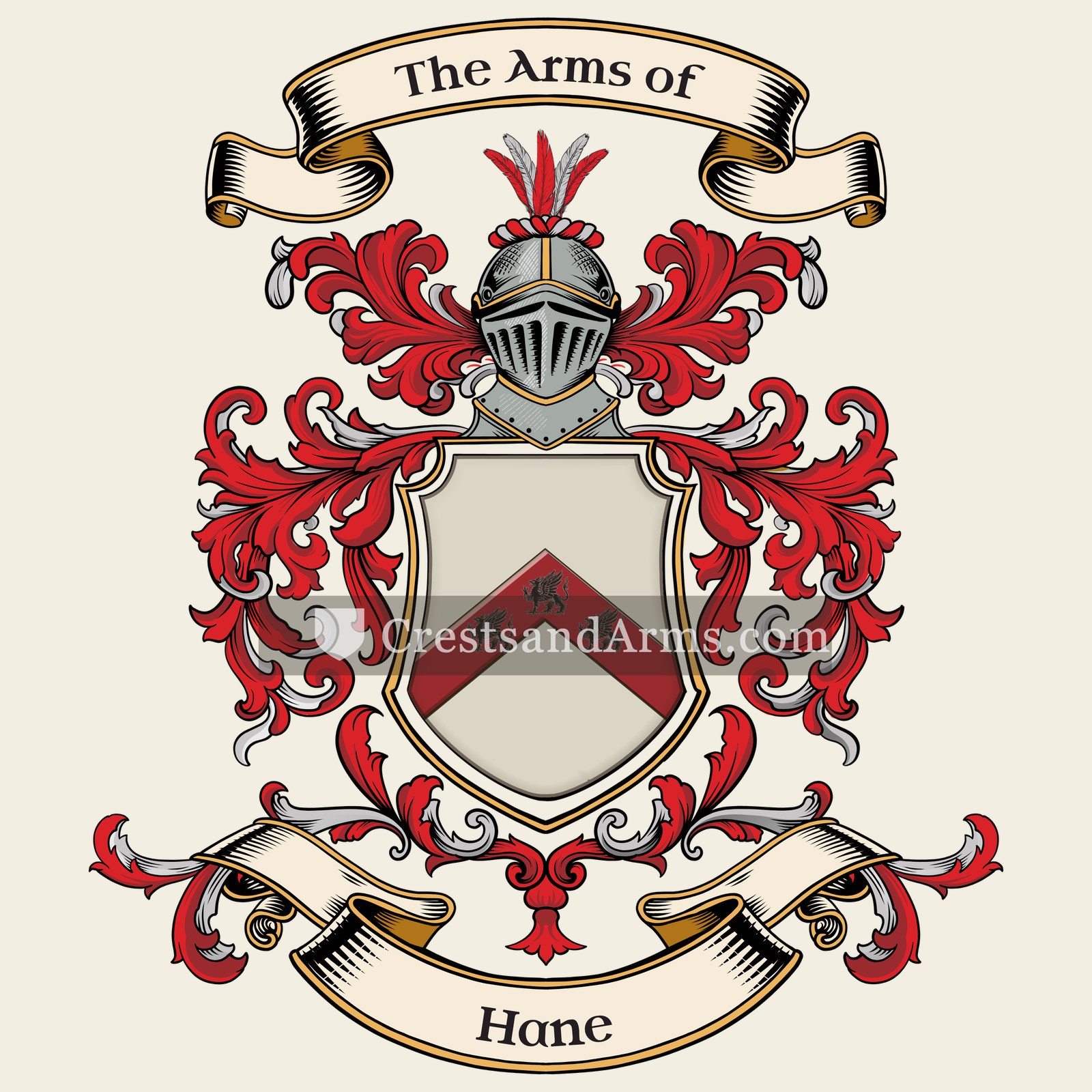
chevronProtection, and faithful service completed
griffinValour and vigilance, guarding great treasure
Colours
Silver (Argent)Means: Peace and sincerity
Red (Gules)Means: Military strength
Black (Sable)Means: Constancy
Historical info
Source
J. B. Rietstap, Armorial Général, Gouda: G. B. van Goor Zonen, 1884–87
Blazon (the actual original written record)
“D'arg. au chev. de gu., acc. de trois têtes de griffon de sa., languées de gu. Cq. cour. C.: une aigle iss. de sa., languée de gu. L.: d'arg. et de gu. S.: deux griffons d'or, tenant chacun une bannière, celle à dextre aux armes de l'écu, ou d'azur semée de bill. d'or, au lion du même, cour. aussi d'or, br. sur le tout (seigneurie de Leeuwerghem), celle à sen. bandée d'azur et d'or, à une ombre de lion cour., br. sur le tout, à la bord. comp. de gu. et d'arg. de seize pièces (principauté de Steenhuyse). D.: A DEO ET REGE.”
Belgiumc. 1648
Where the Hane Arms Were Recorded
Brabant
Map of Belgium showing where the Hane arms are recorded
The Hane arms were recorded in Belgium, c. 1648.
Arms such as these were typically recorded in Brabant.
Brabant lay at the heart of the Low Countries, where the trade routes met. Its towns were wealthy and its landowners many, and both kinds of family kept arms, which is why the region is so heavily represented.
This is where the arms were entered in the register. Families often moved to other parts of the country, so the same name can turn up in more than one region.
The body that granted and recorded arms in Belgium in this period.
Philip IV of Spain
Sovereign of the period
Philip IV of Spain
1621–1665
Reigning in Germany when the Hane arms are first recorded.
How Arms Worked in Belgium
In Belgium, a coat of arms is considered personal property that is passed down through the male line to legitimate descendants. Families often use the same shield design across generations to show their shared heritage. If a branch of the family wants to change the design, they must apply for an official update to their specific version of the arms.
Granting authority
The Conseil héraldique is the official body that regulates and approves all coats of arms in Belgium.
How they got arms
Families obtain their coats of arms through formal royal grants or by confirming their historical right to use existing designs.
Where arms were recorded
All approved coats of arms are officially recorded in the public registers of the Conseil héraldique since 1844.
The family's standing
Recorded among the armigerous families of Belgium.
Origin & History of the Hane Family in Belgium
The family name Hane has deep roots in the historical region of Brabant, where members of the family were firmly established by the year 1648. During the mid-seventeenth century, Brabant served as a vital crossroads for trade and agriculture within the Southern Netherlands. Families living in this area often identified themselves through their connection to the land or their specific roles within local village communities. The name Hane likely emerged during this period as a way to distinguish specific households as the population grew and record-keeping became more formal. By the time the Peace of Westphalia was signed in 1648, the Hane family was already part of the social fabric of the region, participating in the daily life and economic activities that defined life in the Low Countries. Their presence in these early parish and civil registers highlights a long history of stability and community involvement in what is now modern-day Belgium.
Related Branches & Arms
Root word
Johannes
God is gracious
This name
HaneA patronymic form derived from a shortened version of the name John.
also spelled
Hanne
Haen
Hanna
Related arms
Hayn, Hahnsimilar arms
Haenvariant spelling
Hahnvariant spelling
Documented Sources
J. B. Rietstap, Armorial Général, Gouda: G. B. van Goor Zonen, 1884–87
Bremmer, Rolf H., An Introduction to Old Frisian: History, Grammar, Reader, Glossary, 2009


 cockCourage, vigilance and readiness for battle
 cockCourage, vigilance and readiness for battle

 mulletThe third son, and a divine quality from above

 chevronProtection, and faithful service completed
 griffinValour and vigilance, guarding great treasure