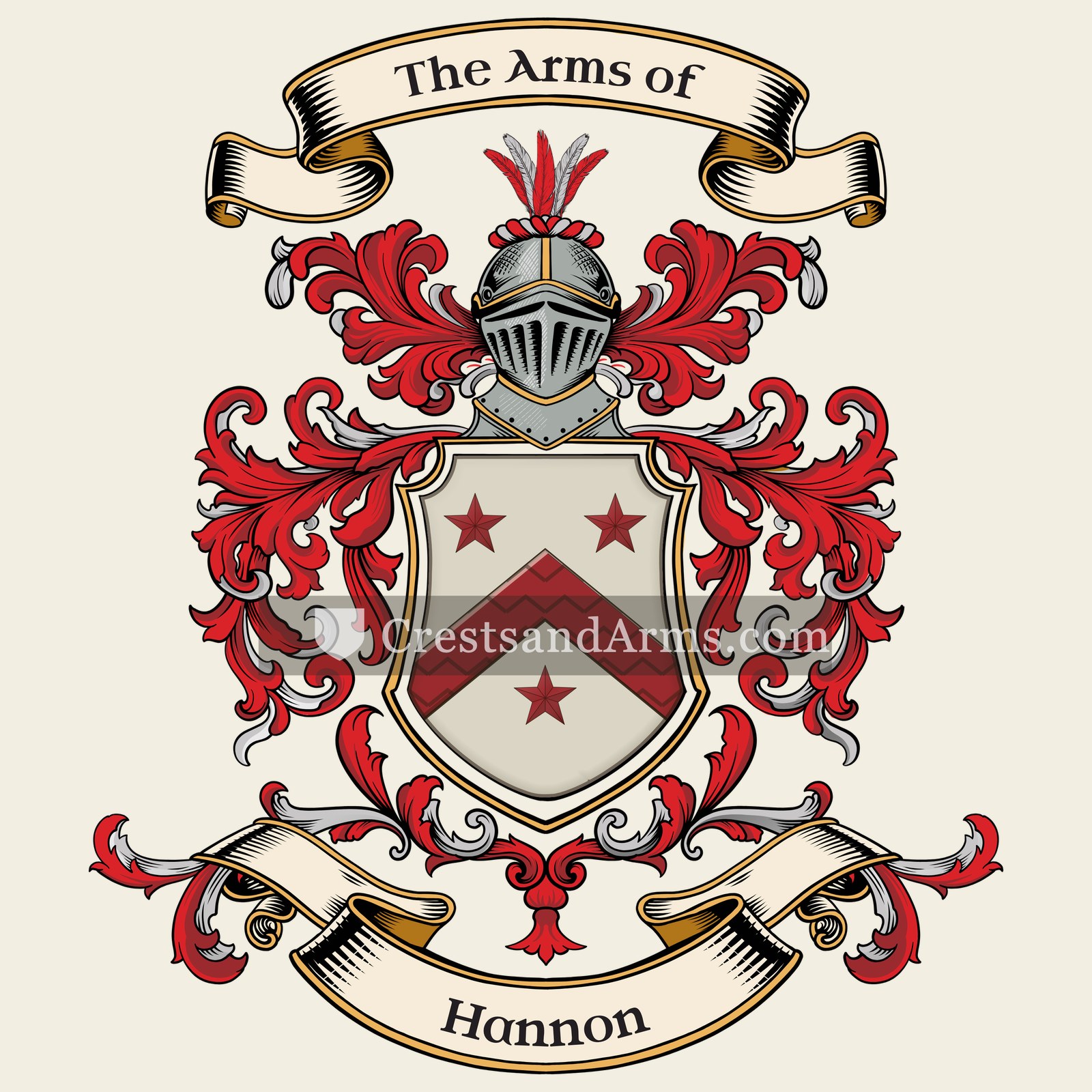
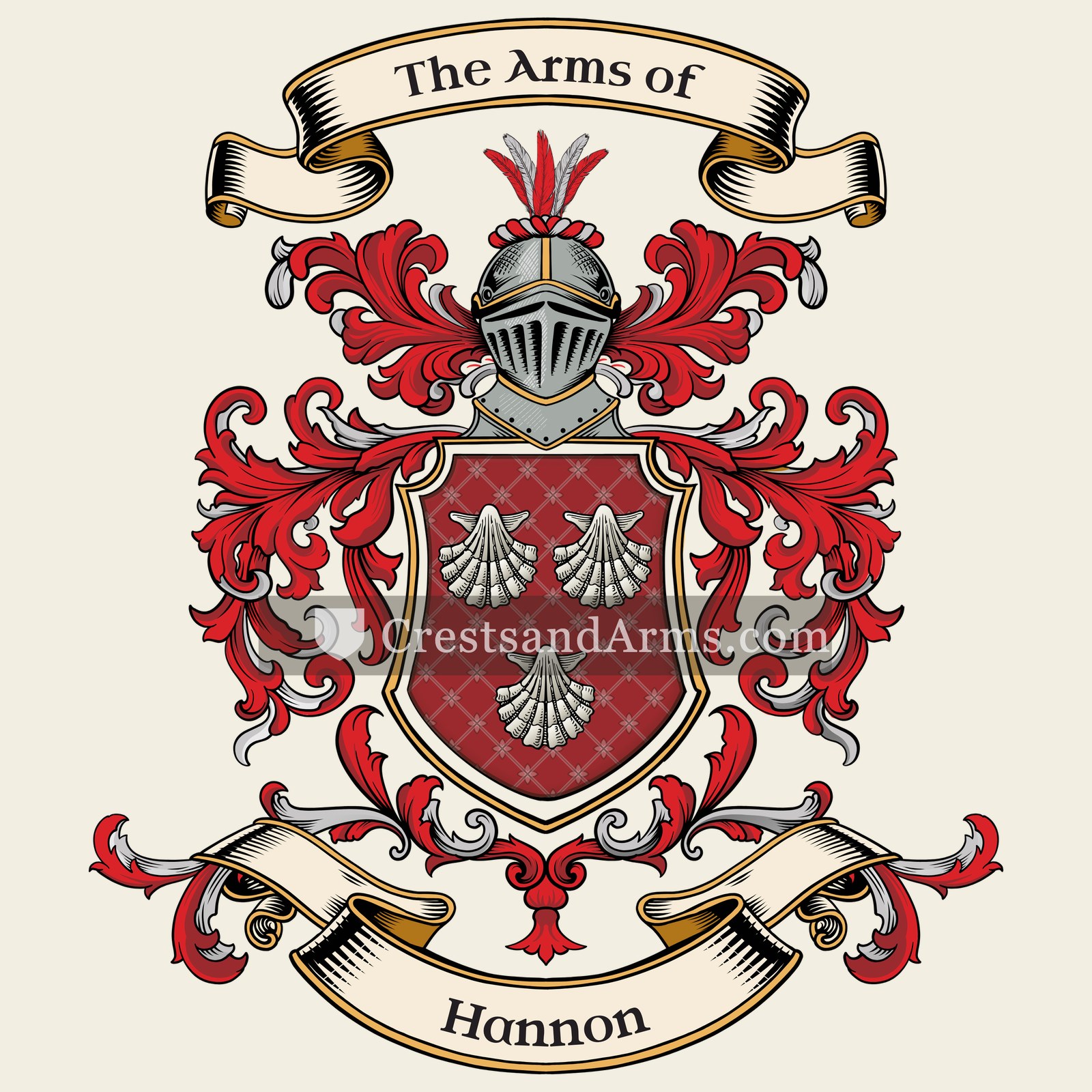
A record of documented arms, meaning and origin, researched for the Hannon family lines. Documented in 2 countries.
Reg. 6474 · French, G–I
Coat of Arms & Family Crest Details
Symbols on this shield
chevronProtection, and faithful service completed
mulletThe third son, and a divine quality from above
Colours
Silver (Argent)Means: Peace and sincerity
Red (Gules)Means: Military strength
Historical info
Source
J. B. Rietstap, Armorial Général, Gouda: G. B. van Goor Zonen, 1884–87
Blazon (the actual original written record)
“D'arg. au chev. de gu., acc. de trois molettes (5) du même.”
FlandreFlandre, c. 1663
Where the Hannon Arms Were Recorded
Flandre
Map of France showing where the Hannon arms are recorded
The Hannon arms were recorded in Flandre, c. 1663.
Flandre grew rich on cloth, and its towns were among the busiest in Europe. Merchant families bought land with their profits and took arms to go with it, so trade put as many names in the registers here as land did.
This is where the arms were entered in the register. Families often moved to other parts of the country, so the same name can turn up in more than one region.
The body that granted and recorded arms in France in this period.
Louis XIV of France
Sovereign of the period
Louis XIV of France
1643–1715
Reigning in France when the Hannon arms are first recorded.
How Arms Worked in France
In France, a coat of arms was a mark of honor that passed down through the male line to all legitimate descendants. Families often used the same shield without changes to show their shared heritage. If a branch wanted to stand out, they could add a small mark to their shield to show their specific place in the family tree.
Granting authority
The Juge d'armes de France acted as the official authority that regulated and verified coats of arms across the country.
How they got arms
Families typically inherited their arms from ancestors, though they could also receive them through royal grants or by proving their noble status.
Where arms were recorded
Coats of arms were officially recorded in the Armorial Général de France, which began its main collection in the year 1696.
The family's standing
Recorded among the armigerous families of Flandre.
Origin & History of the Hannon Family in France
The Hannon family name has deep roots in the northern regions of France, particularly within the historical territory of Flandre. By the year 1663, records confirm that members of the family were well established in this area, which was a bustling center of trade and agriculture during the seventeenth century. The name itself is thought to have evolved from local linguistic traditions, likely serving as a way to identify individuals based on their specific village or their role within the tightly knit communities of the French-Flemish border. Because this region was frequently influenced by shifting political boundaries and cross-cultural exchanges between France and the Low Countries, the Hannon family likely navigated a complex social landscape. They were part of a resilient population that maintained strong local ties while adapting to the changing administrative rules of the French crown. Over time, the family became a permanent fixture of the regional identity, contributing to the agricultural and social development of the northern French countryside.
Coat of Arms & Family Crest Details
Symbols on this shield
escallopThe pilgrim's shell, and a long journey made
Colours
Red (Gules)Means: Military strength
Silver (Argent)Means: Peace and sincerity
Historical info
Source
J. B. Rietstap, Armorial Général, Gouda: G. B. van Goor Zonen, 1884–87
Blazon (the actual original written record)
“De gu. à trois coquilles d'arg.”
BrabantBrabant, c. 1597
Where the Hannon Arms Were Recorded
Brabant
Map of Belgium showing where the Hannon arms are recorded
The Hannon arms were recorded in Brabant, c. 1597.
Brabant lay at the heart of the Low Countries, where the trade routes met. Its towns were wealthy and its landowners many, and both kinds of family kept arms, which is why the region is so heavily represented.
This is where the arms were entered in the register. Families often moved to other parts of the country, so the same name can turn up in more than one region.
The body that granted and recorded arms in Belgium in this period.
Philip II of Spain
Sovereign of the period
Philip II of Spain
1556–1598
Reigning in France when the Hannon arms are first recorded.
How Arms Worked in Belgium
In Belgium, a coat of arms is considered personal property that is passed down through the male line to legitimate descendants. Families often use the same shield design across generations to show their shared heritage. If a branch of the family wants to change the design, they must apply for an official update to their specific version of the arms.
Granting authority
The Conseil héraldique is the official body that regulates and approves all coats of arms in Belgium.
How they got arms
Families obtain their coats of arms through formal royal grants or by confirming their historical right to use existing designs.
Where arms were recorded
All approved coats of arms are officially recorded in the public registers of the Conseil héraldique since 1844.
The family's standing
Recorded among the armigerous families of Brabant.
Origin & History of the Hannon Family in Belgium
The family name Hannon has deep roots in the historical region of Brabant, where records confirm members of the family were established as early as 1597. During this period, the name was closely tied to the social and economic life of the Low Countries, a region defined by its bustling trade centers and complex local governance. Families like the Hannons often played active roles in the development of local parishes and urban communities, navigating the shifting political landscape of the late sixteenth century. As residents of Brabant, they lived through a time of significant transition as the region moved between different European powers. Their presence in official documents from this era suggests they were integrated into the fabric of local society, contributing to the agricultural or mercantile activities that sustained the region. By tracing their history back to this specific time and place, we see a family that was firmly planted in the heart of Belgian history long before the modern nation was formed.
Related Branches & Arms
Root word
Johannes
Hebrew origin meaning God is gracious.
This name
HannonA French diminutive form derived from the name John, signifying grace or favor.
also spelled
Hannonn
Hannone
Hanon
Documented Sources
J. B. Rietstap, Armorial Général, Gouda: G. B. van Goor Zonen, 1884–87
Archives départementales du Nord, Série B (Cour des comptes, aides et finances de Lille)
Dauzat, Albert, Dictionnaire étymologique des noms de famille et prénoms de France, 1951
Morlet, Marie-Thérèse, Dictionnaire étymologique des noms de famille, 1991
Digital archive packCoat of arms PNG, gold border print PDF, vector SVG and the certificate of authenticity. Sent to your email in minutes.


 chevronProtection, and faithful service completed
 mulletThe third son, and a divine quality from above
 chevronProtection, and faithful service completed
 mulletThe third son, and a divine quality from above

 escallopThe pilgrim's shell, and a long journey made