A record of documented arms, meaning and origin, researched for the Harold family lines. Documented in 3 countries.
Reg. 8245 · German, G–I
Coat of Arms & Family Crest Details
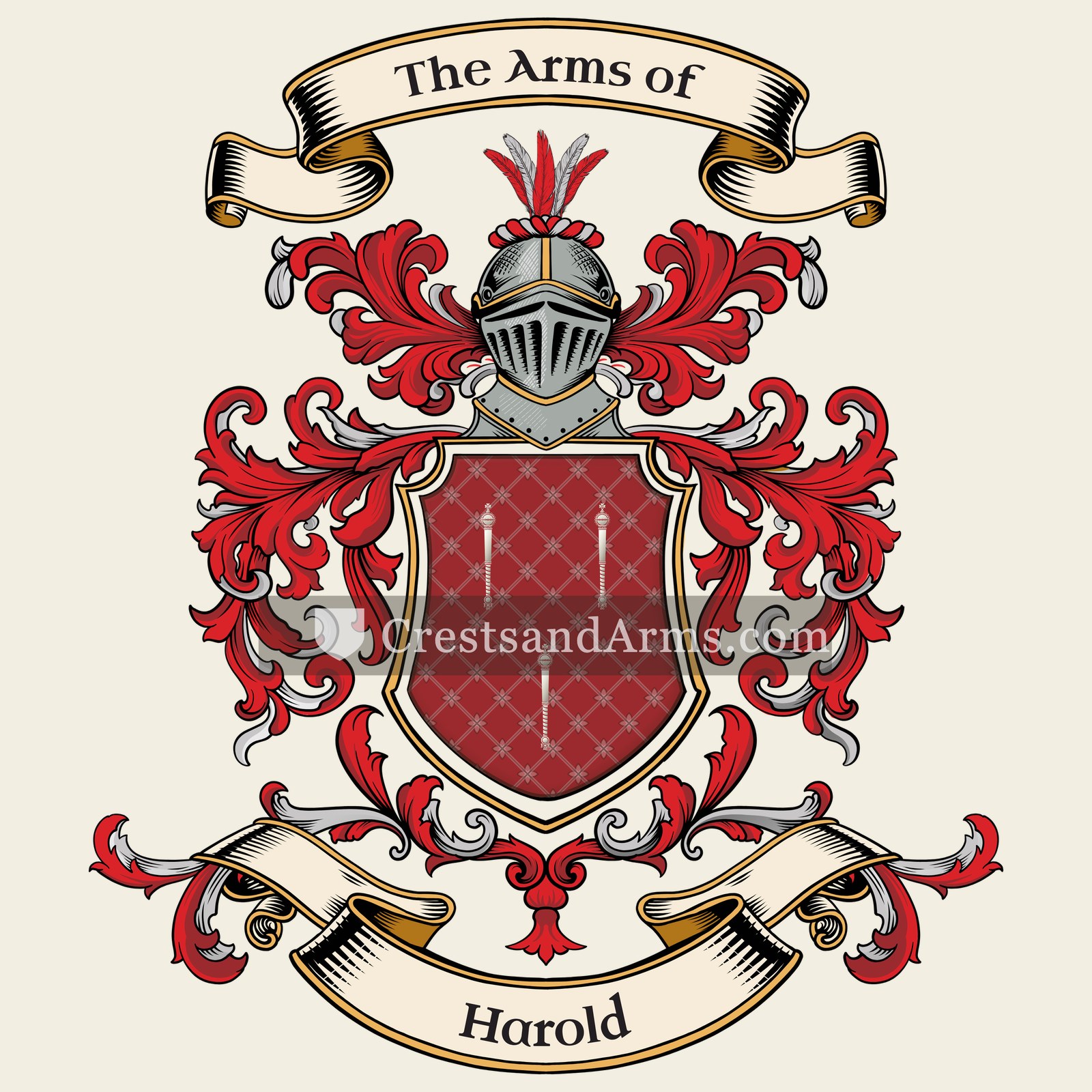
Symbols on this shield
sceptreRoyal authority and justice
Colours
Red (Gules)Means: Military strength
Silver (Argent)Means: Peace and sincerity
Historical info
Source
J. B. Rietstap, Armorial Général, Gouda: G. B. van Goor Zonen, 1884–87
Blazon (the actual original written record)
“De gu. à trois sceptres d'arg., réunis en pairle”
BavariaBavaria, c. 1813
Where the Harold Arms Were Recorded
Bavaria
Map of Germany showing where the Harold arms are recorded
The Harold arms were recorded in Bavaria, c. 1813.
Bavaria was a country of old landed families and walled market towns. Estates passed down the same line for centuries, and both the landowners and the leading townsmen kept arms, which is why so many Bavarian names sit in the registers.
This is where the arms were entered in the register. Families often moved to other parts of the country, so the same name can turn up in more than one region.
The body that granted and recorded arms in Germany in this period.
Frederick William III of Prussia
Sovereign of the period
Frederick William III of Prussia
1797–1840
Reigning in Germany when the Harold arms are first recorded.
How Arms Worked in Germany
Prussian heraldry was strictly tied to social rank and noble status rather than being a free choice for every citizen. These symbols were treated as permanent family property that moved through the generations to all legitimate heirs. If a family branch wanted to change their design to stand out, they had to apply for official permission to alter their specific version of the shield.
Granting authority
The Prussian Heroldsamt acted as the central state office that managed and strictly controlled all noble titles and coats of arms.
How they got arms
Families usually obtained their arms through formal royal grants or by proving their long-standing noble status to the state authorities.
Where arms were recorded
All official coats of arms were kept in the rolls of the Prussian Heroldsamt, which functioned from 1706 until 1918.
The family's standing
Recorded among the armigerous families of Bavaria.
Origin & History of the Harold Family in Germany
The name Harold traces its roots to the ancient Germanic personal name Hariwald, which combines the words for army and ruler. In the context of early German history, families carrying this name were often associated with the social structures of the Germanic tribes who settled across central Europe. By the early nineteenth century, records confirm that members of the Harold family were established in the region of Bavaria. During this period, Bavaria was undergoing significant political changes as it transitioned into a kingdom under the influence of the Napoleonic Wars. Families living there at that time were often deeply connected to the local agricultural or artisanal trades that defined the Bavarian economy. As the region modernized, these individuals helped shape the local community through their participation in village life and regional administration. The presence of the family in Bavaria by 1813 suggests they were part of the long-standing demographic shifts that occurred as German states moved toward unification.
Coat of Arms & Family Crest Details
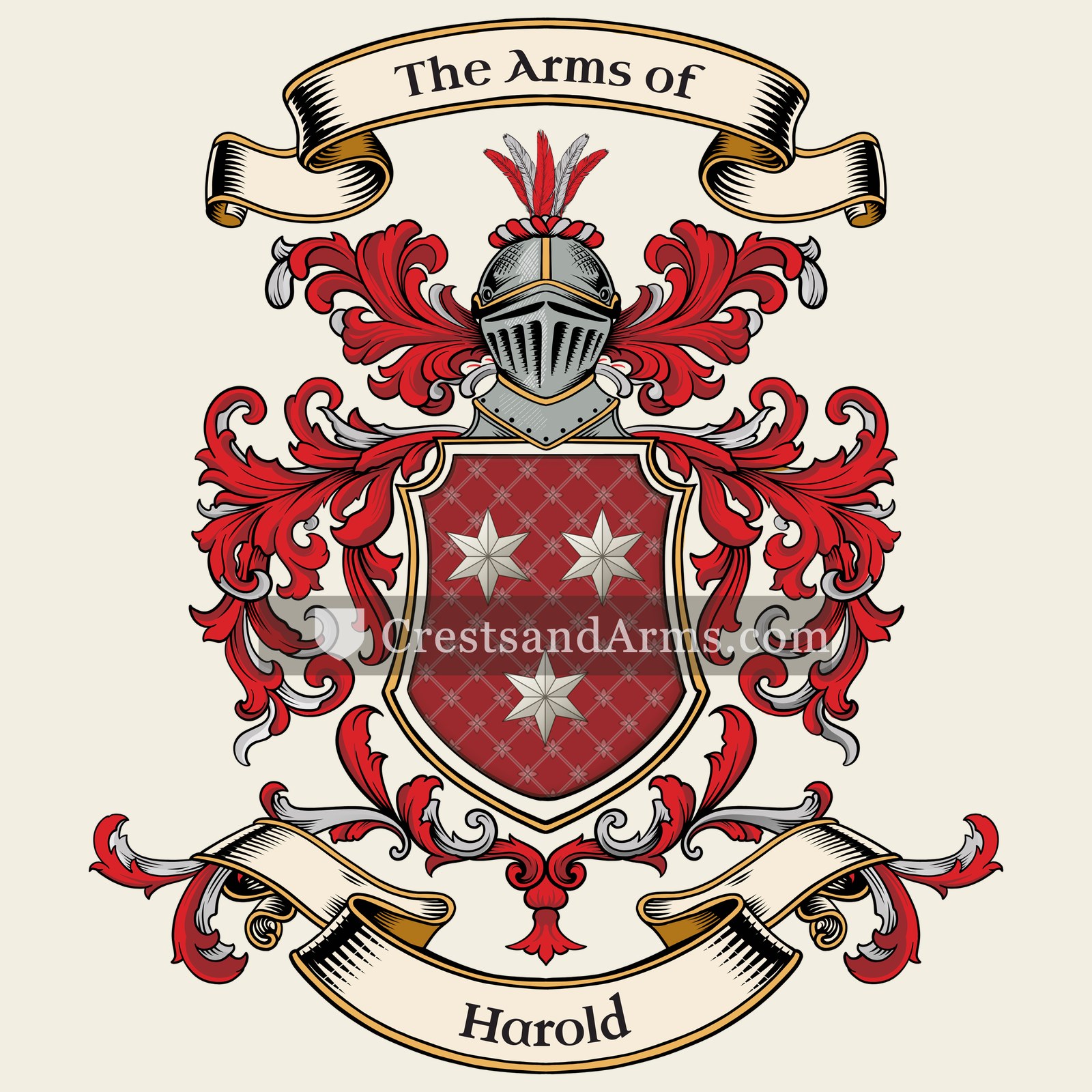
Symbols on this shield
starThe celestial goddess, and nobility
Colours
Red (Gules)Means: Military strength
Silver (Argent)Means: Peace and sincerity
Historical info
Source
Sir Bernard Burke, The General Armory of England, Scotland, Ireland and Wales, London: Harrison & Sons, 1884
Blazon (the actual original written record)
“Gu. an escarbuncle or, betw. three estoiles ar”
DublinDublin, c. 1614
Where the Harold Arms Were Recorded
Dublin
Map of Ireland showing where the Harold arms are recorded
The Harold arms were recorded in Dublin, c. 1614.
Dublin was the seat of government in Ireland and the place where grants were sought and recorded. Families with business at the castle or the courts settled nearby, and settling there put their arms on record.
This is where the arms were entered in the register. Families often moved to other parts of the country, so the same name can turn up in more than one region.
The body that granted and recorded arms in Ireland in this period.
James VI and I
Sovereign of the period
James VI and I
1603–1625
Reigning in Germany when the Harold arms are first recorded.
How Arms Worked in Ireland
The Ulster King of Arms granted coats of arms to individuals who proved their social standing and good character. These symbols were typically inherited by all legitimate descendants of the original holder. If a family branch wanted a unique look, they could apply for a specific change to their design through the office to ensure their identity remained distinct.
Granting authority
The Ulster King of Arms acted as the official body that regulated and issued all coats of arms throughout Ireland.
How they got arms
Families obtained their arms through formal grants issued by the office after proving their eligibility and paying the required fees.
Where arms were recorded
All official grants were recorded in the registers held by the Ulster King of Arms starting from the year 1552.
The family's standing
Recorded among the armigerous families of Dublin.
Origin & History of the Harold Family in Ireland
The history of the Harold family in Ireland is deeply connected to the region surrounding Dublin, where the name appears in official records as early as 1614. While the name itself has roots in Old Norse and Germanic languages, the Irish branch established a significant presence in the Pale, an area under English control during the medieval and early modern periods. By the seventeenth century, members of the family were recognized as landholders and local figures within the administrative structures of County Dublin. These early Harolds were often integrated into the social and economic life of the capital, navigating the complex political shifts that defined the era. Over time, the family name became firmly rooted in the local landscape, reflecting the broader patterns of settlement and migration that shaped the history of the Dublin region.
Coat of Arms & Family Crest Details
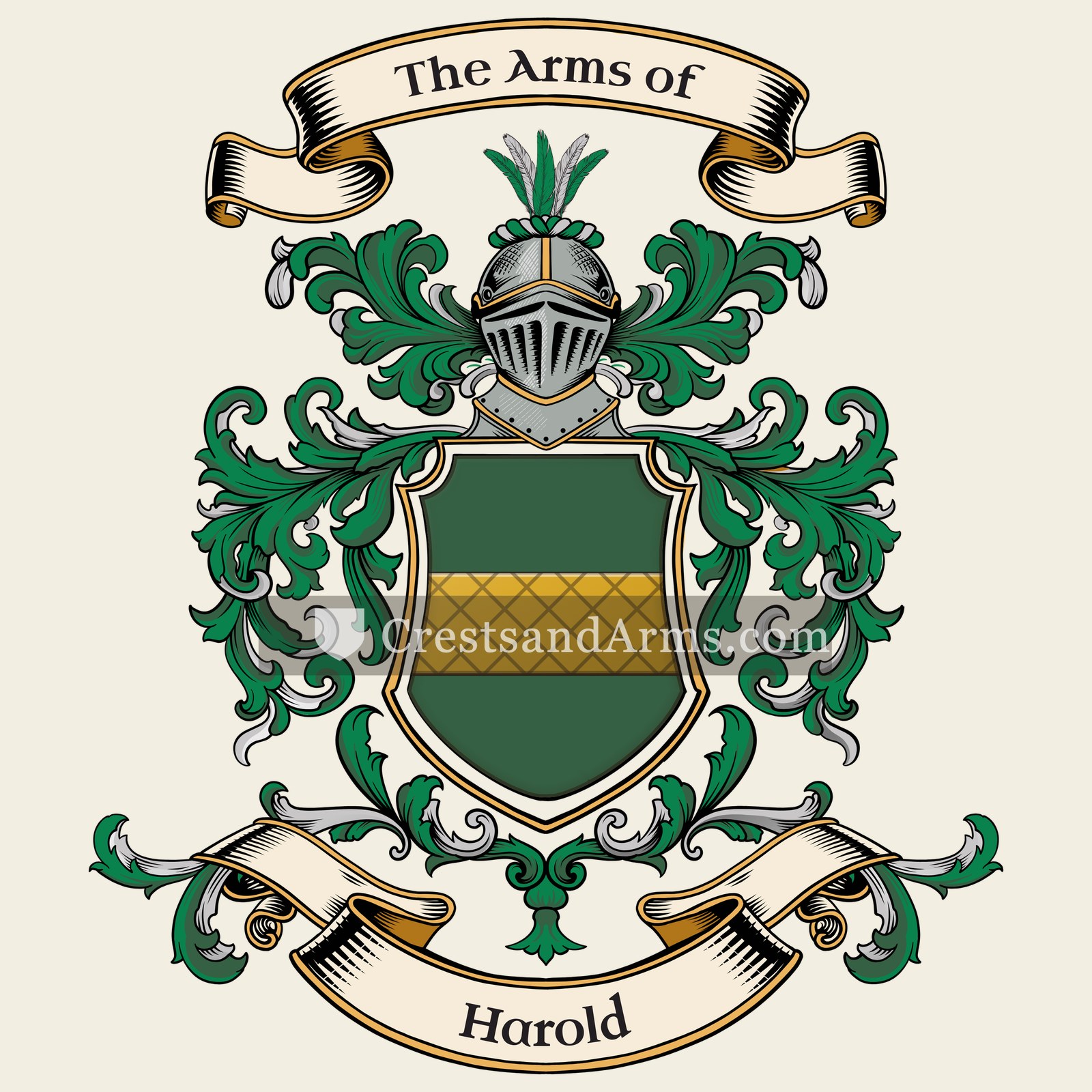
Symbols on this shield
fessThe military belt, and readiness to serve
Colours
Green (Vert)Means: Hope
Gold (Or)Means: Generosity
Historical info
Source
Sir Bernard Burke, The General Armory of England, Scotland, Ireland and Wales, London: Harrison & Sons, 1884
Blazon (the actual original written record)
“Vert a fesse flory counterflory or”
SalopSalop, c. 1620
Where the Harold Arms Were Recorded
Salop
Map of England showing where the Harold arms are recorded
The Harold arms were recorded in Salop, c. 1620.
Shropshire lay on the Welsh border, and border country needed men who could fight. Families held their land in return for service, and service in arms is what a coat of arms was originally for.
This is where the arms were entered in the register. Families often moved to other parts of the country, so the same name can turn up in more than one region.
The body that granted and recorded arms in England in this period.
James VI and I
Sovereign of the period
James VI and I
1603–1625
Reigning in Germany when the Harold arms are first recorded.
How Arms Worked in England
English heraldry allowed arms to be shared by all legitimate descendants of the original owner. These symbols were treated as personal property that moved through the generations to all children. While the eldest son kept the original design, other family members could use the same shield without needing to change it or register their own unique versions.
Granting authority
The College of Arms in London has regulated the use of coats of arms throughout England and Wales since 1484.
How they got arms
Families typically obtained their coats of arms through a formal grant from the Crown or by proving their ancient right to them.
Where arms were recorded
All official coats of arms are recorded in the registers kept at the College of Arms, which date back to the fifteenth century.
The family's standing
Recorded among the armigerous families of Salop.
Origin & History of the Harold Family in England
The surname Harold traces its roots back to the Old English and Old Norse name Haraldr, which translates to army ruler. While the name was famously held by the last Anglo-Saxon king of England, it eventually transitioned from a given name to a hereditary surname during the Middle Ages. By the early 17th century, records confirm that members of the Harold family were well-established in the county of Salop, also known as Shropshire. During this period, families in this region were often tied to the land through agriculture or local trade. The presence of the family in Salop by 1620 suggests they were part of the stable rural population that helped shape the social and economic character of the West Midlands. Over time, the name evolved through various spellings in parish registers as literacy increased and record-keeping became more standardized across English shires.
Related Branches & Arms
Root word
Harwald
Derived from the Germanic elements for army and ruler.
This name
HaroldA leader or commander of an army.
also spelled
Harrold
Harald
Documented Sources
J. B. Rietstap, Armorial Général, Gouda: G. B. van Goor Zonen, 1884–87
Bahlow, Hans, Deutsches Namenlexikon: Familien- und Vornamen nach Ursprung und Sinn erklärt, 1967
Bayerisches Hauptstaatsarchiv, Königlich Bayerisches Staatsministerium des Innern, 1813
Heintze, Albert, Die deutschen Familien-Namen: geschichtlich, geographisch, sprachlich, 1903
Digital archive packCoat of arms PNG, gold border print PDF, vector SVG and the certificate of authenticity. Sent to your email in minutes.


 sceptreRoyal authority and justice
 sceptreRoyal authority and justice

 starThe celestial goddess, and nobility

 fessThe military belt, and readiness to serve