A record of documented arms, meaning and origin, researched for the Hatton family lines. Documented in 3 countries.
Reg. 9015 · French, G–I
Coat of Arms & Family Crest Details
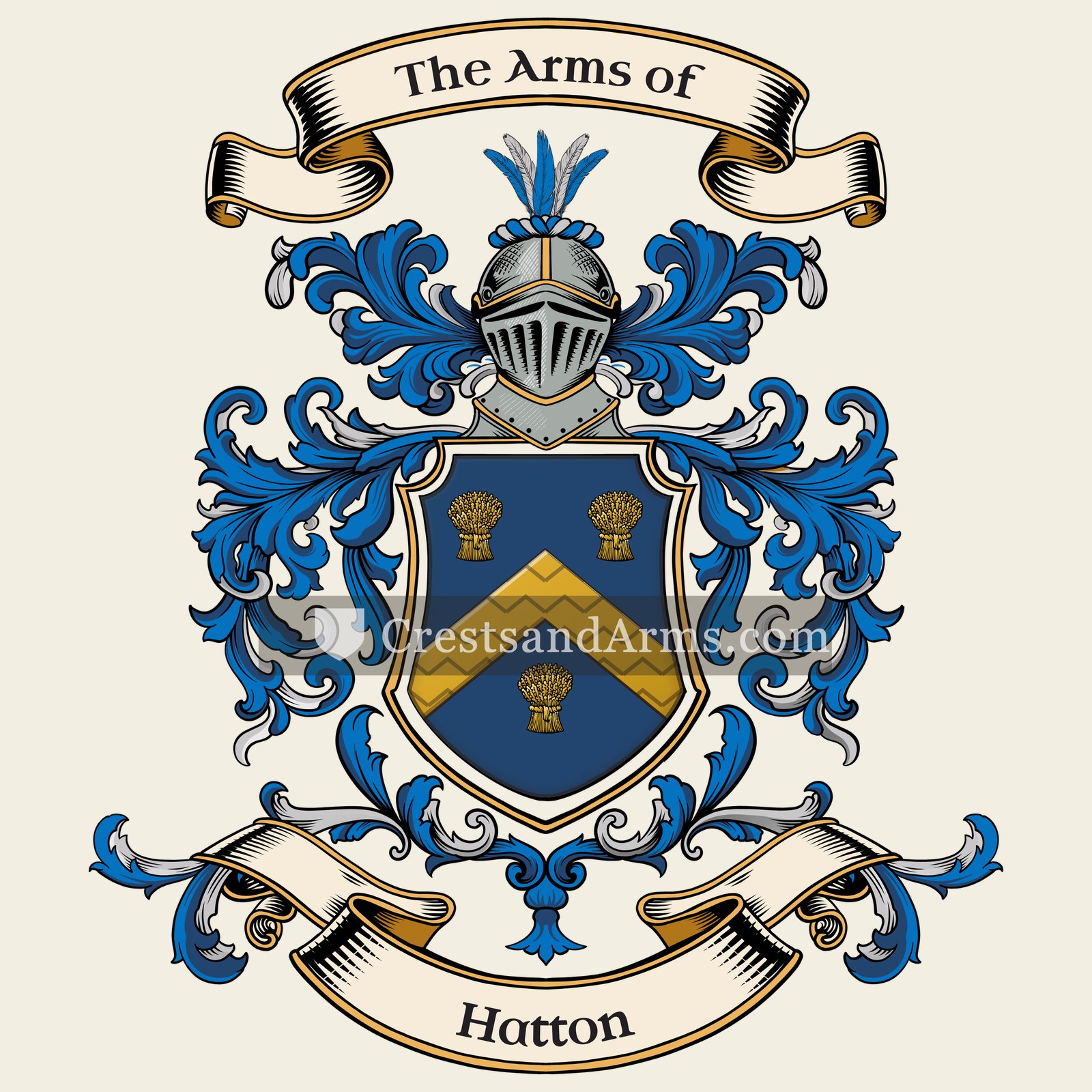
Symbols on this shield
chevronProtection, and faithful service completed
wheatsheafPlenty, and the harvest of one's own labour
Colours
Blue (Azure)Means: Loyalty and truth
Gold (Or)Means: Generosity
Historical info
Source
J. B. Rietstap, Armorial Général, Gouda: G. B. van Goor Zonen, 1884–87
Blazon (the actual original written record)
“D'azur au chev. d'or, acc. de trois gerbes du même. C.: une biche arrêtée d'or. S.: deux chevaux d'arg., bridés de sa. D.: VIRTUS TUTISSIMA CASSIS.”
Francec. 1643
Where the Hatton Arms Were Recorded
Bretagne
Map of France showing where the Hatton arms are recorded
The Hatton arms were recorded in France, c. 1643.
Arms such as these were typically recorded in Bretagne.
More families held coats of arms in Bretagne than anywhere else in France. The land was divided into many small estates rather than a few large ones, so far more households counted as gentry, and each needed a shield of its own to be told apart.
This is where the arms were entered in the register. Families often moved to other parts of the country, so the same name can turn up in more than one region.
The body that granted and recorded arms in France in this period.
Louis XIII of France
Sovereign of the period
Louis XIII of France
1617–1643
Reigning in France when the Hatton arms are first recorded.
How Arms Worked in France
In France, a coat of arms was a mark of honor that passed down through the male line to all legitimate descendants. Families often used the same shield without changes to show their shared heritage. If a branch wanted to stand out, they could add a small mark to their shield to show their specific place in the family tree.
Granting authority
The Juge d'armes de France acted as the official authority that regulated and verified coats of arms across the country.
How they got arms
Families typically inherited their arms from ancestors, though they could also receive them through royal grants or by proving their noble status.
Where arms were recorded
Coats of arms were officially recorded in the Armorial Général de France, which began its main collection in the year 1696.
The family's standing
Recorded among the armigerous families of France.
Origin & History of the Hatton Family in France
The Hatton family name carries a deep history rooted in the cultural landscape of France long before it spread to other parts of the world. By the year 1643, records confirm that members of the family were firmly established in the region of Bretagne. During this era, Bretagne was a distinct province with its own unique customs and strong ties to maritime trade and agriculture. Families living in this area often played vital roles in local governance or the management of rural estates. As the Hatton name appeared in parish registers and legal documents from the mid-seventeenth century, it suggests that these early ancestors were integrated into the social fabric of their communities. Their presence in Bretagne indicates a life tied to the traditions of western France, where they likely navigated the challenges of a changing political landscape while maintaining their family identity across generations.
Coat of Arms & Family Crest Details
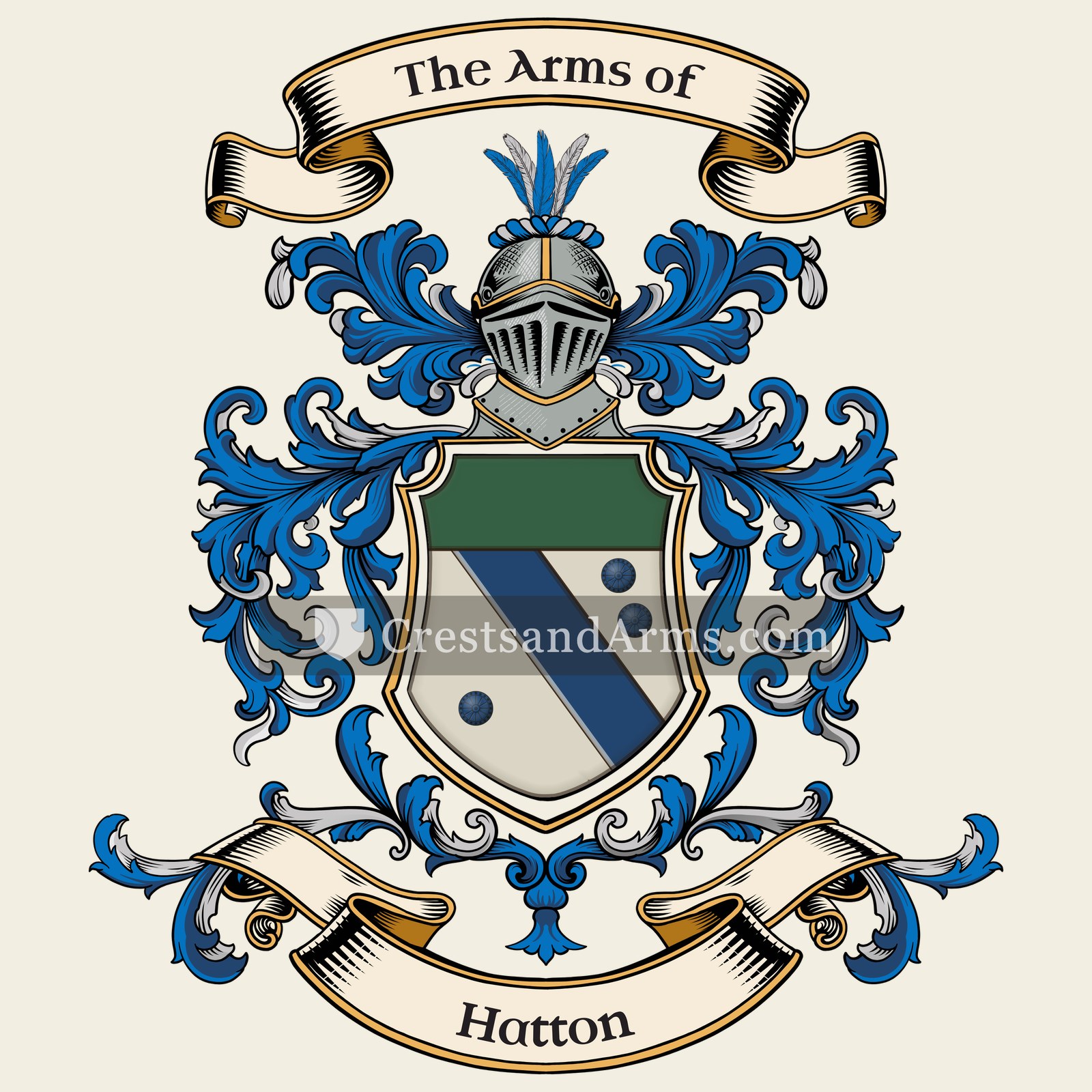
Symbols on this shield
bendDefence, and the scarf of a commander
chiefAuthority, wisdom and dominion
roundelA coin, and one who has been to the crusades
Colours
Silver (Argent)Means: Peace and sincerity
Blue (Azure)Means: Loyalty and truth
Green (Vert)Means: Hope
Historical info
Source
Sir Bernard Burke, The General Armory of England, Scotland, Ireland and Wales, London: Harrison & Sons, 1884
Blazon (the actual original written record)
“Ar. three hurts each charged with a bend of the first, on a chief vert an eagle displ. or”
CambridgeCambridge, c. 1620
Where the Hatton Arms Were Recorded
Cambridge
Map of England showing where the Hatton arms are recorded
The Hatton arms were recorded in Cambridge, c. 1620.
Cambridgeshire was flat, rich farming country with the university at its centre. Fen drainage made new land and new fortunes, and families who gained by it bought manors and took arms to match.
This is where the arms were entered in the register. Families often moved to other parts of the country, so the same name can turn up in more than one region.
The body that granted and recorded arms in England in this period.
James VI and I
Sovereign of the period
James VI and I
1603–1625
Reigning in France when the Hatton arms are first recorded.
How Arms Worked in England
English heraldry allowed arms to be shared by all legitimate descendants of the original owner. These symbols were treated as personal property that moved through the generations to all children. While the eldest son kept the original design, other family members could use the same shield without needing to change it or register their own unique versions.
Granting authority
The College of Arms in London has regulated the use of coats of arms throughout England and Wales since 1484.
How they got arms
Families typically obtained their coats of arms through a formal grant from the Crown or by proving their ancient right to them.
Where arms were recorded
All official coats of arms are recorded in the registers kept at the College of Arms, which date back to the fifteenth century.
The family's standing
Recorded among the armigerous families of Cambridge.
Origin & History of the Hatton Family in England
The surname Hatton is a locational name that originated in England, meaning it was first used to identify people who lived in a place called Hatton. The name itself comes from the Old English words "hætt," meaning a hood or a hill, and "tun," which refers to an enclosure or a settlement. By the time members of the family were documented in Cambridge in 1620, the name had already been established in various English counties for several hundred years. Families with this name often moved from rural villages to growing academic and trade centers like Cambridge as the English economy shifted during the seventeenth century. These early Hattons were part of a society that was rapidly changing, moving away from medieval farming life toward the professional and scholarly opportunities found in university towns.
Coat of Arms & Family Crest Details
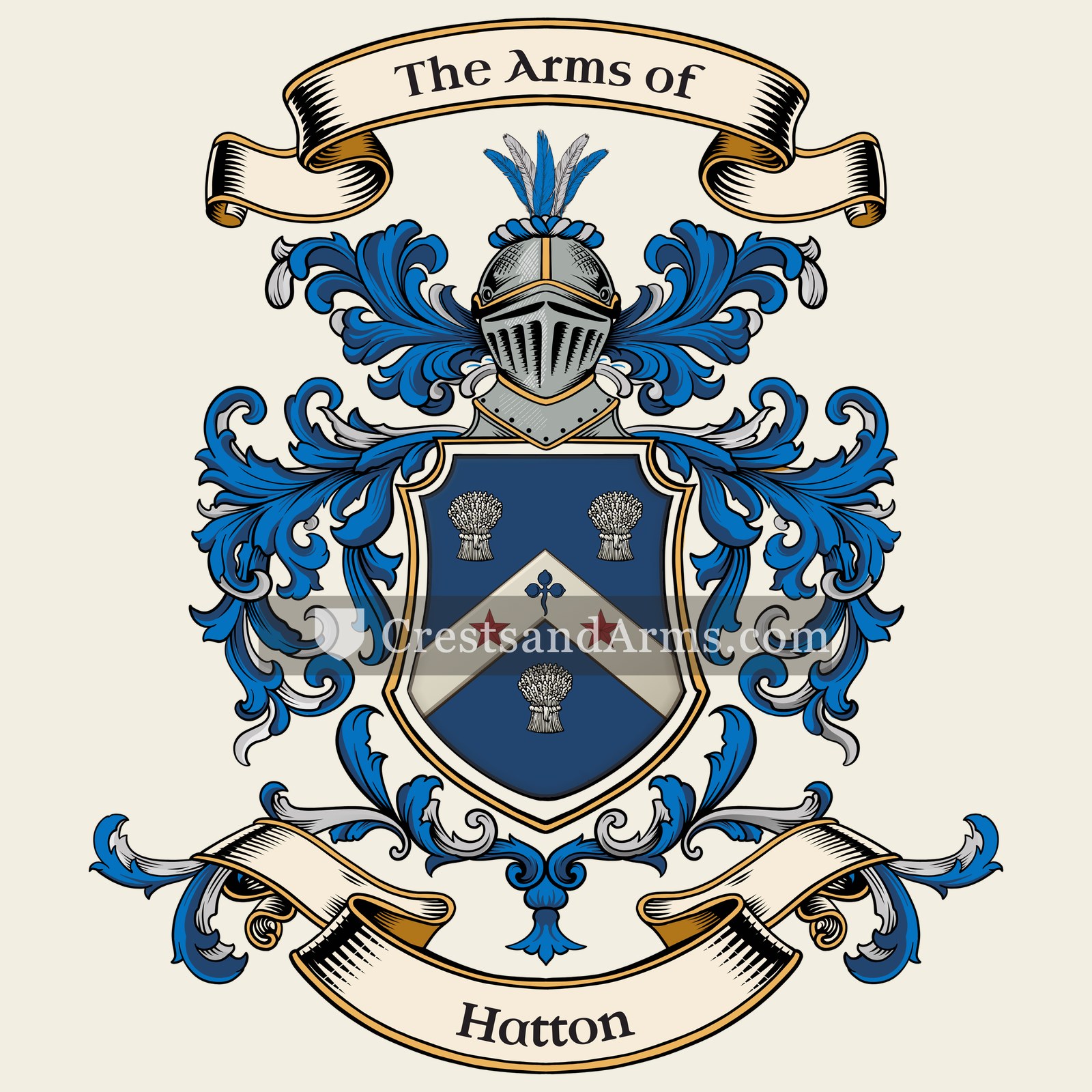
Symbols on this shield
chevronProtection, and faithful service completed
trefoilPerpetuity, and the Trinity
wheatsheafPlenty, and the harvest of one's own labour
mulletThe third son, and a divine quality from above
Colours
Blue (Azure)Means: Loyalty and truth
Silver (Argent)Means: Peace and sincerity
Red (Gules)Means: Military strength
Historical info
Source
Sir Bernard Burke, The General Armory of England, Scotland, Ireland and Wales, London: Harrison & Sons, 1884
Blazon (the actual original written record)
“Az. on a chev. betw. three garbs ar. a trefoil slipped of the field betw. two mullets gu”
FermanaghArchdeacon · Fermanagh, c. 1632
Where the Hatton Arms Were Recorded
Fermanagh
Map of Ireland showing where the Hatton arms are recorded
The Hatton arms were recorded in Fermanagh, c. 1632.
Fermanagh was lake country in the north-west of Ireland, planted with settlers in the seventeenth century. The new landowners took formal grants of land, and those grants brought arms with them.
This is where the arms were entered in the register. Families often moved to other parts of the country, so the same name can turn up in more than one region.
The body that granted and recorded arms in Ireland in this period.
Charles I of England
Sovereign of the period
Charles I of England
1625–1649
Reigning in France when the Hatton arms are first recorded.
How Arms Worked in Ireland
The Ulster King of Arms granted coats of arms to individuals who proved their social standing and good character. These symbols were typically inherited by all legitimate descendants of the original holder. If a family branch wanted a unique look, they could apply for a specific change to their design through the office to ensure their identity remained distinct.
Granting authority
The Ulster King of Arms acted as the official body that regulated and issued all coats of arms throughout Ireland.
How they got arms
Families obtained their arms through formal grants issued by the office after proving their eligibility and paying the required fees.
Where arms were recorded
All official grants were recorded in the registers held by the Ulster King of Arms starting from the year 1552.
The family's standing
Recorded among the armigerous families of Fermanagh.
Origin & History of the Hatton Family in Ireland
The Hatton family name in Ireland is deeply connected to the period of the Plantation of Ulster during the early seventeenth century. While the name has roots in England, historical records confirm that members of the family were established in County Fermanagh by 1632. During this era, many families moved to Ireland to take up land grants and help manage the newly settled territories. The Hattons in Fermanagh likely integrated into the local administrative and agricultural systems that defined the region at the time. By settling in this part of the country, they became part of a significant wave of migration that reshaped the social and economic landscape of Northern Ireland. Their presence in 1632 suggests they were among the early participants in these colonial efforts, helping to build a new life in a changing Irish society.
Related Branches & Arms
Root word
Hatto
A Germanic personal name derived from the word for brave or bold.
This name
HattonA patronymic surname indicating descent from a person named Hatto.
also spelled
Haton
Hatten
Related arms
Hatonvariant spelling
Alredrecorded with Hatton, same area
Caterallrecorded with Hatton, same area
Cottonrecorded with Hatton, same area
Documented Sources
J. B. Rietstap, Armorial Général, Gouda: G. B. van Goor Zonen, 1884–87
Archives départementales d'Ille-et-Vilaine, Série B (Cours et juridictions)
Poter de Courcy, Pol, Nobiliaire et armorial de Bretagne, 1890
Digital archive packCoat of arms PNG, gold border print PDF, vector SVG and the certificate of authenticity. Sent to your email in minutes.


 chevronProtection, and faithful service completed
 wheatsheafPlenty, and the harvest of one's own labour
 chevronProtection, and faithful service completed
 wheatsheafPlenty, and the harvest of one's own labour

 bendDefence, and the scarf of a commander
 chiefAuthority, wisdom and dominion
 roundelA coin, and one who has been to the crusades

 trefoilPerpetuity, and the Trinity
 mulletThe third son, and a divine quality from above