Map of Denmark showing where the Hauch arms are recorded
The Hauch arms were recorded in Denmark, c. 1722.
Arms such as these were typically recorded in Sjaælland.
Zealand held the Danish court, the crown's offices and Copenhagen itself. Families who served the king kept estates within reach of it, and royal service was the ordinary route to a coat of arms.
This is where the arms were entered in the register. Families often moved to other parts of the country, so the same name can turn up in more than one region.
The body that granted and recorded arms in Denmark in this period.
Frederik IV of Denmark
Sovereign of the period
Frederik IV of Denmark
1699–1730
Reigning in Denmark when the Hauch arms are first recorded.
How Arms Worked in Denmark
Danish heraldry during this period was closely tied to noble status and royal favor rather than being open to all citizens. Arms were typically granted by the monarch to individuals, and these symbols were then shared by all members of the noble house. If a family line died out, the right to use those specific arms ended with them.
Granting authority
The Danish royal chancery held the power to issue and regulate official coats of arms for the kingdom.
How they got arms
Families usually received their arms through a formal royal grant that confirmed their noble status and rights.
Where arms were recorded
These grants were officially recorded in the Danish Royal Chancery records starting in the sixteenth century.
The family's standing
Recorded among the armigerous families of Denmark.
Origin & History of the Hauch Family in Denmark
The Hauch family established a significant presence in Denmark during the early eighteenth century, with records confirming their residence on the island of Sjælland by 1722. The family is widely recognized for its contributions to the Danish state, particularly through the career of Andreas Hauch, who served as a high-ranking official in the royal administration. As the family integrated into the Danish social structure, they became deeply involved in the management of land and the development of local governance. Their influence grew steadily as members of the family pursued careers in the military, the judiciary, and the sciences. By settling in the region surrounding Copenhagen, the Hauch family secured a place among the landed elite, which allowed them to shape various aspects of Danish public life for several generations.
Coat of Arms & Family Crest Details
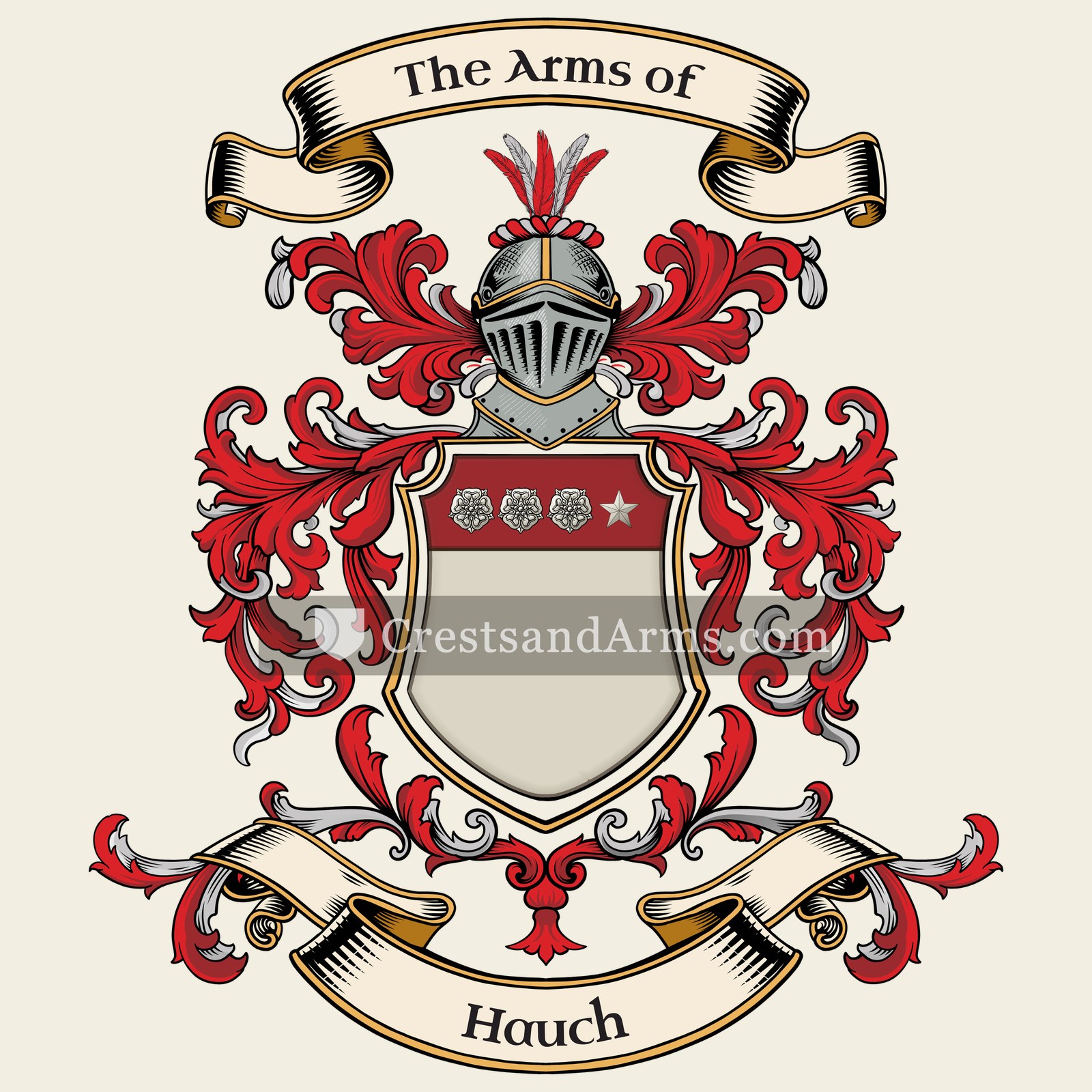
Symbols on this shield
chiefAuthority, wisdom and dominion
roseThe seventh son, and beauty with grace
mulletThe third son, and a divine quality from above
Colours
Silver (Argent)Means: Peace and sincerity
Red (Gules)Means: Military strength
Historical info
Source
J. B. Rietstap, Armorial Général, Gouda: G. B. van Goor Zonen, 1884–87
Blazon (the actual original written record)
“D'arg. à deux pointes accostées de gu., acc. de trois roses de sept feuilles du même, bout. d'or, rangées en chef; au chef de gu., ch. d'une étoile (7) d'arg. Cq. cour. C.: un chamois iss. au nat., entre un vol, de gu. et d'arg. D.: ICH TRAW MEIN STERN.”
BavariaBavaria, c. 1765
Digital archive packCoat of arms PNG, gold border print PDF, vector SVG and the certificate of authenticity. Sent to your email in minutes.
Map of Germany showing where the Hauch arms are recorded
The Hauch arms were recorded in Bavaria, c. 1765.
Bavaria was a country of old landed families and walled market towns. Estates passed down the same line for centuries, and both the landowners and the leading townsmen kept arms, which is why so many Bavarian names sit in the registers.
This is where the arms were entered in the register. Families often moved to other parts of the country, so the same name can turn up in more than one region.
The body that granted and recorded arms in Germany in this period.
Francis I, Holy Roman Emperor
Sovereign of the period
Francis I, Holy Roman Emperor
1745–1765
Reigning in Denmark when the Hauch arms are first recorded.
How Arms Worked in Germany
In the Holy Roman Empire, coats of arms were often granted to individuals by the Emperor or his representatives. These arms were then passed down through the generations to all legitimate descendants of the original holder. Younger branches of a family usually kept the same shield design without needing to change it, as the arms belonged to the entire lineage.
Granting authority
The Holy Roman Emperor held the sole power to grant new coats of arms throughout his vast imperial territories.
How they got arms
Families typically obtained their coats of arms through a formal imperial grant or by proving their noble status to the authorities.
Where arms were recorded
These grants were officially recorded in the Imperial Chancery registers, which began keeping formal records of such honors during the Middle Ages.
The family's standing
Recorded among the armigerous families of Bavaria.
Origin & History of the Hauch Family in Germany
The family name Hauch has deep roots in the southern regions of Germany, particularly within the historical landscapes of Bavaria. By the mid-eighteenth century, the family was well-established in this area, with clear records placing members of the Hauch line in Bavarian territories by 1765. During this period, the name was often associated with families living in rural or semi-urban settings, where they likely participated in the local agricultural or trade-based economy that defined life in the Holy Roman Empire. As the region underwent shifts in governance and social structure, the Hauch family remained part of the local fabric, contributing to the development of their communities through their work and civic participation. Their presence in 1765 suggests that the family had already been settled in the region for generations, as surnames of this type were typically solidified through long-term residence and community recognition in specific German villages.
Hauch Meaning & Related Branches
Root word
Hauke
A Germanic term derived from the word for a hawk.
This name
HauchA topographic or habitational name referring to someone who lived near a hawk's nesting site.
also spelled
Hauck
Howk
Hauk
Related arms
Bergheglichsimilar arms
Hauckvariant spelling
Documented Sources
J. B. Rietstap, Armorial Général, Gouda: G. B. van Goor Zonen, 1884–87
Hiort-Lorenzen, H. R. and Thiset, A., Danmarks Adels Aarbog, 1897
Bricka, C. F., Dansk Biografisk Lexikon, 1892
Rigsarkivet, Danske Kancelli, Skudsmaalsbøger og Indfødsretsprotokoller
Digital archive packCoat of arms PNG, gold border print PDF, vector SVG and the certificate of authenticity. Sent to your email in minutes.


 eagleNobility, strength and a keen mind
 heartSincerity, charity and true affection
 eagleNobility, strength and a keen mind
 heartSincerity, charity and true affection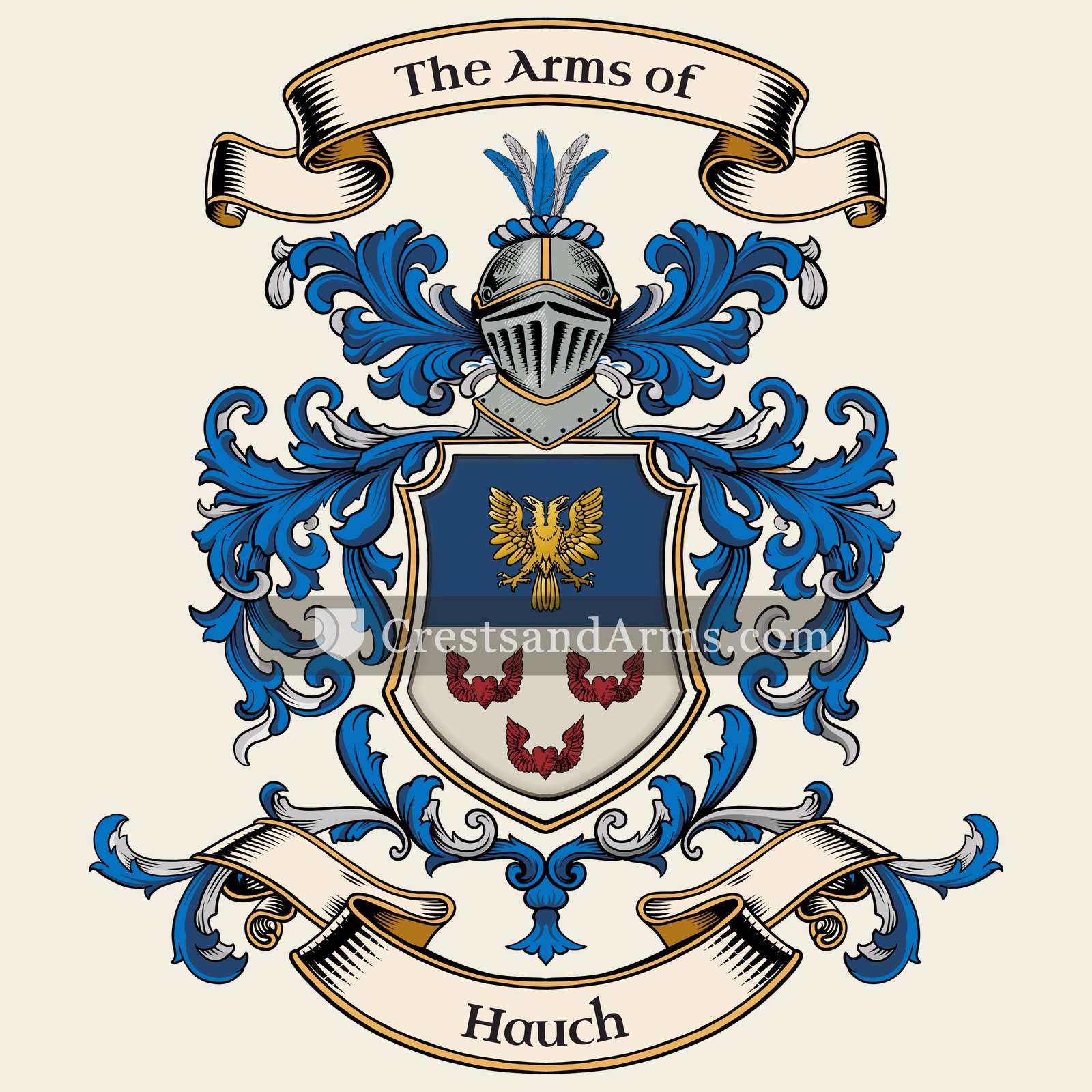


 chiefAuthority, wisdom and dominion
 roseThe seventh son, and beauty with grace
 mulletThe third son, and a divine quality from above