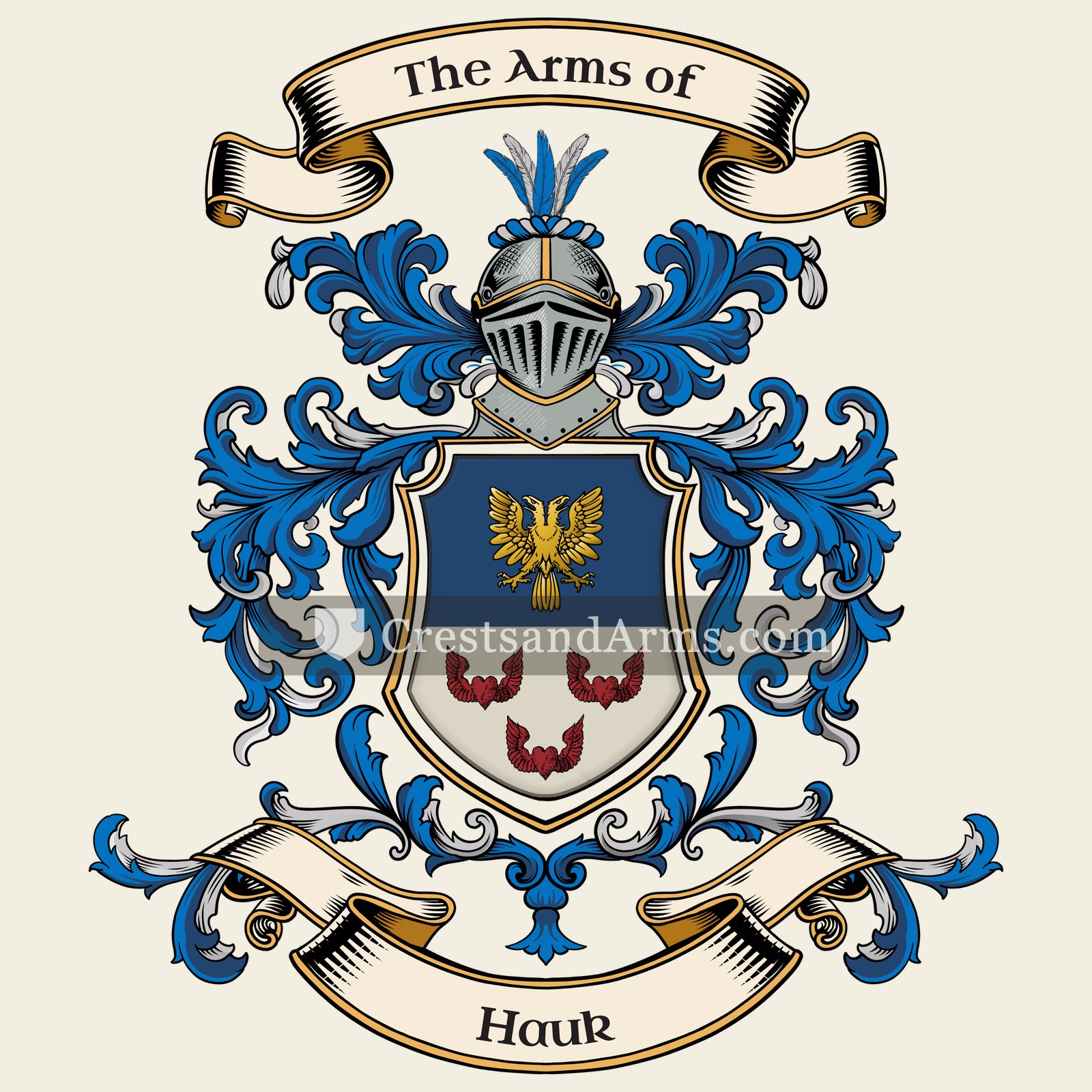
A record of documented arms, meaning and origin, researched for the Hauk family lines. Documented in 2 countries.
Reg. 9916 · Danish, G–I
Coat of Arms & Family Crest Details
Symbols on this shield
eagleNobility, strength and a keen mind
heartSincerity, charity and true affection
Colours
Blue (Azure)Means: Loyalty and truth
Silver (Argent)Means: Peace and sincerity
Gold (Or)Means: Generosity
Red (Gules)Means: Military strength
Historical info
Source
J. B. Rietstap, Armorial Général, Gouda: G. B. van Goor Zonen, 1884–87
Blazon (the actual original written record)
“Coupé: au 1 d'azur à une aigle de profil d'or, le vol étendu; au 2 d'arg. à trois coeurs de gu. Cq. cour. C.: l'aigle.”
Denmarkc. 1722
Where the Hauk Arms Were Recorded
Sjaælland
Map of Denmark showing where the Hauk arms are recorded
The Hauk arms were recorded in Denmark, c. 1722.
Arms such as these were typically recorded in Sjaælland.
Zealand held the Danish court, the crown's offices and Copenhagen itself. Families who served the king kept estates within reach of it, and royal service was the ordinary route to a coat of arms.
This is where the arms were entered in the register. Families often moved to other parts of the country, so the same name can turn up in more than one region.
The body that granted and recorded arms in Denmark in this period.
Frederik IV of Denmark
Sovereign of the period
Frederik IV of Denmark
1699–1730
Reigning in Denmark when the Hauk arms are first recorded.
How Arms Worked in Denmark
Danish heraldry during this period was closely tied to noble status and royal favor rather than being open to all citizens. Arms were typically granted by the monarch to individuals, and these symbols were then shared by all members of the noble house. If a family line died out, the right to use those specific arms ended with them.
Granting authority
The Danish royal chancery held the power to issue and regulate official coats of arms for the kingdom.
How they got arms
Families usually received their arms through a formal royal grant that confirmed their noble status and rights.
Where arms were recorded
These grants were officially recorded in the Danish Royal Chancery records starting in the sixteenth century.
The family's standing
Recorded among the armigerous families of Denmark.
Origin & History of the Hauk Family in Denmark
The name Hauk is deeply rooted in the linguistic traditions of Denmark, where it evolved from the Old Norse word for the hawk. In the early eighteenth century, the family established a clear presence on the island of Zealand, known locally as Sjælland. During this period, the Danish population was primarily rural, and families often lived in small agricultural communities where their names were tied to their surroundings or personal characteristics. By 1722, records indicate that members of the Hauk family were active participants in the local parish life of this region. These early ancestors likely worked as farmers or craftsmen, contributing to the steady development of the Danish countryside during a time of significant social change. Their history reflects the broader movement of families who maintained deep ties to the land while navigating the administrative requirements of the Danish state.
Coat of Arms & Family Crest Details
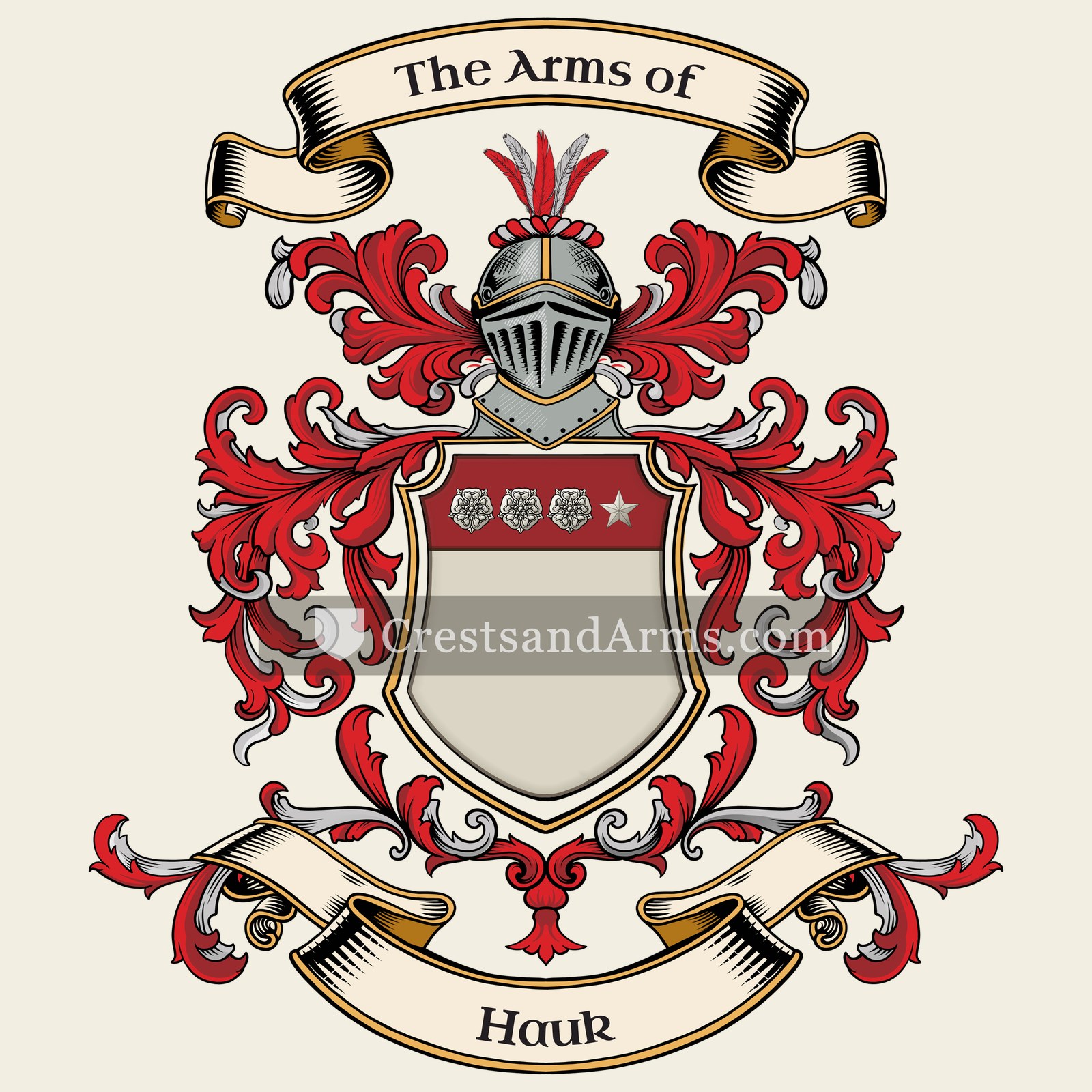
Symbols on this shield
chiefAuthority, wisdom and dominion
roseThe seventh son, and beauty with grace
mulletThe third son, and a divine quality from above
Colours
Silver (Argent)Means: Peace and sincerity
Red (Gules)Means: Military strength
Historical info
Source
J. B. Rietstap, Armorial Général, Gouda: G. B. van Goor Zonen, 1884–87
Blazon (the actual original written record)
“D'arg. à deux pointes accostées de gu., acc. de trois roses de sept feuilles du même, bout. d'or, rangées en chef; au chef de gu., ch. d'une étoile (7) d'arg. Cq. cour. C.: un chamois iss. au nat., entre un vol, de gu. et d'arg. D.: ICH TRAW MEIN STERN.”
BavariaBavaria, c. 1765
Where the Hauk Arms Were Recorded
Bavaria
Map of Germany showing where the Hauk arms are recorded
The Hauk arms were recorded in Bavaria, c. 1765.
Bavaria was a country of old landed families and walled market towns. Estates passed down the same line for centuries, and both the landowners and the leading townsmen kept arms, which is why so many Bavarian names sit in the registers.
This is where the arms were entered in the register. Families often moved to other parts of the country, so the same name can turn up in more than one region.
The body that granted and recorded arms in Germany in this period.
Francis I, Holy Roman Emperor
Sovereign of the period
Francis I, Holy Roman Emperor
1745–1765
Reigning in Denmark when the Hauk arms are first recorded.
How Arms Worked in Germany
In the Holy Roman Empire, coats of arms were often granted to individuals by the Emperor or his representatives. These arms were then passed down through the generations to all legitimate descendants of the original holder. Younger branches of a family usually kept the same shield design without needing to change it, as the arms belonged to the entire lineage.
Granting authority
The Holy Roman Emperor held the sole power to grant new coats of arms throughout his vast imperial territories.
How they got arms
Families typically obtained their coats of arms through a formal imperial grant or by proving their noble status to the authorities.
Where arms were recorded
These grants were officially recorded in the Imperial Chancery registers, which began keeping formal records of such honors during the Middle Ages.
The family's standing
Recorded among the armigerous families of Bavaria.
Origin & History of the Hauk Family in Germany
The surname Hauk originates from the Middle High German word *habech*, which translates to hawk. In the context of early German history, this name was often used as a descriptive nickname for a person who possessed sharp vision or a fierce, predatory nature. By the time members of the Hauk family were documented in Bavaria in 1765, the name had become a stable hereditary surname. During this period, families in the Bavarian region were often rooted in agricultural or trade-based communities, and their lives were closely tied to the local parish records that tracked births, marriages, and deaths. As the family established itself in southern Germany, they likely participated in the local customs and social structures of the Holy Roman Empire, moving through generations as the German language and regional borders evolved around them.
Related Branches & Arms
Root word
Haukr
An Old Norse word referring to a bird of prey or hawk.
This name
HaukA topographic or habitational name derived from the Old Norse term for a hawk.
also spelled
Hauck
Howk
Hauk
Documented Sources
J. B. Rietstap, Armorial Général, Gouda: G. B. van Goor Zonen, 1884–87
The Danish National Archives (Rigsarkivet), Census records and parish registers (Kirkebøger)
Nielsen, O., Olddanske personnavne, 1883
Kousgård Sørensen, John, Danske personnavne, 1997
Digital archive packCoat of arms PNG, gold border print PDF, vector SVG and the certificate of authenticity. Sent to your email in minutes.


 eagleNobility, strength and a keen mind
 heartSincerity, charity and true affection
 eagleNobility, strength and a keen mind
 heartSincerity, charity and true affection

 chiefAuthority, wisdom and dominion
 roseThe seventh son, and beauty with grace
 mulletThe third son, and a divine quality from above