A record of documented arms, meaning and origin, researched for the Hauser family lines. Documented in 3 countries.
Reg. 4923 · German, G–I
Coat of Arms & Family Crest Details
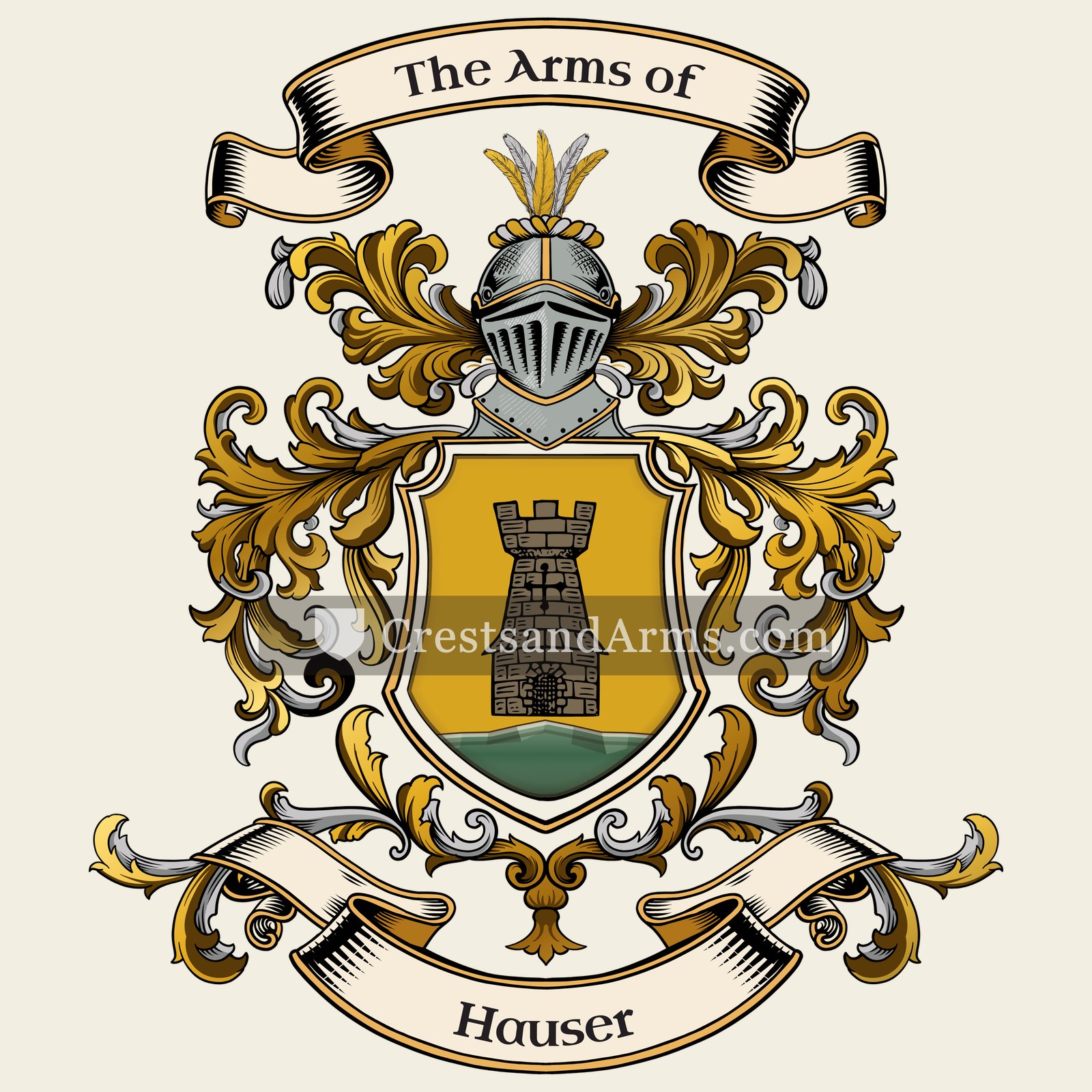
Symbols on this shield
mountThe ground held, and steadfastness upon it
towerGrandeur and solidity, and a stronghold defended
Colours
Gold (Or)Means: Generosity
Green (Vert)Means: Hope
Historical info
Source
J. B. Rietstap, Armorial Général, Gouda: G. B. van Goor Zonen, 1884–87
Blazon (the actual original written record)
“D'or à une maisonnette carrée au nat., essorée de gu., posée sur un tertre de sin. Cq. cour. C.: un moulin à vent en forme de maisonnette carrée, essorée de gu., les ailes d'arg. L. d'or et de sa.”
Germanyc. 1765
Where the Hauser Arms Were Recorded
Bavaria
Map of Germany showing where the Hauser arms are recorded
The Hauser arms were recorded in Germany, c. 1765.
Arms such as these were typically recorded in Bavaria.
Bavaria was a country of old landed families and walled market towns. Estates passed down the same line for centuries, and both the landowners and the leading townsmen kept arms, which is why so many Bavarian names sit in the registers.
This is where the arms were entered in the register. Families often moved to other parts of the country, so the same name can turn up in more than one region.
The body that granted and recorded arms in Germany in this period.
Francis I, Holy Roman Emperor
Sovereign of the period
Francis I, Holy Roman Emperor
1745–1765
Reigning in Germany when the Hauser arms are first recorded.
How Arms Worked in Germany
In the Holy Roman Empire, coats of arms were often granted to individuals by the Emperor or his representatives. These arms were then passed down through the generations to all legitimate descendants of the original holder. Younger branches of a family usually kept the same shield design without needing to change it, as the arms belonged to the entire lineage.
Granting authority
The Holy Roman Emperor held the sole power to grant new coats of arms throughout his vast imperial territories.
How they got arms
Families typically obtained their coats of arms through a formal imperial grant or by proving their noble status to the authorities.
Where arms were recorded
These grants were officially recorded in the Imperial Chancery registers, which began keeping formal records of such honors during the Middle Ages.
The family's standing
Recorded among the armigerous families of Germany.
Origin & History of the Hauser Family in Germany
The surname Hauser is a classic example of a topographic name, which means it was originally used to identify people based on where they lived. In the German language, the word "Haus" means house, and the suffix "er" denotes a person who dwells in or manages a specific place. During the Middle Ages, this name was often given to someone who lived in a prominent house or served as a caretaker for a large estate. By the time records confirm the presence of the Hauser family in Bavaria in 1765, the name had already been established for several centuries across southern Germany and the Alpine regions. Families with this name were typically rooted in rural communities where they worked as farmers, tradespeople, or local administrators. Because the name describes a common living situation, it emerged independently in many different towns, meaning that not all Hausers are descended from a single ancestor. Instead, the name grew alongside the development of German village life, reflecting the importance of the household as the center of social and economic activity in the eighteenth century.
Coat of Arms & Family Crest Details
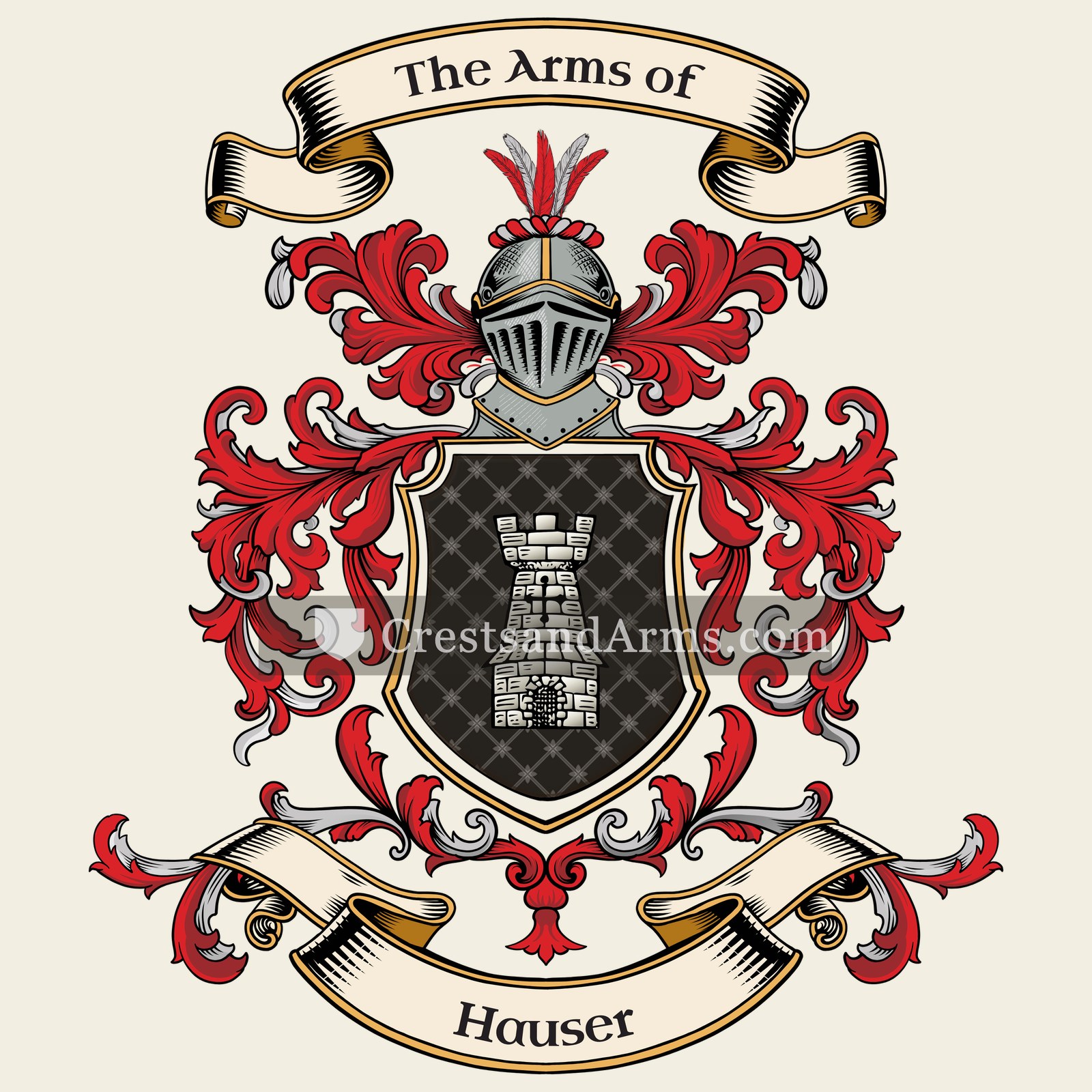
Symbols on this shield
towerGrandeur and solidity, and a stronghold defended
Colours
Black (Sable)Means: Constancy
Silver (Argent)Means: Peace and sincerity
Historical info
Source
J. B. Rietstap, Armorial Général, Gouda: G. B. van Goor Zonen, 1884–87
Blazon (the actual original written record)
“De sa. à une maison d'arg., es-”
AustriaVienne, c. 1772
Where the Hauser Arms Were Recorded
Vienne
Map of Austria showing where the Hauser arms are recorded
The Hauser arms were recorded in Vienne, c. 1772.
This is where the arms were entered in the register. Families often moved to other parts of the country, so the same name can turn up in more than one region.
Region
Vienne
Town
Vienne
First recorded
1772
Granting Authority for the Hauser Arms
Imperial and Royal chancery
Sodacan · CC BY-SA 3.0
The body that granted and recorded arms in Austria in this period.
Joseph II, Holy Roman Emperor
Sovereign of the period
Joseph II, Holy Roman Emperor
1765–1790
Reigning in Germany when the Hauser arms are first recorded.
How Arms Worked in Austria
Austrian coats of arms were often linked directly to noble titles granted by the Emperor. These symbols belonged to the entire family line rather than just one individual. When a family grew, new branches kept the original design without needing to change it. This system allowed all members of a noble house to share the same identity across many generations.
Granting authority
The Imperial and Royal chancery managed all heraldic matters and controlled the official granting of arms throughout the Austrian lands.
How they got arms
Families typically received their arms through a formal imperial decree that often accompanied the elevation of a person to noble status.
Where arms were recorded
Official records of these grants were kept in the Imperial Register of Nobility which began its formal documentation process in 1453.
The family's standing
Recorded among the armigerous families of Austria.
Origin & History of the Hauser Family in Austria
The surname Hauser is a topographical name that originated in the German-speaking regions of Central Europe, specifically identifying individuals who lived in or near a house of notable importance. In the context of Austria, the name often referred to someone who resided on a farmstead or a significant dwelling within a village. By the time the family was established in Vienna in 1772, the name had become well-integrated into the social fabric of the Habsburg Empire. During this era, Vienna served as a bustling center of administration and trade, attracting families from across the provinces to seek opportunities in the imperial capital. The presence of the Hauser family in city records during the late 18th century suggests they were part of the growing urban middle class that supported the city’s expansion. As the family navigated life in Vienna, their name served as a link to their rural roots while they adapted to the professional and civic demands of a major European city.
Coat of Arms & Family Crest Details
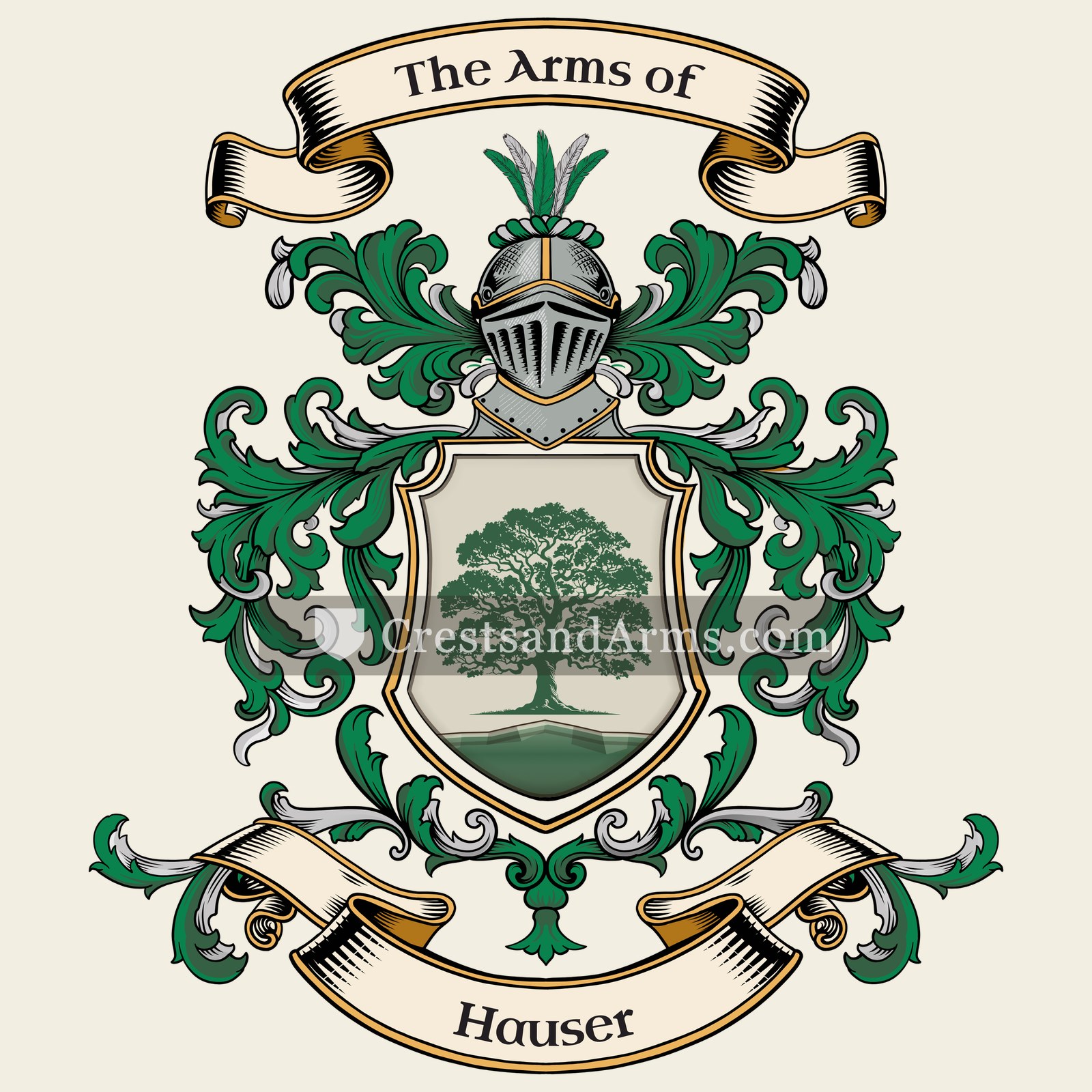
Symbols on this shield
mountThe ground held, and steadfastness upon it
treeLife, endurance and deep roots
Colours
Silver (Argent)Means: Peace and sincerity
Green (Vert)Means: Hope
Historical info
Source
J. B. Rietstap, Armorial Général, Gouda: G. B. van Goor Zonen, 1884–87
Blazon (the actual original written record)
“D'arg. à un rosier de sin sur un tertre du même, fleuri de trois pièces de gu. Cq. cour. C.: un coeur de gu., entre un vol du même. L. d'arg. et de gu.”
SwitzerlandBâle, c. 1745
Where the Hauser Arms Were Recorded
Bâle
Map of Switzerland showing where the Hauser arms are recorded
The Hauser arms were recorded in Bâle, c. 1745.
This is where the arms were entered in the register. Families often moved to other parts of the country, so the same name can turn up in more than one region.
The body that granted and recorded arms in Switzerland in this period.
How Arms Worked in Switzerland
In Switzerland, coats of arms were not restricted to the nobility and were often adopted by common citizens and families. These symbols were passed down through generations to show family identity. When branches of a family grew, they often changed small details of the design to distinguish their own line from the original group.
Granting authority
Cantonal and civic authorities managed the use of coats of arms within their specific regions and local jurisdictions.
How they got arms
Families typically assumed their own coats of arms based on local custom rather than receiving them from a central monarch.
Where arms were recorded
Arms were recorded in various cantonal and civic registers starting from the fourteenth century throughout the Swiss region.
The family's standing
Recorded among the armigerous families of Switzerland.
Origin & History of the Hauser Family in Switzerland
The surname Hauser is deeply rooted in the German-speaking regions of Europe, where it originally functioned as a descriptive term for someone who lived in a house or served as a householder. By the time members of the family were documented in Basel in 1745, the name had already become a well-established identifier for families of status and local influence. In the context of 18th-century Switzerland, the Hauser family likely participated in the vibrant urban life of Basel, which was then a major center for trade, printing, and banking. Families with this name often held roles within the local guilds or civic administration, reflecting the importance of settled residency in a city defined by its strict social hierarchies. As the family grew, they became part of the long-standing Swiss tradition of local citizenship, where one’s identity was tied closely to the specific town or canton where their ancestors had first settled and established their livelihood.
Related Branches & Arms
Root word
Hus
A dwelling, house, or shelter.
This name
HauserRefers to someone who lived in or near a house, or a householder.
also spelled
Hausere
Hauserr
Haussler
Howzer
Documented Sources
J. B. Rietstap, Armorial Général, Gouda: G. B. van Goor Zonen, 1884–87
Bahlow, Hans, Deutsches Namenlexikon: Familien- und Vornamen nach Ursprung und Sinn erklärt, 1967
Heintze, Albert, Die deutschen Familiennamen: geschichtlich, geographisch, sprachlich, 1903


 mountThe ground held, and steadfastness upon it
 towerGrandeur and solidity, and a stronghold defended
 mountThe ground held, and steadfastness upon it
 towerGrandeur and solidity, and a stronghold defended


 treeLife, endurance and deep roots