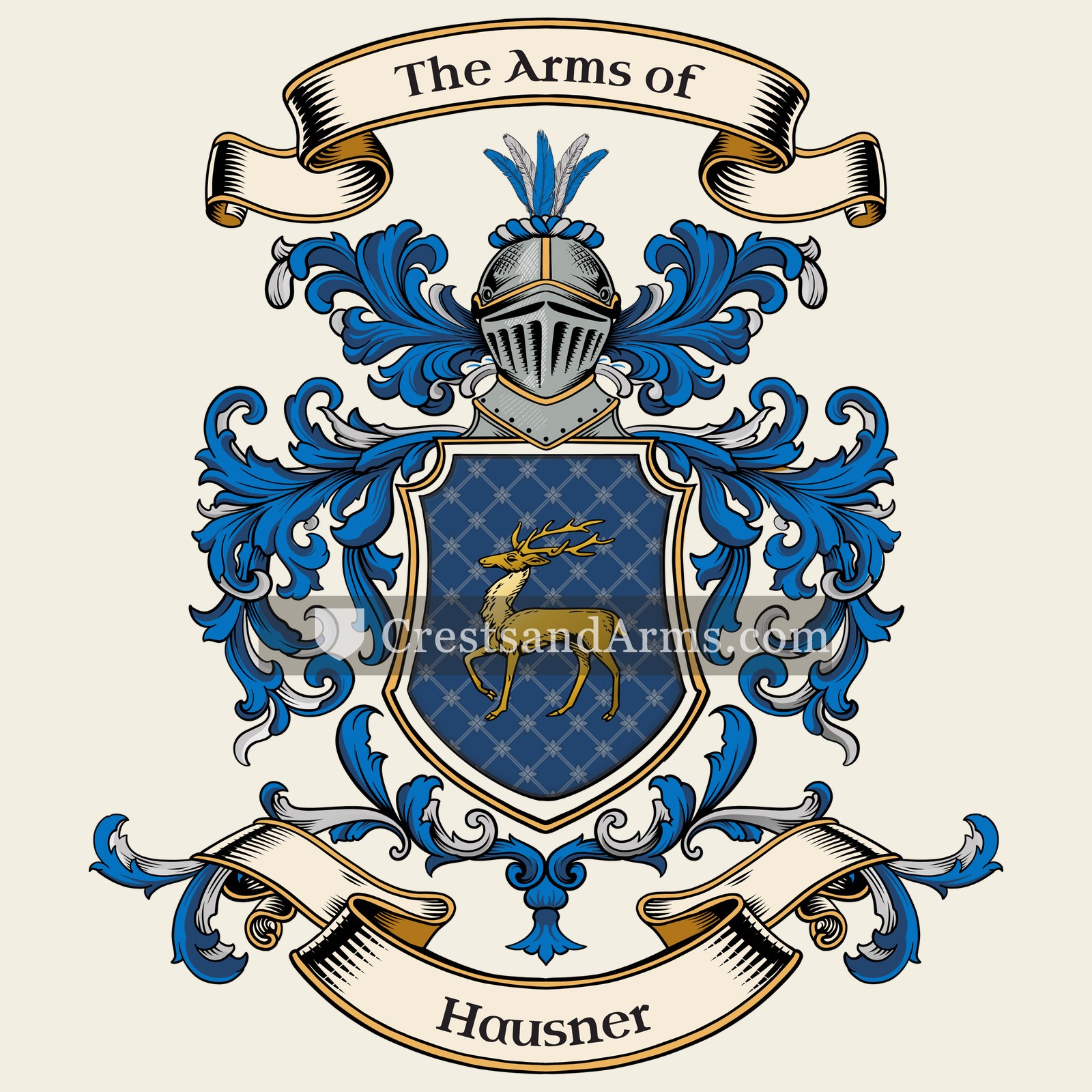
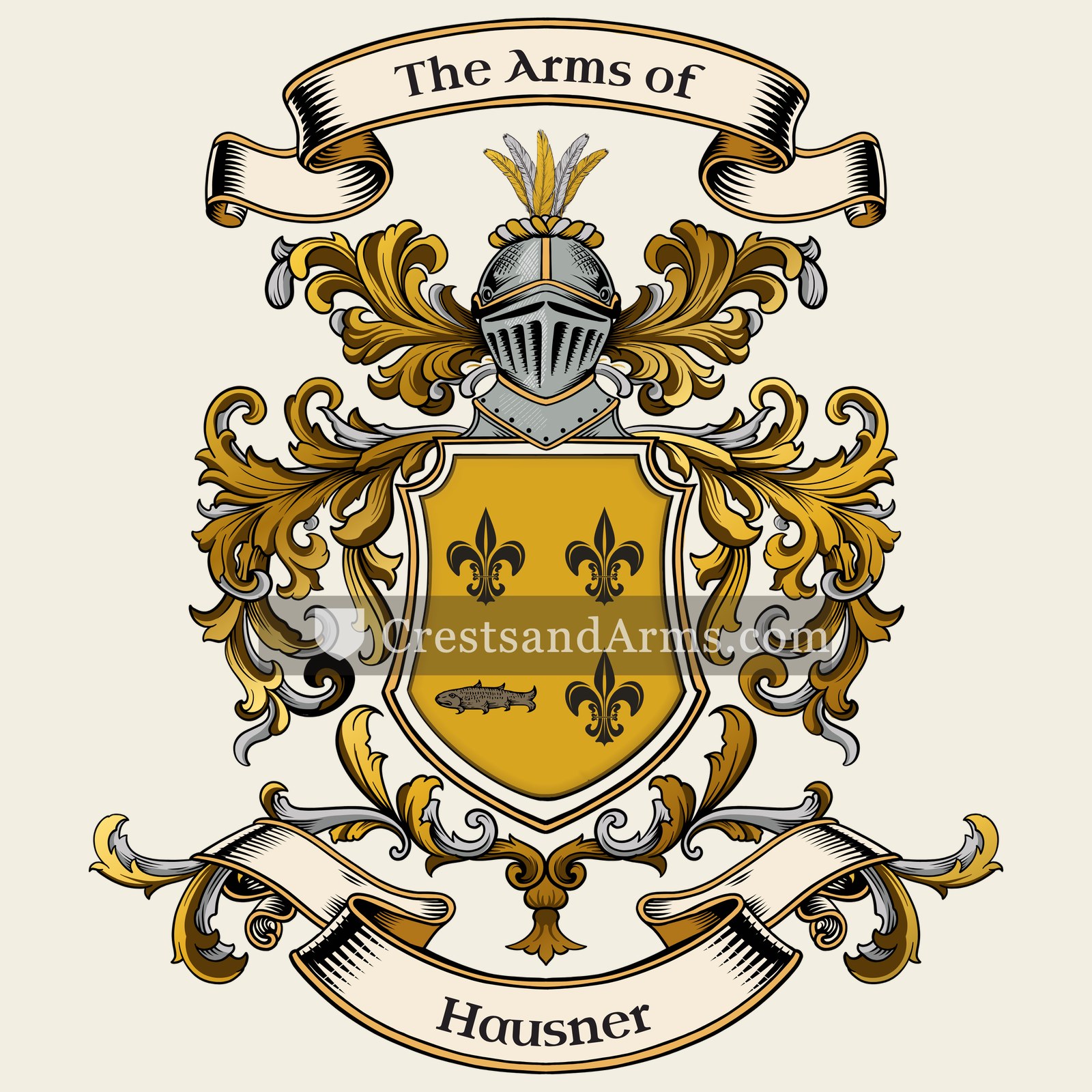
A record of documented arms, meaning and origin, researched for the Hausner family lines. Documented in 2 countries.
Reg. 2525 · German, G–I
Coat of Arms & Family Crest Details
Symbols on this shield
stagPeace and harmony, and one who will not fight unprovoked
Colours
Blue (Azure)Means: Loyalty and truth
Gold (Or)Means: Generosity
Historical info
Source
J. B. Rietstap, Armorial Général, Gouda: G. B. van Goor Zonen, 1884–87
Blazon (the actual original written record)
“D'azur à une biche pass. d'or. C.: la biche, iss.”
FranconiaFranconia, c. 1765
Where the Hausner Arms Were Recorded
Franconia
Map of Germany showing where the Hausner arms are recorded
The Hausner arms were recorded in Franconia, c. 1765.
Franconia was a patchwork of small territories in central Germany, full of minor landowners and prosperous market towns. So many separate households held land there that the region produced a great many coats of arms.
This is where the arms were entered in the register. Families often moved to other parts of the country, so the same name can turn up in more than one region.
The body that granted and recorded arms in Germany in this period.
Francis I, Holy Roman Emperor
Sovereign of the period
Francis I, Holy Roman Emperor
1745–1765
Reigning in Germany when the Hausner arms are first recorded.
How Arms Worked in Germany
In the Holy Roman Empire, coats of arms were often granted to individuals by the Emperor or his representatives. These arms were then passed down through the generations to all legitimate descendants of the original holder. Younger branches of a family usually kept the same shield design without needing to change it, as the arms belonged to the entire lineage.
Granting authority
The Holy Roman Emperor held the sole power to grant new coats of arms throughout his vast imperial territories.
How they got arms
Families typically obtained their coats of arms through a formal imperial grant or by proving their noble status to the authorities.
Where arms were recorded
These grants were officially recorded in the Imperial Chancery registers, which began keeping formal records of such honors during the Middle Ages.
The family's standing
Recorded among the armigerous families of Franconia.
Origin & History of the Hausner Family in Germany
The surname Hausner is a topographic name that originated in the German-speaking regions of Central Europe. It was historically used to identify someone who lived in or managed a specific house, often serving as a term for a householder or a caretaker of a property. By the mid-18th century, records confirm that families bearing this name were well-established in the region of Franconia. During this era, Franconia was a collection of territories within the Holy Roman Empire, and families like the Hausners were typically tied to the land through agricultural work or local trade. As the name spread across the German states, it became a marker of those who held a settled position within their local village communities. This history reflects the transition of German surnames from simple descriptions of a person's home life into permanent family identifiers that were passed down through generations.
Coat of Arms & Family Crest Details
Symbols on this shield
fleur de lisPurity, light, and the sixth son
fishA true and generous mind, and Christian faith
Colours
Gold (Or)Means: Generosity
Historical info
Source
J. B. Rietstap, Armorial Général, Gouda: G. B. van Goor Zonen, 1884–87
Blazon (the actual original written record)
“Tiercé en bande: au 1 taillé d'or sur sa., à deux fleurs-de-lis de l'un à l'autre, posées en barres; au 2 d'arg. à un poisson nageant au nat., posé en bande; au 3 taillé d'or sur sa., à une fleur de lis, posée en barre, de l'un à l'autre. Cq. cour. C.: un vol à l'antique, aux armes de l'écu. L. d'or et de sa.”
StyriaStyria, c. 1772
Where the Hausner Arms Were Recorded
Styria
Map of Austria showing where the Hausner arms are recorded
The Hausner arms were recorded in Styria, c. 1772.
Styria was mountain and forest country in southern Austria, with iron in its hills. Mining and landholding both made money, and families who held either kind of property took arms to seal their papers with.
This is where the arms were entered in the register. Families often moved to other parts of the country, so the same name can turn up in more than one region.
Region
Styria
First recorded
1772
Granting Authority for the Hausner Arms
Imperial and Royal chancery
Sodacan · CC BY-SA 3.0
The body that granted and recorded arms in Austria in this period.
Joseph II, Holy Roman Emperor
Sovereign of the period
Joseph II, Holy Roman Emperor
1765–1790
Reigning in Germany when the Hausner arms are first recorded.
How Arms Worked in Austria
Austrian coats of arms were often linked directly to noble titles granted by the Emperor. These symbols belonged to the entire family line rather than just one individual. When a family grew, new branches kept the original design without needing to change it. This system allowed all members of a noble house to share the same identity across many generations.
Granting authority
The Imperial and Royal chancery managed all heraldic matters and controlled the official granting of arms throughout the Austrian lands.
How they got arms
Families typically received their arms through a formal imperial decree that often accompanied the elevation of a person to noble status.
Where arms were recorded
Official records of these grants were kept in the Imperial Register of Nobility which began its formal documentation process in 1453.
The family's standing
Recorded among the armigerous families of Styria.
Origin & History of the Hausner Family in Austria
The surname Hausner is a topographic name that originated in the German-speaking regions of Central Europe, specifically identifying individuals who lived in or managed a house, often serving as a caretaker or a tenant. By the late 18th century, the family had established a notable presence in the Austrian region of Styria. Historical records confirm that members of the Hausner family were settled in this area by 1772, likely working within the agricultural or administrative systems common to the rural landscapes of the Austrian Empire. During this period, families often took their names from their specific dwelling or their role within a local village community. As the family moved through the Styrian countryside, they became integrated into the local social fabric, contributing to the regional development of the area during a time of significant transition in Austrian history.
Related Branches & Arms
Root word
Hus
A dwelling, house, or shelter.
This name
HausnerAn occupational surname for someone who lived in or worked at a house.
also spelled
Hausnere
Hausnerr
Howzner
Documented Sources
J. B. Rietstap, Armorial Général, Gouda: G. B. van Goor Zonen, 1884–87
Bahlow, Hans. Deutsches Namenlexikon: Familien- und Vornamen nach Ursprung und Sinn erklärt. 1967
Gottschald, Max. Deutsche Namenkunde: Unsere Familiennamen nach ihrer Entstehung und Bedeutung. 1971
State Archive of Bamberg (Staatsarchiv Bamberg), Standesamtliche Unterlagen und Kirchenbücher der Region Franken
Digital archive packCoat of arms PNG, gold border print PDF, vector SVG and the certificate of authenticity. Sent to your email in minutes.


 stagPeace and harmony, and one who will not fight unprovoked
 stagPeace and harmony, and one who will not fight unprovoked

 fleur de lisPurity, light, and the sixth son
 fishA true and generous mind, and Christian faith