Map of France showing where the Haynes arms are recorded
The Haynes arms were recorded in Etats-Unis, c. 1725.
Arms such as these were typically recorded in Bretagne.
More families held coats of arms in Bretagne than anywhere else in France. The land was divided into many small estates rather than a few large ones, so far more households counted as gentry, and each needed a shield of its own to be told apart.
This is where the arms were entered in the register. Families often moved to other parts of the country, so the same name can turn up in more than one region.
The body that granted and recorded arms in France in this period.
Louis XV of France
Sovereign of the period
Louis XV of France
1715–1774
Reigning in France when the Haynes arms are first recorded.
How Arms Worked in France
In France, a coat of arms was a mark of honor that passed down through the male line to all legitimate descendants. Families often used the same shield without changes to show their shared heritage. If a branch wanted to stand out, they could add a small mark to their shield to show their specific place in the family tree.
Granting authority
The Juge d'armes de France acted as the official authority that regulated and verified coats of arms across the country.
How they got arms
Families typically inherited their arms from ancestors, though they could also receive them through royal grants or by proving their noble status.
Where arms were recorded
Coats of arms were officially recorded in the Armorial Général de France, which began its main collection in the year 1696.
The family's standing
Recorded among the armigerous families of France.
Origin & History of the Haynes Family in France
The history of the Haynes family in France is deeply rooted in the rugged landscape of Bretagne, where records confirm their presence by 1725. During this era, families in the region were often tied to the land through agricultural traditions and local parish life. The name likely evolved as a phonetic adaptation of regional dialects, reflecting the unique linguistic blend of the Breton people. Living in a province known for its distinct cultural identity and maritime connections, the early Haynes family members were part of a community that balanced inland farming with trade along the coast. Their survival and growth in this environment suggest a resilient lineage that adapted to the social and economic shifts of eighteenth-century France. By maintaining their presence in local parish registers, these ancestors ensured that their family name became a lasting part of the historical fabric of the region.
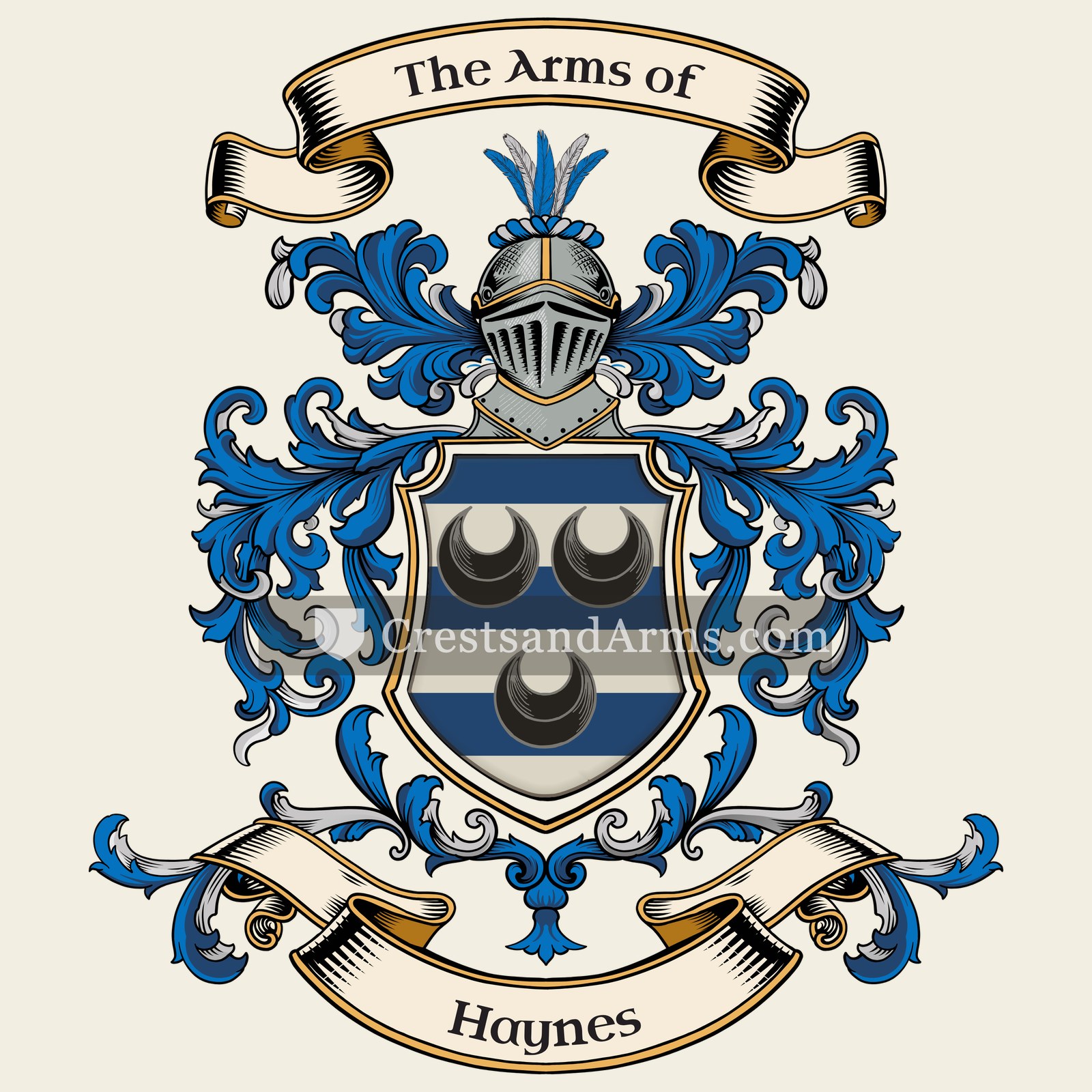
Coat of Arms & Family Crest Details
Symbols on this shield
crescentHonour by the sovereign, and the second son
Colours
Silver (Argent)Means: Peace and sincerity
Blue (Azure)Means: Loyalty and truth
Historical info
Source
Sir Bernard Burke, The General Armory of England, Scotland, Ireland and Wales, London: Harrison & Sons, 1884
Blazon (the actual original written record)
“Ar. three crescents barry wavy az. and gu”
MiddlesexHackney · Middlesex, c. 1578
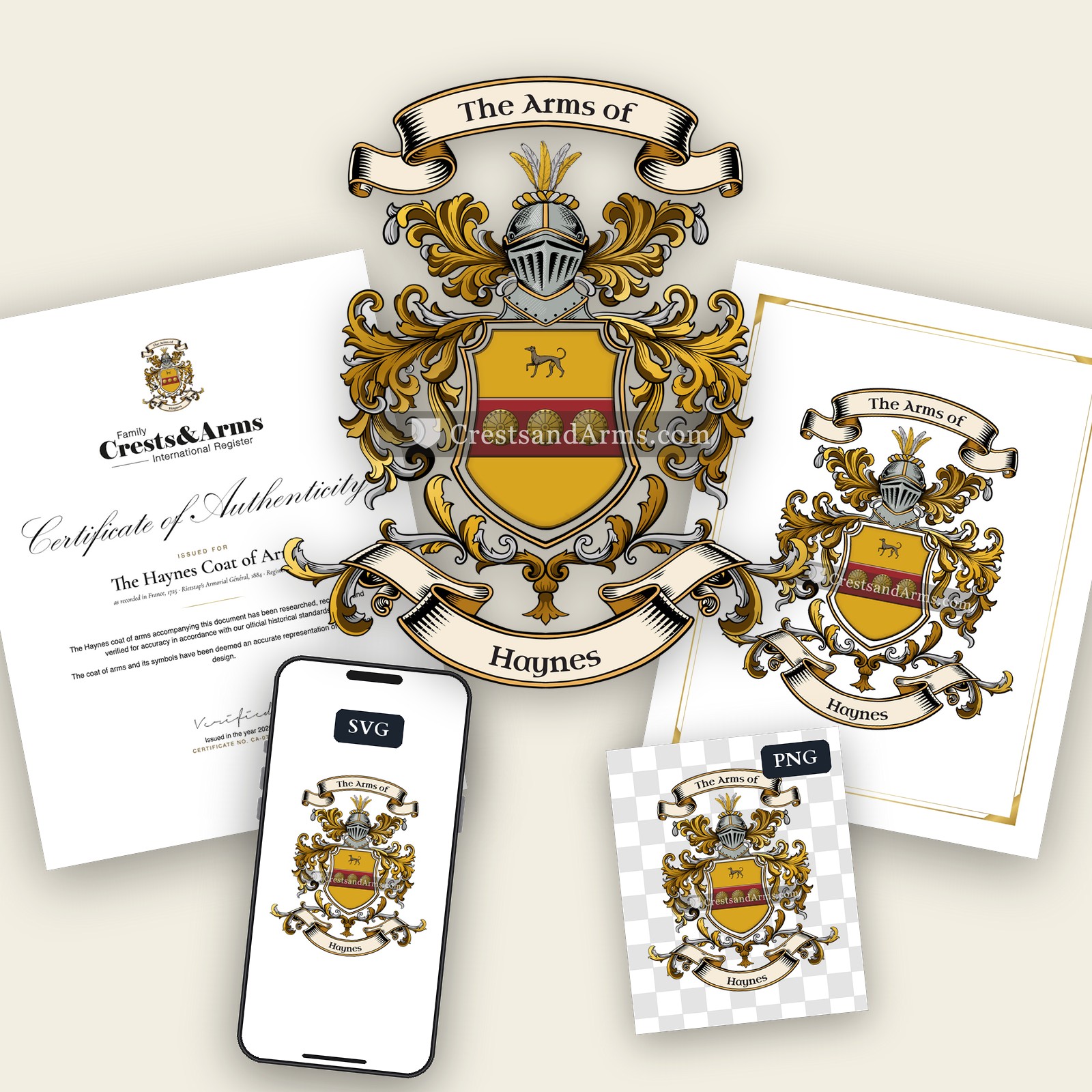
Digital archive packCoat of arms PNG, gold border print PDF, vector SVG and the certificate of authenticity. Sent to your email in minutes.
Map of England showing where the Haynes arms are recorded
The Haynes arms were recorded in Middlesex, c. 1578.
Middlesex was the county around London, and City money flowed straight into it. Merchants and officials bought estates within reach of the capital, and a new estate brought a coat of arms with it.
This is where the arms were entered in the register. Families often moved to other parts of the country, so the same name can turn up in more than one region.
The body that granted and recorded arms in England in this period.
Elizabeth I of England
Sovereign of the period
Elizabeth I of England
1558–1603
Reigning in France when the Haynes arms are first recorded.
How Arms Worked in England
English heraldry allowed arms to be shared by all legitimate descendants of the original owner. These symbols were treated as personal property that moved through the generations to all children. While the eldest son kept the original design, other family members could use the same shield without needing to change it or register their own unique versions.
Granting authority
The College of Arms in London has regulated the use of coats of arms throughout England and Wales since 1484.
How they got arms
Families typically obtained their coats of arms through a formal grant from the Crown or by proving their ancient right to them.
Where arms were recorded
All official coats of arms are recorded in the registers kept at the College of Arms, which date back to the fifteenth century.
The family's standing
Recorded among the armigerous families of Middlesex.
Origin & History of the Haynes Family in England
The surname Haynes has deep roots in England, evolving from a descriptive term used to identify individuals based on their occupation or residence. Many historians believe the name originated as a variation of "hayward," which was a title for a local official responsible for maintaining fences and protecting crops from wandering livestock. By the late sixteenth century, the family had established a clear presence in the county of Middlesex. Records from 1578 confirm that members of the Haynes family were living and working in this region during the reign of Queen Elizabeth I. This period was a time of significant social change in England, and families like the Haynes were often involved in local agriculture or trade. As the name spread across different English counties, it became a permanent fixture of the local population, reflecting the long history of families who helped build the rural and urban communities of the era.
Haynes Meaning & Related Branches
Root word
Hagen
A Germanic word meaning an enclosure, hedge, or protected area.
This name
HaynesDerived from a topographic name for someone who lived near a fenced or hedged enclosure.
also spelled
Haines
Hayns
Hanes
Heynes
Haine
Related arms
Heynessame arms
Eynessimilar arms
Hainessimilar arms
Hainevariant spelling
Documented Sources
J. B. Rietstap, Armorial Général, Gouda: G. B. van Goor Zonen, 1884–87
Archives départementales du Morbihan, Registres paroissiaux et d'état civil
Archives départementales du Finistère, Collection de la série E, État civil
Gautier, Hervé, Histoire de la Bretagne, 1993
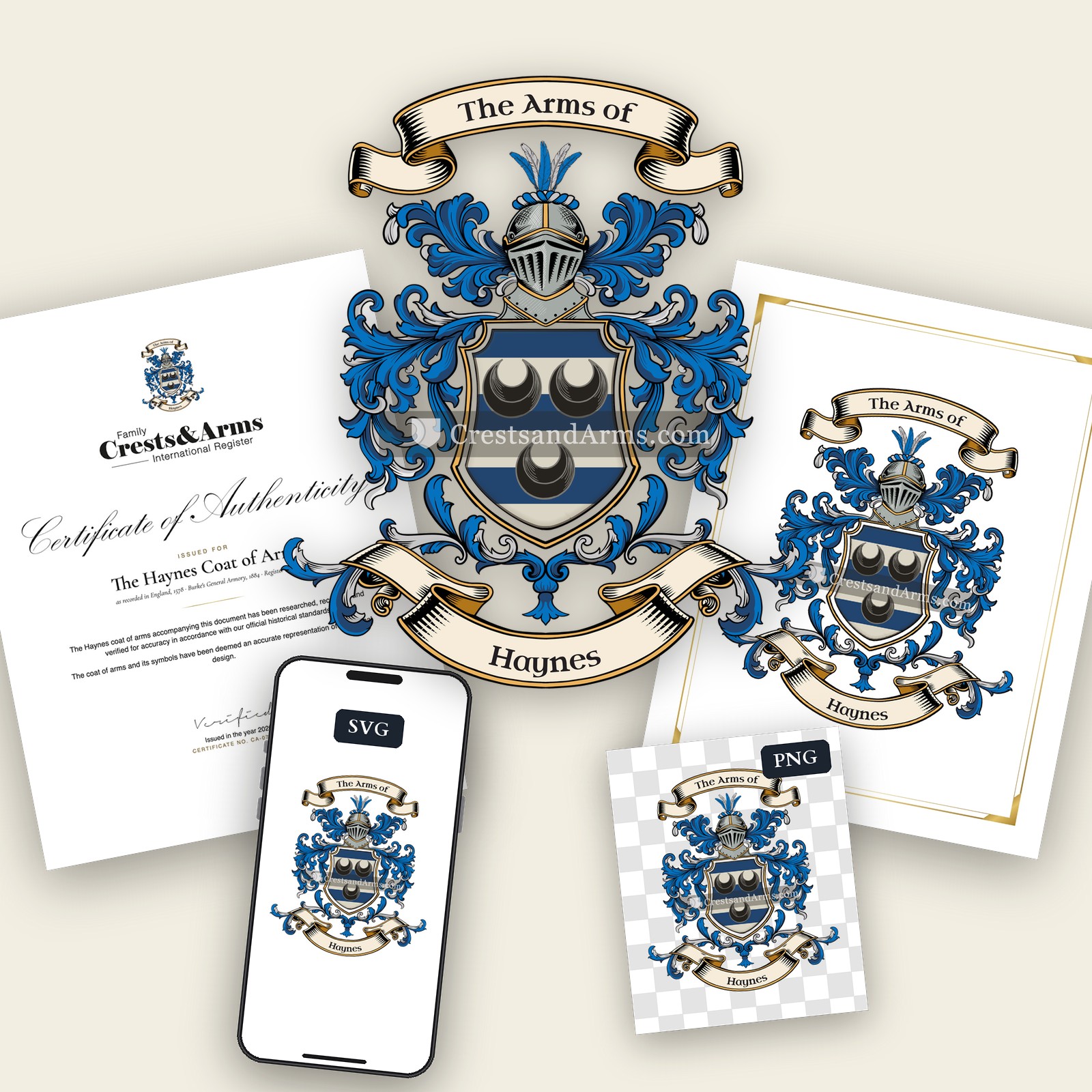
Digital archive packCoat of arms PNG, gold border print PDF, vector SVG and the certificate of authenticity. Sent to your email in minutes.


 fessThe military belt, and readiness to serve
 roundelA coin, and one who has been to the crusades
 greyhoundCourage, vigilance and loyalty
 fessThe military belt, and readiness to serve
 roundelA coin, and one who has been to the crusades
 greyhoundCourage, vigilance and loyalty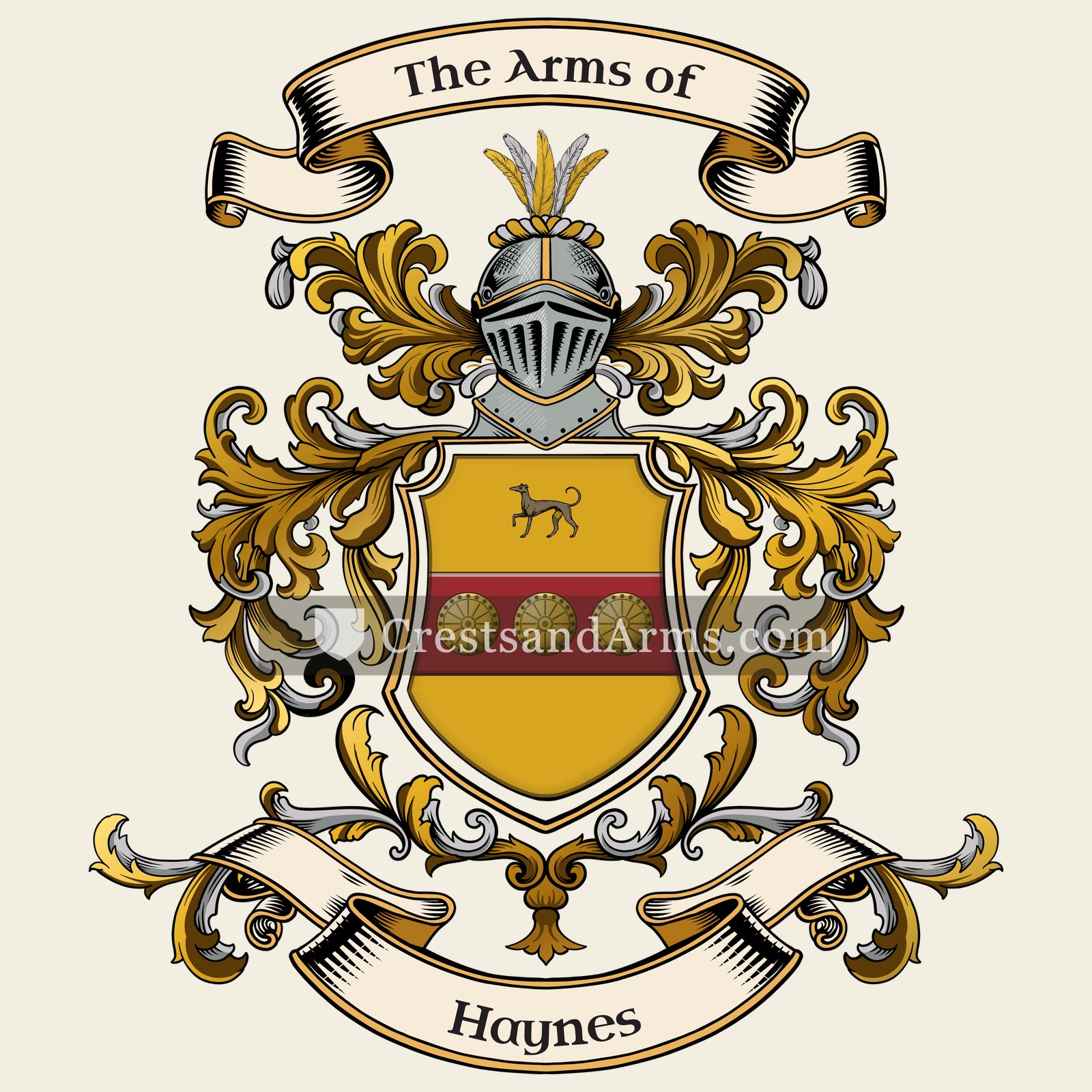


 crescentHonour by the sovereign, and the second son