A record of documented arms, meaning and origin, researched for the Haze family lines. Documented in 2 countries.
Reg. 3058 · Danish, G–I
Coat of Arms & Family Crest Details
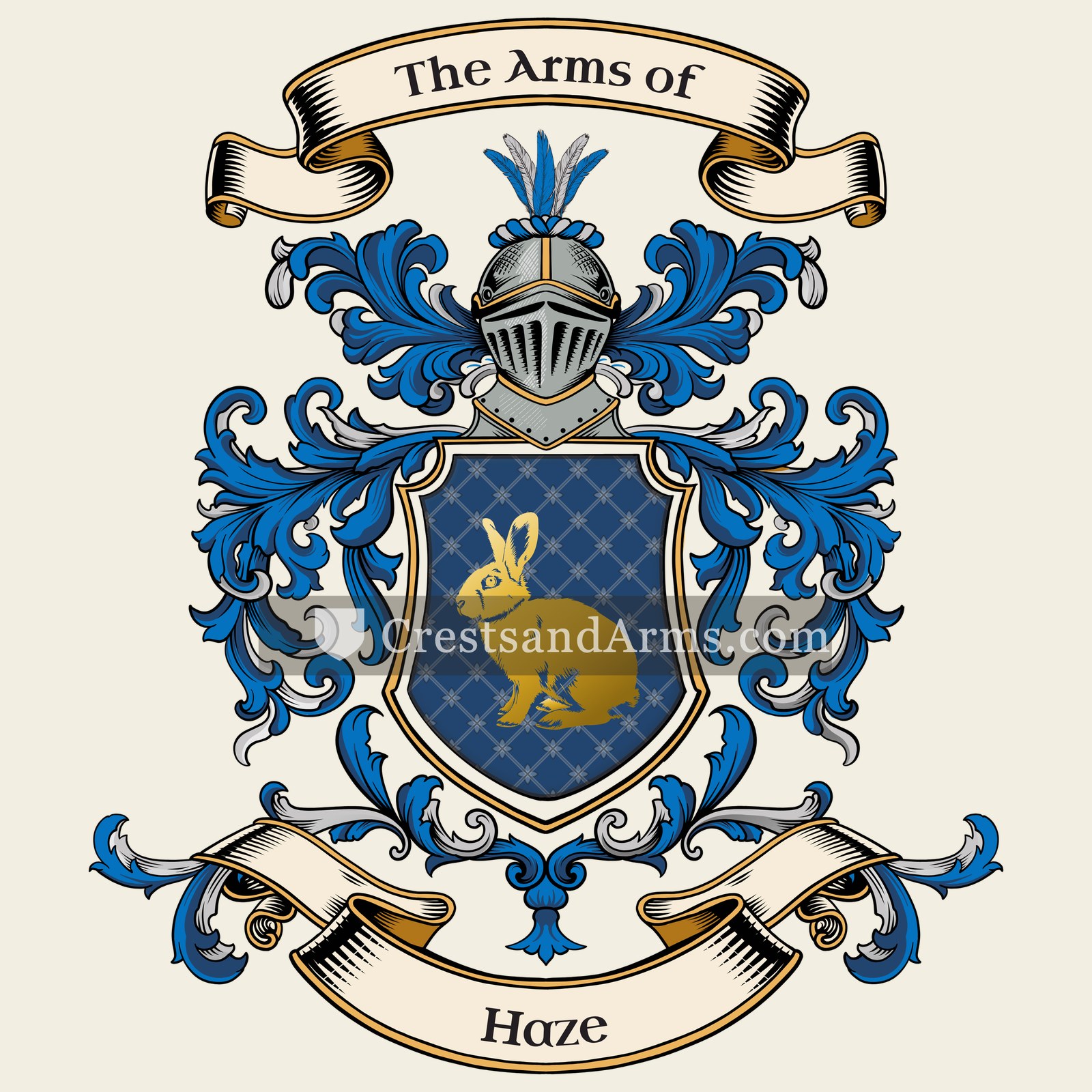
Symbols on this shield
rabbitOne who lives peaceably and well
Colours
Blue (Azure)Means: Loyalty and truth
Gold (Or)Means: Generosity
Historical info
Source
J. B. Rietstap, Armorial Général, Gouda: G. B. van Goor Zonen, 1884–87
Blazon (the actual original written record)
“D'azur à un lièvre courant d'or. C.: cinq pl. d'aut.: d'azur, d'or, d'arg., d'azur et d'or.”
Denmarkc. 1722
Where the Haze Arms Were Recorded
Sjaælland
Map of Denmark showing where the Haze arms are recorded
The Haze arms were recorded in Denmark, c. 1722.
Arms such as these were typically recorded in Sjaælland.
Zealand held the Danish court, the crown's offices and Copenhagen itself. Families who served the king kept estates within reach of it, and royal service was the ordinary route to a coat of arms.
This is where the arms were entered in the register. Families often moved to other parts of the country, so the same name can turn up in more than one region.
The body that granted and recorded arms in Denmark in this period.
Frederik IV of Denmark
Sovereign of the period
Frederik IV of Denmark
1699–1730
Reigning in Denmark when the Haze arms are first recorded.
How Arms Worked in Denmark
Danish heraldry during this period was closely tied to noble status and royal favor rather than being open to all citizens. Arms were typically granted by the monarch to individuals, and these symbols were then shared by all members of the noble house. If a family line died out, the right to use those specific arms ended with them.
Granting authority
The Danish royal chancery held the power to issue and regulate official coats of arms for the kingdom.
How they got arms
Families usually received their arms through a formal royal grant that confirmed their noble status and rights.
Where arms were recorded
These grants were officially recorded in the Danish Royal Chancery records starting in the sixteenth century.
The family's standing
Recorded among the armigerous families of Denmark.
Origin & History of the Haze Family in Denmark
The history of the Haze family in Denmark is deeply rooted in the landscape of the island of Sjaelland. By the year 1722, records confirm that family members were established in this region, which served as the cultural and political heart of the Danish kingdom. During this period, the name was likely shaped by the local linguistic traditions of the Danish language, where surnames often evolved from geographical markers or descriptions of a person's trade. Living on Sjaelland meant the family was part of a society transitioning through significant agricultural and social changes under the absolute monarchy of the time. While the name Haze may have been influenced by the phonetic patterns of the local dialects, it remained a distinct identifier for a family navigating the rural and growing urban environments of eighteenth-century Denmark. This early presence on the island suggests that the family was well-integrated into the local community, participating in the daily life and historical development of the Danish heartland.
Coat of Arms & Family Crest Details
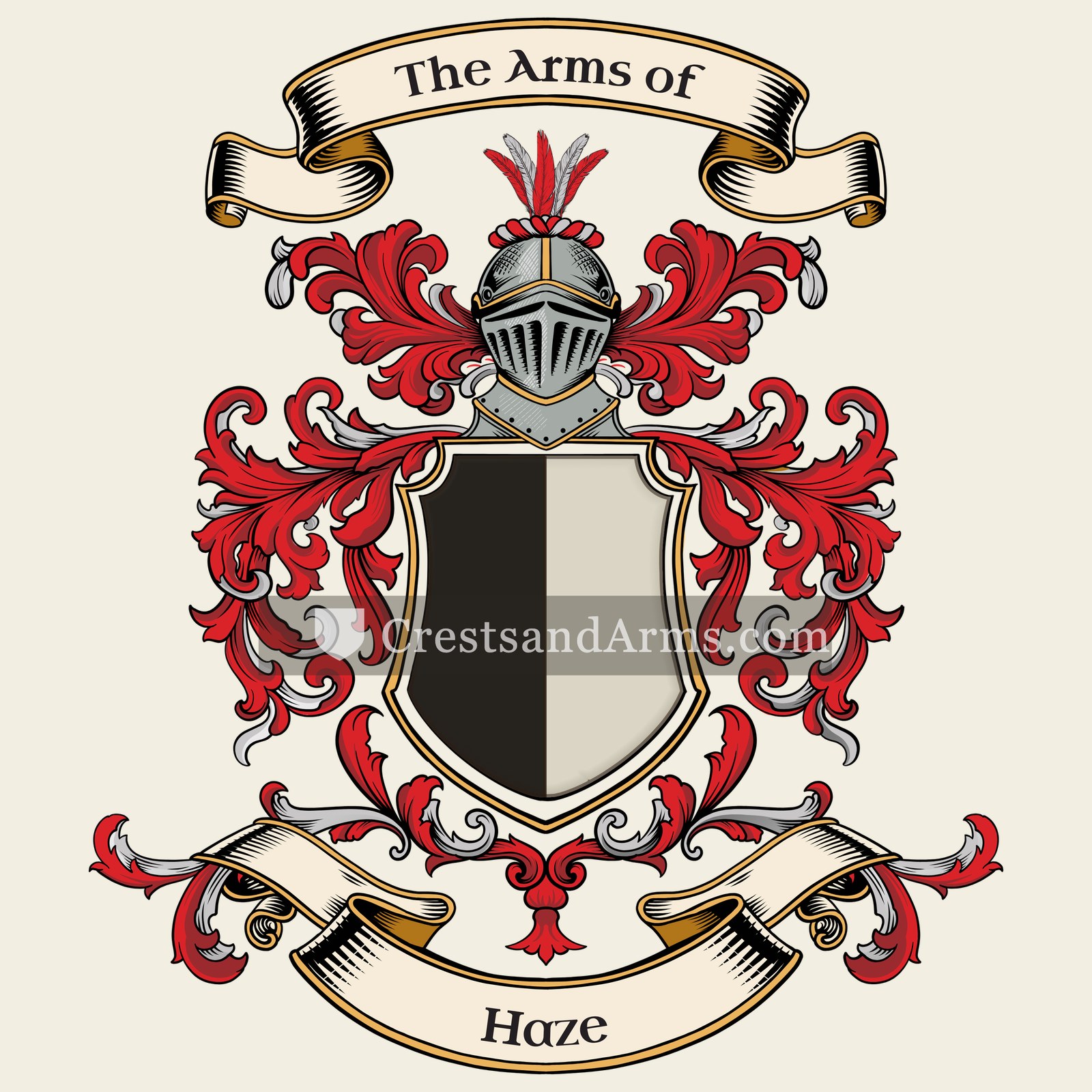
Colours
Black (Sable)Means: Constancy
Silver (Argent)Means: Peace and sincerity
Historical info
Source
J. B. Rietstap, Armorial Général, Gouda: G. B. van Goor Zonen, 1884–87
Blazon (the actual original written record)
“Parti de sa. et d'arg. C.: deux prob., d'arg. et de sa.”
NorwayNorvége, c. 1605
Where the Haze Arms Were Recorded
Oslo
Map of Norway showing where the Haze arms are recorded
The Haze arms were recorded in Norvége, c. 1605.
Arms such as these were typically recorded in Oslo.
Oslo held the Norwegian court and the offices that went with it. Norway's landed families were few and most held some post under the crown, and a post of that kind was what brought a shield.
This is where the arms were entered in the register. Families often moved to other parts of the country, so the same name can turn up in more than one region.
The body that granted and recorded arms in Norway in this period.
Christian IV of Denmark
Sovereign of the period
Christian IV of Denmark
1588–1648
Reigning in Denmark when the Haze arms are first recorded.
How Arms Worked in Norway
Norwegian families often assumed their own coats of arms freely without needing official permission from the crown. These symbols functioned as personal seals for merchants and farmers rather than just marks of nobility. Families passed these designs through generations as private property. When branches split, they frequently modified the original colors or shapes to create distinct versions for their own use.
Granting authority
The Norwegian royal chancery oversaw the formal recognition of noble status and the official registration of coats of arms.
How they got arms
Most families simply adopted their own unique designs to use on seals and property, though some sought royal confirmation.
Where arms were recorded
Official records of noble arms were kept in the royal chancery archives, which began documenting these grants during the union period.
The family's standing
Recorded among the armigerous families of Norway.
Origin & History of the Haze Family in Norway
The history of the Haze family in Norway begins with documented records of members living in Oslo as early as 1605. During this period, Oslo was a growing center of trade and administration under the influence of the Dano-Norwegian union. Families like the Hazes often occupied roles within the urban merchant class or the local bureaucracy, which allowed them to establish a firm foothold in the capital city. Because the name appears in city registers during the early seventeenth century, it suggests that the family was part of the foundational social fabric of old Oslo before the city was rebuilt following the great fire of 1624. By settling in the capital, these early ancestors were positioned at the heart of Norwegian political and economic life, helping to shape the community during a time of significant transition for the nation.
Related Branches & Arms
Root word
Hase
A Middle High German term referring to a hare or rabbit.
This name
HazeA topographic or habitational name likely denoting someone who lived near a hare-populated area.
also spelled
Haase
Haze
Hays
Hayes
Hayss
Documented Sources
J. B. Rietstap, Armorial Général, Gouda: G. B. van Goor Zonen, 1884–87
Rigsarkivet (Danish National Archives), Kirkebøger for Sjællands Stift (Parish Registers for the Diocese of Zealand)
Rigsarkivet (Danish National Archives), Folketællinger (Census records)
Karker, Allan, Dansk Navneskik (1993)
Steenstrup, Johannes, Danske Stednavne (1908)
Digital archive packCoat of arms PNG, gold border print PDF, vector SVG and the certificate of authenticity. Sent to your email in minutes.


 rabbitOne who lives peaceably and well
 rabbitOne who lives peaceably and well