A record of documented arms, meaning and origin, researched for the Heber family lines. Documented in 3 countries.
Reg. 4091 · German, G–I
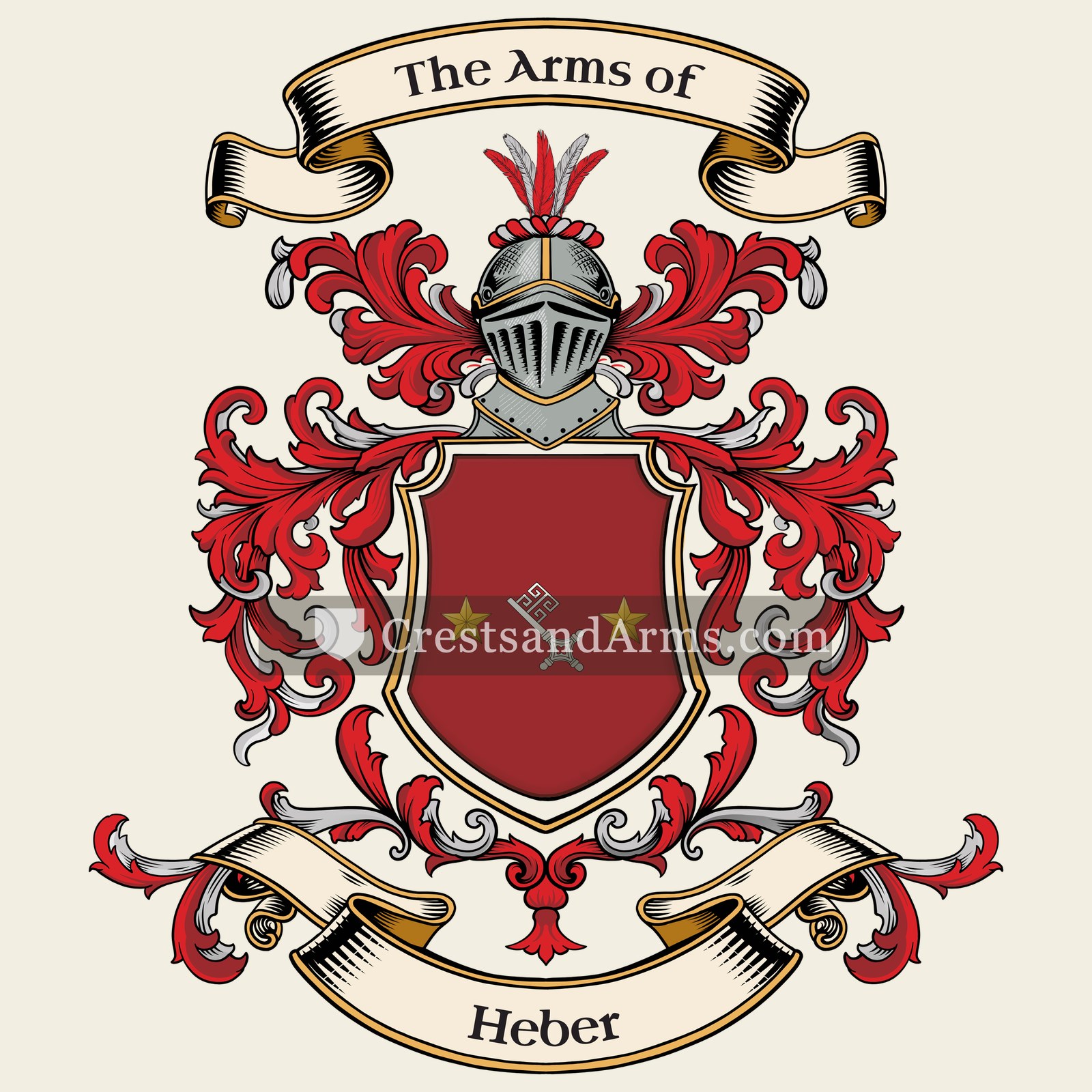
Coat of Arms & Family Crest Details
Symbols on this shield
keyGuardianship, and the office of a steward
mulletThe third son, and a divine quality from above
Colours
Red (Gules)Means: Military strength
Silver (Argent)Means: Peace and sincerity
Gold (Or)Means: Generosity
Historical info
Source
J. B. Rietstap, Armorial Général, Gouda: G. B. van Goor Zonen, 1884–87
Blazon (the actual original written record)
“De gu. à une clé d'arg., cour. d'or, le panneton en bas, accostée de deux étoiles d'or. C.: la clé couronnée; entre deux prob., coupées alt. d'arg. et de gu.”
FranconiaFranconia, c. 1765
Where the Heber Arms Were Recorded
Franconia
Map of Germany showing where the Heber arms are recorded
The Heber arms were recorded in Franconia, c. 1765.
Franconia was a patchwork of small territories in central Germany, full of minor landowners and prosperous market towns. So many separate households held land there that the region produced a great many coats of arms.
This is where the arms were entered in the register. Families often moved to other parts of the country, so the same name can turn up in more than one region.
The body that granted and recorded arms in Germany in this period.
Francis I, Holy Roman Emperor
Sovereign of the period
Francis I, Holy Roman Emperor
1745–1765
Reigning in Germany when the Heber arms are first recorded.
How Arms Worked in Germany
In the Holy Roman Empire, coats of arms were often granted to individuals by the Emperor or his representatives. These arms were then passed down through the generations to all legitimate descendants of the original holder. Younger branches of a family usually kept the same shield design without needing to change it, as the arms belonged to the entire lineage.
Granting authority
The Holy Roman Emperor held the sole power to grant new coats of arms throughout his vast imperial territories.
How they got arms
Families typically obtained their coats of arms through a formal imperial grant or by proving their noble status to the authorities.
Where arms were recorded
These grants were officially recorded in the Imperial Chancery registers, which began keeping formal records of such honors during the Middle Ages.
The family's standing
Recorded among the armigerous families of Franconia.
Origin & History of the Heber Family in Germany
The surname Heber originates from the Germanic linguistic tradition, likely evolving as a descriptive name rooted in the Old High German word *hebar*, which historically referred to a person who lifted or carried heavy loads. By the mid-eighteenth century, the family established a notable presence in the Franconia region of Germany. Records from 1765 confirm that members of the family were integrated into the local social and economic fabric of this area, which was then characterized by a mix of agricultural estates and emerging trade centers. During this period, families in Franconia often lived in tight-knit village communities where surnames became fixed as a way to distinguish between neighbors in parish registers. The Heber family likely participated in the common trades of the time, such as farming or craftsmanship, which allowed them to maintain a stable life within the borders of the Holy Roman Empire before the major political shifts of the nineteenth century.
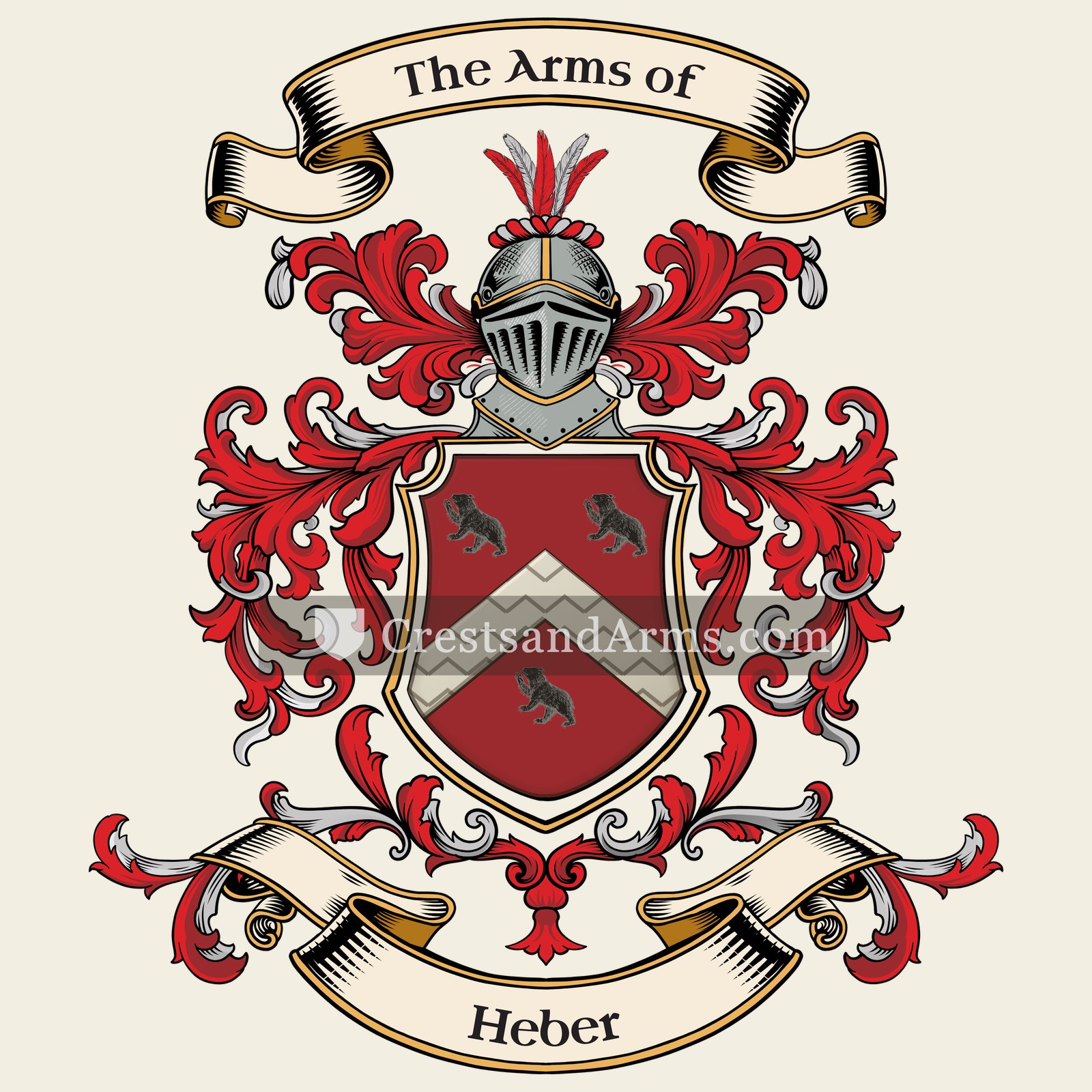
Coat of Arms & Family Crest Details
Symbols on this shield
chevronProtection, and faithful service completed
bearStrength, cunning and protection of kin
Colours
Red (Gules)Means: Military strength
Silver (Argent)Means: Peace and sincerity
Black (Sable)Means: Constancy
Historical info
Source
J. B. Rietstap, Armorial Général, Gouda: G. B. van Goor Zonen, 1884–87
Blazon (the actual original written record)
“De gu. au chev. ployé d'arg., acc. en chef de deux ours naiss. et affr. de sa. et en p. d'une tête et col d'ours de sa. C.: un ours ramp. de sa., tenant de ses pattes une pique d'or, arm. d'arg. L. d'arg. et de gu.”
SwitzerlandBâle, c. 1745
Where the Heber Arms Were Recorded
Bâle
Map of Switzerland showing where the Heber arms are recorded
The Heber arms were recorded in Bâle, c. 1745.
This is where the arms were entered in the register. Families often moved to other parts of the country, so the same name can turn up in more than one region.
The body that granted and recorded arms in Switzerland in this period.
How Arms Worked in Switzerland
In Switzerland, coats of arms were not restricted to the nobility and were often adopted by common citizens and families. These symbols were passed down through generations to show family identity. When branches of a family grew, they often changed small details of the design to distinguish their own line from the original group.
Granting authority
Cantonal and civic authorities managed the use of coats of arms within their specific regions and local jurisdictions.
How they got arms
Families typically assumed their own coats of arms based on local custom rather than receiving them from a central monarch.
Where arms were recorded
Arms were recorded in various cantonal and civic registers starting from the fourteenth century throughout the Swiss region.
The family's standing
Recorded among the armigerous families of Switzerland.
Origin & History of the Heber Family in Switzerland
The history of the Heber family in Switzerland is deeply rooted in the urban landscape of Basel during the eighteenth century. By 1745, records confirm that members of the family were already established residents within the city walls. During this era, Basel was a thriving center for trade and craftsmanship, and families like the Hebers often integrated into the local guilds to secure their economic standing. The name itself likely originated from Germanic roots, potentially linked to occupations or geographic locations in the surrounding regions before the family settled in the Swiss Confederation. As they navigated the social and political structures of Basel, the Hebers contributed to the city’s identity as a hub of European commerce. Their presence in the city archives during this period highlights a transition from regional mobility to a stable, long-term residence in one of Switzerland's most important cultural and economic centers.
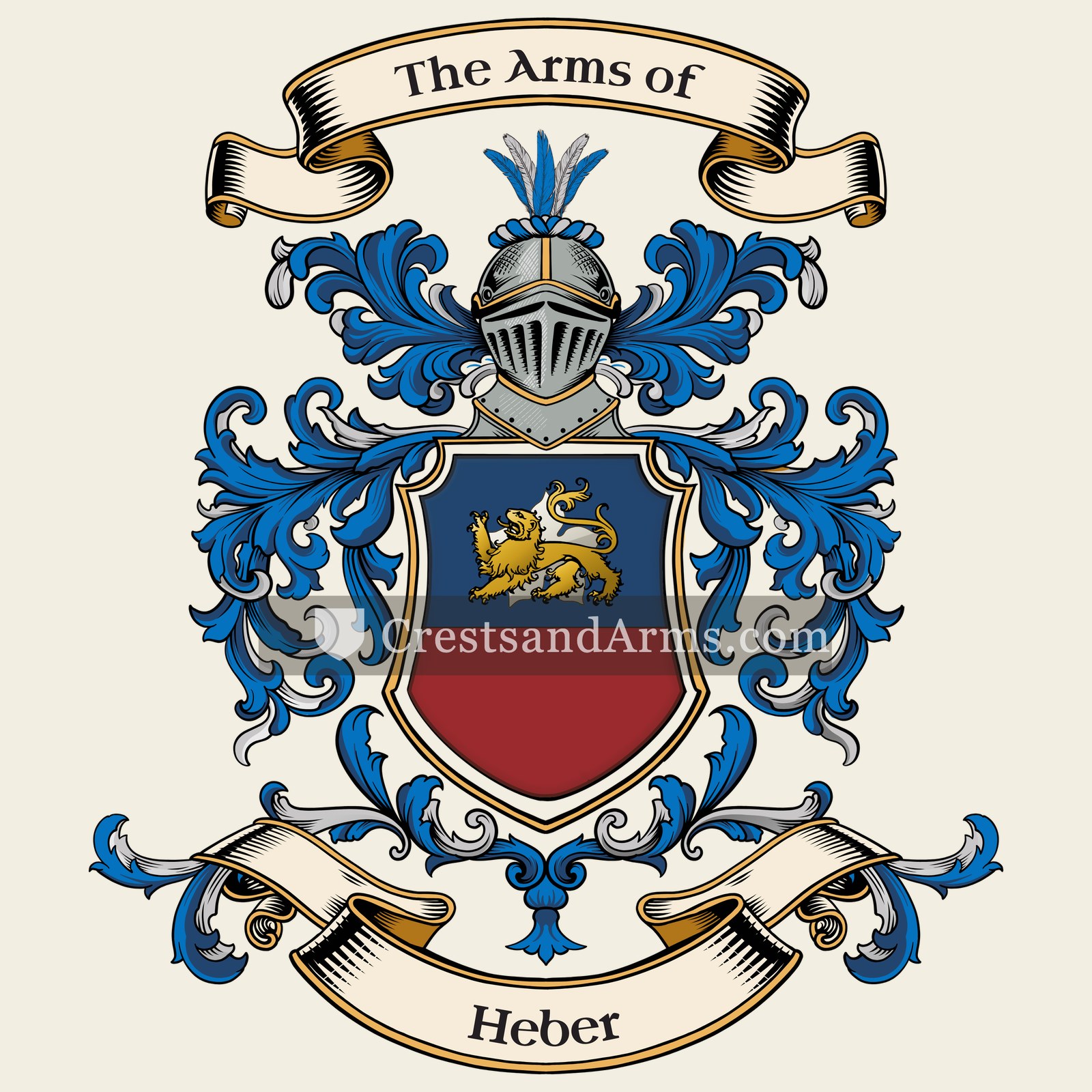
Coat of Arms & Family Crest Details
Symbols on this shield
fessThe military belt, and readiness to serve
lionCourage, strength and royalty
cinquefoilHope and joy
Colours
Blue (Azure)Means: Loyalty and truth
Red (Gules)Means: Military strength
Gold (Or)Means: Generosity
Silver (Argent)Means: Peace and sincerity
Historical info
Source
Sir Bernard Burke, The General Armory of England, Scotland, Ireland and Wales, London: Harrison & Sons, 1884
Blazon (the actual original written record)
“Per fesse az. and gu. a lion ramp. or, in the dexter chief point a cinquefoil ar”
YorkMarton · York, c. 1569
Where the Heber Arms Were Recorded
York
Map of England showing where the Heber arms are recorded
The Heber arms were recorded in York, c. 1569.
Yorkshire is the largest of the English counties, and it held more gentry families than any other. Land there was split among a great many households rather than a few, so a great many of them carried arms.
This is where the arms were entered in the register. Families often moved to other parts of the country, so the same name can turn up in more than one region.
The body that granted and recorded arms in England in this period.
Elizabeth I of England
Sovereign of the period
Elizabeth I of England
1558–1603
Reigning in Germany when the Heber arms are first recorded.
How Arms Worked in England
English heraldry allowed arms to be shared by all legitimate descendants of the original owner. These symbols were treated as personal property that moved through the generations to all children. While the eldest son kept the original design, other family members could use the same shield without needing to change it or register their own unique versions.
Granting authority
The College of Arms in London has regulated the use of coats of arms throughout England and Wales since 1484.
How they got arms
Families typically obtained their coats of arms through a formal grant from the Crown or by proving their ancient right to them.
Where arms were recorded
All official coats of arms are recorded in the registers kept at the College of Arms, which date back to the fifteenth century.
The family's standing
Recorded among the armigerous families of York.
Origin & History of the Heber Family in England
The history of the Heber family in England is deeply rooted in the northern county of Yorkshire, where records confirm their presence by at least 1569. The name itself is thought to be locative, likely originating from a place name that evolved into a surname as families moved and established themselves in new communities. During the sixteenth century, the Hebers began to rise in local prominence, particularly in the Craven district of North Yorkshire. They became well-known as landed gentry, managing large estates and participating in the regional administration of the North. Their influence grew steadily over the following generations, as members of the family became deeply involved in the social and political life of the area. By settling in the rugged landscape of the north, the family established a lasting legacy that remained tied to the history of Yorkshire for centuries.
Related Branches & Arms
Root word
Heber
Derived from the Hebrew word meaning companion or associate.
This name
HeberA German topographic or occupational surname referring to a person who lived near a lift or hill.
also spelled
Heberr
Heebere
Related arms
Atcherleyrecorded with Heber, same area
Bellasisrecorded with Heber, same area
Coneyrecorded with Heber, same area
Creykerecorded with Heber, same area
Documented Sources
J. B. Rietstap, Armorial Général, Gouda: G. B. van Goor Zonen, 1884–87
Bahlow, Hans, Deutsches Namenlexikon: Familien- und Vornamen nach Ursprung und Sinn erklärt, 1967
Heintze, Albert, Die deutschen Familien-Namen: geschichtlich, geographisch, sprachlich, 1903
Staatsarchiv Bamberg, Kirchenbücher der Pfarreien im Hochstift Bamberg, 1765
Digital archive packCoat of arms PNG, gold border print PDF, vector SVG and the certificate of authenticity. Sent to your email in minutes.


 keyGuardianship, and the office of a steward
 mulletThe third son, and a divine quality from above
 keyGuardianship, and the office of a steward
 mulletThe third son, and a divine quality from above

 chevronProtection, and faithful service completed
 bearStrength, cunning and protection of kin
 fessThe military belt, and readiness to serve
 lionCourage, strength and royalty
 cinquefoilHope and joy