Map of France showing where the Heery arms are recorded
The Heery arms were recorded in Bergzabern Alsace, c. 1663.
This is where the arms were entered in the register. Families often moved to other parts of the country, so the same name can turn up in more than one region.
The body that granted and recorded arms in France in this period.
Louis XIV of France
Sovereign of the period
Louis XIV of France
1643–1715
Reigning in France when the Heery arms are first recorded.
How Arms Worked in France
In France, a coat of arms was a mark of honor that passed down through the male line to all legitimate descendants. Families often used the same shield without changes to show their shared heritage. If a branch wanted to stand out, they could add a small mark to their shield to show their specific place in the family tree.
Granting authority
The Juge d'armes de France acted as the official authority that regulated and verified coats of arms across the country.
How they got arms
Families typically inherited their arms from ancestors, though they could also receive them through royal grants or by proving their noble status.
Where arms were recorded
Coats of arms were officially recorded in the Armorial Général de France, which began its main collection in the year 1696.
The family's standing
Recorded among the armigerous families of France.
Origin & History of the Heery Family in France
The history of the Heery family name in the Alsace region is deeply tied to the complex cultural shifts of the seventeenth century. By 1663, records confirm that family members were established in the town of Bergzabern, which was then part of a territory caught between French and German influences. During this era, Alsace was a crossroads for families moving across borders due to the aftermath of the Thirty Years' War. The name likely evolved from local Germanic roots before being recorded within the administrative systems of the French crown as the region became more integrated into the kingdom. Families like the Heerys often served as local craftsmen or laborers who helped rebuild the social fabric of the town after decades of regional conflict. Their presence in Bergzabern reflects a period of stabilization where families began to leave more permanent marks in parish registers and local tax records.
Meaning of the Heery family crest colors & symbols
Symbols on this shield
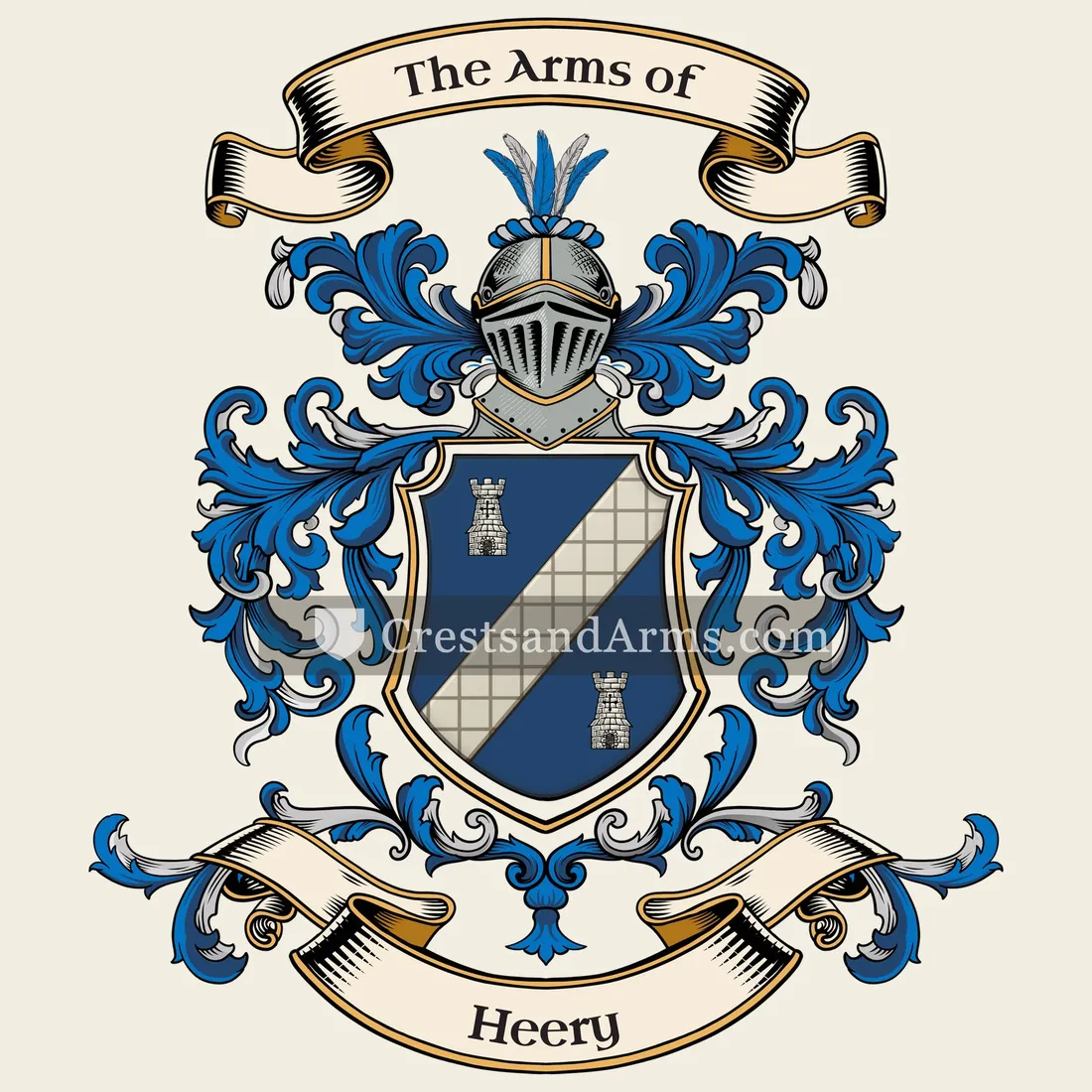
towerGrandeur and solidity, and a stronghold defended
Colours
Blue (Azure)Means: Loyalty and truth
Silver (Argent)Means: Peace and sincerity
Historical info
Source
J. B. Rietstap, Armorial Général, Gouda: G. B. van Goor Zonen, 1884–87
Blazon (the actual original written record)
“D'azur à la barre d'arg., acc. de deux tours du même. C.: un lion iss. d'azur, supp. de ses pattes une rose de gu., tigée et feuillée de sin.”
SaxonySaxony, c. 1589
Digital archive packCoat of arms PNG, gold border print PDF, vector SVG and the certificate of authenticity. Sent to your email in minutes.
Map of Germany showing where the Heery arms are recorded
The Heery arms were recorded in Saxony, c. 1589.
Saxony had mines, trade and old landed families all at once. Silver made some fortunes and land held others, and both sorts of family kept arms, which is why Saxon names appear so often in the registers.
This is where the arms were entered in the register. Families often moved to other parts of the country, so the same name can turn up in more than one region.
The body that granted and recorded arms in Germany in this period.
Emperor Rudolf II
Sovereign of the period
Emperor Rudolf II
1576–1612
Reigning in France when the Heery arms are first recorded.
How Arms Worked in Germany
In the Holy Roman Empire, coats of arms were often granted to individuals by the Emperor or his representatives. These arms were then passed down through the generations to all legitimate descendants of the original holder. Younger branches of a family usually kept the same shield design without needing to change it, as the arms belonged to the entire lineage.
Granting authority
The Holy Roman Emperor held the sole power to grant new coats of arms throughout his vast imperial territories.
How they got arms
Families typically obtained their coats of arms through a formal imperial grant or by proving their noble status to the authorities.
Where arms were recorded
These grants were officially recorded in the Imperial Chancery registers, which began keeping formal records of such honors during the Middle Ages.
The family's standing
Recorded among the armigerous families of Saxony.
Origin & History of the Heery Family in Germany
The surname Heery has deep roots in the historical region of Saxony, where family members were documented as early as 1589. During this period, Saxony was a center of significant religious and social change following the Protestant Reformation. Families living in this area often identified themselves through their local trade or their connection to specific rural landscapes. The name likely evolved from regional dialects spoken in the German heartland, reflecting the linguistic shifts common in the late sixteenth century. As the family established their presence in the Saxon countryside, they became part of a society defined by agrarian traditions and the growing influence of local administrative record-keeping. By settling in this region, the early Heery ancestors contributed to the cultural tapestry of a territory that served as a vital crossroads for trade and intellectual life in Central Europe.
Meaning of the Heery family crest colors & symbols
Symbols on this shield
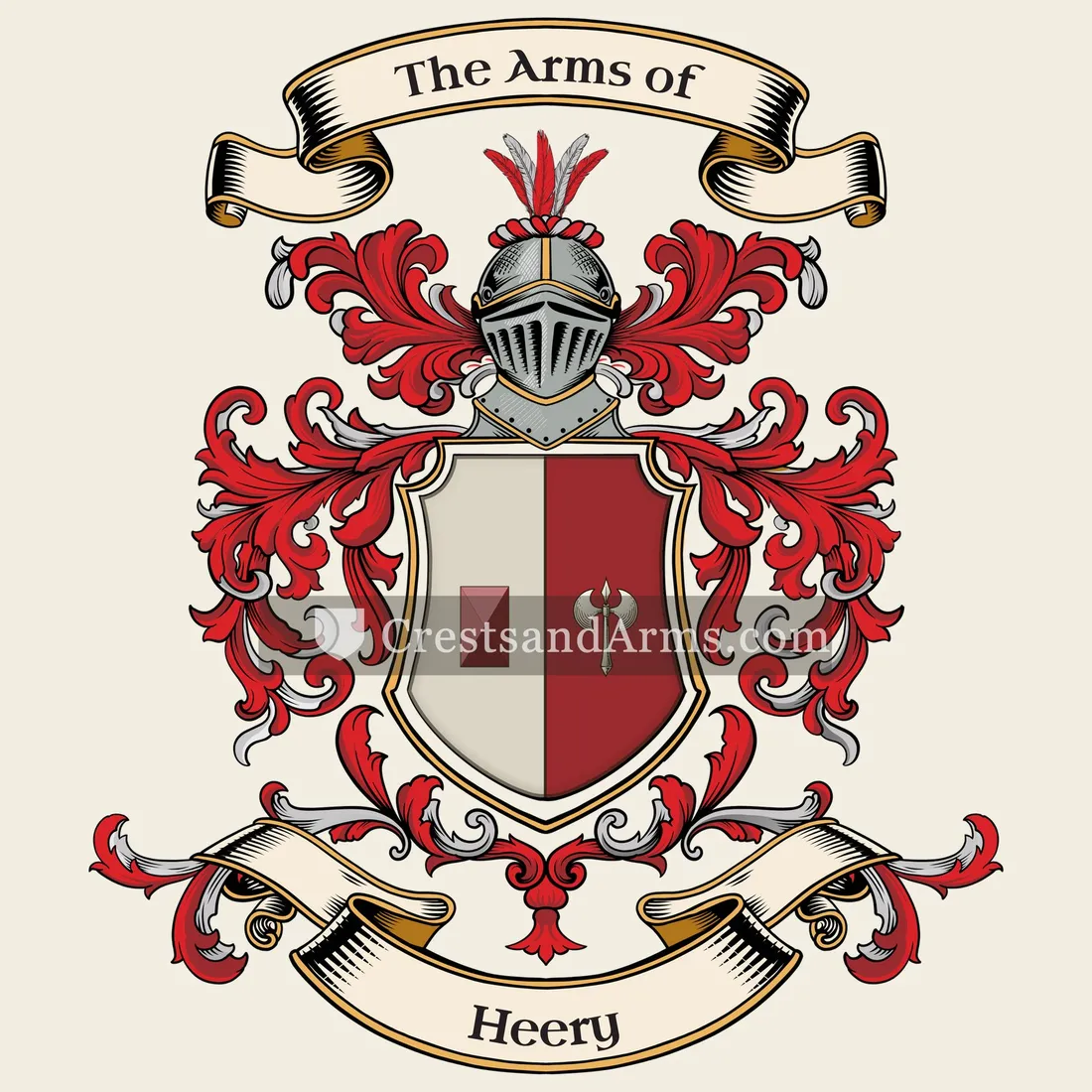
billetThe sealed letter, and a message delivered
axeThe execution of military duty
Colours
Silver (Argent)Means: Peace and sincerity
Red (Gules)Means: Military strength
Black (Sable)Means: Constancy
Historical info
Source
J. B. Rietstap, Armorial Général, Gouda: G. B. van Goor Zonen, 1884–87
Blazon (the actual original written record)
“Parti d'arg. et de gu.; à un ouvrier-mineur, hab. de l'un en l'autre, les jambes écartées, la tête coiffée d'un bonnet de sa., supp. de sa main dextre levée un caillou et tenant de sa sen., appuvée sur sa hanche, un hoyau de sa., emm. d'or. C.: l'homme de l'écu; entre deux prob., coupées alt. d'arg. et de gu.”
Austriac. 1574
Digital archive packCoat of arms PNG, gold border print PDF, vector SVG and the certificate of authenticity. Sent to your email in minutes.
Map of Austria showing where the Heery arms are recorded
The Heery arms were recorded in Austria, c. 1574.
Arms such as these were typically recorded in Tyrol.
Tyrol was mountain country in western Austria, where the valleys were held by families who had been there a very long time. Old tenure counted for more than money, and old families carried arms.
This is where the arms were entered in the register. Families often moved to other parts of the country, so the same name can turn up in more than one region.
Region
Tyrol
First recorded
1574
Granting Authority for the Heery Arms
Imperial and Royal chancery
Sodacan · CC BY-SA 3.0
The body that granted and recorded arms in Austria in this period.
Maximilian II, Holy Roman Emperor
Sovereign of the period
Maximilian II, Holy Roman Emperor
1564–1576
Reigning in France when the Heery arms are first recorded.
How Arms Worked in Austria
Austrian coats of arms were often linked directly to noble titles granted by the Emperor. These symbols belonged to the entire family line rather than just one individual. When a family grew, new branches kept the original design without needing to change it. This system allowed all members of a noble house to share the same identity across many generations.
Granting authority
The Imperial and Royal chancery managed all heraldic matters and controlled the official granting of arms throughout the Austrian lands.
How they got arms
Families typically received their arms through a formal imperial decree that often accompanied the elevation of a person to noble status.
Where arms were recorded
Official records of these grants were kept in the Imperial Register of Nobility which began its formal documentation process in 1453.
The family's standing
Recorded among the armigerous families of Austria.
Origin & History of the Heery Family in Austria
The history of the Heery family in Austria is deeply rooted in the rugged landscape of the Tyrol region. By the year 1574, records confirm that members of the family were already established as residents in this mountainous area. During this period, Tyrol served as a vital crossroads for trade and cultural exchange between Northern Europe and Italy. Families living in these alpine valleys often worked as skilled craftsmen, farmers, or local administrators who helped manage the complex mountain passes. Because the region was under the influence of the Habsburg monarchy, the Heery family likely navigated a society defined by strict social structures and strong local traditions. Their presence in the sixteenth century suggests they were part of the foundational population that helped shape the unique identity of the Tyrolean people. Through generations of living in these high-altitude communities, the family became an enduring part of the regional history of western Austria.
Heery Meaning & Related Branches
Root word
Heri
Old Germanic term meaning army or warrior.
This name
HeeryDerived from a Germanic personal name signifying a member of the army.
also spelled
Heier
Heyr
Hayer
Hire
Documented Sources
J. B. Rietstap, Armorial Général, Gouda: G. B. van Goor Zonen, 1884–87
Archives Départementales du Bas-Rhin, Registres paroissiaux de Bergzabern (1663)
Himly, François-Jacques, Chronologie de la Basse-Alsace, 1972
Kintz, Jean-Pierre, La société alsacienne au XVIIe siècle, 1984
Digital archive packCoat of arms PNG, gold border print PDF, vector SVG and the certificate of authenticity. Sent to your email in minutes.


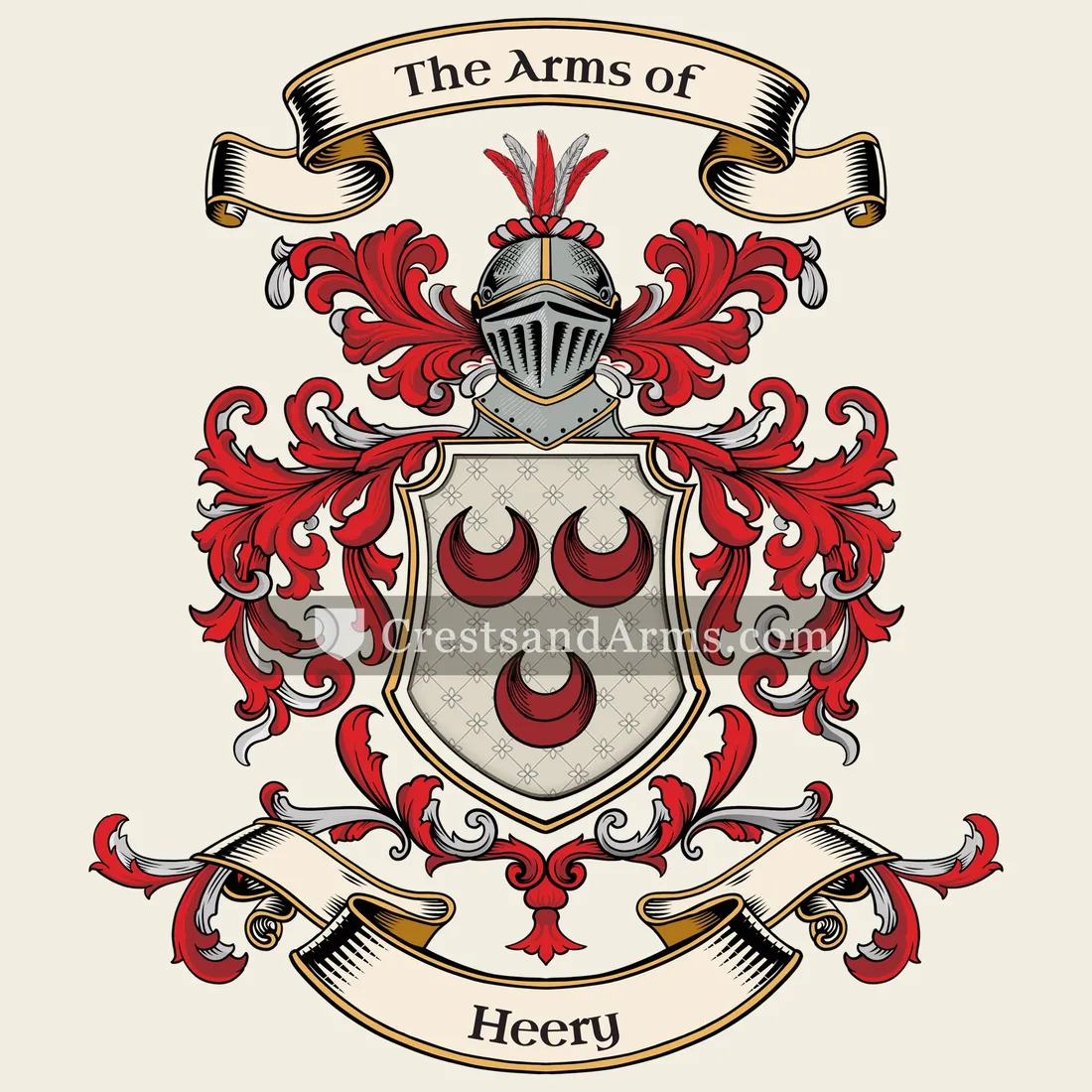
 crescentHonour by the sovereign, and the second son
 crescentHonour by the sovereign, and the second son


 towerGrandeur and solidity, and a stronghold defended


 billetThe sealed letter, and a message delivered
 axeThe execution of military duty