A record of documented arms, meaning and origin, researched for the Heffer family lines. Documented in 2 countries.
Reg. 1294 · Austrian, G–I
Coat of Arms & Family Crest Details
Symbols on this shield
mountThe ground held, and steadfastness upon it
mulletThe third son, and a divine quality from above
dovePeace, love and the Holy Spirit
treeLife, endurance and deep roots
billetThe sealed letter, and a message delivered
lionCourage, strength and royalty
roseThe seventh son, and beauty with grace
Colours
Blue (Azure)Means: Loyalty and truth
Gold (Or)Means: Generosity
Green (Vert)Means: Hope
Black (Sable)Means: Constancy
Silver (Argent)Means: Peace and sincerity
Red (Gules)Means: Military strength
Historical info
Source
J. B. Rietstap, Armorial Général, Gouda: G. B. van Goor Zonen, 1884–87
Blazon (the actual original written record)
“Coupé: au 1 d'azur à un cèdre au nat., le pied accosté de deux pierres verdâtres, tirant sur le noir; le tout soutenu d'une terrasse de sin.; le champ d'azur chapé aussi d'azur, à deux lions ramp. et affr. d'arg.; au 2 parti: a. d'or à trois roses mal-ordonnées de gu., bout. d'arg., mouv. d'une même tige de sin., posée sur un tertre de trois coupeaux de sin.; b. taillé, de gu. à trois étoiles d'or, rangées en barre, sur or à une colombe cont. au nat., tenant en son bec un rameau d'olivier de sin. et posée sur une terrasse du même. Cq. cour. C.: un homme iss., hab. de gu., ceint d'or, les cheveux longs, coiffé d'un chapeau de sa., tenant de sa main dextre une épée d'arg., garnie d'or, la sen. appuyée sur sa hanche; entre deux prob. coupées, à dextre d'or sur gu., à sen. d'azur sur arg. L.: à dextre d'arg. et d'azur, à sen. d'or et de gu.”
Austriac. 1773
Digital archive packCoat of arms PNG, gold border print PDF, vector SVG and the certificate of authenticity. Sent to your email in minutes.
Map of Austria showing where the Heffer arms are recorded
The Heffer arms were recorded in Austria, c. 1773.
Arms such as these were typically recorded in Tyrol.
Tyrol was mountain country in western Austria, where the valleys were held by families who had been there a very long time. Old tenure counted for more than money, and old families carried arms.
This is where the arms were entered in the register. Families often moved to other parts of the country, so the same name can turn up in more than one region.
Region
Tyrol
First recorded
1773
Granting Authority for the Heffer Arms
Imperial and Royal chancery
Sodacan · CC BY-SA 3.0
The body that granted and recorded arms in Austria in this period.
Joseph II, Holy Roman Emperor
Sovereign of the period
Joseph II, Holy Roman Emperor
1765–1790
Reigning in Austria when the Heffer arms are first recorded.
How Arms Worked in Austria
Austrian coats of arms were often linked directly to noble titles granted by the Emperor. These symbols belonged to the entire family line rather than just one individual. When a family grew, new branches kept the original design without needing to change it. This system allowed all members of a noble house to share the same identity across many generations.
Granting authority
The Imperial and Royal chancery managed all heraldic matters and controlled the official granting of arms throughout the Austrian lands.
How they got arms
Families typically received their arms through a formal imperial decree that often accompanied the elevation of a person to noble status.
Where arms were recorded
Official records of these grants were kept in the Imperial Register of Nobility which began its formal documentation process in 1453.
The family's standing
Recorded among the armigerous families of Austria.
Origin & History of the Heffer Family in Austria
The family name Heffer finds its roots in the rugged landscape of the Austrian Tyrol, where records confirm the presence of family members as early as 1773. During this period, the region was characterized by small, self-sustaining alpine communities where surnames often evolved from local occupations, physical traits, or specific geographic landmarks. In the German-speaking traditions of the Tyrol, the name likely emerged as a descriptive identifier for individuals living near specific mountain pastures or those involved in the regional cattle trade, as the linguistic root relates closely to the term for a young cow. Life in the eighteenth-century Tyrol was defined by the harsh mountain climate and the influence of the Habsburg monarchy, which governed these valleys with a focus on agriculture and local trade. By settling in this region, the early Heffer family became part of a resilient mountain culture that relied on communal cooperation and deep ties to the land to survive the challenges of the high Alps.
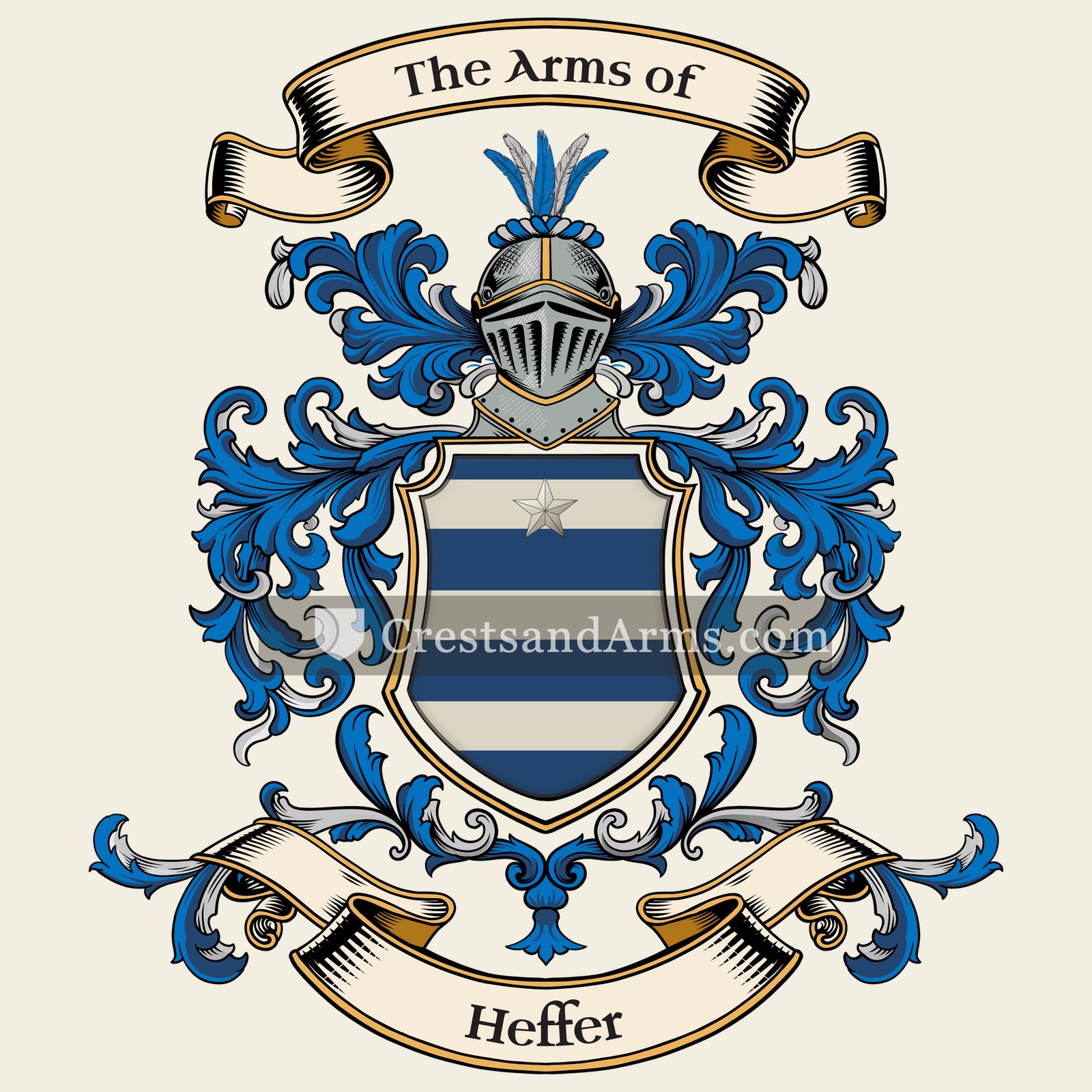
Coat of Arms & Family Crest Details
Symbols on this shield
fessThe military belt, and readiness to serve
mulletThe third son, and a divine quality from above
Colours
Blue (Azure)Means: Loyalty and truth
Silver (Argent)Means: Peace and sincerity
Historical info
Source
J. B. Rietstap, Armorial Général, Gouda: G. B. van Goor Zonen, 1884–87
Blazon (the actual original written record)
“D'azur à trois fasces ondées d'arg., acc. en chef d'une étoile du même. C.: une étoile d'arg., entre un vol, d'azur et d'arg. D.: NON FRAUDE SED ASTU.”
ZeelandZeeland, c. 1815
Digital archive packCoat of arms PNG, gold border print PDF, vector SVG and the certificate of authenticity. Sent to your email in minutes.
Map of Netherlands showing where the Heffer arms are recorded
The Heffer arms were recorded in Zeeland, c. 1815.
Zeeland was a scatter of islands in the south-west of the Netherlands, living on the sea and on land reclaimed from it. Families who drained and held that land were counted among the gentry, and gentry carried arms.
This is where the arms were entered in the register. Families often moved to other parts of the country, so the same name can turn up in more than one region.
Region
Zeeland
First recorded
1815
Granting Authority for the Heffer Arms
Hoge Raad van Adel
Photograph made by me · CC BY-SA 3.0
The body that granted and recorded arms in Netherlands in this period.
William I of the Netherlands
Sovereign of the period
William I of the Netherlands
1815–1840
Reigning in Austria when the Heffer arms are first recorded.
How Arms Worked in Netherlands
In the Netherlands, coats of arms were often used by noble families and those who held specific public offices. These arms were passed down through the generations to legitimate descendants. Younger branches of a family usually kept the original design without needing to add special marks. This system ensured that the family identity remained clear and consistent over many years.
Granting authority
The Hoge Raad van Adel is the official body that regulates and manages noble titles and coats of arms in the Netherlands.
How they got arms
Families typically obtained their coats of arms through official royal grants or by proving their long-standing historical use of the symbols.
Where arms were recorded
Coats of arms are officially recorded in the registers held by the Hoge Raad van Adel, which began its work in 1814.
The family's standing
Recorded among the armigerous families of Zeeland.
Origin & History of the Heffer Family in Netherlands
The history of the Heffer family in the Netherlands is deeply connected to the coastal province of Zeeland, where records confirm their presence by 1815. During this era, the region was recovering from the Napoleonic Wars and the establishment of the United Kingdom of the Netherlands. The name likely evolved from regional dialects or occupational descriptions common to the low-lying polders and maritime communities of the Dutch coast. Families in Zeeland during the early nineteenth century were often tied to the land or the sea, and the Heffer name appears in civil registries that were newly standardized under French administrative influence. These early ancestors lived through a time of significant transition as the Netherlands moved toward becoming a modern nation-state. By tracking these early records, we see a family that was part of the foundational social fabric of the Zeeland islands during a period of great political change.
Related Branches & Arms
Root word
Heifer
A young female cow that has not yet borne a calf.
This name
HefferAn occupational surname for a cattle farmer or a nickname for a young person.
also spelled
Hofer
Hoefer
Documented Sources
J. B. Rietstap, Armorial Général, Gouda: G. B. van Goor Zonen, 1884–87


 mountThe ground held, and steadfastness upon it
 mulletThe third son, and a divine quality from above
 dovePeace, love and the Holy Spirit
 treeLife, endurance and deep roots
 billetThe sealed letter, and a message delivered
 lionCourage, strength and royalty
 roseThe seventh son, and beauty with grace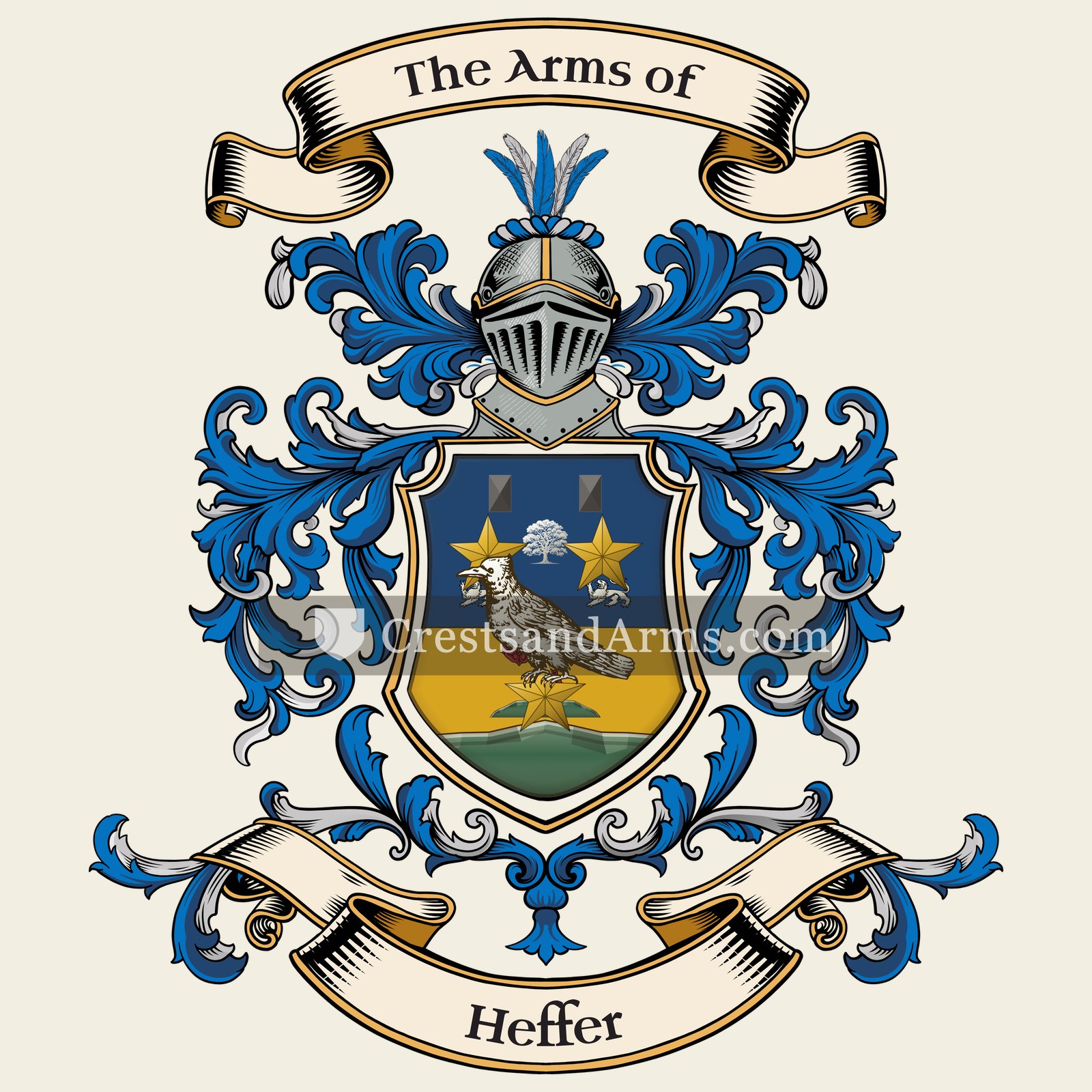


 fessThe military belt, and readiness to serve