A record of documented arms, meaning and origin, researched for the Heiden family lines. Documented in 3 countries.
Reg. 9885 · German, G–I
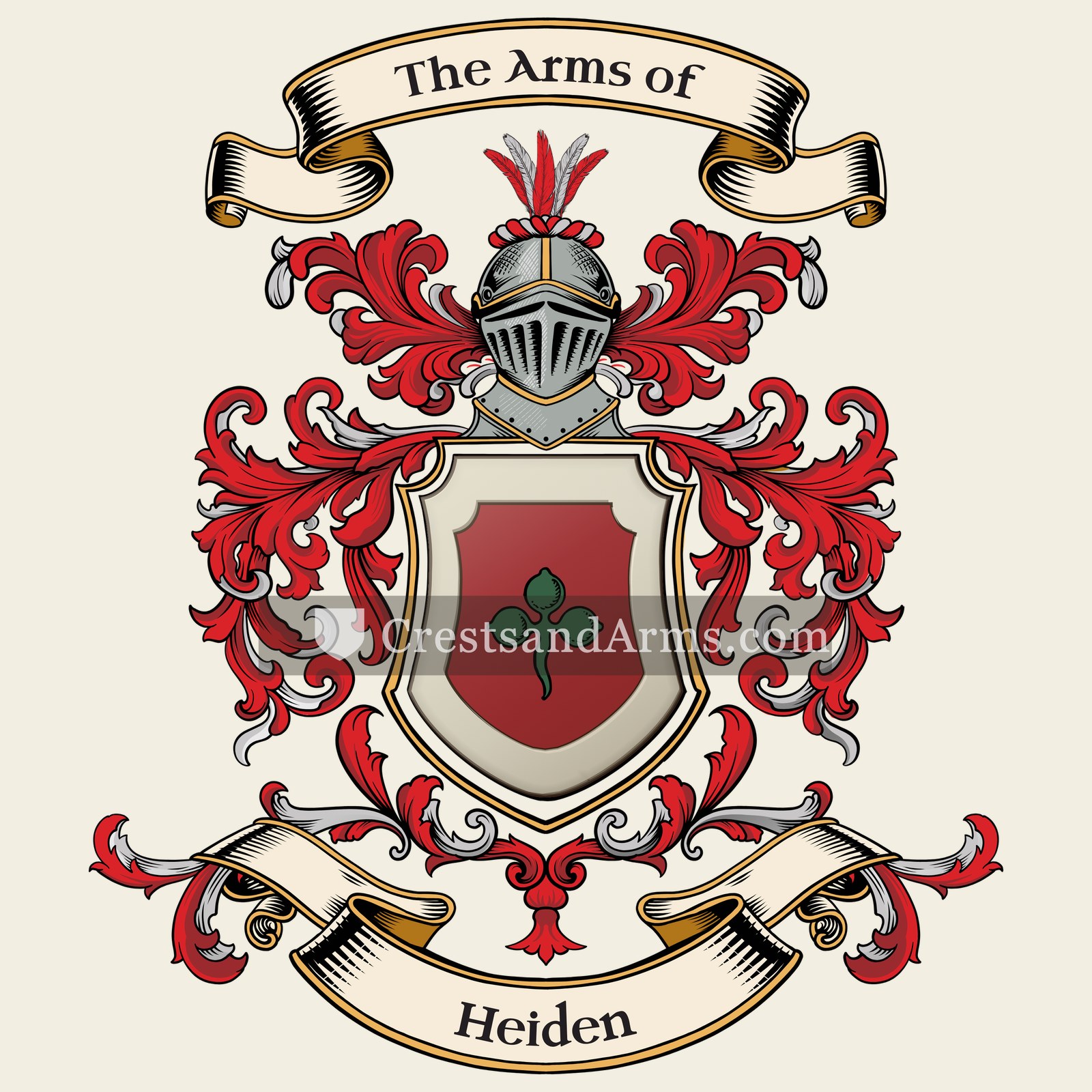
Coat of Arms & Family Crest Details
Symbols on this shield
trefoilPerpetuity, and the Trinity
Colours
Red (Gules)Means: Military strength
Silver (Argent)Means: Peace and sincerity
Green (Vert)Means: Hope
Historical info
Source
J. B. Rietstap, Armorial Général, Gouda: G. B. van Goor Zonen, 1884–87
Blazon (the actual original written record)
“De gu. à une tiercefeuille tigée de sin.; à la bord. d'arg. C.: un buste de jeune homme, hab. de gu., bout. d'or, la tête coiffée d'un bonnet albanais de gu., retr. de sin. L.: de gu. et de sin.”
GermanyNuremberg, c. 1765
Where the Heiden Arms Were Recorded
Nuremberg
Map of Germany showing where the Heiden arms are recorded
The Heiden arms were recorded in Nuremberg, c. 1765.
This is where the arms were entered in the register. Families often moved to other parts of the country, so the same name can turn up in more than one region.
The body that granted and recorded arms in Germany in this period.
Francis I, Holy Roman Emperor
Sovereign of the period
Francis I, Holy Roman Emperor
1745–1765
Reigning in Germany when the Heiden arms are first recorded.
How Arms Worked in Germany
In the Holy Roman Empire, coats of arms were often granted to individuals by the Emperor or his representatives. These arms were then passed down through the generations to all legitimate descendants of the original holder. Younger branches of a family usually kept the same shield design without needing to change it, as the arms belonged to the entire lineage.
Granting authority
The Holy Roman Emperor held the sole power to grant new coats of arms throughout his vast imperial territories.
How they got arms
Families typically obtained their coats of arms through a formal imperial grant or by proving their noble status to the authorities.
Where arms were recorded
These grants were officially recorded in the Imperial Chancery registers, which began keeping formal records of such honors during the Middle Ages.
The family's standing
Recorded among the armigerous families of Germany.
Origin & History of the Heiden Family in Germany
The name Heiden originates from the Middle High German word *heide*, which translates to heath or wasteland. In the context of medieval Germany, this name was often a topographical surname given to families who lived near open, uncultivated stretches of land or moor. By the time the family was established in Nuremberg in 1765, the city had long been a center for skilled craftsmanship and trade. Families living in Nuremberg during this era were often part of a structured urban society where surnames served as vital identifiers for tax records and guild memberships. Because Nuremberg was a hub for metalwork and printing, ancestors of the Heiden family likely participated in the city’s thriving mercantile economy, contributing to the growth of one of the Holy Roman Empire’s most influential urban centers.
Coat of Arms & Family Crest Details
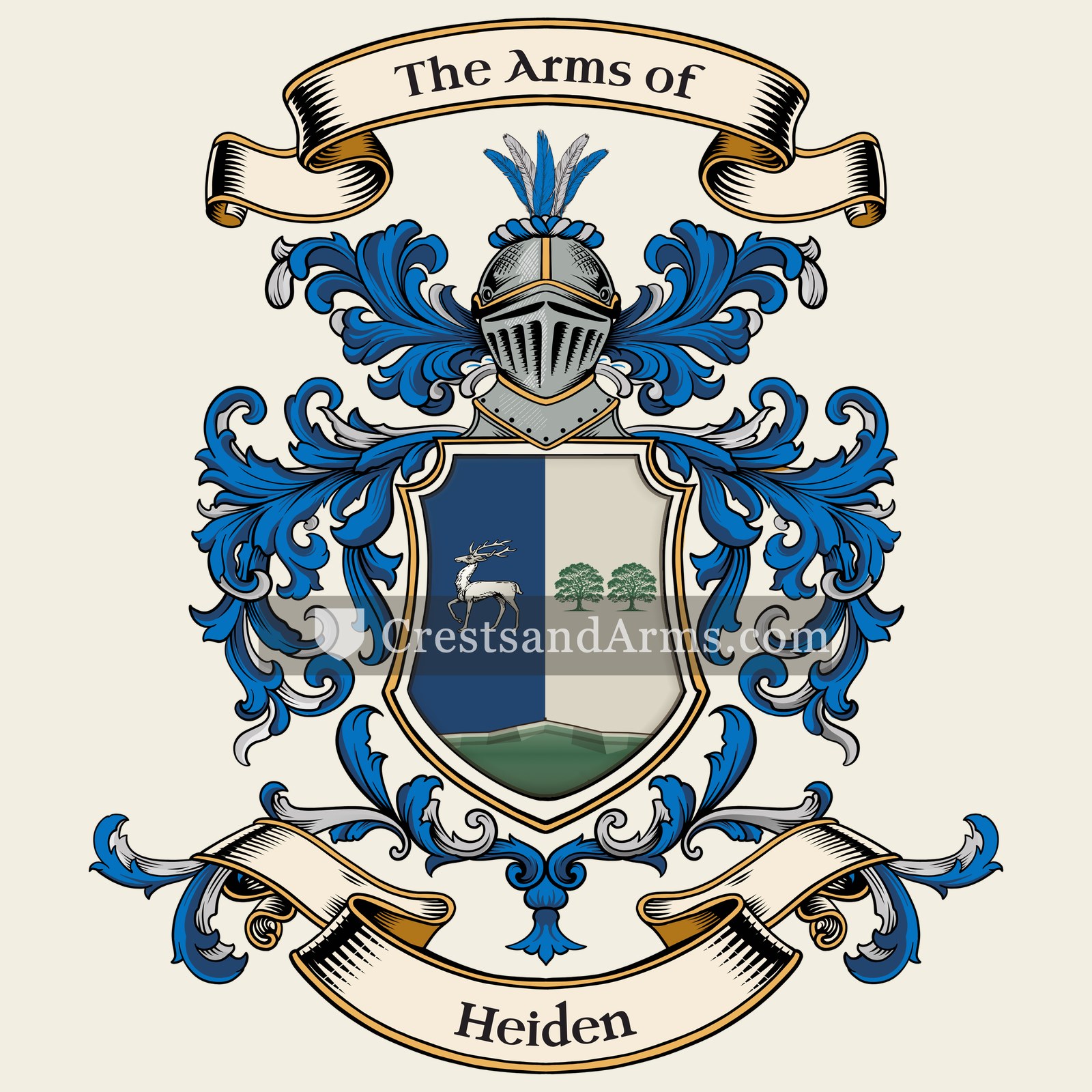
Symbols on this shield
mountThe ground held, and steadfastness upon it
bendDefence, and the scarf of a commander
stagPeace and harmony, and one who will not fight unprovoked
treeLife, endurance and deep roots
Colours
Blue (Azure)Means: Loyalty and truth
Silver (Argent)Means: Peace and sincerity
Green (Vert)Means: Hope
Historical info
Source
J. B. Rietstap, Armorial Général, Gouda: G. B. van Goor Zonen, 1884–87
Blazon (the actual original written record)
“Parti, d'azur à un cerf ramp. et cont. au nat., et d'arg. à deux arbres de sin.; le tout soutenu d'une terrasse de sin., br. sur le parti. Cq. cour. C.: un cerf iss. au nat., entre un vol, l'aile dextre d'or à la bande d'azur, l'aile sen. d'arg. à la bande de sin. L.: à dextre d'arg. et d'or, à sen. d'or et d'azur.”
Austriac. 1772
Where the Heiden Arms Were Recorded
Tyrol
Map of Austria showing where the Heiden arms are recorded
The Heiden arms were recorded in Austria, c. 1772.
Arms such as these were typically recorded in Tyrol.
Tyrol was mountain country in western Austria, where the valleys were held by families who had been there a very long time. Old tenure counted for more than money, and old families carried arms.
This is where the arms were entered in the register. Families often moved to other parts of the country, so the same name can turn up in more than one region.
Region
Tyrol
First recorded
1772
Granting Authority for the Heiden Arms
Imperial and Royal chancery
Sodacan · CC BY-SA 3.0
The body that granted and recorded arms in Austria in this period.
Joseph II, Holy Roman Emperor
Sovereign of the period
Joseph II, Holy Roman Emperor
1765–1790
Reigning in Germany when the Heiden arms are first recorded.
How Arms Worked in Austria
Austrian coats of arms were often linked directly to noble titles granted by the Emperor. These symbols belonged to the entire family line rather than just one individual. When a family grew, new branches kept the original design without needing to change it. This system allowed all members of a noble house to share the same identity across many generations.
Granting authority
The Imperial and Royal chancery managed all heraldic matters and controlled the official granting of arms throughout the Austrian lands.
How they got arms
Families typically received their arms through a formal imperial decree that often accompanied the elevation of a person to noble status.
Where arms were recorded
Official records of these grants were kept in the Imperial Register of Nobility which began its formal documentation process in 1453.
The family's standing
Recorded among the armigerous families of Austria.
Origin & History of the Heiden Family in Austria
The name Heiden has deep roots in the rugged landscape of the Austrian Tyrol, where family members were documented as early as 1772. The name itself is derived from the Middle High German term for a person living in a heath or an uncultivated field, which suggests that the earliest ancestors were likely farmers or settlers who cleared land in the mountainous terrain. Living in the Tyrol region during the late 18th century meant that these individuals were part of a society shaped by isolated alpine valleys and strong local traditions. Families in this area often stayed in the same villages for generations, working the land and contributing to the unique cultural identity of the Austrian Alps. By the time of the 1772 records, the Heiden family was already established as a part of the local community, likely navigating the challenges of life under the rule of the Habsburg monarchy while maintaining their own small holdings in the high-altitude environment.
Coat of Arms & Family Crest Details
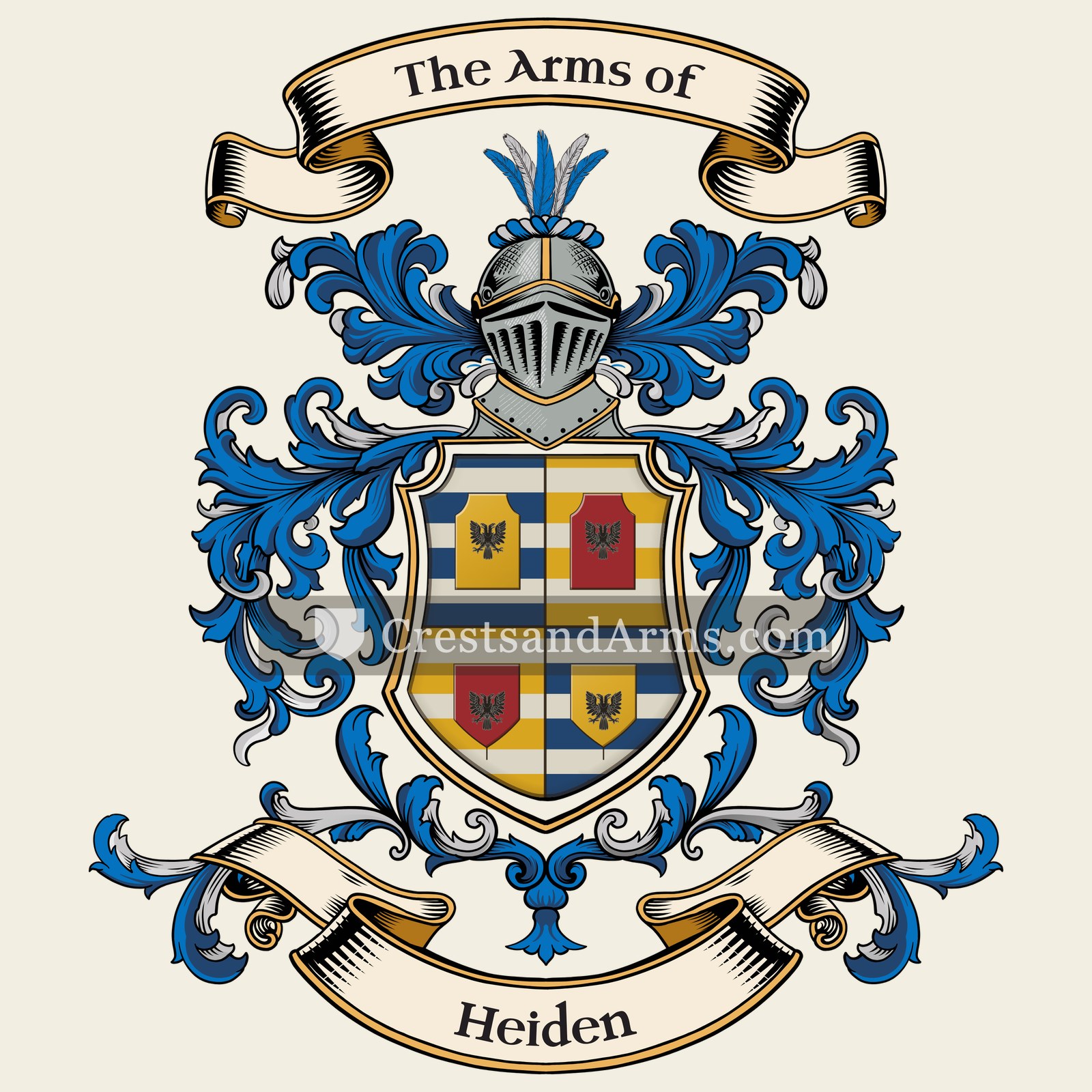
Symbols on this shield
fessThe military belt, and readiness to serve
eagleNobility, strength and a keen mind
Colours
Blue (Azure)Means: Loyalty and truth
Gold (Or)Means: Generosity
Silver (Argent)Means: Peace and sincerity
Red (Gules)Means: Military strength
Black (Sable)Means: Constancy
Historical info
Source
J. B. Rietstap, Armorial Général, Gouda: G. B. van Goor Zonen, 1884–87
Blazon (the actual original written record)
“Ec.: aux 1 et 4 d'azur à trois fasces d'arg. (Heiden); aux 2 et 3 d'or à une crémaillère triangulaire de gu. (Kettler). Sur le tout d'or à l'aigle ép. de sa., cour. d'or. Trois cq. cour. C.: 1º un vol aux armes du 1; l. d'arg. et d'azur; 2º un écusson aux armes du 2, accosté de deux plumes de faisan, d'or et de gu.; l. d'or et de sa.; 3º un vol aux armes du 1: l. d'or et de gu. S.: deux léopards lionnés d'or, arm. et lamp. de gu.”
Netherlandsc. 1815
Where the Heiden Arms Were Recorded
Friesland
Map of Netherlands showing where the Heiden arms are recorded
The Heiden arms were recorded in Netherlands, c. 1815.
Arms such as these were typically recorded in Friesland.
Friesland was low, wet country on the northern coast of the Netherlands, farmed by families who had held the same land for centuries. Free landholders were unusually common there, and a free landholder could carry arms.
This is where the arms were entered in the register. Families often moved to other parts of the country, so the same name can turn up in more than one region.
Region
Friesland
First recorded
1815
Granting Authority for the Heiden Arms
Hoge Raad van Adel
Photograph made by me · CC BY-SA 3.0
The body that granted and recorded arms in Netherlands in this period.
William I of the Netherlands
Sovereign of the period
William I of the Netherlands
1815–1840
Reigning in Germany when the Heiden arms are first recorded.
How Arms Worked in Netherlands
In the Netherlands, coats of arms were often used by noble families and those who held specific public offices. These arms were passed down through the generations to legitimate descendants. Younger branches of a family usually kept the original design without needing to add special marks. This system ensured that the family identity remained clear and consistent over many years.
Granting authority
The Hoge Raad van Adel is the official body that regulates and manages noble titles and coats of arms in the Netherlands.
How they got arms
Families typically obtained their coats of arms through official royal grants or by proving their long-standing historical use of the symbols.
Where arms were recorded
Coats of arms are officially recorded in the registers held by the Hoge Raad van Adel, which began its work in 1814.
The family's standing
Recorded among the armigerous families of Netherlands.
Origin & History of the Heiden Family in Netherlands
The surname Heiden finds its roots in the Germanic word for a heath or an open, uncultivated field. In the context of the Netherlands, families carrying this name often lived near these wild, sandy landscapes, which were common in the northern provinces. By the early 19th century, records confirm that members of the Heiden family were established in the province of Friesland. During this period, the Dutch government began formalizing civil registration, which required families to adopt permanent surnames for tax and census purposes. Because the name describes a specific type of terrain, it likely emerged as a way to identify people based on where they lived or worked. As these families moved through the Frisian countryside, they contributed to the local agricultural and social fabric of the region, eventually spreading the name further across the Dutch provinces as the population grew and migrated.
Related Branches & Arms
Root word
Heide
A tract of uncultivated land or heath.
This name
HeidenRefers to someone who lived on or near a heath or wasteland.
also spelled
Heyden
Heidin
Heidenn
Haiden
Related arms
Heidevariant spelling
Heydenvariant spelling
Documented Sources
J. B. Rietstap, Armorial Général, Gouda: G. B. van Goor Zonen, 1884–87
Bahlow, Hans, Deutsches Namenlexikon: Familien- und Vornamen nach Ursprung und Sinn erklärt, 1967
Stadtarchiv Nürnberg, Bürgerbücher der Stadt Nürnberg, 1765
Heintze, Albert, Die deutschen Familien-Namen: geschichtlich, geographisch, sprachlich, 1903
Digital archive packCoat of arms PNG, gold border print PDF, vector SVG and the certificate of authenticity. Sent to your email in minutes.


 trefoilPerpetuity, and the Trinity
 trefoilPerpetuity, and the Trinity

 mountThe ground held, and steadfastness upon it
 bendDefence, and the scarf of a commander
 stagPeace and harmony, and one who will not fight unprovoked
 treeLife, endurance and deep roots

 fessThe military belt, and readiness to serve
 eagleNobility, strength and a keen mind