Map of Germany showing where the Heidi arms are recorded
The Heidi arms were recorded in Silesia, c. 1765.
Silesia was farming country in the east of the German lands, held in large estates by families who stayed put for generations. Owning land was what entitled a family to arms, so the region fills a good deal of the register.
This is where the arms were entered in the register. Families often moved to other parts of the country, so the same name can turn up in more than one region.
The body that granted and recorded arms in Germany in this period.
Francis I, Holy Roman Emperor
Sovereign of the period
Francis I, Holy Roman Emperor
1745–1765
Reigning in Germany when the Heidi arms are first recorded.
How Arms Worked in Germany
In the Holy Roman Empire, coats of arms were often granted to individuals by the Emperor or his representatives. These arms were then passed down through the generations to all legitimate descendants of the original holder. Younger branches of a family usually kept the same shield design without needing to change it, as the arms belonged to the entire lineage.
Granting authority
The Holy Roman Emperor held the sole power to grant new coats of arms throughout his vast imperial territories.
How they got arms
Families typically obtained their coats of arms through a formal imperial grant or by proving their noble status to the authorities.
Where arms were recorded
These grants were officially recorded in the Imperial Chancery registers, which began keeping formal records of such honors during the Middle Ages.
The family's standing
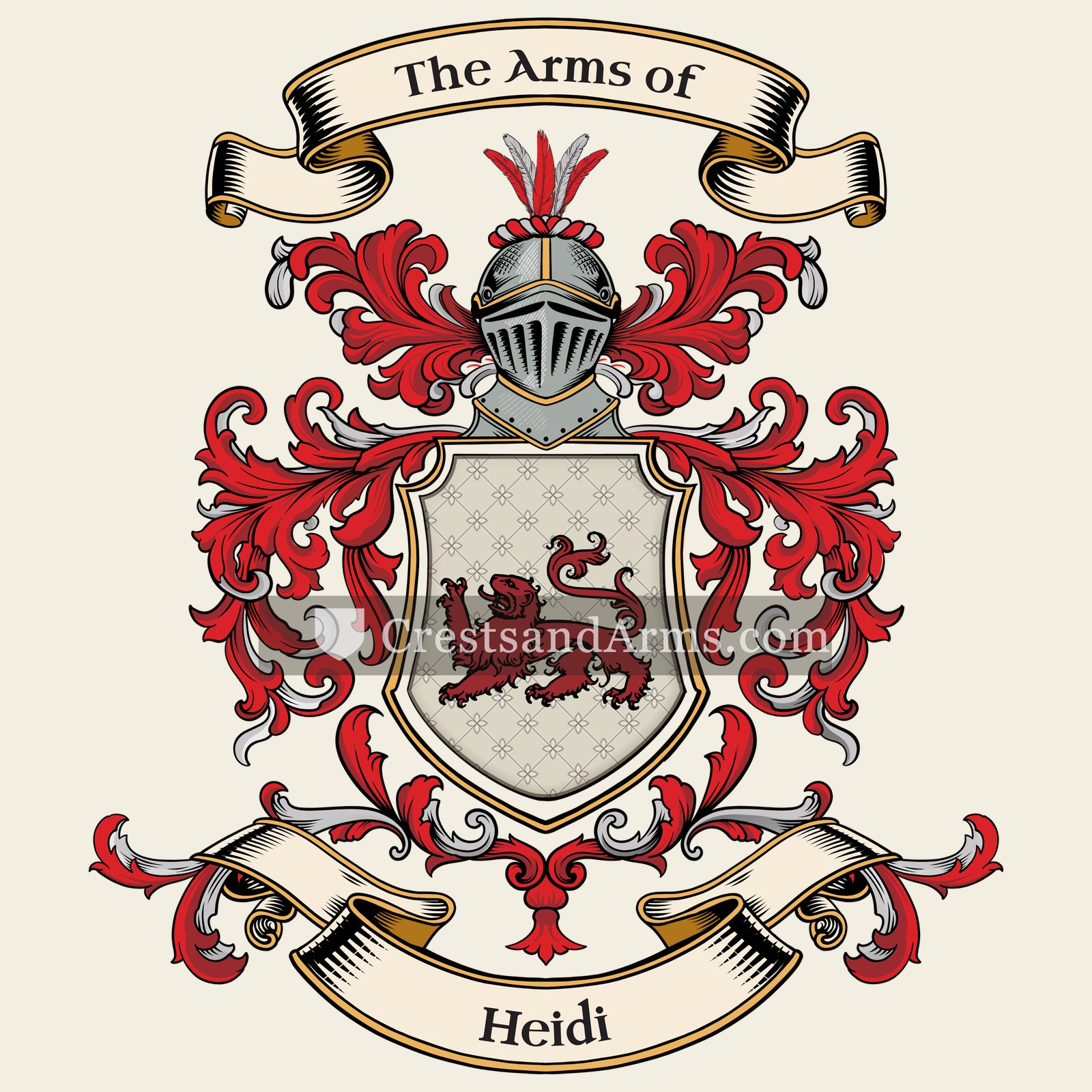
Recorded among the armigerous families of Silesia.
Origin & History of the Heidi Family in Germany
The name Heidi originates as a shortened, affectionate form of the Germanic name Adelheid, which translates to noble and kind. While the name became famous through literature much later, historical records confirm that families bearing this name were well-established in the region of Silesia by 1765. During this period, Silesia was a vibrant cultural crossroads under Prussian rule, and families with this name were often integrated into the local agricultural or artisan communities. Because the name began as a term of endearment, it likely transitioned from a personal nickname into a permanent family surname as record-keeping became more standardized in Central Europe. These early ancestors lived through a time of significant social change, helping to shape the local identity of the Silesian landscape long before the name gained widespread international recognition.
Related Branches & Arms
Root word
Adelheid
Germanic roots meaning noble and kind or of noble sort.
This name
HeidiA diminutive form representing nobility and a kind, gentle nature.
also spelled
Heyde
Heiden
Heid
Hide
Hyde
Documented Sources
J. B. Rietstap, Armorial Général, Gouda: G. B. van Goor Zonen, 1884–87
Bahlow, Hans, Deutsches Namenlexikon: Familien- und Vornamen nach Ursprung und Sinn erklärt, 1967
Heintze, Albert, Die deutschen Familien-Namen: geschichtlich, geographisch, sprachlich, 1903
State Archive in Wrocław (Archiwum Państwowe we Wrocławiu), Akta stanu cywilnego (Civil Registry Records), 1765
Digital archive packCoat of arms PNG, gold border print PDF, vector SVG and the certificate of authenticity. Sent to your email in minutes.


 lionCourage, strength and royalty
 lionCourage, strength and royalty