Map of Netherlands showing where the Heino arms are recorded
The Heino arms were recorded in Netherlands, c. 1815.
Arms such as these were typically recorded in Friesland.
Friesland was low, wet country on the northern coast of the Netherlands, farmed by families who had held the same land for centuries. Free landholders were unusually common there, and a free landholder could carry arms.
This is where the arms were entered in the register. Families often moved to other parts of the country, so the same name can turn up in more than one region.
Region
Friesland
First recorded
1815
Granting Authority for the Heino Arms
Hoge Raad van Adel
Photograph made by me · CC BY-SA 3.0
The body that granted and recorded arms in Netherlands in this period.
William I of the Netherlands
Sovereign of the period
William I of the Netherlands
1815–1840
Reigning in Netherlands when the Heino arms are first recorded.
How Arms Worked in Netherlands
In the Netherlands, coats of arms were often used by noble families and those who held specific public offices. These arms were passed down through the generations to legitimate descendants. Younger branches of a family usually kept the original design without needing to add special marks. This system ensured that the family identity remained clear and consistent over many years.
Granting authority
The Hoge Raad van Adel is the official body that regulates and manages noble titles and coats of arms in the Netherlands.
How they got arms
Families typically obtained their coats of arms through official royal grants or by proving their long-standing historical use of the symbols.
Where arms were recorded
Coats of arms are officially recorded in the registers held by the Hoge Raad van Adel, which began its work in 1814.
The family's standing
Recorded among the armigerous families of Netherlands.
Origin & History of the Heino Family in Netherlands
The name Heino has deep roots in the northern regions of the Netherlands, particularly within the province of Friesland. By the early 19th century, families bearing this name were well-established in Frisian communities. The name itself is a patronymic variation, which means it likely originated as a shortened form of Germanic names starting with the element "hagin," meaning enclosure or hedge. In the context of 1815, when the Netherlands began formalizing civil registration, families like the Heinos were part of a society transitioning toward standardized surnames. These early ancestors were often tied to the local agricultural landscape of the northern provinces, where they lived as part of the tight-knit rural population. Their presence in Friesland during this era reflects the broader history of Dutch families who maintained strong regional identities while adapting to the changing administrative laws of the newly formed Kingdom of the Netherlands.
Coat of Arms & Family Crest Details
Symbols on this shield
cross symbolChristian faith and service
fessThe military belt, and readiness to serve
Colours
Blue (Azure)Means: Loyalty and truth
Red (Gules)Means: Military strength
Silver (Argent)Means: Peace and sincerity
Historical info
Source
J. B. Rietstap, Armorial Général, Gouda: G. B. van Goor Zonen, 1884–87
Blazon (the actual original written record)
“Ec.: aux 1 et 4 d'azur à trois croisettes pattées d'arg.; aux 2 et 3 fascé de gu. et d'arg., de quatre pièces. Cq. cour. C.: un homme iss., hab. de gu., au rabat d'arg., coiffé d'un bonnet de gu., tenant de sa main dextre une croix pattée d'arg. et de sa sen. un marteau au nat., posé sur son épaule.”
Germanyc. 1708
Digital archive packCoat of arms PNG, gold border print PDF, vector SVG and the certificate of authenticity. Sent to your email in minutes.
Map of Germany showing where the Heino arms are recorded
The Heino arms were recorded in Germany, c. 1708.
Arms such as these were typically recorded in Bavaria.
Bavaria was a country of old landed families and walled market towns. Estates passed down the same line for centuries, and both the landowners and the leading townsmen kept arms, which is why so many Bavarian names sit in the registers.
This is where the arms were entered in the register. Families often moved to other parts of the country, so the same name can turn up in more than one region.
The body that granted and recorded arms in Germany in this period.
Joseph I, Holy Roman Emperor
Sovereign of the period
Joseph I, Holy Roman Emperor
1705–1711
Reigning in Netherlands when the Heino arms are first recorded.
How Arms Worked in Germany
In the Holy Roman Empire, coats of arms were often granted to individuals by the Emperor or his representatives. These arms were then passed down through the generations to all legitimate descendants of the original holder. Younger branches of a family usually kept the same shield design without needing to change it, as the arms belonged to the entire lineage.
Granting authority
The Holy Roman Emperor held the sole power to grant new coats of arms throughout his vast imperial territories.
How they got arms
Families typically obtained their coats of arms through a formal imperial grant or by proving their noble status to the authorities.
Where arms were recorded
These grants were officially recorded in the Imperial Chancery registers, which began keeping formal records of such honors during the Middle Ages.
The family's standing
Recorded among the armigerous families of Germany.
Origin & History of the Heino Family in Germany
The name Heino originates from the Germanic personal name Heino, which functioned as a short form of names beginning with the element "hagan" or "hein," meaning home or enclosure. By the early eighteenth century, families bearing this name were established in the region of Bavaria. During this period, the social structure of rural Bavaria was defined by agrarian life and strict parish record-keeping. Families like the Heinos often lived in small, tight-knit village communities where their identity was closely tied to their local land and their religious affiliation. As the name transitioned from a personal identifier to a hereditary surname, it reflected the shift toward more permanent family lineages in southern Germany. These early ancestors were likely part of the hardworking peasant or artisan classes who maintained the traditions and local customs of the Bavarian countryside during the post-war recovery of the early 1700s.
Coat of Arms & Family Crest Details
Symbols on this shield
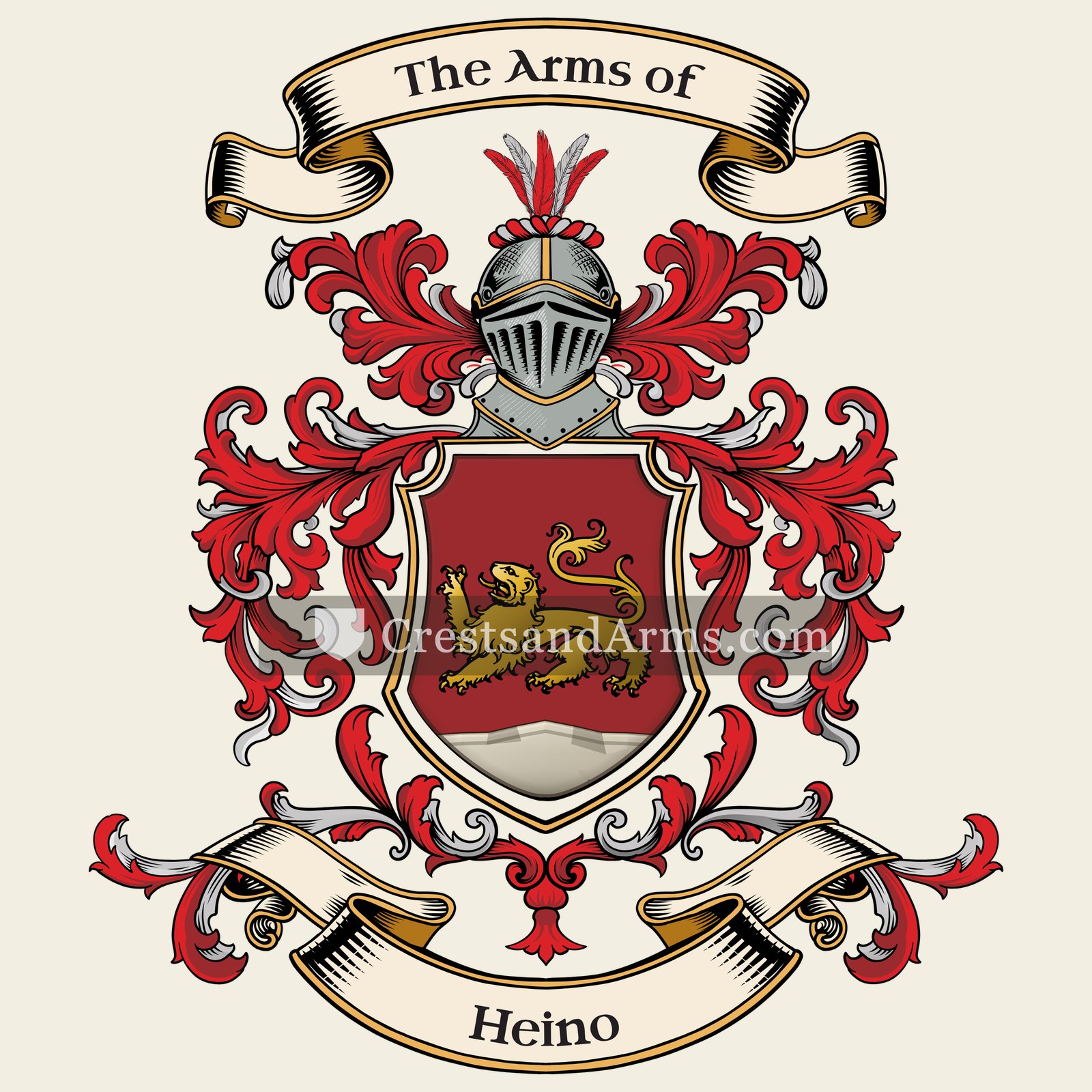
mountThe ground held, and steadfastness upon it
lionCourage, strength and royalty
Colours
Red (Gules)Means: Military strength
Silver (Argent)Means: Peace and sincerity
Gold (Or)Means: Generosity
Historical info
Source
J. B. Rietstap, Armorial Général, Gouda: G. B. van Goor Zonen, 1884–87
Blazon (the actual original written record)
“De gu. au lion d'or, soutenu d'une terrasse rocheuse d'arg. Cq. cour. C.: le lion ramp., tenant de sa patte dextre trois roses de gu., bout. d'or, tigées et feuillées de sin.; entre deux prob., coupées alt. d'or et de gu. L.: d'or et de gu.”
Austriac. 1612
Digital archive packCoat of arms PNG, gold border print PDF, vector SVG and the certificate of authenticity. Sent to your email in minutes.
Map of Austria showing where the Heino arms are recorded
The Heino arms were recorded in Austria, c. 1612.
Arms such as these were typically recorded in Tyrol.
Tyrol was mountain country in western Austria, where the valleys were held by families who had been there a very long time. Old tenure counted for more than money, and old families carried arms.
This is where the arms were entered in the register. Families often moved to other parts of the country, so the same name can turn up in more than one region.
Region
Tyrol
First recorded
1612
Granting Authority for the Heino Arms
Imperial and Royal chancery
Sodacan · CC BY-SA 3.0
The body that granted and recorded arms in Austria in this period.
Emperor Rudolf II
Sovereign of the period
Emperor Rudolf II
1576–1612
Reigning in Netherlands when the Heino arms are first recorded.
How Arms Worked in Austria
Austrian coats of arms were often linked directly to noble titles granted by the Emperor. These symbols belonged to the entire family line rather than just one individual. When a family grew, new branches kept the original design without needing to change it. This system allowed all members of a noble house to share the same identity across many generations.
Granting authority
The Imperial and Royal chancery managed all heraldic matters and controlled the official granting of arms throughout the Austrian lands.
How they got arms
Families typically received their arms through a formal imperial decree that often accompanied the elevation of a person to noble status.
Where arms were recorded
Official records of these grants were kept in the Imperial Register of Nobility which began its formal documentation process in 1453.
The family's standing
Recorded among the armigerous families of Austria.
Origin & History of the Heino Family in Austria
The family name Heino traces its roots in the Austrian region of Tyrol back to at least 1612. During this period, the name was closely tied to the rugged landscape of the Alps, where families often lived in small, isolated mountain communities. The name likely evolved from regional naming traditions that favored short, distinct sounds common in Germanic dialects. As residents of Tyrol, early members of the Heino family were likely involved in the local agricultural and mining industries that defined the economy of the seventeenth century. Life in these high-altitude valleys required great resilience, and the family name persisted through generations as they integrated into the social and religious structures of the Holy Roman Empire. By maintaining their presence in the region, the early Heino family became a small but enduring part of the cultural tapestry of the Tyrolean mountains.
Related Branches & Arms
Root word
Hagin
Germanic root meaning hedge, enclosure, or protected area.
This name
HeinoDerived from a diminutive of names containing the element hagin, signifying a protector or ruler of an enclosure.
also spelled
Heyn
Heinn
Heine
Hine
Documented Sources
J. B. Rietstap, Armorial Général, Gouda: G. B. van Goor Zonen, 1884–87
Meertens, P.J., De betekenis van de Nederlandse familienamen, 1959
Van der Schaar, J., Woordenboek van voornamen, 1964
AlleFriezen, Burgerlijke Stand 1811-1950
Nationaal Archief, Registers van de Burgerlijke Stand
Digital archive packCoat of arms PNG, gold border print PDF, vector SVG and the certificate of authenticity. Sent to your email in minutes.


 towerGrandeur and solidity, and a stronghold defended
 towerGrandeur and solidity, and a stronghold defended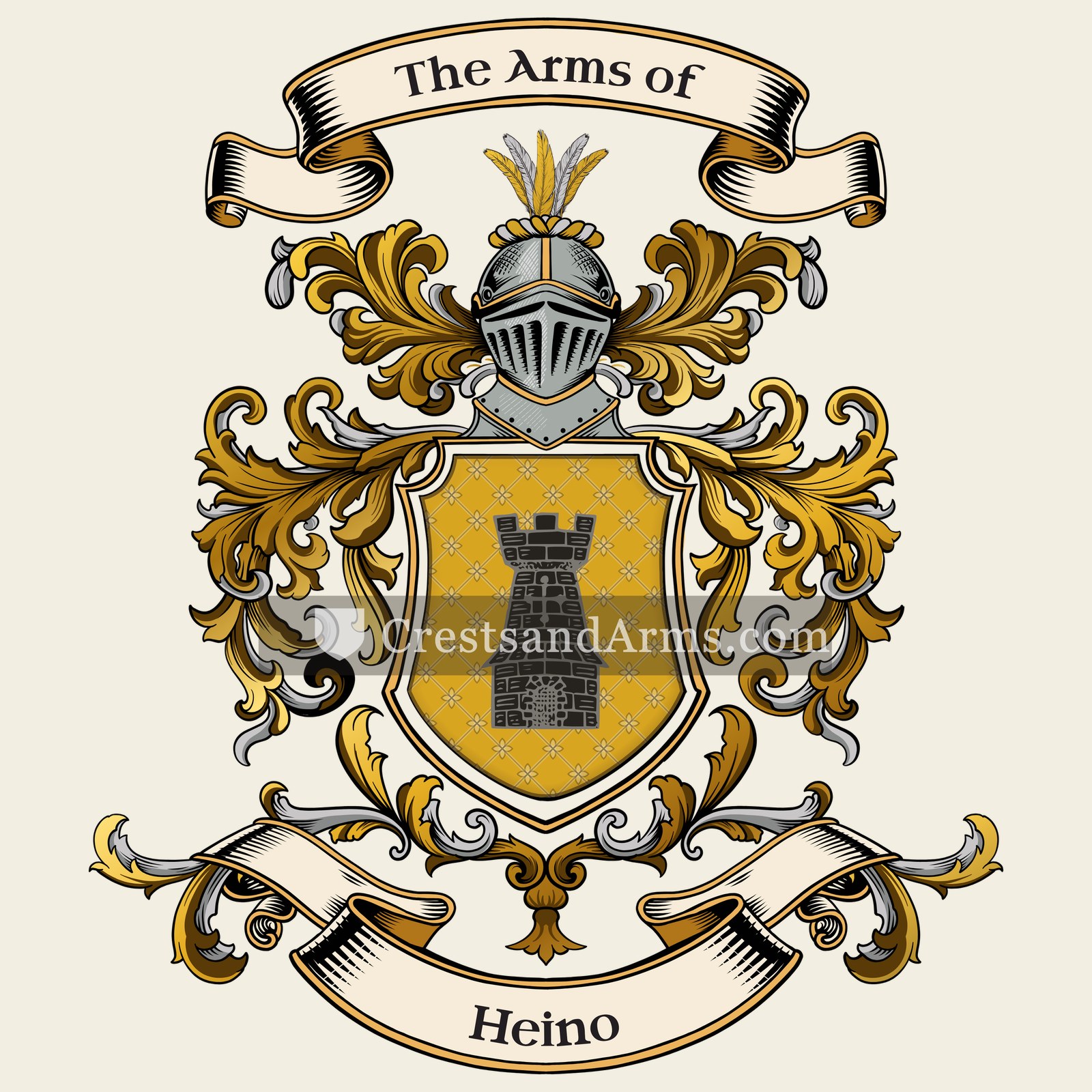


 cross symbolChristian faith and service
 fessThe military belt, and readiness to serve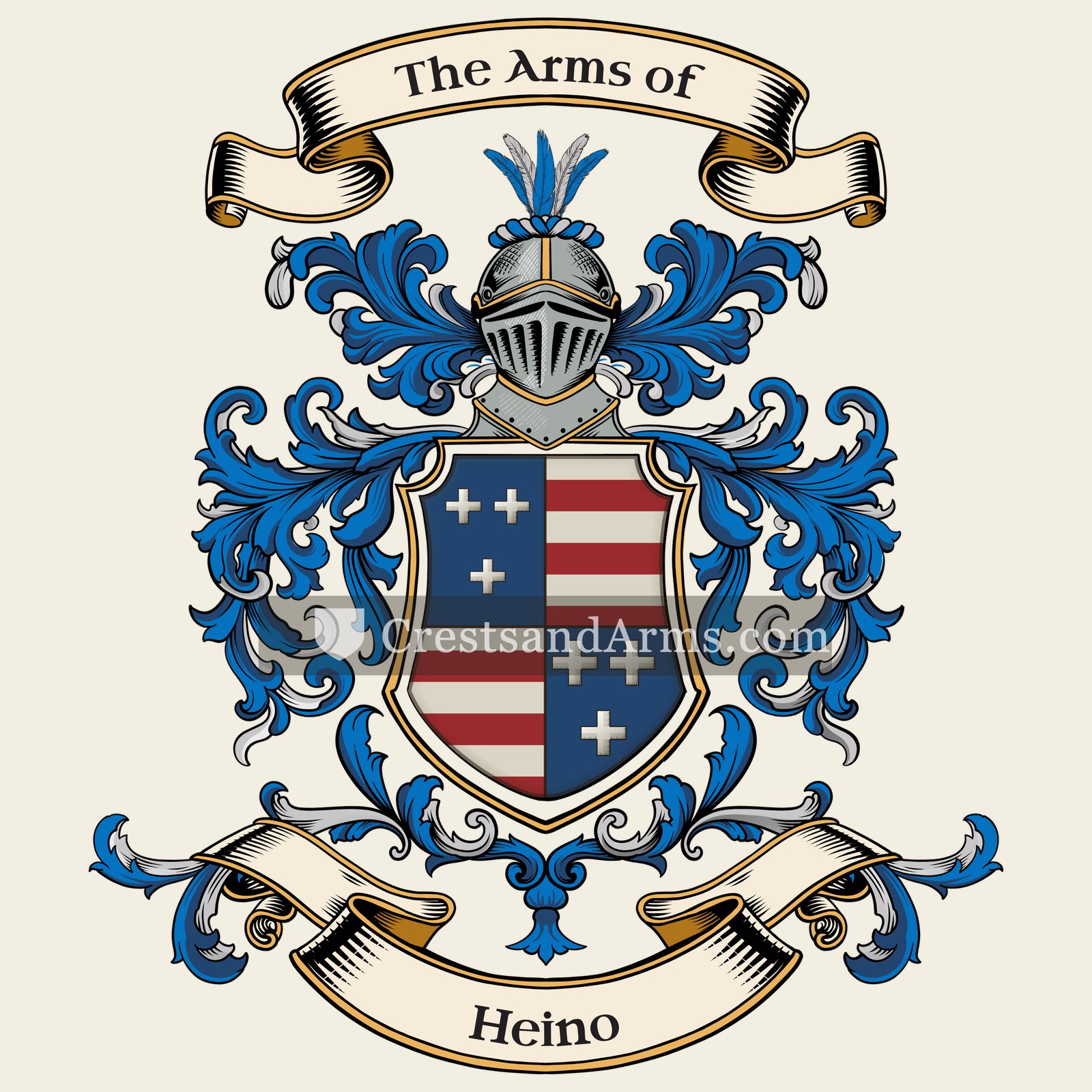


 mountThe ground held, and steadfastness upon it
 lionCourage, strength and royalty