Map of Belgium showing where the Heister arms are recorded
The Heister arms were recorded in Brabant, c. 1737.
Brabant lay at the heart of the Low Countries, where the trade routes met. Its towns were wealthy and its landowners many, and both kinds of family kept arms, which is why the region is so heavily represented.
This is where the arms were entered in the register. Families often moved to other parts of the country, so the same name can turn up in more than one region.
The body that granted and recorded arms in Belgium in this period.
Charles VI, Holy Roman Emperor
Sovereign of the period
Charles VI, Holy Roman Emperor
1711–1740
Reigning in Belgium when the Heister arms are first recorded.
How Arms Worked in Belgium
In Belgium, a coat of arms is considered personal property that is passed down through the male line to legitimate descendants. Families often use the same shield design across generations to show their shared heritage. If a branch of the family wants to change the design, they must apply for an official update to their specific version of the arms.
Granting authority
The Conseil héraldique is the official body that regulates and approves all coats of arms in Belgium.
How they got arms
Families obtain their coats of arms through formal royal grants or by confirming their historical right to use existing designs.
Where arms were recorded
All approved coats of arms are officially recorded in the public registers of the Conseil héraldique since 1844.
The family's standing
Recorded among the armigerous families of Brabant.
Origin & History of the Heister Family in Belgium
The history of the Heister family in Belgium is deeply rooted in the historical region of Brabant, where records confirm their presence as early as 1737. During the eighteenth century, Brabant was a bustling center of trade and agriculture under the rule of the Austrian Netherlands. Families like the Heisters often lived in these rural or semi-urban landscapes, working within the local guild systems or managing land holdings that defined the economy of the era. The name itself likely originated from Germanic roots, reflecting the movement of people across borders in Western Europe during a time of shifting political boundaries. By establishing themselves in Brabant, the early Heister family became part of a complex social fabric that survived the transition from Austrian rule to the later formation of the modern Belgian state. Their presence in these records highlights the long-standing tradition of families settling in the Low Countries to build lives centered on local community and regional commerce.
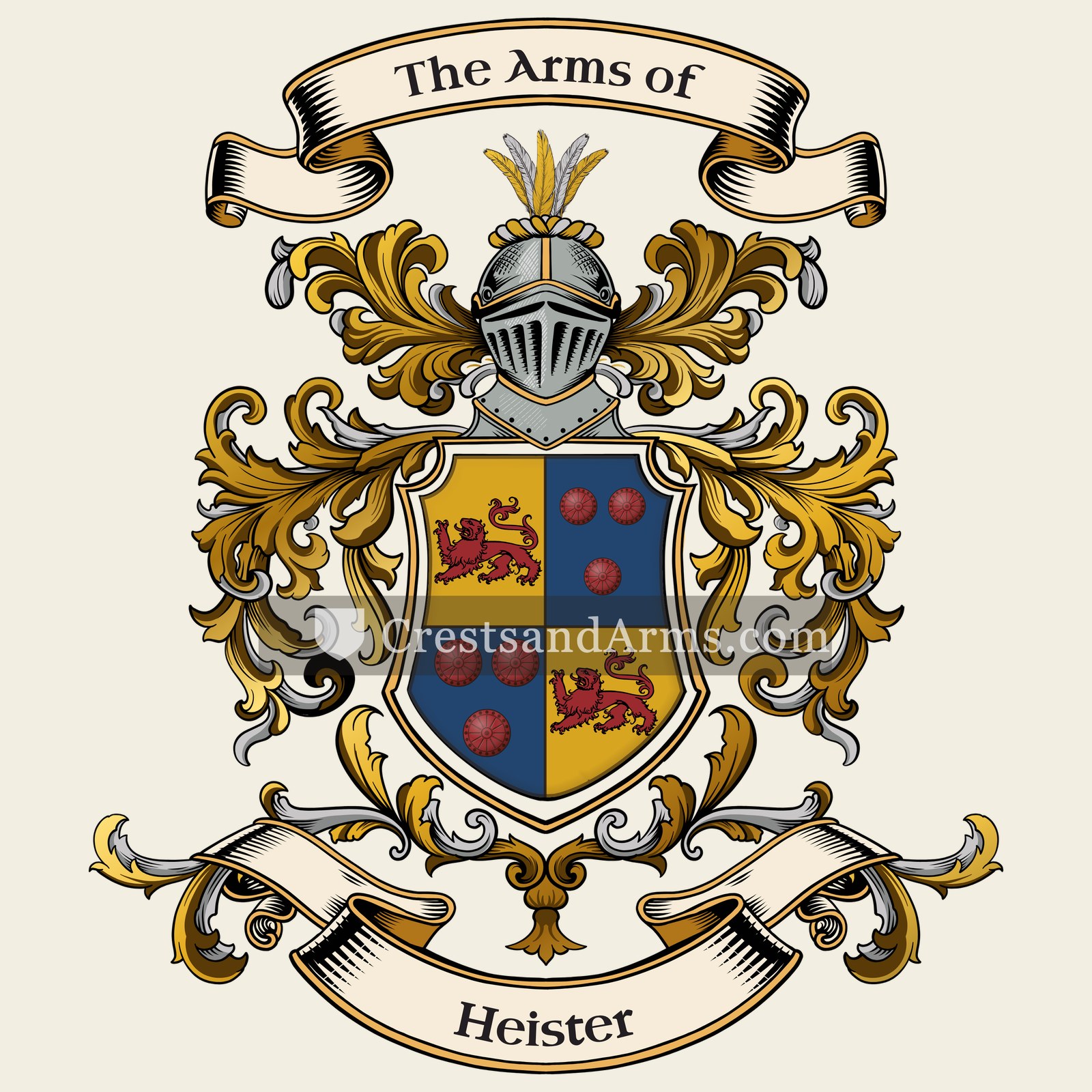
Coat of Arms & Family Crest Details
Symbols on this shield
mountThe ground held, and steadfastness upon it
treeLife, endurance and deep roots
sunGlory, splendour and the source of life
Colours
Silver (Argent)Means: Peace and sincerity
Green (Vert)Means: Hope
Gold (Or)Means: Generosity
Historical info
Source
J. B. Rietstap, Armorial Général, Gouda: G. B. van Goor Zonen, 1884–87
Blazon (the actual original written record)
“D'arg. à un hêtre de sin., terrassé du même; et un soleil d'or, br. sur le fût. Cq. cour. C.: un sceptre d'or, posé en pal, entre deux cornes de buffle d'arg. L.: d'arg. et de sin.”
HesseHesse, c. 1631
Digital archive packCoat of arms PNG, gold border print PDF, vector SVG and the certificate of authenticity. Sent to your email in minutes.
Map of Germany showing where the Heister arms are recorded
The Heister arms were recorded in Hesse, c. 1631.
Hesse was central German country, divided among a large number of small landowners and prosperous towns. So many separate households held ground there that the region produced an unusual number of coats of arms.
This is where the arms were entered in the register. Families often moved to other parts of the country, so the same name can turn up in more than one region.
The body that granted and recorded arms in Germany in this period.
Ferdinand II, Holy Roman Emperor
Sovereign of the period
Ferdinand II, Holy Roman Emperor
1619–1637
Reigning in Belgium when the Heister arms are first recorded.
How Arms Worked in Germany
In the Holy Roman Empire, coats of arms were often granted to individuals by the Emperor or his representatives. These arms were then passed down through the generations to all legitimate descendants of the original holder. Younger branches of a family usually kept the same shield design without needing to change it, as the arms belonged to the entire lineage.
Granting authority
The Holy Roman Emperor held the sole power to grant new coats of arms throughout his vast imperial territories.
How they got arms
Families typically obtained their coats of arms through a formal imperial grant or by proving their noble status to the authorities.
Where arms were recorded
These grants were officially recorded in the Imperial Chancery registers, which began keeping formal records of such honors during the Middle Ages.
The family's standing
Recorded among the armigerous families of Hesse.
Origin & History of the Heister Family in Germany
The surname Heister traces its roots to the central German region of Hesse, where records confirm the presence of the family as early as 1631. The name is generally considered a topographic surname, which means it was likely adopted by people who lived near a specific local landmark. In the German language, the term *heister* historically referred to a young beech tree or a sapling. It is probable that the earliest members of the family lived near a prominent grove or a young forest, leading neighbors to identify them by their surroundings. During the seventeenth century, life in Hesse was defined by the deep social and physical disruptions of the Thirty Years' War. Families like the Heisters often lived in small, rural agricultural communities where they were closely tied to the land and the local landscape. As the family grew and moved across German territories, the name persisted as a reflection of their ancestral connection to the forests of their home region.
Coat of Arms & Family Crest Details
Symbols on this shield
lionCourage, strength and royalty
roundelA coin, and one who has been to the crusades
Colours
Gold (Or)Means: Generosity
Blue (Azure)Means: Loyalty and truth
Red (Gules)Means: Military strength
Historical info
Source
J. B. Rietstap, Armorial Général, Gouda: G. B. van Goor Zonen, 1884–87
Blazon (the actual original written record)
“Ec.: aux 1 et 4 d'or au lion de gu., celui du 1 cont.; aux 2 et 3 d'azur à trois boules de gu., rangées en barre.”
Austriac. 1664
Digital archive packCoat of arms PNG, gold border print PDF, vector SVG and the certificate of authenticity. Sent to your email in minutes.
Map of Austria showing where the Heister arms are recorded
The Heister arms were recorded in Austria, c. 1664.
Arms such as these were typically recorded in Tyrol.
Tyrol was mountain country in western Austria, where the valleys were held by families who had been there a very long time. Old tenure counted for more than money, and old families carried arms.
This is where the arms were entered in the register. Families often moved to other parts of the country, so the same name can turn up in more than one region.
Region
Tyrol
First recorded
1664
Granting Authority for the Heister Arms
Imperial and Royal chancery
Sodacan · CC BY-SA 3.0
The body that granted and recorded arms in Austria in this period.
Leopold I, Holy Roman Emperor
Sovereign of the period
Leopold I, Holy Roman Emperor
1658–1705
Reigning in Belgium when the Heister arms are first recorded.
How Arms Worked in Austria
Austrian coats of arms were often linked directly to noble titles granted by the Emperor. These symbols belonged to the entire family line rather than just one individual. When a family grew, new branches kept the original design without needing to change it. This system allowed all members of a noble house to share the same identity across many generations.
Granting authority
The Imperial and Royal chancery managed all heraldic matters and controlled the official granting of arms throughout the Austrian lands.
How they got arms
Families typically received their arms through a formal imperial decree that often accompanied the elevation of a person to noble status.
Where arms were recorded
Official records of these grants were kept in the Imperial Register of Nobility which began its formal documentation process in 1453.
The family's standing
Recorded among the armigerous families of Austria.
Origin & History of the Heister Family in Austria
The family name Heister has deep roots in the mountainous landscape of Tyrol, where members of the family were officially documented as early as 1664. During this period, the name was closely tied to the social and economic structures of the Austrian Alps. Families with this surname often lived in small, tight-knit communities where they contributed to the local administration and agricultural life of the region. As the family grew, their presence spread from these high-altitude valleys into other parts of the Austrian Empire. This movement was often driven by military service or the pursuit of professional roles in growing urban centers. By establishing themselves in these new areas, the Heister family became part of the broader history of the Habsburg lands, transitioning from local Tyrolean roots to a wider influence within the region.
Related Branches & Arms
Root word
Heister
Derived from the Middle High German word heister meaning young beech tree.
This name
HeisterA topographic name for someone who lived near a thicket or a young beech forest.
also spelled
Heystar
Heisterr
Heistr
Hyster
Related arms
Haystersimilar arms
Hélarysimilar arms
Heestervariant spelling
Documented Sources
J. B. Rietstap, Armorial Général, Gouda: G. B. van Goor Zonen, 1884–87
State Archives in Belgium (Rijksarchief te Brussel), Parochieregisters van Brabant, 1737
Bauwens, E., Geschiedenis van Brabant: van het hertogdom tot heden, 2005
Digital archive packCoat of arms PNG, gold border print PDF, vector SVG and the certificate of authenticity. Sent to your email in minutes.


 mountThe ground held, and steadfastness upon it
 paleMilitary strength, and a fortified defence
 treeLife, endurance and deep roots
 mountThe ground held, and steadfastness upon it
 paleMilitary strength, and a fortified defence
 treeLife, endurance and deep roots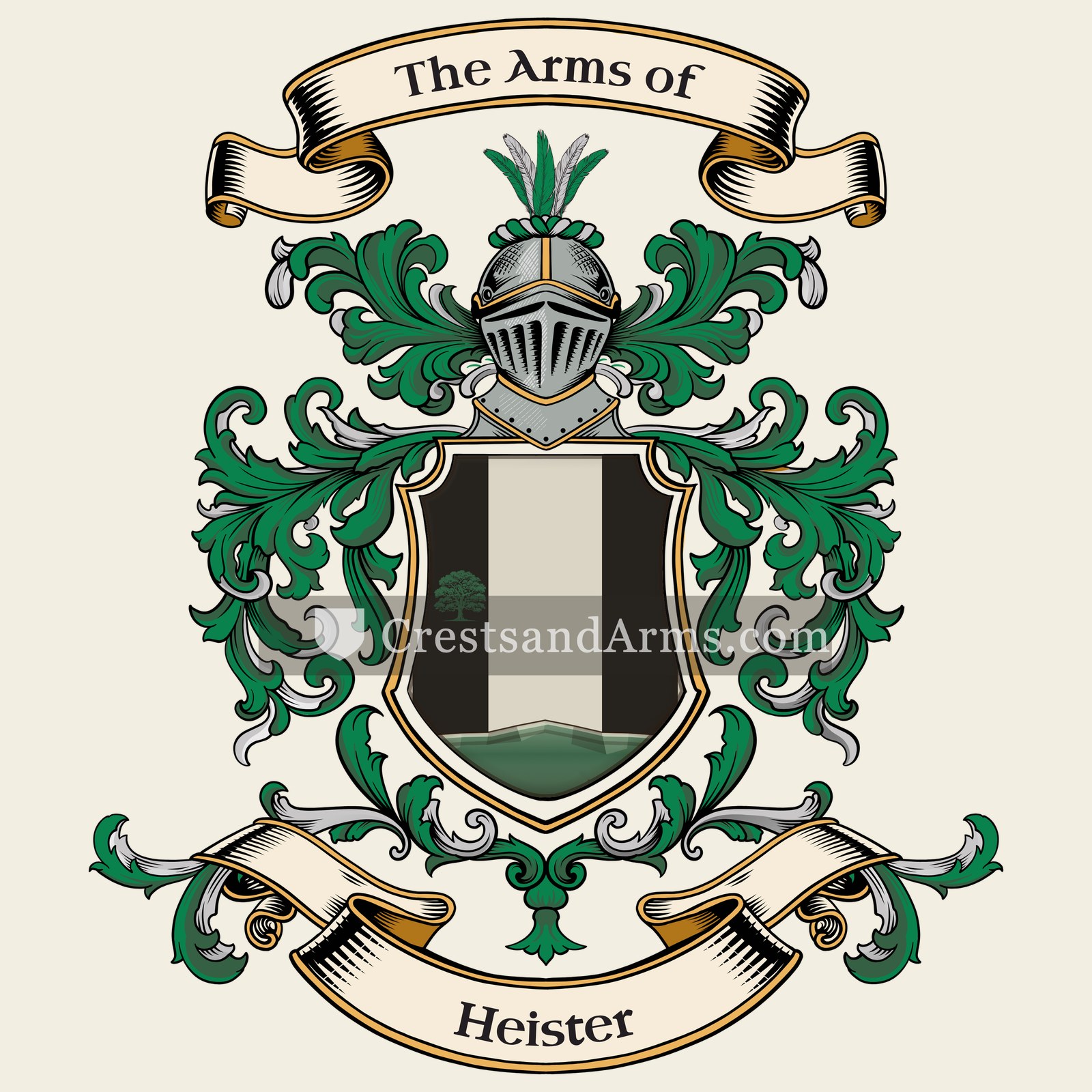


 sunGlory, splendour and the source of life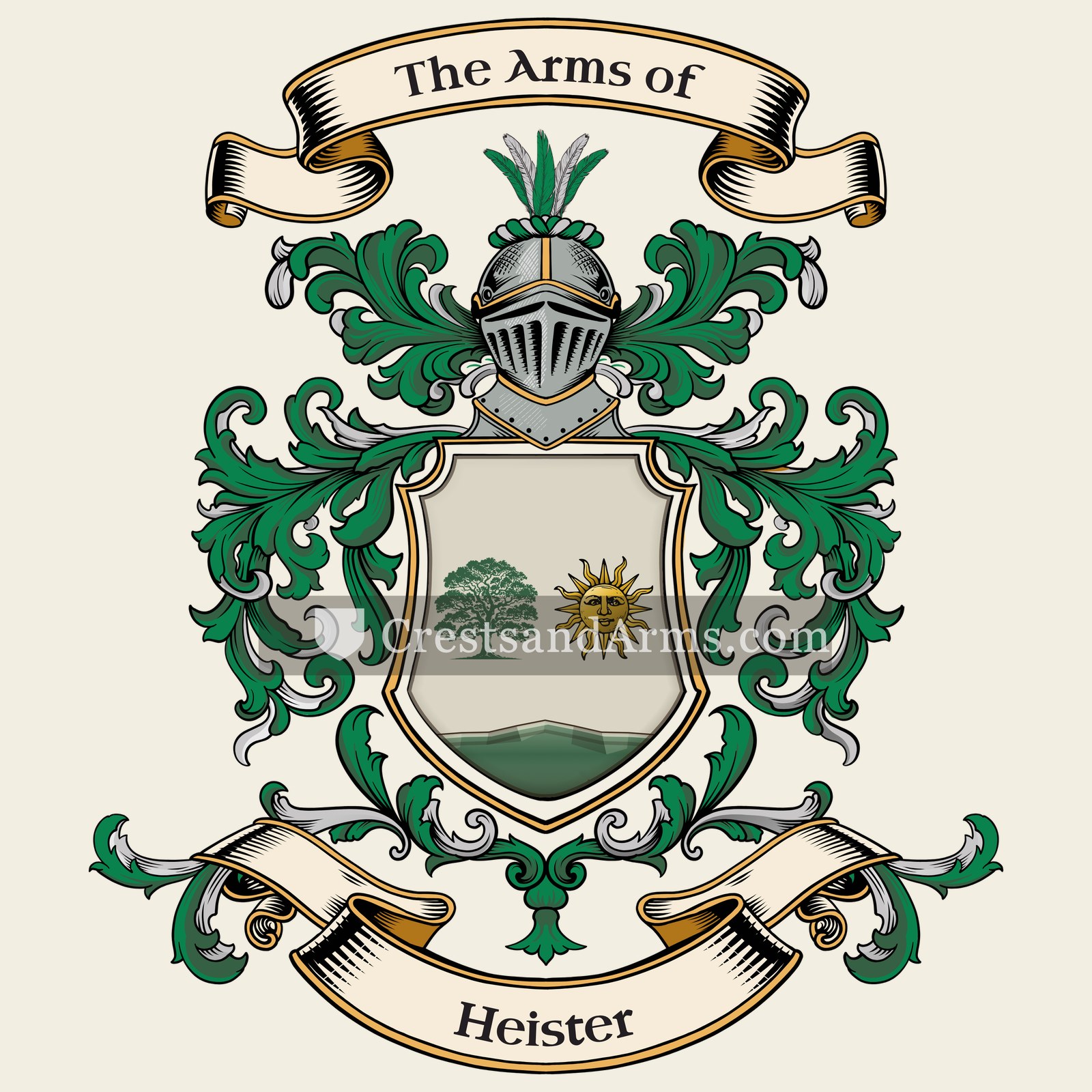


 lionCourage, strength and royalty
 roundelA coin, and one who has been to the crusades