Map of France showing where the Hel arms are recorded
The Hel arms were recorded in Alsace, c. 1784.
Alsace lay between France and the German lands and belonged to both at different times. Its families held small estates and served whichever side ruled, and men who served in arms carried arms of their own.
This is where the arms were entered in the register. Families often moved to other parts of the country, so the same name can turn up in more than one region.
The body that granted and recorded arms in France in this period.
Louis XVI of France
Sovereign of the period
Louis XVI of France
1774–1791
Reigning in France when the Hel arms are first recorded.
How Arms Worked in France
In France, a coat of arms was a mark of honor that passed down through the male line to all legitimate descendants. Families often used the same shield without changes to show their shared heritage. If a branch wanted to stand out, they could add a small mark to their shield to show their specific place in the family tree.
Granting authority
The Juge d'armes de France acted as the official authority that regulated and verified coats of arms across the country.
How they got arms
Families typically inherited their arms from ancestors, though they could also receive them through royal grants or by proving their noble status.
Where arms were recorded
Coats of arms were officially recorded in the Armorial Général de France, which began its main collection in the year 1696.
The family's standing
Recorded among the armigerous families of Alsace.
Origin & History of the Hel Family in France
The family name Hel has deep roots in the Alsace region of eastern France, a territory that has historically served as a cultural bridge between French and Germanic traditions. By the late eighteenth century, records confirm that members of the Hel family were well established in this area, particularly around 1784. During this period, Alsace was a complex landscape of agricultural villages and growing towns where families often identified themselves through their local trade or their specific village of origin. The name Hel likely evolved from these regional dialects, reflecting the linguistic blending common in the Rhine valley. As residents of a borderland, the early Hel family members lived through a time of significant social change, eventually witnessing the transition from the old royal structures of France to the revolutionary era that redefined citizenship and family identity across the nation.
Coat of Arms & Family Crest Details
Symbols on this shield
fessThe military belt, and readiness to serve
Colours
Green (Vert)Means: Hope
Silver (Argent)Means: Peace and sincerity
Historical info
Source
J. B. Rietstap, Armorial Général, Gouda: G. B. van Goor Zonen, 1884–87
Blazon (the actual original written record)
“De sin. à la fasce d'arg. Cq. cour. C.: deux cornes de bouquetin affrontées, tortillées de sin. et d'arg.”
FranconiaFranconia, c. 1765
Digital archive packCoat of arms PNG, gold border print PDF, vector SVG and the certificate of authenticity. Sent to your email in minutes.
Map of Germany showing where the Hel arms are recorded
The Hel arms were recorded in Franconia, c. 1765.
Franconia was a patchwork of small territories in central Germany, full of minor landowners and prosperous market towns. So many separate households held land there that the region produced a great many coats of arms.
This is where the arms were entered in the register. Families often moved to other parts of the country, so the same name can turn up in more than one region.
The body that granted and recorded arms in Germany in this period.
Francis I, Holy Roman Emperor
Sovereign of the period
Francis I, Holy Roman Emperor
1745–1765
Reigning in France when the Hel arms are first recorded.
How Arms Worked in Germany
In the Holy Roman Empire, coats of arms were often granted to individuals by the Emperor or his representatives. These arms were then passed down through the generations to all legitimate descendants of the original holder. Younger branches of a family usually kept the same shield design without needing to change it, as the arms belonged to the entire lineage.
Granting authority
The Holy Roman Emperor held the sole power to grant new coats of arms throughout his vast imperial territories.
How they got arms
Families typically obtained their coats of arms through a formal imperial grant or by proving their noble status to the authorities.
Where arms were recorded
These grants were officially recorded in the Imperial Chancery registers, which began keeping formal records of such honors during the Middle Ages.
The family's standing
Recorded among the armigerous families of Franconia.
Origin & History of the Hel Family in Germany
The surname Hel is deeply rooted in the historical landscape of Franconia, a region in southern Germany known for its complex social structures and agricultural traditions. By the mid-eighteenth century, families bearing this name were well-established within the local community, as evidenced by records confirming their presence in the area by 1765. The name itself is often associated with regional linguistic roots, potentially derived from short forms of personal names or descriptive terms related to the local topography. During this period, families like the Hels were typically integrated into the village life of the Holy Roman Empire, where they likely worked as farmers, craftsmen, or tradespeople. These early generations lived through a time of significant cultural transition in Germany, navigating the rigid social hierarchies of the Franconian territories while contributing to the development of their local parishes and towns. Their history reflects the broader experience of many Germanic families who maintained deep ties to their ancestral lands for generations.
Coat of Arms & Family Crest Details
Symbols on this shield
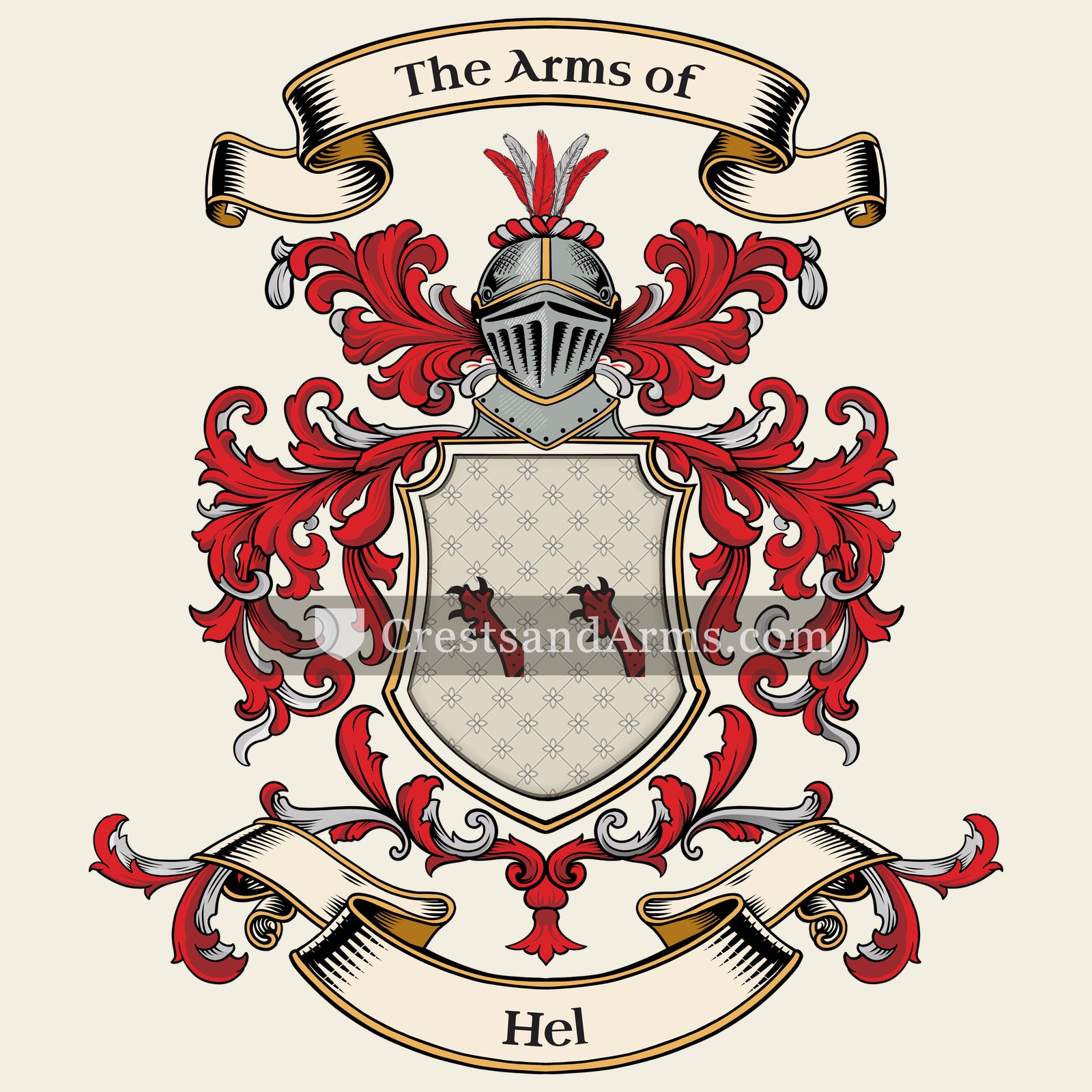
saltireResolution, and St Andrew's cross
paleMilitary strength, and a fortified defence
pawStrength held ready, the beast's power in a single limb
Colours
Silver (Argent)Means: Peace and sincerity
Red (Gules)Means: Military strength
Historical info
Source
J. B. Rietstap, Armorial Général, Gouda: G. B. van Goor Zonen, 1884–87
Blazon (the actual original written record)
“D'arg. à deux pattes de lion de gu., passées en saut., les ongles en haut. C.: deux pattes de lion de gu., en pals, les ongles en haut [Comp. Häll de Suntheim.]”
Switzerlandc. 1745
Digital archive packCoat of arms PNG, gold border print PDF, vector SVG and the certificate of authenticity. Sent to your email in minutes.
Map of Switzerland showing where the Hel arms are recorded
The Hel arms were recorded in Switzerland, c. 1745.
Arms such as these were typically recorded in Bern.
Bern was the largest of the Swiss cantons and ran itself, with its own council and its own courts. Its governing families held office for generations, and office of that kind carried a shield with it.
This is where the arms were entered in the register. Families often moved to other parts of the country, so the same name can turn up in more than one region.
The body that granted and recorded arms in Switzerland in this period.
How Arms Worked in Switzerland
In Switzerland, coats of arms were not restricted to the nobility and were often adopted by common citizens and families. These symbols were passed down through generations to show family identity. When branches of a family grew, they often changed small details of the design to distinguish their own line from the original group.
Granting authority
Cantonal and civic authorities managed the use of coats of arms within their specific regions and local jurisdictions.
How they got arms
Families typically assumed their own coats of arms based on local custom rather than receiving them from a central monarch.
Where arms were recorded
Arms were recorded in various cantonal and civic registers starting from the fourteenth century throughout the Swiss region.
The family's standing
Recorded among the armigerous families of Switzerland.
Origin & History of the Hel Family in Switzerland
The history of the Hel family in Switzerland is deeply rooted in the urban development of the city of Bern during the eighteenth century. By 1745, records confirm that members of the Hel family were established residents within the city walls, participating in the structured social and economic life of the Swiss Confederacy. During this era, Bern was a powerful city-state governed by a strict patrician class, and families like the Hels often integrated into the local guilds or trade networks that defined the region. Because the name is short and distinct, it likely originated from a descriptive nickname or a reference to a specific geographic location in the German-speaking territories. As the family settled into their lives in Bern, they contributed to the steady growth of the local population during a time of relative stability and agricultural prosperity. Their presence in the city archives suggests they were part of the hardworking middle strata of society that kept the city functioning through commerce and civic duty.
Related Branches & Arms
Root word
Helios
Ancient Greek term referring to the sun or the sun god.
This name
HelA locative or topographic surname likely denoting someone living near a sunny place or a sun-facing slope.
also spelled
Helle
Hel
Hellel
Hylle
Hellee
Documented Sources
J. B. Rietstap, Armorial Général, Gouda: G. B. van Goor Zonen, 1884–87
Archives Départementales du Bas-Rhin, Registres paroissiaux et d'état civil, 1784
Kintz, Jean-Pierre, La société alsacienne au XVIIIe siècle, 1984
Lefebvre, Georges, Les paysans du Nord pendant la Révolution française, 1924
Digital archive packCoat of arms PNG, gold border print PDF, vector SVG and the certificate of authenticity. Sent to your email in minutes.


 eagleNobility, strength and a keen mind
 eagleNobility, strength and a keen mind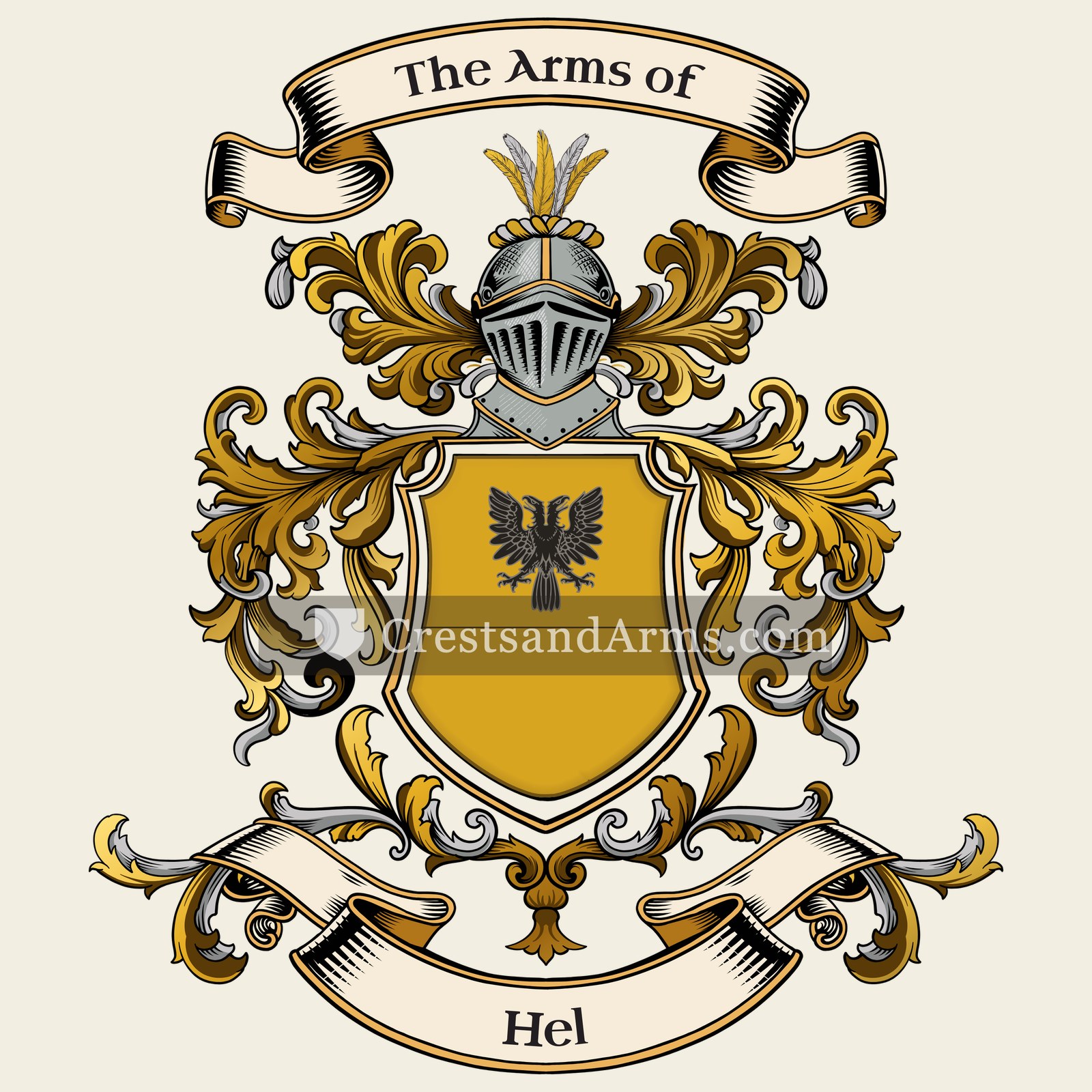


 fessThe military belt, and readiness to serve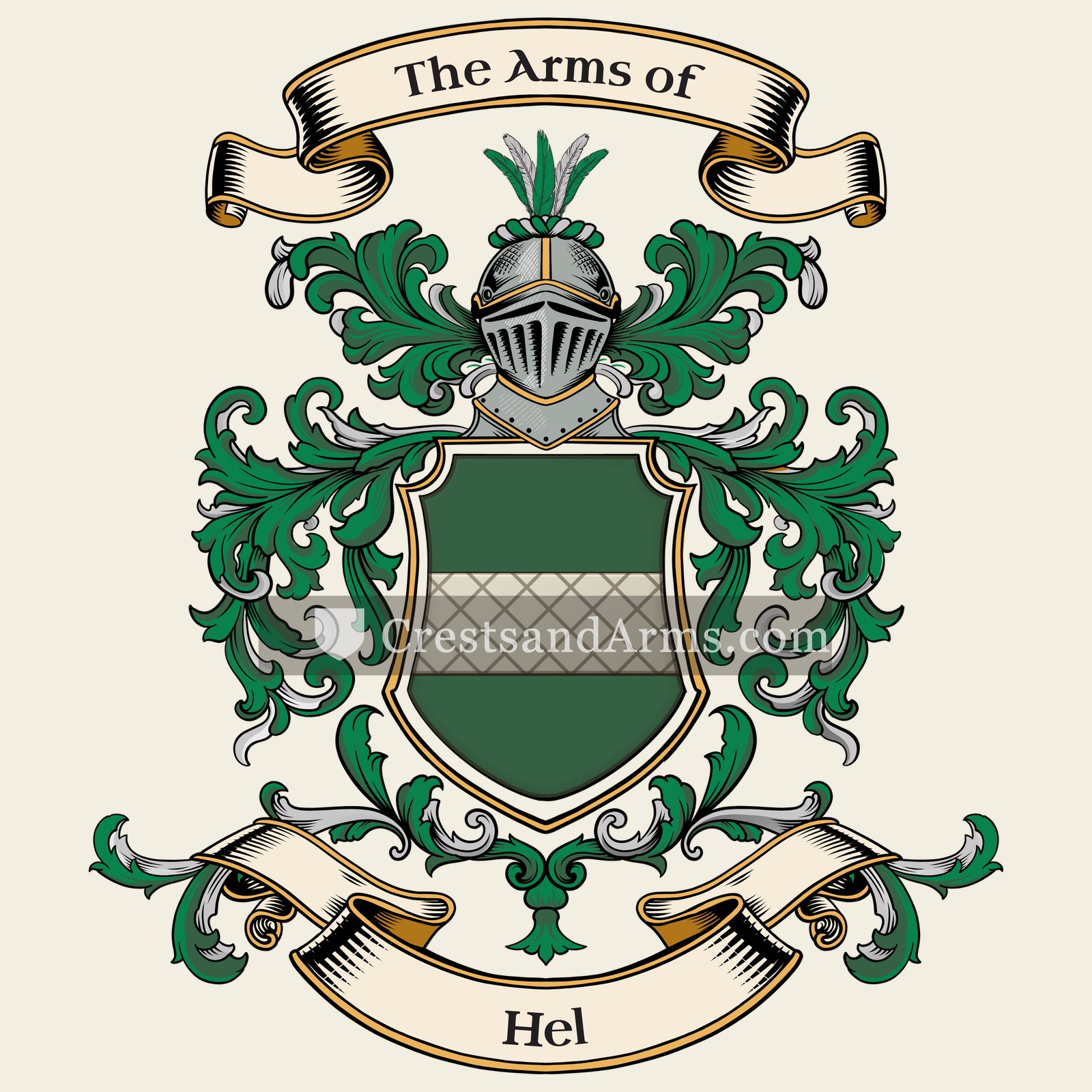


 saltireResolution, and St Andrew's cross
 paleMilitary strength, and a fortified defence
 pawStrength held ready, the beast's power in a single limb