A record of documented arms, meaning and origin, researched for the Helbig family lines. Documented in 2 countries.
Reg. 2307 · Dutch, G–I
Coat of Arms & Family Crest Details
Symbols on this shield
lionCourage, strength and royalty
roseThe seventh son, and beauty with grace
Colours
Gold (Or)Means: Generosity
Blue (Azure)Means: Loyalty and truth
Red (Gules)Means: Military strength
Historical info
Source
J. B. Rietstap, Armorial Général, Gouda: G. B. van Goor Zonen, 1884–87
Blazon (the actual original written record)
“Coupé: au 1 d'or au lion de gu., tenant de ses pattes la lame d'une épée d'azur en pal; au 2 d'azur à une fleur de huit feuilles d'or, mouvante en rond. L'écu bordé d'or. Cq. cour. C.: un chevalier iss., le casque panaché de gu., tenant une épée d'arg. L.: à dextre d'or et de gu., à sen. d'or et d'azur.”
ZeelandZeeland, c. 1779
Digital archive packCoat of arms PNG, gold border print PDF, vector SVG and the certificate of authenticity. Sent to your email in minutes.
Map of Netherlands showing where the Helbig arms are recorded
The Helbig arms were recorded in Zeeland, c. 1779.
Zeeland was a scatter of islands in the south-west of the Netherlands, living on the sea and on land reclaimed from it. Families who drained and held that land were counted among the gentry, and gentry carried arms.
This is where the arms were entered in the register. Families often moved to other parts of the country, so the same name can turn up in more than one region.
Region
Zeeland
First recorded
1779
Granting Authority for the Helbig Arms
Hoge Raad van Adel
Photograph made by me · CC BY-SA 3.0
The body that granted and recorded arms in Netherlands in this period.
How Arms Worked in Netherlands
In the Netherlands, coats of arms were often used by noble families and those who held specific public offices. These arms were passed down through the generations to legitimate descendants. Younger branches of a family usually kept the original design without needing to add special marks. This system ensured that the family identity remained clear and consistent over many years.
Granting authority
The Hoge Raad van Adel is the official body that regulates and manages noble titles and coats of arms in the Netherlands.
How they got arms
Families typically obtained their coats of arms through official royal grants or by proving their long-standing historical use of the symbols.
Where arms were recorded
Coats of arms are officially recorded in the registers held by the Hoge Raad van Adel, which began its work in 1814.
The family's standing
Recorded among the armigerous families of Zeeland.
Origin & History of the Helbig Family in Netherlands
The Helbig family name carries a history rooted in the movement of people across Northern Europe, eventually establishing a notable presence in the Netherlands by the late eighteenth century. While the name itself is of Germanic origin, its arrival in the coastal province of Zeeland by 1779 suggests a family history shaped by trade, maritime connections, and the migration patterns common to the North Sea region during that era. Zeeland was a hub for international commerce, and families arriving there often integrated into the local merchant or artisan classes. By settling in this region, the early Helbig members became part of the unique social fabric of the Dutch Republic, where they adapted to the local language and customs while maintaining their distinct family identity. This transition from their ancestral roots to the Dutch landscape highlights the adaptability of families during a time of significant economic and social change in Europe.
Coat of Arms & Family Crest Details
Symbols on this shield
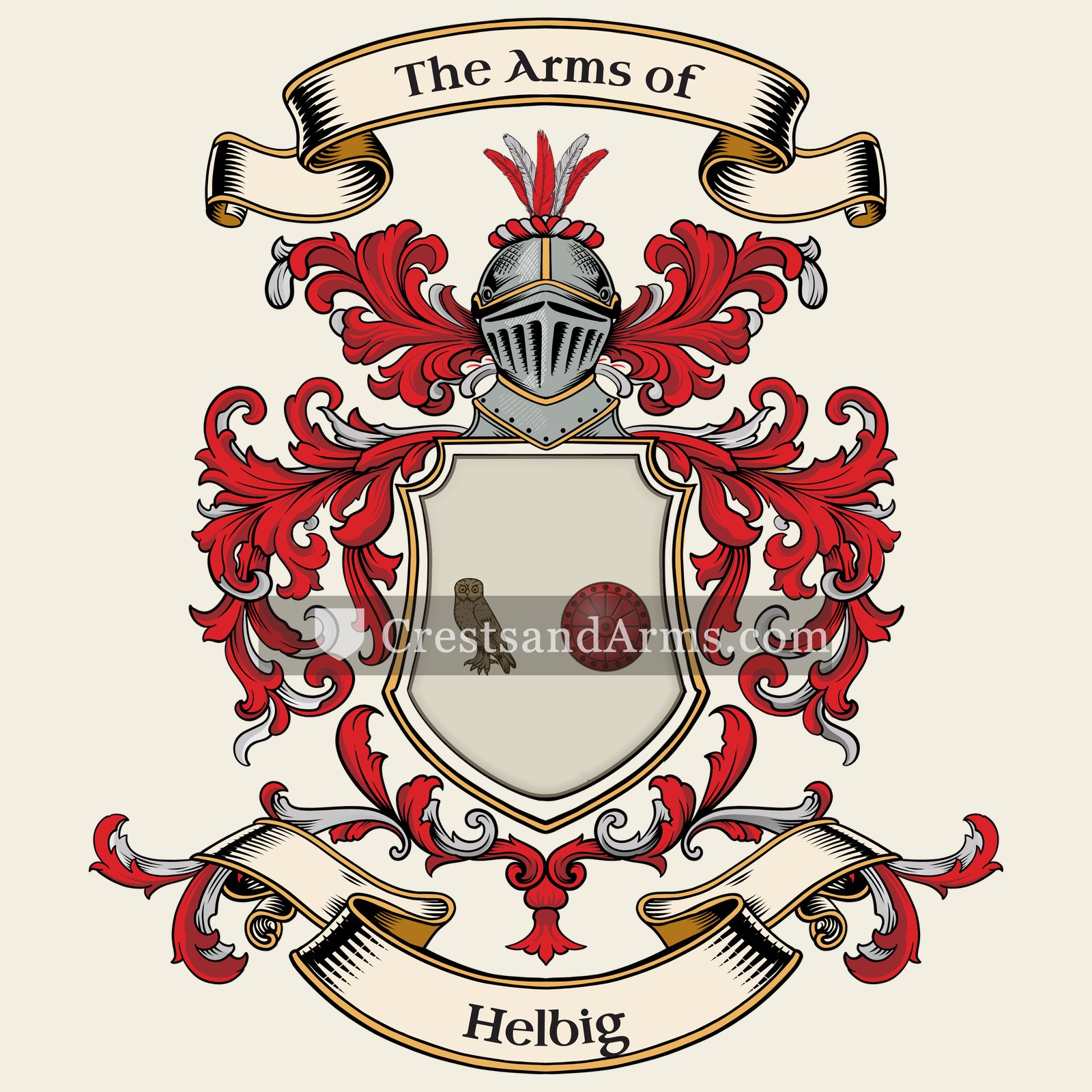
owlWisdom and vigilance by night
roundelA coin, and one who has been to the crusades
Colours
Silver (Argent)Means: Peace and sincerity
Red (Gules)Means: Military strength
Historical info
Source
J. B. Rietstap, Armorial Général, Gouda: G. B. van Goor Zonen, 1884–87
Blazon (the actual original written record)
“D'arg. à une chouette au nat., posée sur une boule de gu. Cq. cour. C.: les meubles de l'écu. L. d'arg. et de gu.”
GermanyNuremberg, c. 1765
Digital archive packCoat of arms PNG, gold border print PDF, vector SVG and the certificate of authenticity. Sent to your email in minutes.
Map of Germany showing where the Helbig arms are recorded
The Helbig arms were recorded in Nuremberg, c. 1765.
This is where the arms were entered in the register. Families often moved to other parts of the country, so the same name can turn up in more than one region.
The body that granted and recorded arms in Germany in this period.
Francis I, Holy Roman Emperor
Sovereign of the period
Francis I, Holy Roman Emperor
1745–1765
Reigning in Netherlands when the Helbig arms are first recorded.
How Arms Worked in Germany
In the Holy Roman Empire, coats of arms were often granted to individuals by the Emperor or his representatives. These arms were then passed down through the generations to all legitimate descendants of the original holder. Younger branches of a family usually kept the same shield design without needing to change it, as the arms belonged to the entire lineage.
Granting authority
The Holy Roman Emperor held the sole power to grant new coats of arms throughout his vast imperial territories.
How they got arms
Families typically obtained their coats of arms through a formal imperial grant or by proving their noble status to the authorities.
Where arms were recorded
These grants were officially recorded in the Imperial Chancery registers, which began keeping formal records of such honors during the Middle Ages.
The family's standing
Recorded among the armigerous families of Germany.
Origin & History of the Helbig Family in Germany
The family name Helbig is a shortened form of the old Germanic name Heilwig, which combines the words for health or safety and war. During the Middle Ages, names like this were common throughout the German-speaking regions as they reflected the values of strength and protection. By the time members of the family were recorded in Nuremberg in 1765, the name had been established for several generations across various parts of central Germany. Nuremberg was a major center for trade and skilled craftsmanship during the eighteenth century, and families like the Helbigs often moved to such cities to work as artisans or merchants. Because the name evolved from a personal name rather than a specific location, it was adopted by different groups of people in various regions, leading to its widespread presence across the German landscape.
Related Branches & Arms
Root word
Helwig
Derived from the Germanic elements for battle and holy or war.
This name
HelbigA variant of a Germanic personal name signifying a holy warrior or fighter.
also spelled
Hellbig
Helbigk
Helbigue
Documented Sources
J. B. Rietstap, Armorial Général, Gouda: G. B. van Goor Zonen, 1884–87
Zeeuws Archief, DTB Zeeland (Doop-, Trouw- en Begraafboeken), 1779
Debrabandere, Frans, Woordenboek van de familienamen in België en Noord-Frankrijk, 2003
Meertens Instituut, Nederlandse Familienamenbank, 2023
Digital archive packCoat of arms PNG, gold border print PDF, vector SVG and the certificate of authenticity. Sent to your email in minutes.


 lionCourage, strength and royalty
 roseThe seventh son, and beauty with grace
 lionCourage, strength and royalty
 roseThe seventh son, and beauty with grace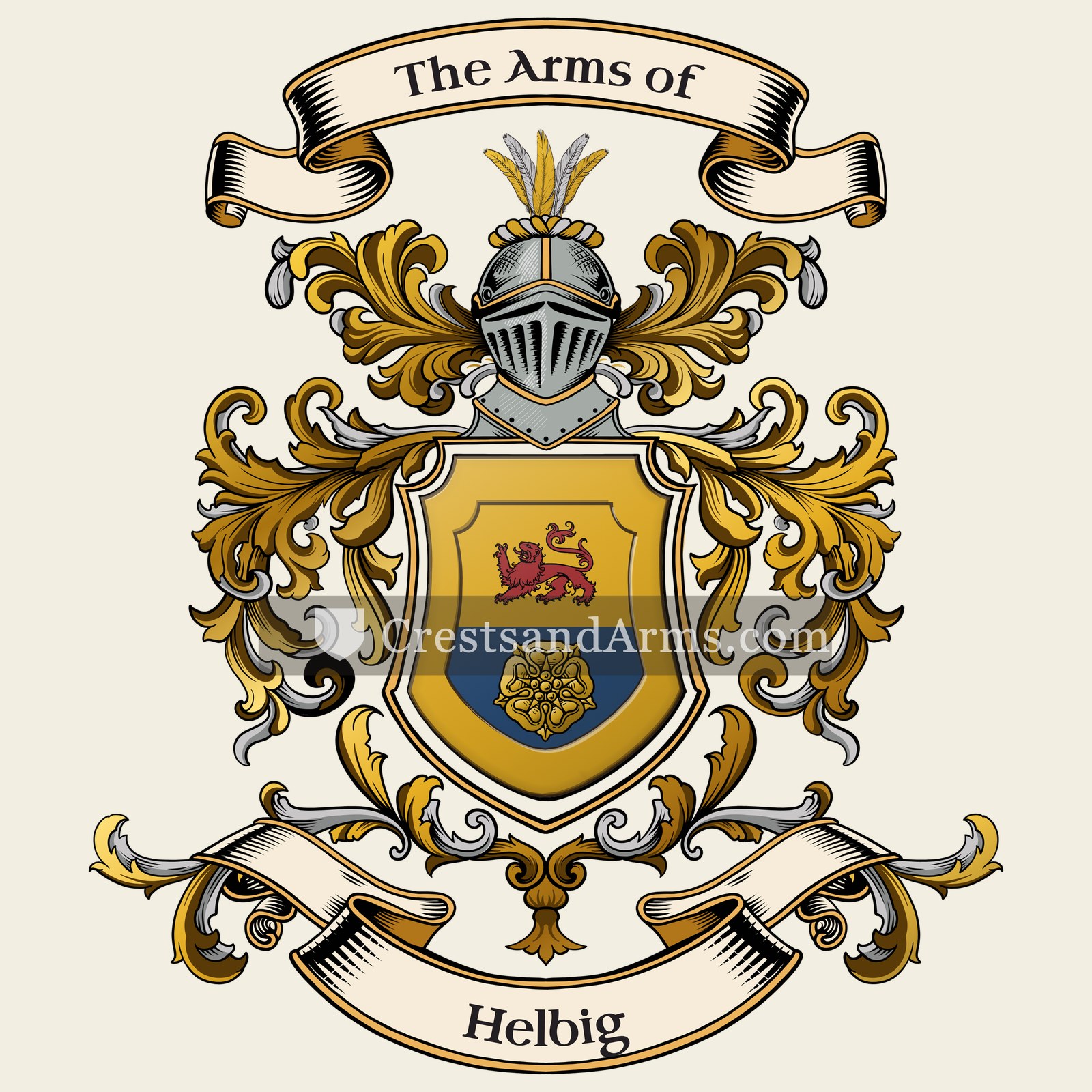

 owlWisdom and vigilance by night
 roundelA coin, and one who has been to the crusades