Map of Austria showing where the Helbling arms are recorded
The Helbling arms were recorded in Tyrol, c. 1772.
Tyrol was mountain country in western Austria, where the valleys were held by families who had been there a very long time. Old tenure counted for more than money, and old families carried arms.
This is where the arms were entered in the register. Families often moved to other parts of the country, so the same name can turn up in more than one region.
Region
Tyrol
First recorded
1772
Granting Authority for the Helbling Arms
Imperial and Royal chancery
Sodacan · CC BY-SA 3.0
The body that granted and recorded arms in Austria in this period.
Joseph II, Holy Roman Emperor
Sovereign of the period
Joseph II, Holy Roman Emperor
1765–1790
Reigning in Austria when the Helbling arms are first recorded.
How Arms Worked in Austria
Austrian coats of arms were often linked directly to noble titles granted by the Emperor. These symbols belonged to the entire family line rather than just one individual. When a family grew, new branches kept the original design without needing to change it. This system allowed all members of a noble house to share the same identity across many generations.
Granting authority
The Imperial and Royal chancery managed all heraldic matters and controlled the official granting of arms throughout the Austrian lands.
How they got arms
Families typically received their arms through a formal imperial decree that often accompanied the elevation of a person to noble status.
Where arms were recorded
Official records of these grants were kept in the Imperial Register of Nobility which began its formal documentation process in 1453.
The family's standing
Recorded among the armigerous families of Tyrol.
Origin & History of the Helbling Family in Austria
The name Helbling finds its historical roots in the German-speaking regions of the Alps, where it developed as a descriptive surname during the Middle Ages. The name is derived from the Middle High German word *helbelinc*, which referred to a small silver coin used in the region. This suggests that the earliest ancestors to carry the name may have been merchants, money changers, or individuals associated with local trade and finance. By the time records confirm the family presence in the Tyrol region in 1772, the Helblings were well-established members of the local mountain communities. Living in the rugged terrain of western Austria, these families were often tied to agriculture and the skilled trades necessary to survive in the high-altitude valleys. Over generations, the family became deeply integrated into the social and economic fabric of the Austrian landscape, moving from their origins as small-scale traders to becoming a recognized part of the regional population.
Coat of Arms & Family Crest Details
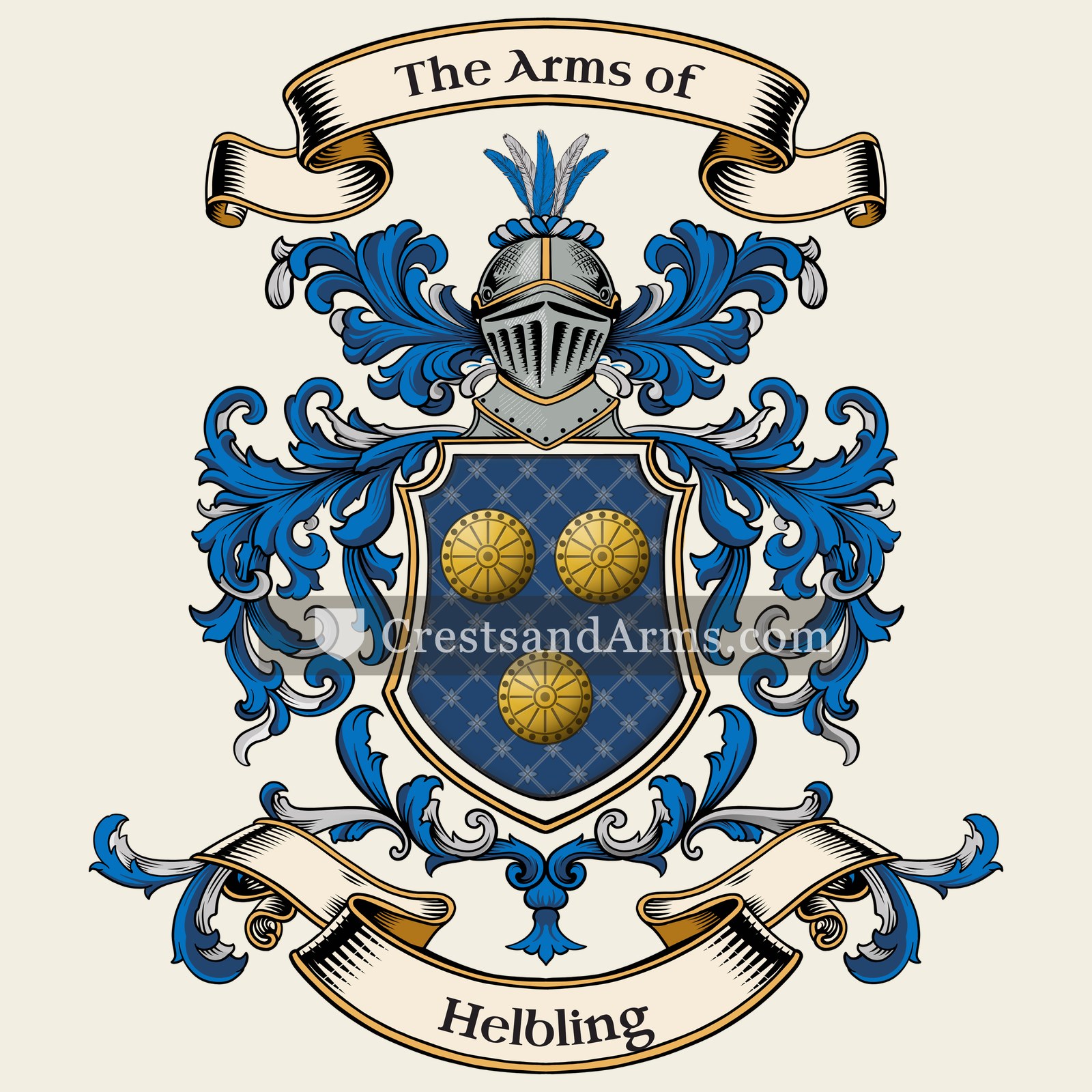
Symbols on this shield
cross symbolChristian faith and service
roundelA coin, and one who has been to the crusades
Colours
Blue (Azure)Means: Loyalty and truth
Gold (Or)Means: Generosity
Historical info
Source
J. B. Rietstap, Armorial Général, Gouda: G. B. van Goor Zonen, 1884–87
Blazon (the actual original written record)
“D'azur à trois boules d'or, environnées chacune d'une corde de sa. en forme de croix.”
SwitzerlandFribourg, c. 1745
Digital archive packCoat of arms PNG, gold border print PDF, vector SVG and the certificate of authenticity. Sent to your email in minutes.
Map of Switzerland showing where the Helbling arms are recorded
The Helbling arms were recorded in Fribourg, c. 1745.
This is where the arms were entered in the register. Families often moved to other parts of the country, so the same name can turn up in more than one region.
The body that granted and recorded arms in Switzerland in this period.
How Arms Worked in Switzerland
In Switzerland, coats of arms were not restricted to the nobility and were often adopted by common citizens and families. These symbols were passed down through generations to show family identity. When branches of a family grew, they often changed small details of the design to distinguish their own line from the original group.
Granting authority
Cantonal and civic authorities managed the use of coats of arms within their specific regions and local jurisdictions.
How they got arms
Families typically assumed their own coats of arms based on local custom rather than receiving them from a central monarch.
Where arms were recorded
Arms were recorded in various cantonal and civic registers starting from the fourteenth century throughout the Swiss region.
The family's standing
Recorded among the armigerous families of Switzerland.
Origin & History of the Helbling Family in Switzerland
The Helbling family name has deep roots in the Swiss landscape, particularly within the canton of Fribourg where records confirm their presence by the middle of the eighteenth century. The name itself is derived from the Middle High German word *helbelinc*, which historically referred to a small silver coin used in the medieval period. It is likely that the name began as a nickname for an ancestor who was involved in trade, banking, or perhaps someone who was known for their association with this specific currency. By 1745, families bearing this name were well-established in the region, participating in the local agricultural and civic life that defined the Swiss cantons of that era. As these families grew, they became integrated into the social fabric of Fribourg, contributing to the local economy and community development long before the modern Swiss state was fully formed. This history reflects the broader patterns of Swiss migration and settlement, where families often took on names linked to their daily work or the economic tools they handled in their local markets.
Related Branches & Arms
Root word
Helb
A diminutive or variation related to the Germanic word for hero.
This name
HelblingA surname historically used to describe a small or young hero.
also spelled
Hellbling
Helblingg
Helblinge
Related arms
Feurerrecorded with Helbling, same area
Suterrecorded with Helbling, same area
Documented Sources
J. B. Rietstap, Armorial Général, Gouda: G. B. van Goor Zonen, 1884–87
Bahlow, Hans, Deutsches Namenlexikon: Familien- und Vornamen nach Ursprung und Sinn erklärt, 1967


 falconOne eager and quick in pursuit
 falconOne eager and quick in pursuit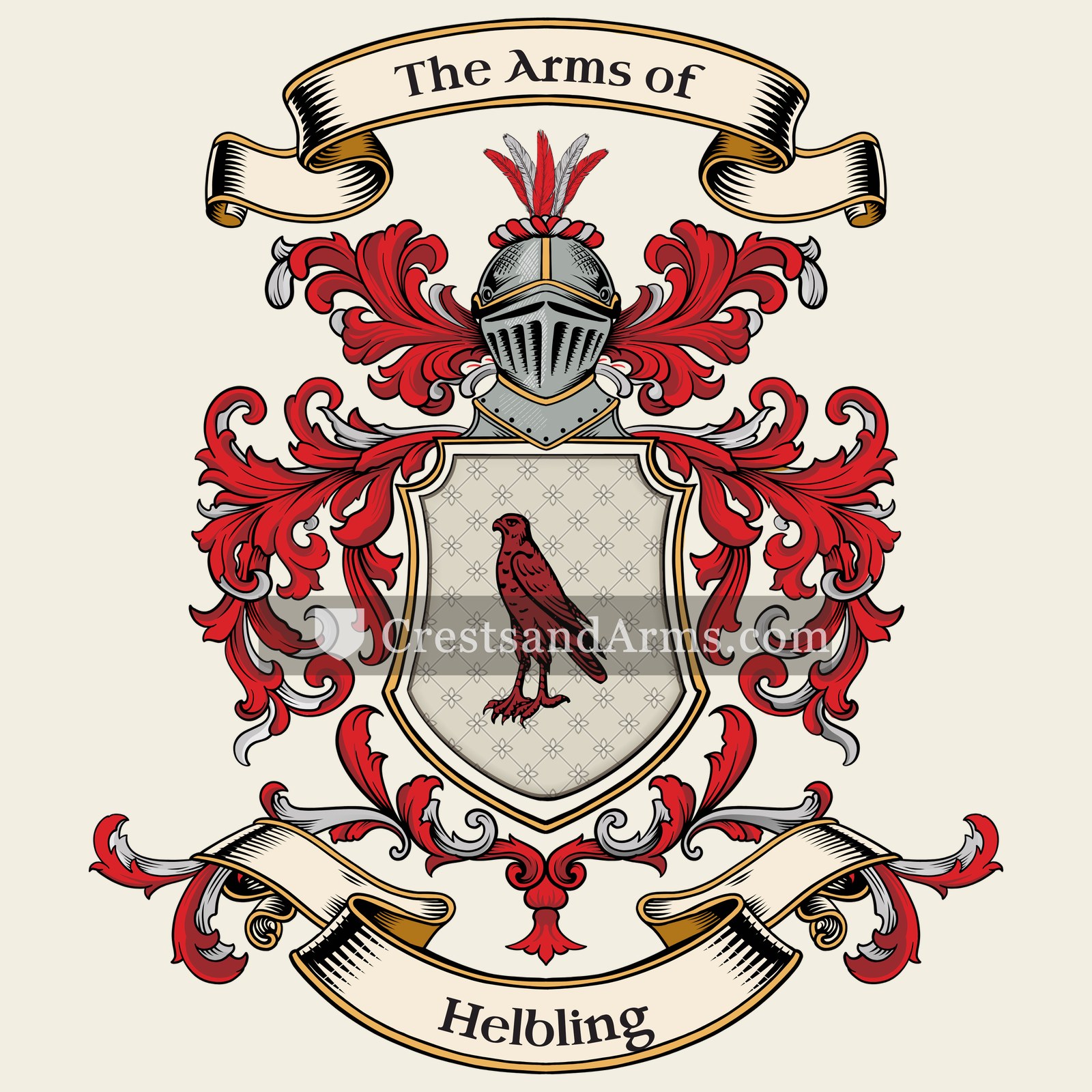


 cross symbolChristian faith and service
 roundelA coin, and one who has been to the crusades