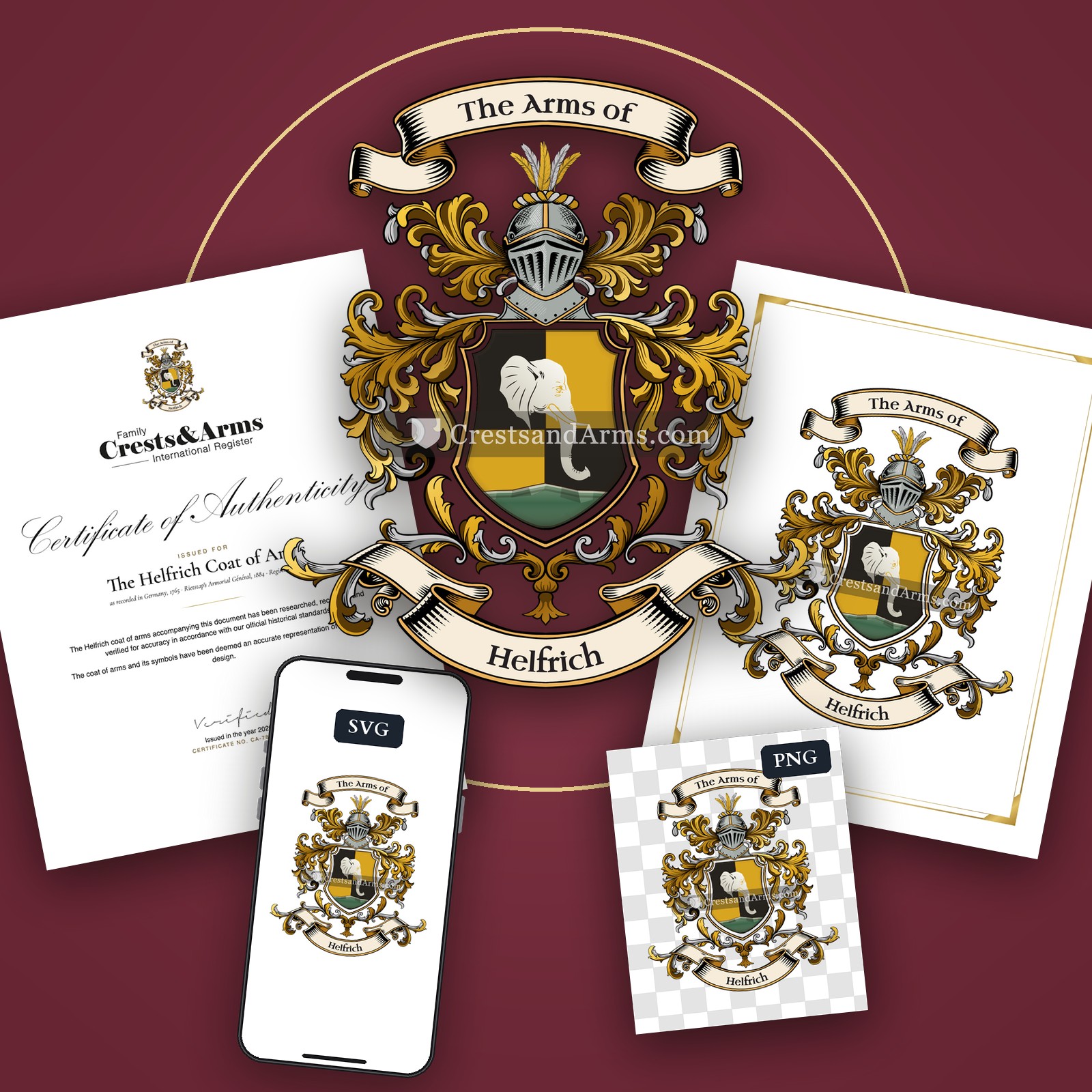
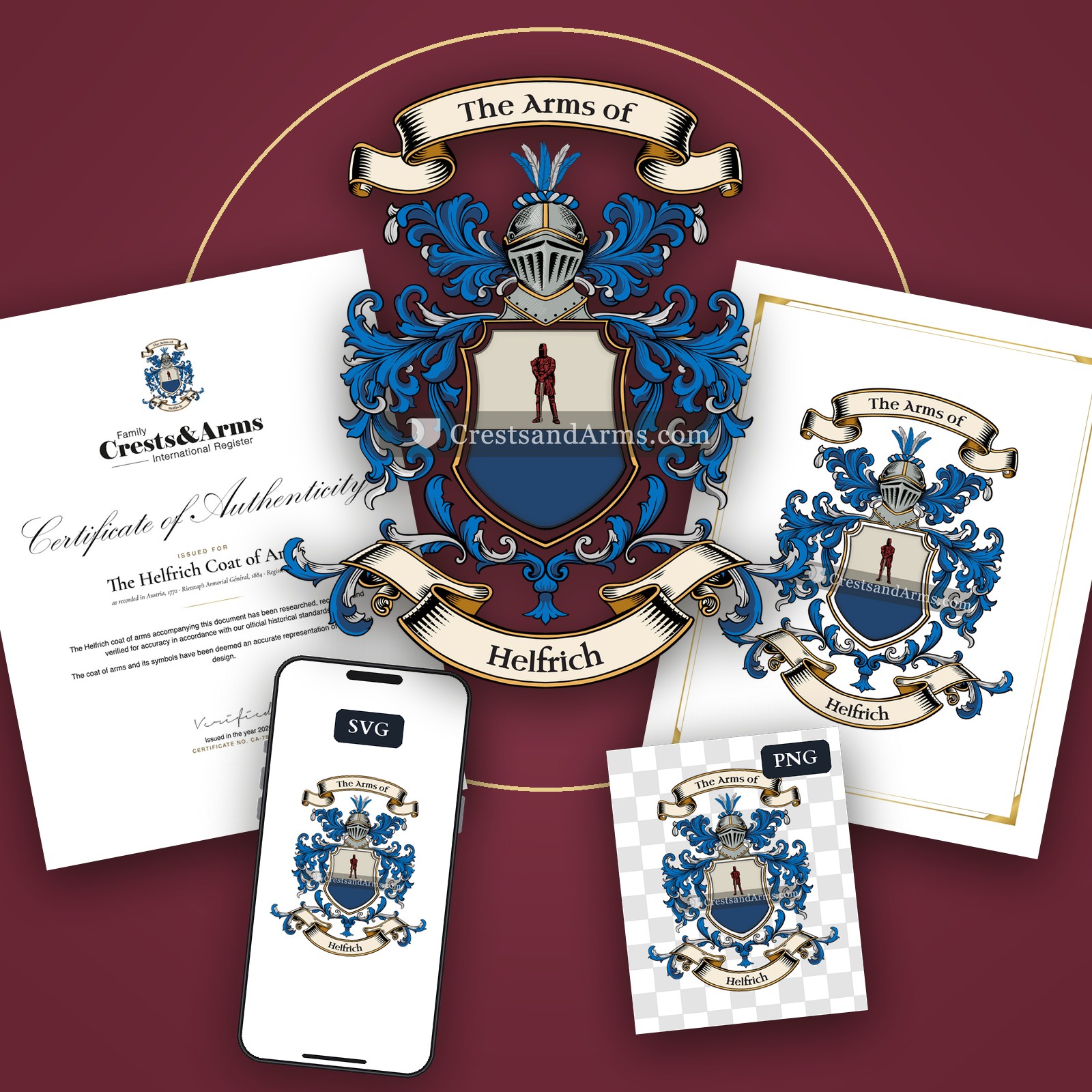
A record of documented arms, meaning and origin, researched for the Helfrich family lines. Documented in 2 countries.
Reg. 7884 · German, G–I
Coat of Arms & Family Crest Details
Symbols on this shield
mountThe ground held, and steadfastness upon it
elephantGreat strength, wit and ambition
Colours
Black (Sable)Means: Constancy
Gold (Or)Means: Generosity
Green (Vert)Means: Hope
Historical info
Source
J. B. Rietstap, Armorial Général, Gouda: G. B. van Goor Zonen, 1884–87
Blazon (the actual original written record)
“Ec. de sa. et d'or; à un éléphant au nat., br. sur les écartelures, posé sur une terrasse de sin. en p. Cq. cour. C.: deux prob., coupées alt. de sa. et d'or, ornées chacune dans son embouchure de trois pl. d'aut., à dextre une d'or entre deux de sa., à sen. une de sa. entre deux d'or. L.: d'or et de sa.”
CourlandLeipzig · Courland, c. 1765
Digital archive packCoat of arms PNG, gold border print PDF, vector SVG and the certificate of authenticity. Sent to your email in minutes.
Map of Germany showing where the Helfrich arms are recorded
The Helfrich arms were recorded in Courland, c. 1765.
Courland was Baltic coast country held in large estates by a small number of families. They kept their land for generations and served as officers abroad, and both landholding and service brought arms with them.
This is where the arms were entered in the register. Families often moved to other parts of the country, so the same name can turn up in more than one region.
The body that granted and recorded arms in Germany in this period.
Francis I, Holy Roman Emperor
Sovereign of the period
Francis I, Holy Roman Emperor
1745–1765
Reigning in Germany when the Helfrich arms are first recorded.
How Arms Worked in Germany
In the Holy Roman Empire, coats of arms were often granted to individuals by the Emperor or his representatives. These arms were then passed down through the generations to all legitimate descendants of the original holder. Younger branches of a family usually kept the same shield design without needing to change it, as the arms belonged to the entire lineage.
Granting authority
The Holy Roman Emperor held the sole power to grant new coats of arms throughout his vast imperial territories.
How they got arms
Families typically obtained their coats of arms through a formal imperial grant or by proving their noble status to the authorities.
Where arms were recorded
These grants were officially recorded in the Imperial Chancery registers, which began keeping formal records of such honors during the Middle Ages.
The family's standing
Recorded among the armigerous families of Courland.
Origin & History of the Helfrich Family in Germany
The surname Helfrich originates from the Germanic regions of Central Europe, where it evolved from the Old High German personal name Helfrich. This name combines the roots for help and powerful or rich, suggesting that early bearers were often viewed as strong supporters or influential figures within their local communities. While the name was established across various German states for centuries, members of the family eventually migrated eastward into the Baltic region. By 1765, records confirm that the Helfrich family had firmly established themselves in Courland, which is modern-day Latvia. This migration was common for German families during the eighteenth century as they sought new opportunities in the Baltic provinces under the influence of the Russian Empire. These early family members in Courland likely served as administrators, merchants, or landowners who maintained their cultural and linguistic ties to their German heritage while adapting to the unique social landscape of the Baltic frontier.
Coat of Arms & Family Crest Details
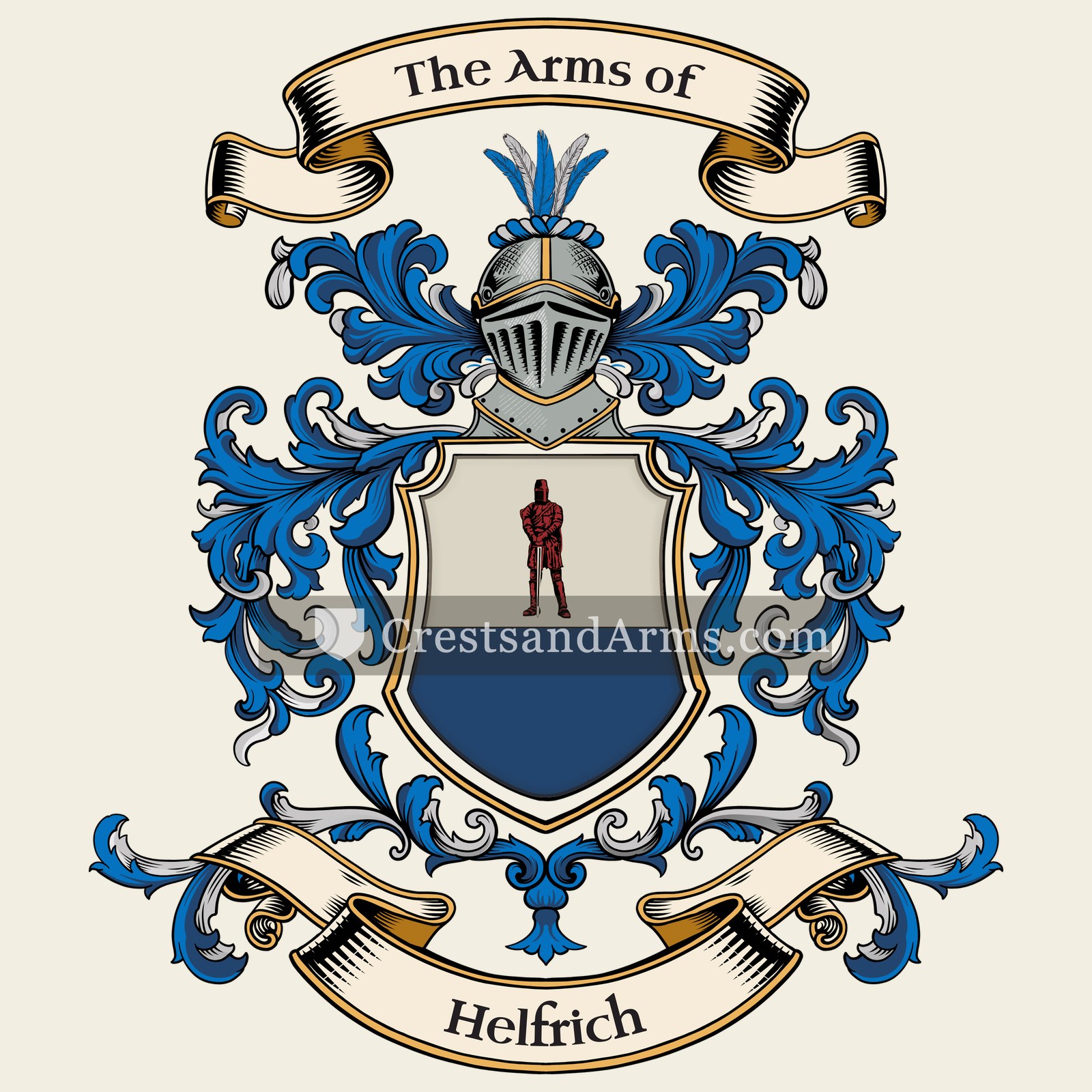
Symbols on this shield
knightChivalry and service in arms
Colours
Silver (Argent)Means: Peace and sincerity
Blue (Azure)Means: Loyalty and truth
Red (Gules)Means: Military strength
Historical info
Source
J. B. Rietstap, Armorial Général, Gouda: G. B. van Goor Zonen, 1884–87
Blazon (the actual original written record)
“Coupé: au 1 d'arg. à un homme iss., mouv. du coupé, hab. de gu. coiffé d'un bassinet d'azur; au 2 d'azur plein. C.: l'homme iss.; entre deux prob. coupées, à dextre d'azur sur gu., à sen. d'arg. sur azur.”
AustriaVienne, c. 1772
Digital archive packCoat of arms PNG, gold border print PDF, vector SVG and the certificate of authenticity. Sent to your email in minutes.
Map of Austria showing where the Helfrich arms are recorded
The Helfrich arms were recorded in Vienne, c. 1772.
This is where the arms were entered in the register. Families often moved to other parts of the country, so the same name can turn up in more than one region.
Region
Vienne
Town
Vienne
First recorded
1772
Granting Authority for the Helfrich Arms
Imperial and Royal chancery
Sodacan · CC BY-SA 3.0
The body that granted and recorded arms in Austria in this period.
Joseph II, Holy Roman Emperor
Sovereign of the period
Joseph II, Holy Roman Emperor
1765–1790
Reigning in Germany when the Helfrich arms are first recorded.
How Arms Worked in Austria
Austrian coats of arms were often linked directly to noble titles granted by the Emperor. These symbols belonged to the entire family line rather than just one individual. When a family grew, new branches kept the original design without needing to change it. This system allowed all members of a noble house to share the same identity across many generations.
Granting authority
The Imperial and Royal chancery managed all heraldic matters and controlled the official granting of arms throughout the Austrian lands.
How they got arms
Families typically received their arms through a formal imperial decree that often accompanied the elevation of a person to noble status.
Where arms were recorded
Official records of these grants were kept in the Imperial Register of Nobility which began its formal documentation process in 1453.
The family's standing
Recorded among the armigerous families of Austria.
Origin & History of the Helfrich Family in Austria
The Helfrich surname finds its roots in the Germanic linguistic tradition, where it functioned as a name denoting a helpful or powerful ruler. By the late eighteenth century, the family had established a notable presence in Vienna, which served as the vibrant cultural and administrative heart of the Habsburg Empire. Records confirm that members of the Helfrich family were living in the city by 1772, a time when Vienna was undergoing significant urban expansion and social change under the reign of Empress Maria Theresa. During this period, families with this name often integrated into the city’s growing professional and merchant classes, contributing to the daily life of a capital that acted as a crossroads for Central European trade and intellectual exchange. This early residency in Vienna suggests that the family was part of the steady migration of skilled individuals who sought opportunity within the structured bureaucracy and flourishing markets of the Austrian imperial center.
Helfrich Meaning & Related Branches
Root word
Helferich
Derived from the Germanic elements for help and powerful ruler.
This name
HelfrichA surname denoting a helpful or powerful leader, originating from an ancient Germanic personal name.
also spelled
Helfreich
Helfrich
Helfrike
Helferich
Documented Sources
J. B. Rietstap, Armorial Général, Gouda: G. B. van Goor Zonen, 1884–87
Bahlow, Hans, Deutsches Namenlexikon: Familien- und Vornamen nach Ursprung und Sinn erklärt, 1967
Heintze, Albert, Die deutschen Familien-Namen: geschichtlich, geographisch, sprachlich, 1903
Latvian State Historical Archives (Latvijas Valsts vēstures arhīvs), Fond 235: Evangelical Lutheran Church records of Courland, 1765
Digital archive packCoat of arms PNG, gold border print PDF, vector SVG and the certificate of authenticity. Sent to your email in minutes.


 mountThe ground held, and steadfastness upon it
 elephantGreat strength, wit and ambition
 mountThe ground held, and steadfastness upon it
 elephantGreat strength, wit and ambition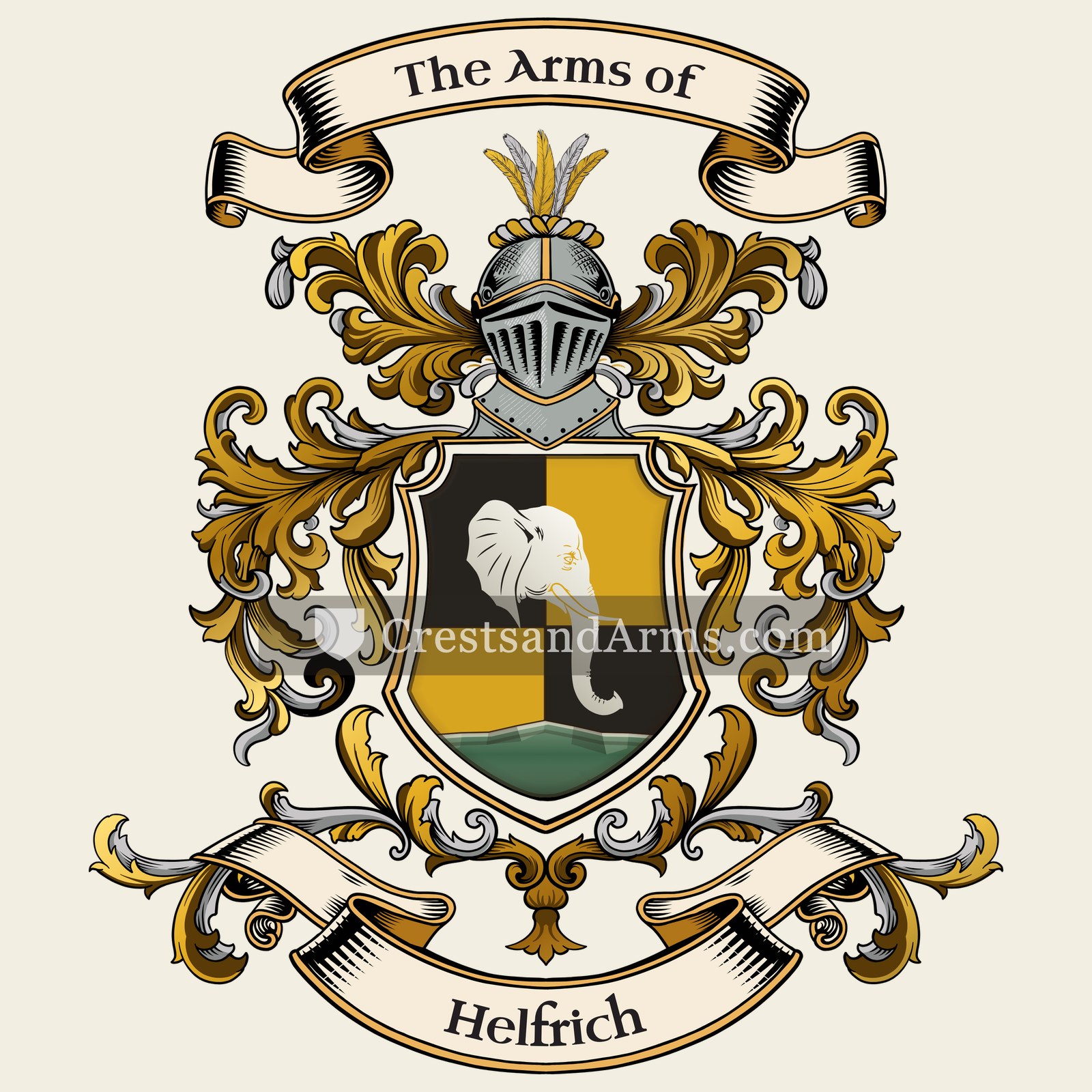


 knightChivalry and service in arms