Map of Netherlands showing where the Helt arms are recorded
The Helt arms were recorded in Netherlands, c. 1815.
Arms such as these were typically recorded in Friesland.
Friesland was low, wet country on the northern coast of the Netherlands, farmed by families who had held the same land for centuries. Free landholders were unusually common there, and a free landholder could carry arms.
This is where the arms were entered in the register. Families often moved to other parts of the country, so the same name can turn up in more than one region.
Region
Friesland
First recorded
1815
Granting Authority for the Helt Arms
Hoge Raad van Adel
Photograph made by me · CC BY-SA 3.0
The body that granted and recorded arms in Netherlands in this period.
William I of the Netherlands
Sovereign of the period
William I of the Netherlands
1815–1840
Reigning in Netherlands when the Helt arms are first recorded.
How Arms Worked in Netherlands
In the Netherlands, coats of arms were often used by noble families and those who held specific public offices. These arms were passed down through the generations to legitimate descendants. Younger branches of a family usually kept the original design without needing to add special marks. This system ensured that the family identity remained clear and consistent over many years.
Granting authority
The Hoge Raad van Adel is the official body that regulates and manages noble titles and coats of arms in the Netherlands.
How they got arms
Families typically obtained their coats of arms through official royal grants or by proving their long-standing historical use of the symbols.
Where arms were recorded
Coats of arms are officially recorded in the registers held by the Hoge Raad van Adel, which began its work in 1814.
The family's standing
Recorded among the armigerous families of Netherlands.
Origin & History of the Helt Family in Netherlands
The family name Helt has deep roots in the northern regions of the Netherlands, particularly within the province of Friesland. By the early nineteenth century, the name was well-established among local communities, reflecting the naming patterns common in the Frisian landscape during that era. In the Dutch tradition, surnames often evolved from nicknames, occupations, or geographic locations, and the name Helt likely emerged as a descriptive identifier for early ancestors living in these coastal territories. Because Friesland maintained a distinct cultural and linguistic identity separate from the rest of the country, families in this region often held onto specific ancestral names for generations. By 1815, when the modern civil registration system began to solidify family records across the Netherlands, the Helt family was already a documented part of the Frisian social fabric, contributing to the agricultural and maritime life that defined the region at the time.
Coat of Arms & Family Crest Details
Symbols on this shield
bendDefence, and the scarf of a commander
chiefAuthority, wisdom and dominion
fishA true and generous mind, and Christian faith
roundelA coin, and one who has been to the crusades
Colours
Gold (Or)Means: Generosity
Blue (Azure)Means: Loyalty and truth
Red (Gules)Means: Military strength
Historical info
Source
J. B. Rietstap, Armorial Général, Gouda: G. B. van Goor Zonen, 1884–87
Blazon (the actual original written record)
“D'or à la bande d'azur, ch. de deux poissons d'or, posés dans le sens de la bande et affrontés; au chef de gu., ch. d'une couronne d'or, surm. de deux bes. du même. Cq. cour. C.: un mortier de chancelier d'or. S.: deux chiens braque reg. d'arg., coll. d'azur, bouclés d'or.”
Denmarkc. 1720
Digital archive packCoat of arms PNG, gold border print PDF, vector SVG and the certificate of authenticity. Sent to your email in minutes.
Map of Denmark showing where the Helt arms are recorded
The Helt arms were recorded in Denmark, c. 1720.
Arms such as these were typically recorded in Sjaælland.
Zealand held the Danish court, the crown's offices and Copenhagen itself. Families who served the king kept estates within reach of it, and royal service was the ordinary route to a coat of arms.
This is where the arms were entered in the register. Families often moved to other parts of the country, so the same name can turn up in more than one region.
The body that granted and recorded arms in Denmark in this period.
Frederik IV of Denmark
Sovereign of the period
Frederik IV of Denmark
1699–1730
Reigning in Netherlands when the Helt arms are first recorded.
How Arms Worked in Denmark
Danish heraldry during this period was closely tied to noble status and royal favor rather than being open to all citizens. Arms were typically granted by the monarch to individuals, and these symbols were then shared by all members of the noble house. If a family line died out, the right to use those specific arms ended with them.
Granting authority
The Danish royal chancery held the power to issue and regulate official coats of arms for the kingdom.
How they got arms
Families usually received their arms through a formal royal grant that confirmed their noble status and rights.
Where arms were recorded
These grants were officially recorded in the Danish Royal Chancery records starting in the sixteenth century.
The family's standing
Recorded among the armigerous families of Denmark.
Origin & History of the Helt Family in Denmark
The Helt family name has deep roots in the historical landscape of Sjælland, where members of the family were firmly established by the early eighteenth century. During this period, Denmark was transitioning through a time of significant social change, and families like the Helts were often tied to the local agricultural economy or the growing administrative structures of the Danish state. The name itself reflects the linguistic traditions of the region, potentially originating from descriptive terms used in Old Danish to identify a person’s character or physical traits. By 1720, the family was part of a stable rural or provincial society, living through the era of absolute monarchy under King Frederick IV. These early ancestors likely navigated the strict social hierarchies of the time, working as farmers, craftsmen, or local officials who helped maintain the day-to-day operations of the Danish countryside. Their presence in the records of Sjælland provides a clear window into the lives of ordinary citizens who helped shape the cultural identity of the island during the eighteenth century.
Coat of Arms & Family Crest Details
Symbols on this shield
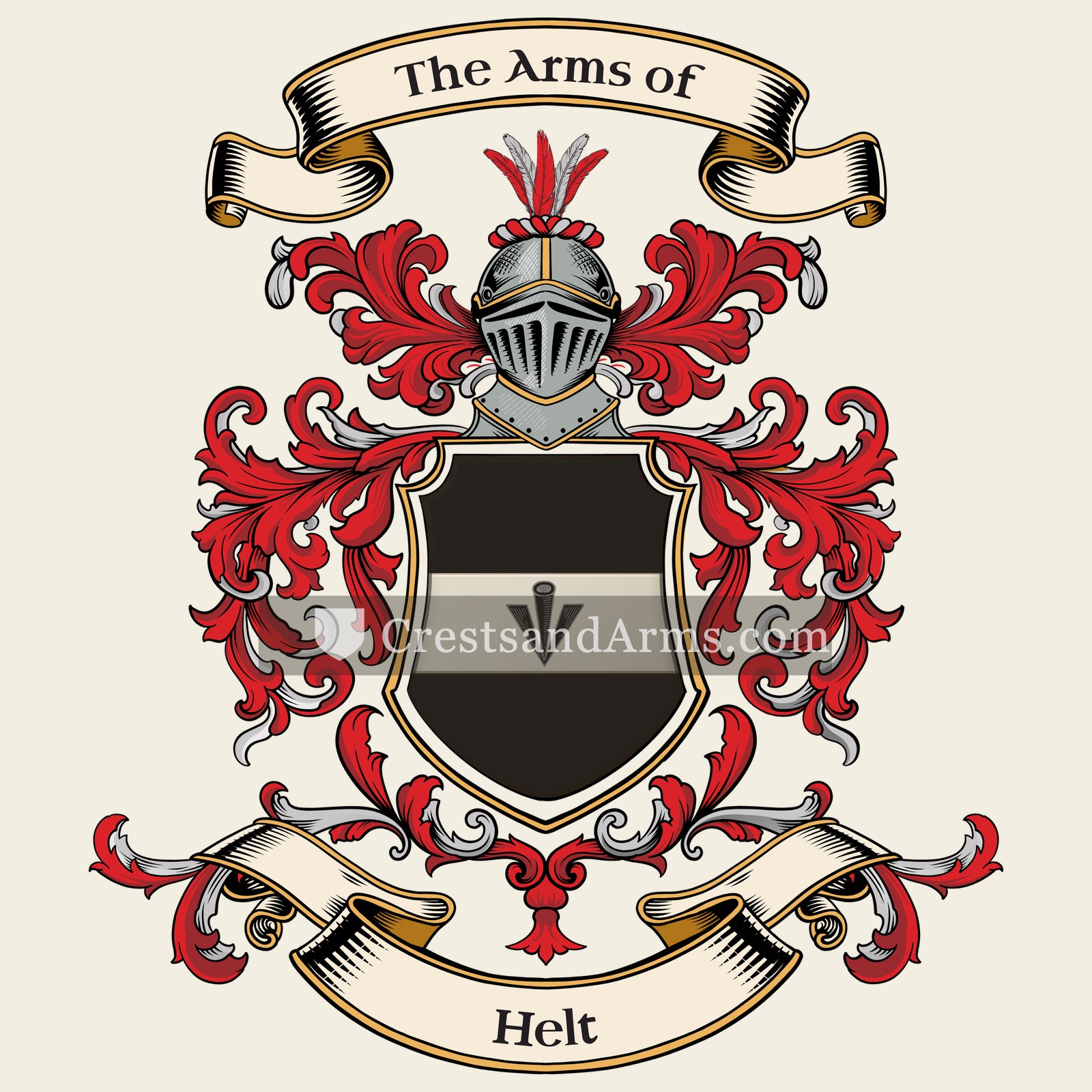
fessThe military belt, and readiness to serve
arrowReadiness for battle, and affliction endured
Colours
Black (Sable)Means: Constancy
Silver (Argent)Means: Peace and sincerity
Historical info
Source
J. B. Rietstap, Armorial Général, Gouda: G. B. van Goor Zonen, 1884–87
Blazon (the actual original written record)
“De sa. à la fasce d'arg., ch. d'une flèche du champ, posée en fasce. Cq. cour. C.: un chien braque iss. de sa., coll. de la fasce de l'écu.”
Polandc. 1772
Digital archive packCoat of arms PNG, gold border print PDF, vector SVG and the certificate of authenticity. Sent to your email in minutes.
Map of Poland showing where the Helt arms are recorded
The Helt arms were recorded in Poland, c. 1772.
Arms such as these were typically recorded in Mazovia.
Mazovia held Warsaw, the Polish court and the assemblies where the szlachta met. Poland's nobles were unusually numerous and every one of them bore arms, and Warsaw is where those arms were argued over and recorded.
This is where the arms were entered in the register. Families often moved to other parts of the country, so the same name can turn up in more than one region.
Region
Mazovia
First recorded
1772
Granting Authority for the Helt Arms
Ennoblement by the Sejm
Author: Olek Remesz · CC BY-SA 3.0
The body that granted and recorded arms in Poland in this period.
Stanisław August Poniatowski
Sovereign of the period
Stanisław August Poniatowski
1764–1795
Reigning in Netherlands when the Helt arms are first recorded.
How Arms Worked in Poland
Polish noble families shared a single coat of arms across many different surnames, creating large clans rather than individual designs. These symbols were held collectively by all members of the clan regardless of their specific family name. When a new family joined the nobility, they were adopted into an existing clan and began using that group's established shield.
Granting authority
The Sejm, which was the Polish parliament, held the power to grant noble status and the right to bear arms.
How they got arms
Families typically received their coat of arms through a formal act of ennoblement granted by the Sejm for distinguished service.
Where arms were recorded
These grants were officially recorded in the Crown Metrica, which served as the central archive for state documents starting in the sixteenth century.
The family's standing
Recorded among the armigerous families of Poland.
Origin & History of the Helt Family in Poland
The history of the Helt family in Poland is deeply rooted in the historical landscape of the Mazovia region. By the year 1772, members of the family were already established residents of this central Polish province. During this period, Mazovia was a center of agricultural activity and shifting political borders, which influenced the lives of many families living in rural parishes. The name Helt likely arrived in the region through the movement of people across Central Europe, as families often migrated to find new land or trade opportunities. As the family settled into the local community, they became part of the social fabric of Mazovian life, participating in the customs and daily routines that defined the late eighteenth century. Their presence in the records from this time suggests they were integrated into the local population, living alongside other families who helped shape the identity of the region during a time of significant national change.
Related Branches & Arms
Root word
Held
A Germanic term referring to a hero or a brave person.
This name
HeltA descriptive occupational or nickname denoting a courageous or valiant individual.
also spelled
Held
Related arms
Heldvariant spelling
Heldtvariant spelling
Documented Sources
J. B. Rietstap, Armorial Général, Gouda: G. B. van Goor Zonen, 1884–87
Tresoar (Fries Historisch en Letterkundig Centrum), Burgerlijke Stand van Friesland (Civil Registration of Friesland), 1811–1950
Ypema, J., Friese familienamen: Een overzicht van de herkomst en verspreiding, 1998
Centraal Bureau voor Genealogie, Nederlandse Familienamenbank, 2010
Digital archive packCoat of arms PNG, gold border print PDF, vector SVG and the certificate of authenticity. Sent to your email in minutes.


 chevronProtection, and faithful service completed
 ringFidelity, and a promise kept
 chevronProtection, and faithful service completed
 ringFidelity, and a promise kept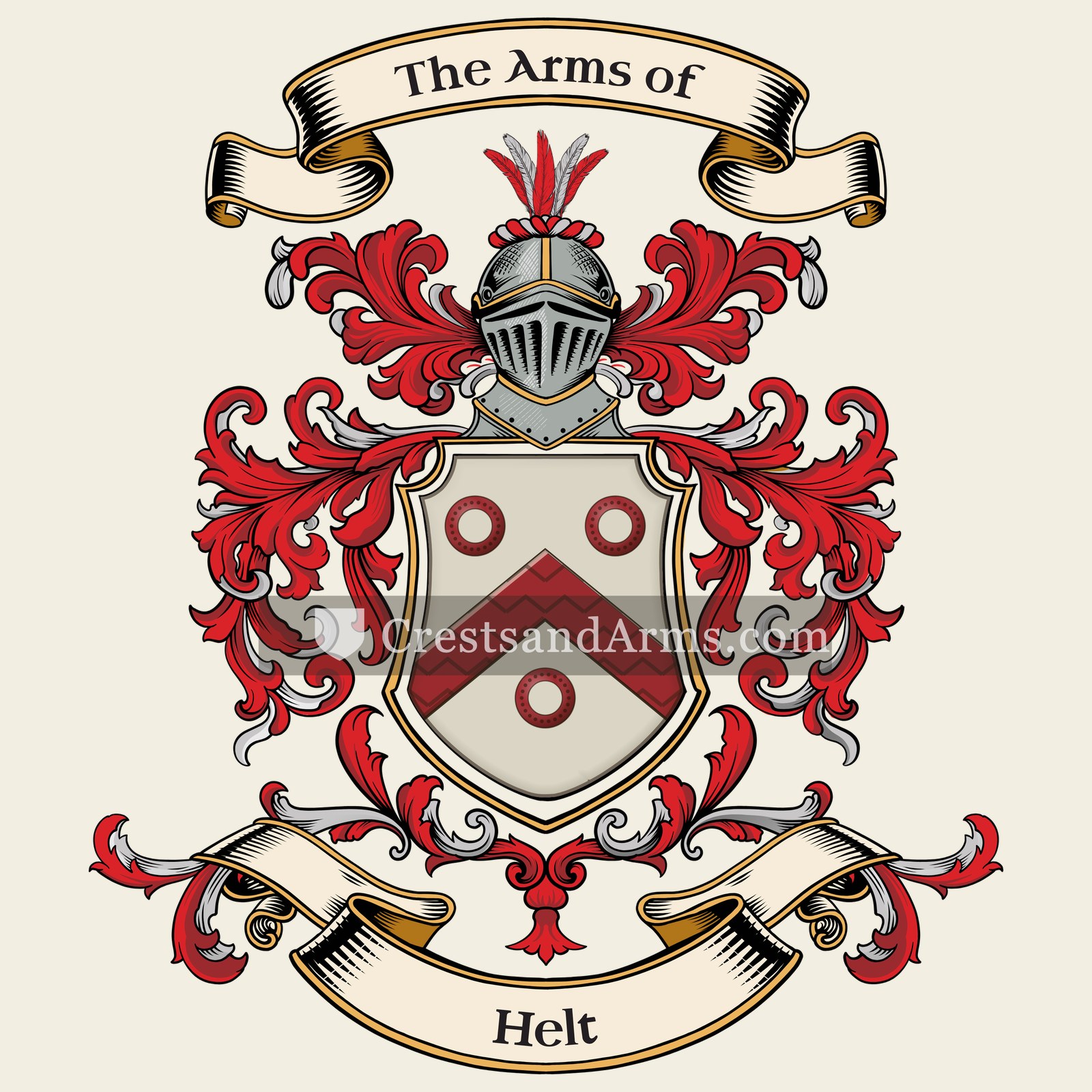


 bendDefence, and the scarf of a commander
 chiefAuthority, wisdom and dominion
 fishA true and generous mind, and Christian faith
 roundelA coin, and one who has been to the crusades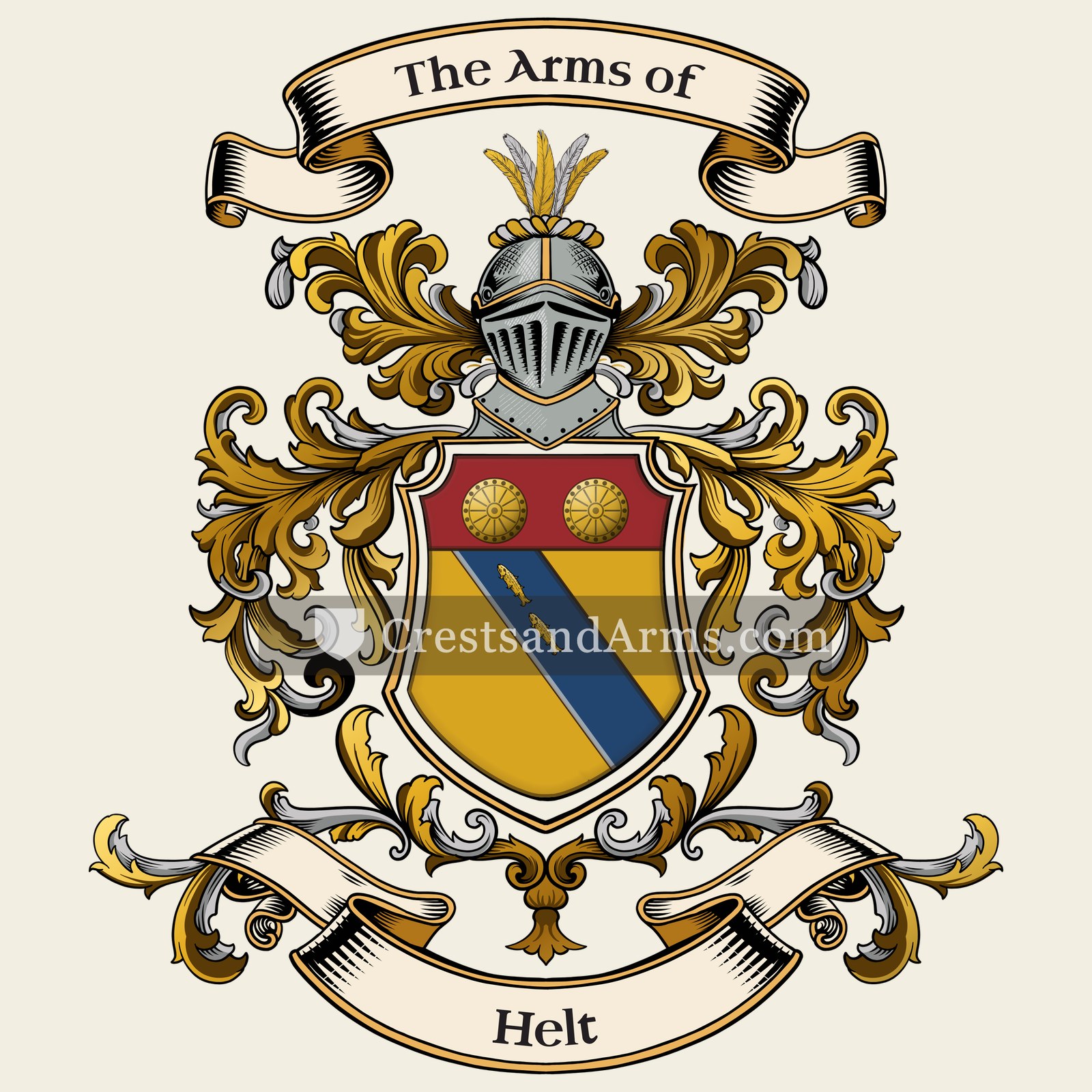


 fessThe military belt, and readiness to serve
 arrowReadiness for battle, and affliction endured