Map of Belgium showing where the Hendryx arms are recorded
The Hendryx arms were recorded in Bruges, c. 1737.
This is where the arms were entered in the register. Families often moved to other parts of the country, so the same name can turn up in more than one region.
The body that granted and recorded arms in Belgium in this period.
Charles VI, Holy Roman Emperor
Sovereign of the period
Charles VI, Holy Roman Emperor
1711–1740
Reigning in Belgium when the Hendryx arms are first recorded.
How Arms Worked in Belgium
In Belgium, a coat of arms is considered personal property that is passed down through the male line to legitimate descendants. Families often use the same shield design across generations to show their shared heritage. If a branch of the family wants to change the design, they must apply for an official update to their specific version of the arms.
Granting authority
The Conseil héraldique is the official body that regulates and approves all coats of arms in Belgium.
How they got arms
Families obtain their coats of arms through formal royal grants or by confirming their historical right to use existing designs.
Where arms were recorded
All approved coats of arms are officially recorded in the public registers of the Conseil héraldique since 1844.
The family's standing
Recorded among the armigerous families of Belgium.
Origin & History of the Hendryx Family in Belgium
The history of the Hendryx name in Belgium is deeply connected to the vibrant urban life of Bruges during the eighteenth century. By 1737, records confirm that members of the family were established residents within this historic city, which served as a major hub for trade and craftsmanship in the Low Countries. At that time, Bruges was an important center for the textile industry and international commerce, providing a stable environment for families to build their livelihoods. The name likely evolved from regional variations of the name Henry, reflecting the common practice of adopting patronymic surnames based on a father’s given name. As the family integrated into the local community, they participated in the daily economic and social rhythms of a city known for its intricate canal networks and guild-based labor systems. This early presence in Bruges suggests that the ancestors of the Hendryx line were part of the hardworking middle class that helped sustain the city’s long-standing reputation for industry and cultural preservation.
Coat of Arms & Family Crest Details
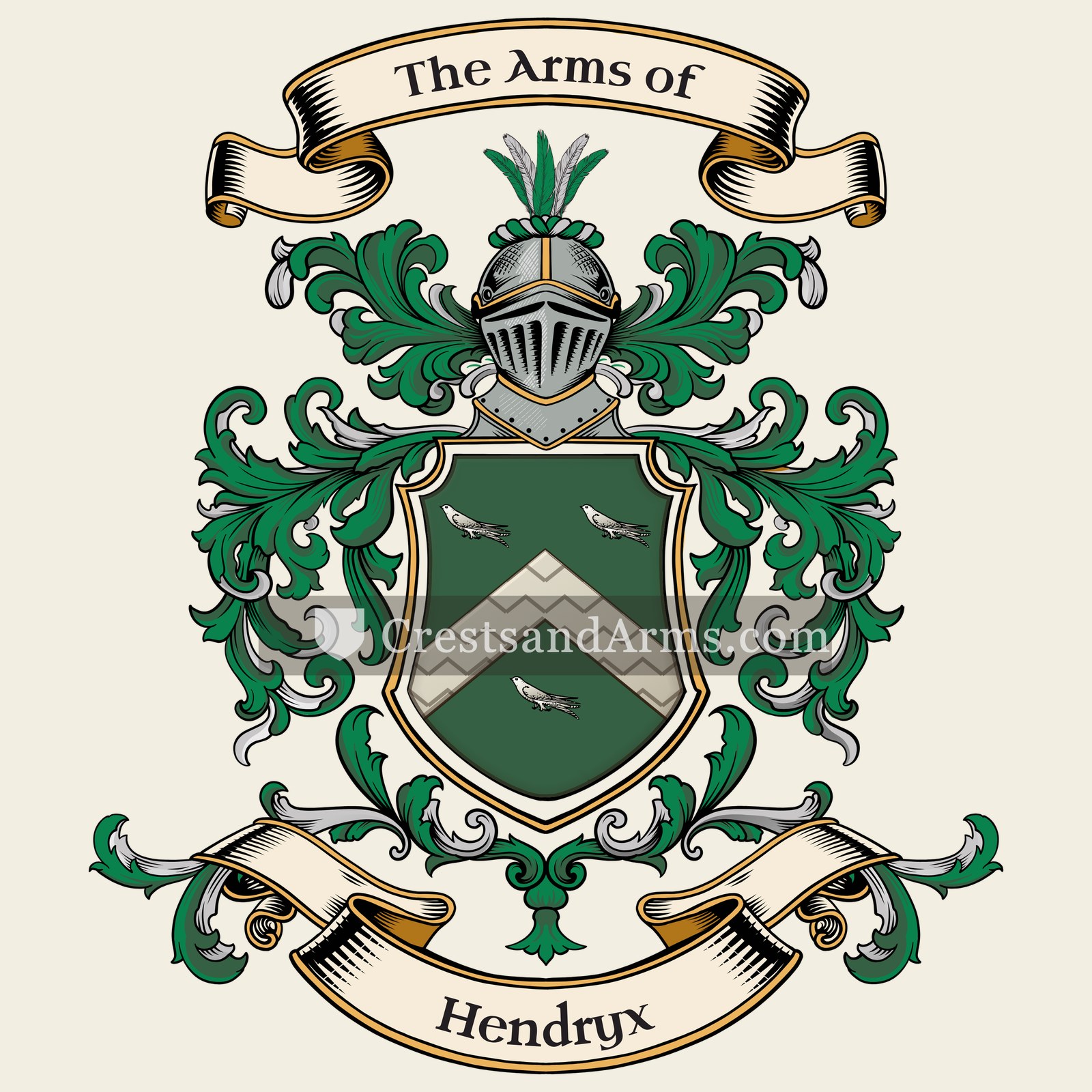
Symbols on this shield
chevronProtection, and faithful service completed
martletA younger son, who must win his own land
Colours
Green (Vert)Means: Hope
Silver (Argent)Means: Peace and sincerity
Historical info
Source
J. B. Rietstap, Armorial Général, Gouda: G. B. van Goor Zonen, 1884–87
Blazon (the actual original written record)
“De sin. au chev. d'arg., acc. de trois oiseaux du même.”
FlandreFlandre, c. 1663
Digital archive packCoat of arms PNG, gold border print PDF, vector SVG and the certificate of authenticity. Sent to your email in minutes.
Map of France showing where the Hendryx arms are recorded
The Hendryx arms were recorded in Flandre, c. 1663.
Flandre grew rich on cloth, and its towns were among the busiest in Europe. Merchant families bought land with their profits and took arms to go with it, so trade put as many names in the registers here as land did.
This is where the arms were entered in the register. Families often moved to other parts of the country, so the same name can turn up in more than one region.
The body that granted and recorded arms in France in this period.
Louis XIV of France
Sovereign of the period
Louis XIV of France
1643–1715
Reigning in Belgium when the Hendryx arms are first recorded.
How Arms Worked in France
In France, a coat of arms was a mark of honor that passed down through the male line to all legitimate descendants. Families often used the same shield without changes to show their shared heritage. If a branch wanted to stand out, they could add a small mark to their shield to show their specific place in the family tree.
Granting authority
The Juge d'armes de France acted as the official authority that regulated and verified coats of arms across the country.
How they got arms
Families typically inherited their arms from ancestors, though they could also receive them through royal grants or by proving their noble status.
Where arms were recorded
Coats of arms were officially recorded in the Armorial Général de France, which began its main collection in the year 1696.
The family's standing
Recorded among the armigerous families of Flandre.
Origin & History of the Hendryx Family in France
The roots of the Hendryx name in France are tied to the complex history of the Flanders region during the seventeenth century. By 1663, records confirm that families bearing this name were established in Flandre, a territory that frequently shifted between French and Spanish control during this era. The name itself likely evolved as a regional variation of Germanic naming traditions, reflecting the linguistic blend common in border provinces where Dutch, French, and Flemish cultures met. Families in this area were often involved in the agricultural and merchant trades that defined the local economy. As the borders solidified under the expansionist policies of King Louis XIV, these families navigated the transition from living in a contested frontier zone to becoming subjects of the French crown. This period of change influenced how the family name was recorded in local parish registers, eventually leading to the distinct spelling that persists today.
Related Branches & Arms
Root word
Heinrich
Germanic name meaning home ruler or ruler of the enclosure.
This name
HendryxA patronymic surname derived from the personal name Henry, signifying son of Henry.
also spelled
Hendryx
Hendrix
Documented Sources
J. B. Rietstap, Armorial Général, Gouda: G. B. van Goor Zonen, 1884–87
Stadsarchief Brugge, Parochieregisters van de stad Brugge (1737)
Rijksarchief te Brugge, Registers van de Burgerlijke Stand en Parochieregisters
De Flou, Karel, Woordenboek der Toponymie van westelijk Vlaanderen, Vlaamsch Artesië, het Land van den Hoek, de graafschappen Guînes en Boulogne en een gedeelte van het graafschap Ponthieu (1914)
Vannieuwenhuyze, Brecht, Brugge: de geschiedenis van een Europese stad (2018)
Digital archive packCoat of arms PNG, gold border print PDF, vector SVG and the certificate of authenticity. Sent to your email in minutes.


 wheatsheafPlenty, and the harvest of one's own labour
 wheatsheafPlenty, and the harvest of one's own labour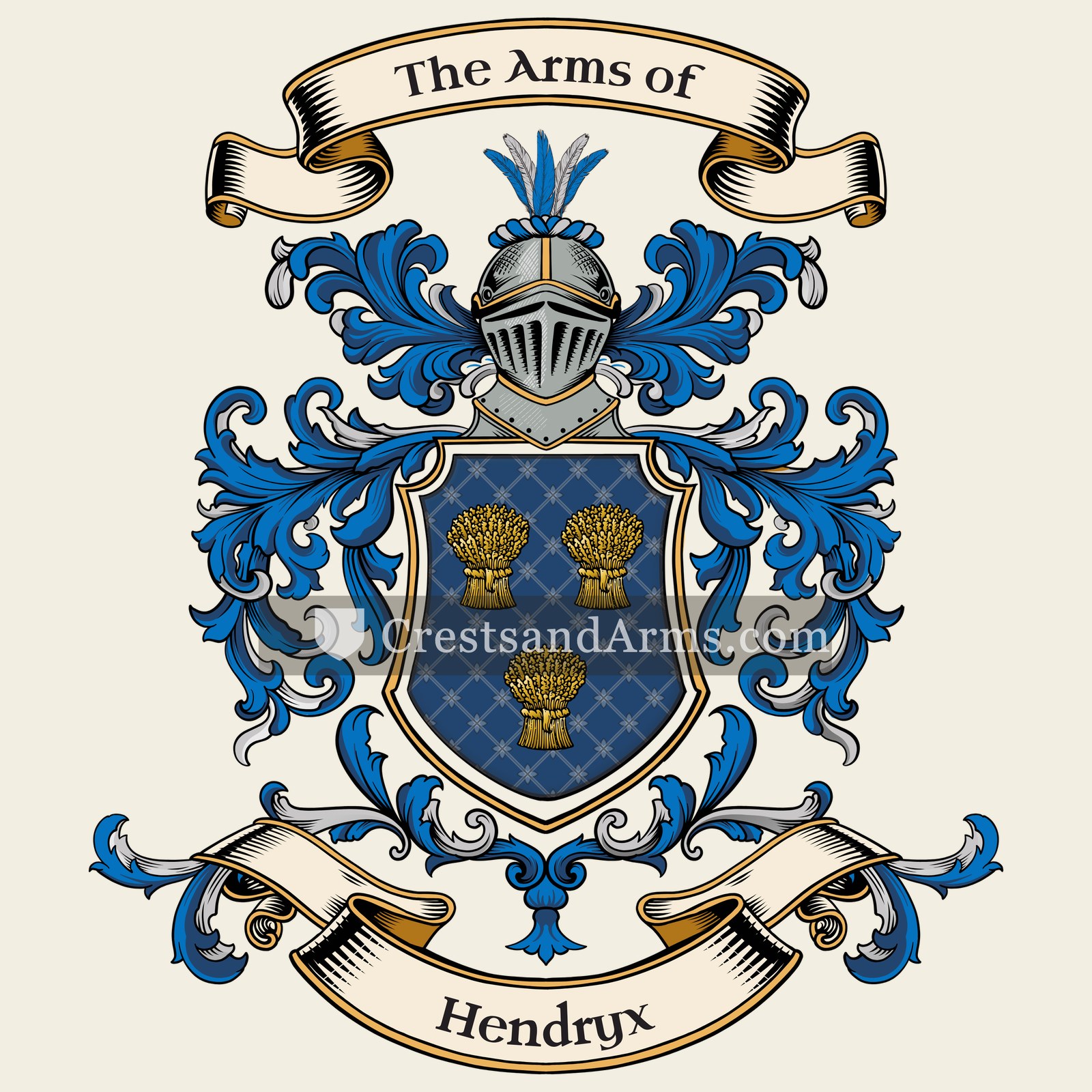


 chevronProtection, and faithful service completed
 martletA younger son, who must win his own land