A record of documented arms, meaning and origin, researched for the Hermawan family lines. Documented in 3 countries.
Reg. 0483 · Swiss, G–I
Coat of Arms & Family Crest Details
Symbols on this shield
mountThe ground held, and steadfastness upon it
cupFaith, office, and a trust discharged
arms pheon arrowheadReadiness for battle, and the broad arrow of the sovereign
roseThe seventh son, and beauty with grace
Colours
Red (Gules)Means: Military strength
Green (Vert)Means: Hope
Gold (Or)Means: Generosity
Silver (Argent)Means: Peace and sincerity
Historical info
Source
J. B. Rietstap, Armorial Général, Gouda: G. B. van Goor Zonen, 1884–87
Blazon (the actual original written record)
“De gu. à un vase à deux anses d'or, posé sur un tertre de sin. et supp. un fer de lance renv. d'arg., accosté de deux roses du même, tigées et feuillées de sin. et mouv. du vase. C.: les meubles de l'écu.”
SwitzerlandBerne, c. 1745
Digital archive packCoat of arms PNG, gold border print PDF, vector SVG and the certificate of authenticity. Sent to your email in minutes.
Map of Switzerland showing where the Hermawan arms are recorded
The Hermawan arms were recorded in Berne, c. 1745.
This is where the arms were entered in the register. Families often moved to other parts of the country, so the same name can turn up in more than one region.
The body that granted and recorded arms in Switzerland in this period.
How Arms Worked in Switzerland
In Switzerland, coats of arms were not restricted to the nobility and were often adopted by common citizens and families. These symbols were passed down through generations to show family identity. When branches of a family grew, they often changed small details of the design to distinguish their own line from the original group.
Granting authority
Cantonal and civic authorities managed the use of coats of arms within their specific regions and local jurisdictions.
How they got arms
Families typically assumed their own coats of arms based on local custom rather than receiving them from a central monarch.
Where arms were recorded
Arms were recorded in various cantonal and civic registers starting from the fourteenth century throughout the Swiss region.
The family's standing
Recorded among the armigerous families of Switzerland.
Origin & History of the Hermawan Family in Switzerland
The Hermawan family name established a documented presence in the city of Berne by 1745, marking a significant chapter in the family’s early history within Switzerland. During this period, Berne served as a powerful center of trade and political influence, and families residing there were often integrated into the city’s structured social and guild systems. Historical records suggest that the Hermawan family members were likely involved in the local urban economy, which relied heavily on skilled craftsmanship and merchant networks that defined the Swiss cantons in the eighteenth century. By settling in such a prominent administrative hub, the family became part of the unique cultural fabric of the region, navigating the complex laws and social expectations of the Old Swiss Confederacy. This early residency in Berne indicates that the family was well-positioned within the community, allowing them to participate in the civic life and daily operations of a city that was rapidly modernizing during the Enlightenment era.
Coat of Arms & Family Crest Details
Symbols on this shield
ramLeadership and authority
Colours
Red (Gules)Means: Military strength
Silver (Argent)Means: Peace and sincerity
Historical info
Source
J. B. Rietstap, Armorial Général, Gouda: G. B. van Goor Zonen, 1884–87
Blazon (the actual original written record)
“De gu. à un bélier ramp. et cont. d'arg., accorné et onglé d'or. C.: le bélier iss. et cont., entre deux prob. de gu., ornées chacune à l'ext. de quatre verges horizontales auxquelles sont suspendues des feuilles de tilleul de sin., 1, 2, 2 et 3; et une autre feuille de tilleul de sin. dans l'embouchure de chaque prob.”
Germanyc. 1555
Digital archive packCoat of arms PNG, gold border print PDF, vector SVG and the certificate of authenticity. Sent to your email in minutes.
Map of Germany showing where the Hermawan arms are recorded
The Hermawan arms were recorded in Germany, c. 1555.
Arms such as these were typically recorded in Bavaria.
Bavaria was a country of old landed families and walled market towns. Estates passed down the same line for centuries, and both the landowners and the leading townsmen kept arms, which is why so many Bavarian names sit in the registers.
This is where the arms were entered in the register. Families often moved to other parts of the country, so the same name can turn up in more than one region.
The body that granted and recorded arms in Germany in this period.
Charles V
Sovereign of the period
Charles V
1519–1556
Reigning in Switzerland when the Hermawan arms are first recorded.
How Arms Worked in Germany
In the Holy Roman Empire, coats of arms were often granted to individuals by the Emperor or his representatives. These arms were then passed down through the generations to all legitimate descendants of the original holder. Younger branches of a family usually kept the same shield design without needing to change it, as the arms belonged to the entire lineage.
Granting authority
The Holy Roman Emperor held the sole power to grant new coats of arms throughout his vast imperial territories.
How they got arms
Families typically obtained their coats of arms through a formal imperial grant or by proving their noble status to the authorities.
Where arms were recorded
These grants were officially recorded in the Imperial Chancery registers, which began keeping formal records of such honors during the Middle Ages.
The family's standing
Recorded among the armigerous families of Germany.
Origin & History of the Hermawan Family in Germany
The family name Hermawan traces its roots back to the mid-sixteenth century in the region of Bavaria. Historical records confirm that members of the family were established in this area by 1555, a time when the Peace of Augsburg brought significant changes to the religious and social landscape of the Holy Roman Empire. The name itself is rooted in Germanic linguistic traditions, likely evolving from older personal names that combined elements meaning warrior or army with those signifying protection or strength. During this era, families often lived in small agricultural communities or near growing market towns where they contributed to the local economy through farming or skilled craftsmanship. As the family grew, they became part of the steady social fabric of southern Germany, navigating the challenges of the Reformation and the shifting political borders of the Bavarian territories. By maintaining their presence in the region for generations, the early Hermawan family helped shape the local identity of their communities through their daily work and civic participation.
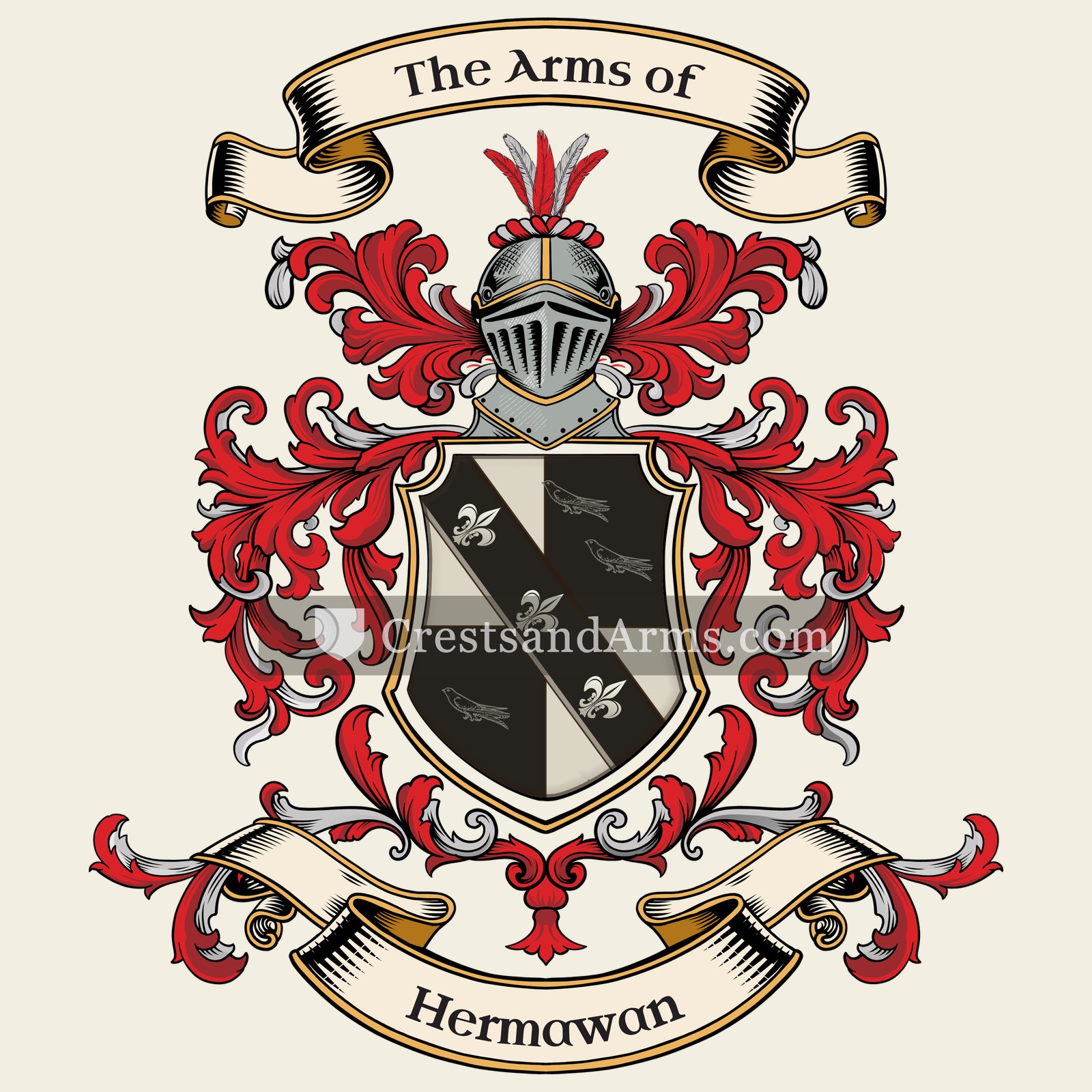
Coat of Arms & Family Crest Details
Symbols on this shield
bendDefence, and the scarf of a commander
martletA younger son, who must win his own land
fleur de lisPurity, light, and the sixth son
Colours
Silver (Argent)Means: Peace and sincerity
Black (Sable)Means: Constancy
Historical info
Source
Sir Bernard Burke, The General Armory of England, Scotland, Ireland and Wales, London: Harrison & Sons, 1884
Blazon (the actual original written record)
“Quarterly, indented ar. and sa. on a bend of the second betw. three martlets of the first as many fleurs-de-lis of the last”
BuckinghamBuckingham, c. 1620
Digital archive packCoat of arms PNG, gold border print PDF, vector SVG and the certificate of authenticity. Sent to your email in minutes.
Map of England showing where the Hermawan arms are recorded
The Hermawan arms were recorded in Buckingham, c. 1620.
Buckinghamshire was quiet farming country on the road out of London. Court officials and lawyers bought manors there within easy reach of the capital, and a manor was the usual reason to take arms.
This is where the arms were entered in the register. Families often moved to other parts of the country, so the same name can turn up in more than one region.
The body that granted and recorded arms in England in this period.
James VI and I
Sovereign of the period
James VI and I
1603–1625
Reigning in Switzerland when the Hermawan arms are first recorded.
How Arms Worked in England
English heraldry allowed arms to be shared by all legitimate descendants of the original owner. These symbols were treated as personal property that moved through the generations to all children. While the eldest son kept the original design, other family members could use the same shield without needing to change it or register their own unique versions.
Granting authority
The College of Arms in London has regulated the use of coats of arms throughout England and Wales since 1484.
How they got arms
Families typically obtained their coats of arms through a formal grant from the Crown or by proving their ancient right to them.
Where arms were recorded
All official coats of arms are recorded in the registers kept at the College of Arms, which date back to the fifteenth century.
The family's standing
Recorded among the armigerous families of Buckingham.
Origin & History of the Hermawan Family in England
The history of the Hermawan family in England begins with documented evidence of their presence in Buckingham as early as 1620. During the seventeenth century, Buckingham was a bustling market town that served as a central hub for trade and local governance. Families living in this region often played active roles in the agricultural and mercantile life of the county. While the name itself carries roots that suggest a connection to Germanic or Old English linguistic origins, its appearance in Buckingham records highlights how the family integrated into the social fabric of the English Midlands. By settling in this area, early members of the family likely participated in the local parish system, which was the primary way that residents recorded their births, marriages, and daily activities during the Stuart period. This early residency establishes the family as part of the long-standing community history of Buckinghamshire, reflecting a period of growth and stability for families living in the English countryside.
Related Branches & Arms
Root word
Herman
Derived from the Germanic elements for army and man.
This name
HermawanA patronymic surname signifying descendant of the warrior or soldier.
also spelled
Herrman
Harmon
Documented Sources
J. B. Rietstap, Armorial Général, Gouda: G. B. van Goor Zonen, 1884–87
Staatsarchiv des Kantons Bern, Bürgerrodel der Stadt Bern, 1745
Von Mülinen, Wolfgang Friedrich, Geschichte der Stadt Bern, 1891
Digital archive packCoat of arms PNG, gold border print PDF, vector SVG and the certificate of authenticity. Sent to your email in minutes.


 mountThe ground held, and steadfastness upon it
 cupFaith, office, and a trust discharged
 arms pheon arrowheadReadiness for battle, and the broad arrow of the sovereign
 roseThe seventh son, and beauty with grace
 mountThe ground held, and steadfastness upon it
 cupFaith, office, and a trust discharged
 arms pheon arrowheadReadiness for battle, and the broad arrow of the sovereign
 roseThe seventh son, and beauty with grace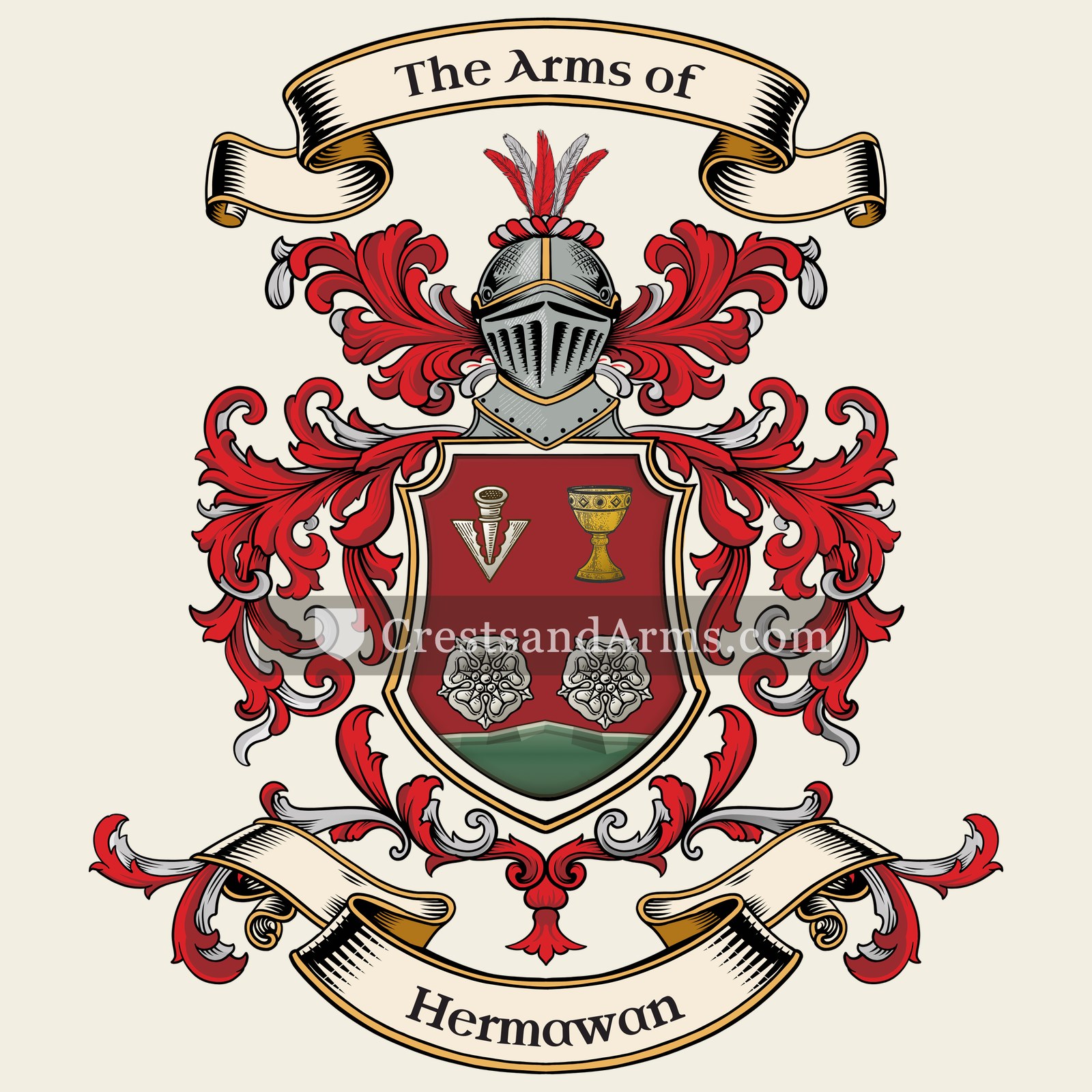

 ramLeadership and authority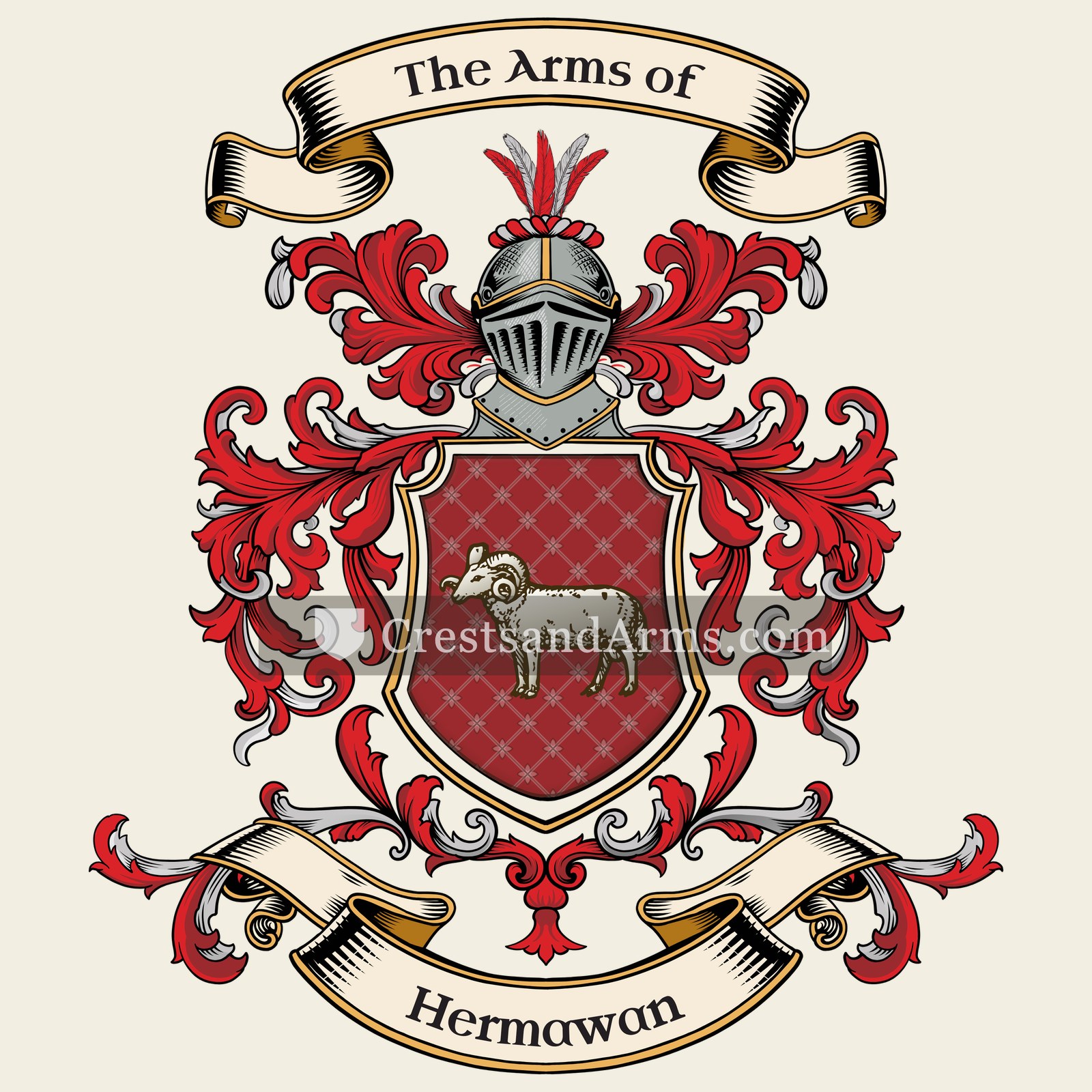


 bendDefence, and the scarf of a commander
 martletA younger son, who must win his own land
 fleur de lisPurity, light, and the sixth son