A record of documented arms, meaning and origin, researched for the Herring family lines. Documented in 3 countries.
Reg. 1683 · German, G–I
Coat of Arms & Family Crest Details
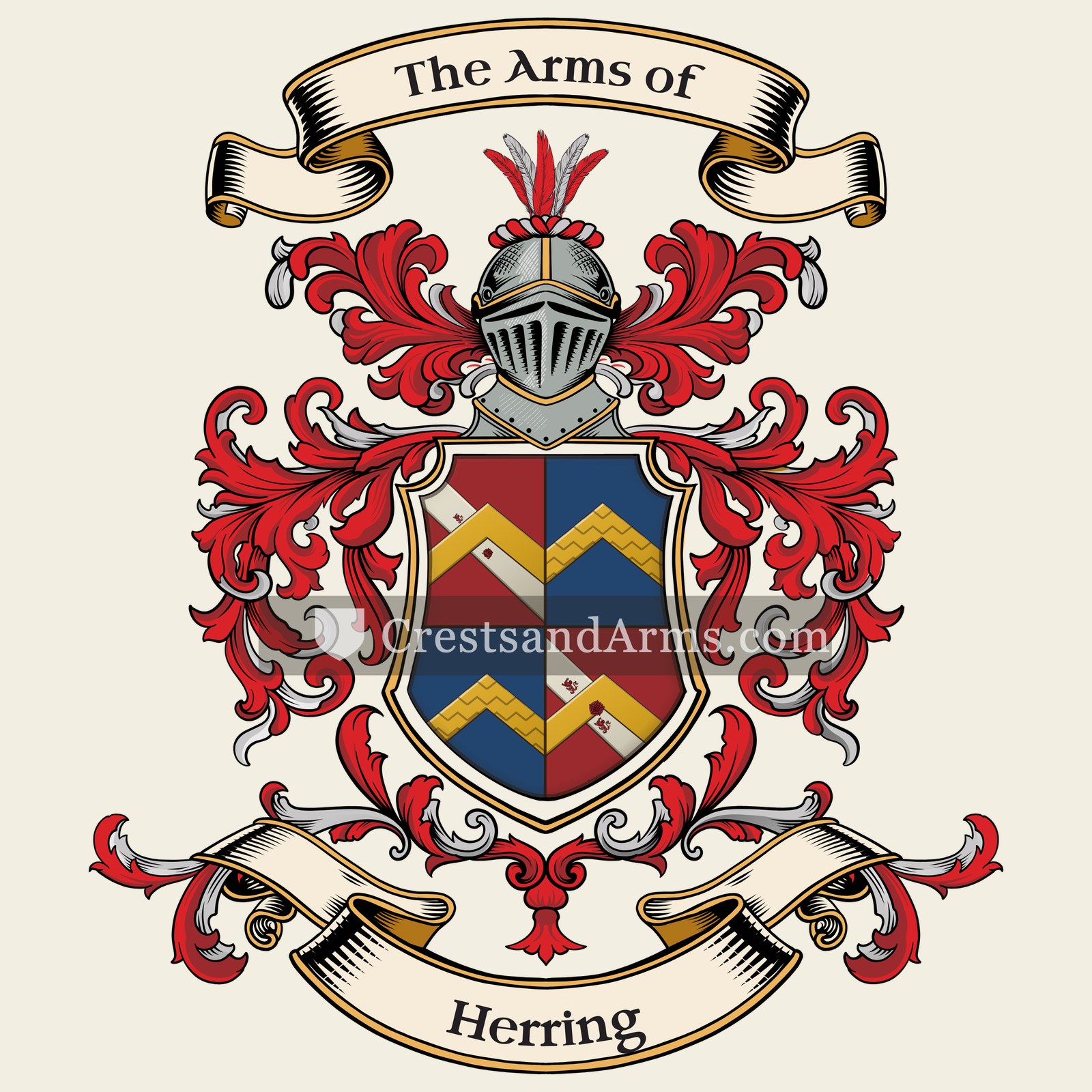
Symbols on this shield
fishA true and generous mind, and Christian faith
Colours
Silver (Argent)Means: Peace and sincerity
Blue (Azure)Means: Loyalty and truth
Historical info
Source
J. B. Rietstap, Armorial Général, Gouda: G. B. van Goor Zonen, 1884–87
Blazon (the actual original written record)
“D'arg. à trois harengs d'azur, posés en bandes, rangés en barre. C.: un chapeau de sa., retr. d'arg., sommé de sept pl. d'aut., alternativement de sa. et d'arg. (Arm. v. G.)”
WestphaliaWestphalia, c. 1765
Digital archive packCoat of arms PNG, gold border print PDF, vector SVG and the certificate of authenticity. Sent to your email in minutes.
Map of Germany showing where the Herring arms are recorded
The Herring arms were recorded in Westphalia, c. 1765.
Westphalia was a land of small estates and fortified farmhouses in western Germany. Its families were numerous and not especially rich, but each held its own ground, and holding ground was what brought arms.
This is where the arms were entered in the register. Families often moved to other parts of the country, so the same name can turn up in more than one region.
The body that granted and recorded arms in Germany in this period.
Francis I, Holy Roman Emperor
Sovereign of the period
Francis I, Holy Roman Emperor
1745–1765
Reigning in Germany when the Herring arms are first recorded.
How Arms Worked in Germany
In the Holy Roman Empire, coats of arms were often granted to individuals by the Emperor or his representatives. These arms were then passed down through the generations to all legitimate descendants of the original holder. Younger branches of a family usually kept the same shield design without needing to change it, as the arms belonged to the entire lineage.
Granting authority
The Holy Roman Emperor held the sole power to grant new coats of arms throughout his vast imperial territories.
How they got arms
Families typically obtained their coats of arms through a formal imperial grant or by proving their noble status to the authorities.
Where arms were recorded
These grants were officially recorded in the Imperial Chancery registers, which began keeping formal records of such honors during the Middle Ages.
The family's standing
Recorded among the armigerous families of Westphalia.
Origin & History of the Herring Family in Germany
The surname Herring is rooted in the linguistic traditions of medieval Germany, where it functioned primarily as a descriptive occupational or topographic name. It is widely believed to have originated from the Middle High German word *hering*, which refers to the fish, suggesting that early ancestors may have been involved in the fishing trade, fish processing, or the transport of goods along the major river systems of the region. By the middle of the eighteenth century, the family established a notable presence in the Westphalia region. This area was historically characterized by a mix of agrarian communities and growing trade networks, providing a stable environment for families to settle and expand. The name became firmly embedded in local parish records by 1765, reflecting a period where families were increasingly documented through church baptisms, marriages, and land tax assessments. These early records illustrate a lineage deeply connected to the social and economic development of the Westphalian landscape during the late Enlightenment era.
Coat of Arms & Family Crest Details
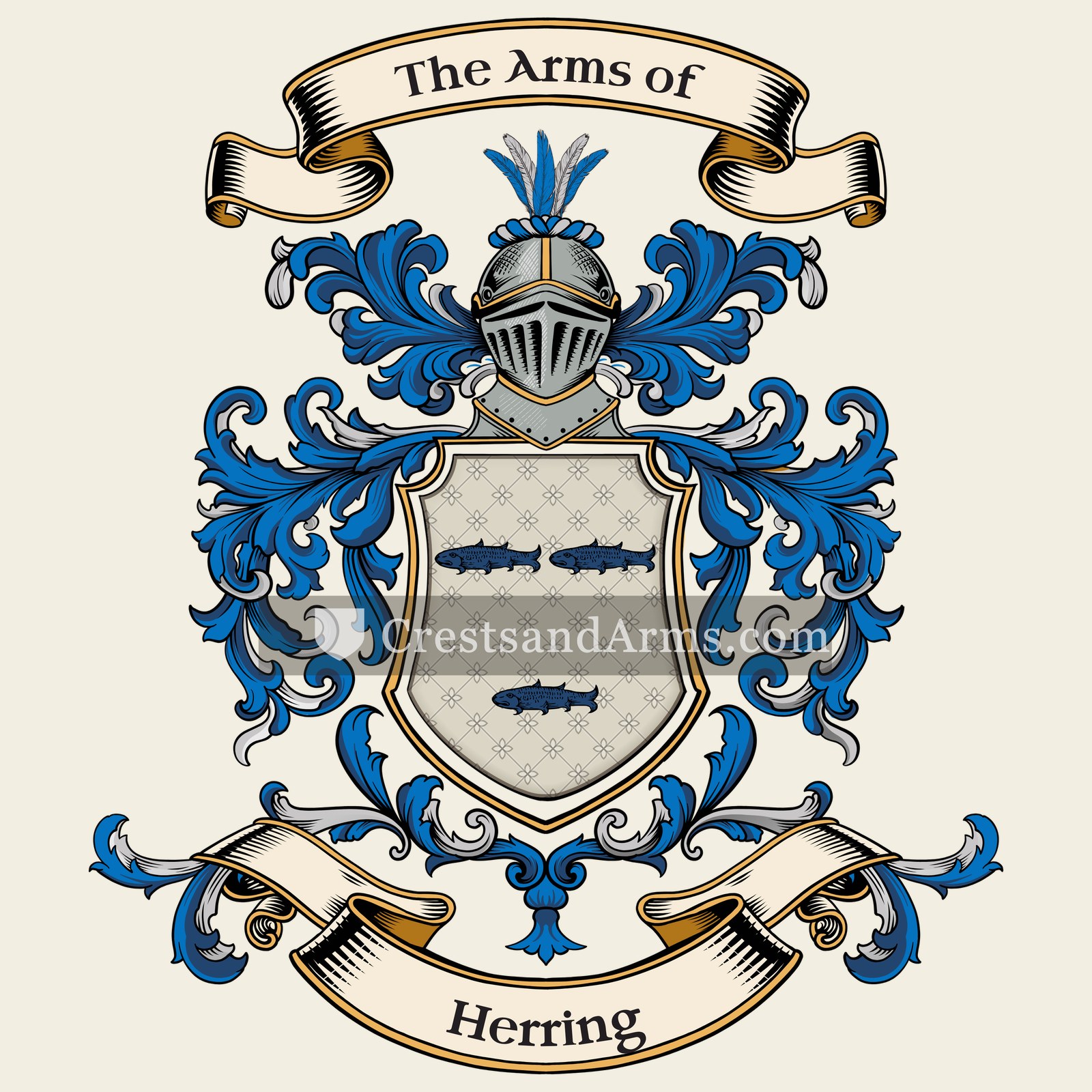
Symbols on this shield
cross symbolChristian faith and service
fishA true and generous mind, and Christian faith
Colours
Blue (Azure)Means: Loyalty and truth
Silver (Argent)Means: Peace and sincerity
Historical info
Source
Sir Bernard Burke, The General Armory of England, Scotland, Ireland and Wales, London: Harrison & Sons, 1884
Blazon (the actual original written record)
“Az. semée of crosslets, three herrings ar”
Englandc. 1620
Digital archive packCoat of arms PNG, gold border print PDF, vector SVG and the certificate of authenticity. Sent to your email in minutes.
Map of England showing where the Herring arms are recorded
The Herring arms were recorded in England, c. 1620.
Arms such as these were typically recorded in York.
Yorkshire is the largest of the English counties, and it held more gentry families than any other. Land there was split among a great many households rather than a few, so a great many of them carried arms.
This is where the arms were entered in the register. Families often moved to other parts of the country, so the same name can turn up in more than one region.
The body that granted and recorded arms in England in this period.
James VI and I
Sovereign of the period
James VI and I
1603–1625
Reigning in Germany when the Herring arms are first recorded.
How Arms Worked in England
English heraldry allowed arms to be shared by all legitimate descendants of the original owner. These symbols were treated as personal property that moved through the generations to all children. While the eldest son kept the original design, other family members could use the same shield without needing to change it or register their own unique versions.
Granting authority
The College of Arms in London has regulated the use of coats of arms throughout England and Wales since 1484.
How they got arms
Families typically obtained their coats of arms through a formal grant from the Crown or by proving their ancient right to them.
Where arms were recorded
All official coats of arms are recorded in the registers kept at the College of Arms, which date back to the fifteenth century.
The family's standing
Recorded among the armigerous families of England.
Origin & History of the Herring Family in England
The surname Herring is an ancient occupational and descriptive name that emerged in England during the Middle Ages. It likely originated as a nickname for someone who dealt in the fish trade or perhaps for a person who possessed a slender build or silver-colored hair, reminiscent of the fish itself. By the early 17th century, the family had established a notable presence in the historic city of York. Records from 1620 confirm that members of the Herring family were active participants in the social and economic life of this northern hub. During this period, York was a center for trade and religious administration, and families like the Herrings often contributed to the local craft guilds or merchant networks that defined the city’s growth. This history reflects the broader movement of English families who settled in established urban centers to pursue professional opportunities and build lasting community ties.
Coat of Arms & Family Crest Details
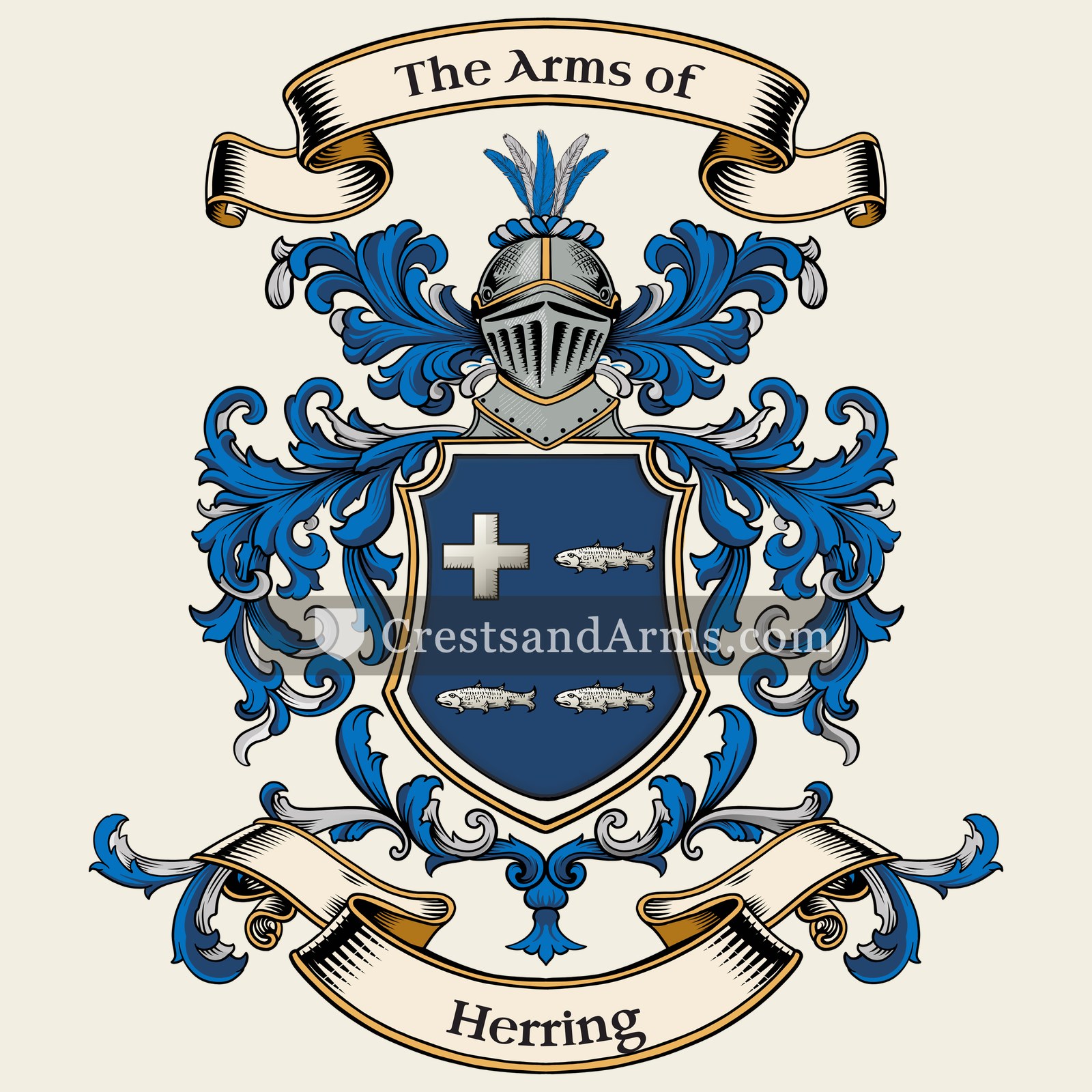
Symbols on this shield
bendDefence, and the scarf of a commander
chevronProtection, and faithful service completed
roseThe seventh son, and beauty with grace
lionCourage, strength and royalty
Colours
Red (Gules)Means: Military strength
Blue (Azure)Means: Loyalty and truth
Silver (Argent)Means: Peace and sincerity
Gold (Or)Means: Generosity
Historical info
Source
Sir Bernard Burke, The General Armory of England, Scotland, Ireland and Wales, London: Harrison & Sons, 1884
Blazon (the actual original written record)
“Quarterly, 1st and 4th, gu. on a bend ar. a rose betw. two lions ramp. of the field; 2nd and 3rd, az. a chev. or”
PerthLethendy · Perth, c. 1748
Digital archive packCoat of arms PNG, gold border print PDF, vector SVG and the certificate of authenticity. Sent to your email in minutes.
Map of Scotland showing where the Herring arms are recorded
The Herring arms were recorded in Perth, c. 1748.
Perth sat where the Highlands meet the Lowlands, and its families held land on both sides of that line. Estates passed down whole for centuries, and unbroken tenure is what puts a name in the register.
This is where the arms were entered in the register. Families often moved to other parts of the country, so the same name can turn up in more than one region.
The body that granted and recorded arms in Scotland in this period.
George II of Great Britain
Sovereign of the period
George II of Great Britain
1727–1760
Reigning in Germany when the Herring arms are first recorded.
How Arms Worked in Scotland
Scottish heraldry is unique because it treats a coat of arms as a piece of personal property protected by law. Only one person can own a specific design at any given time. When a family grows, the head keeps the original shield while other relatives must apply for their own distinct version with slight changes to prove their specific identity.
Granting authority
The Court of the Lord Lyon acts as the official body that regulates and controls all heraldic matters throughout Scotland.
How they got arms
Individuals obtain a legal right to their arms through a formal petition process that confirms their identity and family connection.
Where arms were recorded
All valid coats of arms are officially entered into the Public Register of All Arms and Bearings starting from 1672.
The family's standing
Recorded among the armigerous families of Perth.
Origin & History of the Herring Family in Scotland
The Herring family name has deep roots in the historical landscape of Scotland, with records confirming their presence in the city of Perth as early as 1748. During the eighteenth century, Perth served as a vital hub for trade and craftsmanship, and families like the Herrings often integrated into the local merchant class or the skilled trades that supported the growing urban economy. The name itself likely originated as a descriptive nickname or an occupational identifier related to the fishing industry, which was a cornerstone of the Scottish economy for centuries. As the family established itself in Perth, they became part of the social fabric of the region, navigating the significant political and economic shifts that defined Scotland during the Enlightenment era. By settling in such a prominent administrative center, the early Herrings were positioned to participate in the development of Scottish civic life, leaving a lasting mark on the history of the city.
Herring Meaning & Related Branches
Root word
Haro
A Germanic term meaning army or warrior.
This name
HerringAn occupational name for a fisherman or a dealer in herring fish.
also spelled
Hering
Heryng
Heringe
Related arms
Heringvariant spelling
Hearingvariant spelling
Heringevariant spelling
Kinlochrecorded with Herring, same area
Documented Sources
J. B. Rietstap, Armorial Général, Gouda: G. B. van Goor Zonen, 1884–87
Bahlow, Hans, Deutsches Namenlexikon: Familien- und Vornamen nach Ursprung und Sinn erklärt, 1967
Heintze, Albert, Die deutschen Familiennamen: geschichtlich, geographisch, sprachlich, 1903
Landesarchiv Nordrhein-Westfalen, Abteilung Westfalen, Kirchenbücher der evangelischen und katholischen Kirchengemeinden in Westfalen
Digital archive packCoat of arms PNG, gold border print PDF, vector SVG and the certificate of authenticity. Sent to your email in minutes.


 fishA true and generous mind, and Christian faith
 fishA true and generous mind, and Christian faith


 cross symbolChristian faith and service


 bendDefence, and the scarf of a commander
 chevronProtection, and faithful service completed
 roseThe seventh son, and beauty with grace
 lionCourage, strength and royalty