Map of Germany showing where the Herzog arms are recorded
The Herzog arms were recorded in Nördlingen Bav, c. 1765.
This is where the arms were entered in the register. Families often moved to other parts of the country, so the same name can turn up in more than one region.
The body that granted and recorded arms in Germany in this period.
Francis I, Holy Roman Emperor
Sovereign of the period
Francis I, Holy Roman Emperor
1745–1765
Reigning in Germany when the Herzog arms are first recorded.
How Arms Worked in Germany
In the Holy Roman Empire, coats of arms were often granted to individuals by the Emperor or his representatives. These arms were then passed down through the generations to all legitimate descendants of the original holder. Younger branches of a family usually kept the same shield design without needing to change it, as the arms belonged to the entire lineage.
Granting authority
The Holy Roman Emperor held the sole power to grant new coats of arms throughout his vast imperial territories.
How they got arms
Families typically obtained their coats of arms through a formal imperial grant or by proving their noble status to the authorities.
Where arms were recorded
These grants were officially recorded in the Imperial Chancery registers, which began keeping formal records of such honors during the Middle Ages.
The family's standing
Recorded among the armigerous families of Germany.
Origin & History of the Herzog Family in Germany
The surname Herzog originates from the Middle High German word for a duke or a military leader. During the Middle Ages, this name was often used as a nickname for someone who acted like a nobleman or who served in the household of a high-ranking official. By the time the family was documented in the town of Nördlingen in 1765, the name had become a well-established surname passed down through generations. Nördlingen was a significant center for trade and craftsmanship during this era, and families living there were often deeply integrated into the local guild systems. As the family grew in this region, they likely participated in the daily life of the city, which was known for its defensive walls and its role as a free imperial city. The transition of the name from a title of nobility to a common family name reflects the broader social changes occurring in Germany as individuals moved away from feudal roles toward more independent lives in growing urban centers.
Coat of Arms & Family Crest Details
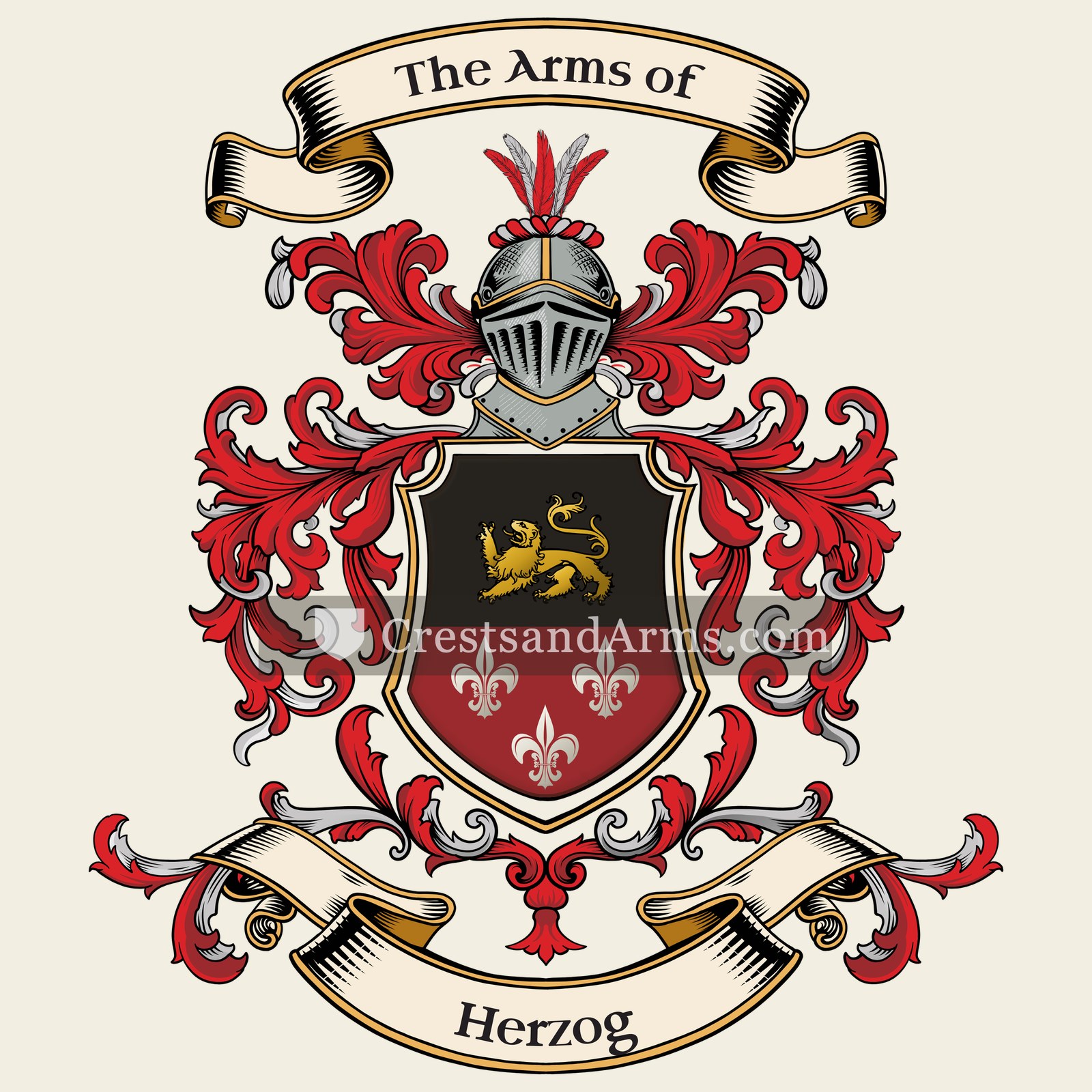
Symbols on this shield
lionCourage, strength and royalty
fleur de lisPurity, light, and the sixth son
Colours
Black (Sable)Means: Constancy
Red (Gules)Means: Military strength
Gold (Or)Means: Generosity
Silver (Argent)Means: Peace and sincerity
Historical info
Source
J. B. Rietstap, Armorial Général, Gouda: G. B. van Goor Zonen, 1884–87
Blazon (the actual original written record)
“Coupé: au 1 de sa. au lion léopardé d'or, tenant un sceptre du même; au 2 de gu. à trois fleurs-de-lis d'arg., rangées en fasce. Cq. cour. C.: un lion iss. d'or, cour. du même, brandissant un sabre d'azur; entre un vol de gu., les plumes ext. de l'aile dextre alt. d'or et de sa., celles de l'aile sen. alt. de gu. et d'arg. L.: à dextre d'or et de sa., à sen. d'arg. et de gu.”
CarinthiaCarinthia, c. 1670
Digital archive packCoat of arms PNG, gold border print PDF, vector SVG and the certificate of authenticity. Sent to your email in minutes.
Map of Austria showing where the Herzog arms are recorded
The Herzog arms were recorded in Carinthia, c. 1670.
Carinthia was Alpine country in southern Austria with iron and lead in its mountains. Mining and landholding both made money, and families who held either kind of property took arms.
This is where the arms were entered in the register. Families often moved to other parts of the country, so the same name can turn up in more than one region.
Region
Carinthia
First recorded
1670
Granting Authority for the Herzog Arms
Imperial and Royal chancery
Sodacan · CC BY-SA 3.0
The body that granted and recorded arms in Austria in this period.
Leopold I, Holy Roman Emperor
Sovereign of the period
Leopold I, Holy Roman Emperor
1658–1705
Reigning in Germany when the Herzog arms are first recorded.
How Arms Worked in Austria
Austrian coats of arms were often linked directly to noble titles granted by the Emperor. These symbols belonged to the entire family line rather than just one individual. When a family grew, new branches kept the original design without needing to change it. This system allowed all members of a noble house to share the same identity across many generations.
Granting authority
The Imperial and Royal chancery managed all heraldic matters and controlled the official granting of arms throughout the Austrian lands.
How they got arms
Families typically received their arms through a formal imperial decree that often accompanied the elevation of a person to noble status.
Where arms were recorded
Official records of these grants were kept in the Imperial Register of Nobility which began its formal documentation process in 1453.
The family's standing
Recorded among the armigerous families of Carinthia.
Origin & History of the Herzog Family in Austria
The surname Herzog originated as a title of nobility, specifically the German word for a duke. In the context of medieval and early modern Austria, names often evolved from the roles or ranks individuals held within their local communities. By the year 1670, records confirm that members of the Herzog family were established in the region of Carinthia. During this period, Carinthia was a vital part of the Habsburg lands, and families living there were often involved in agriculture, trade, or local administration. Because the name was linked to a high-ranking title, it likely served as a descriptive nickname or a reference to someone who worked in the service of a ducal household. Over time, this title transitioned into a permanent family name that was passed down through generations of settlers in the southern Austrian Alps.
Coat of Arms & Family Crest Details
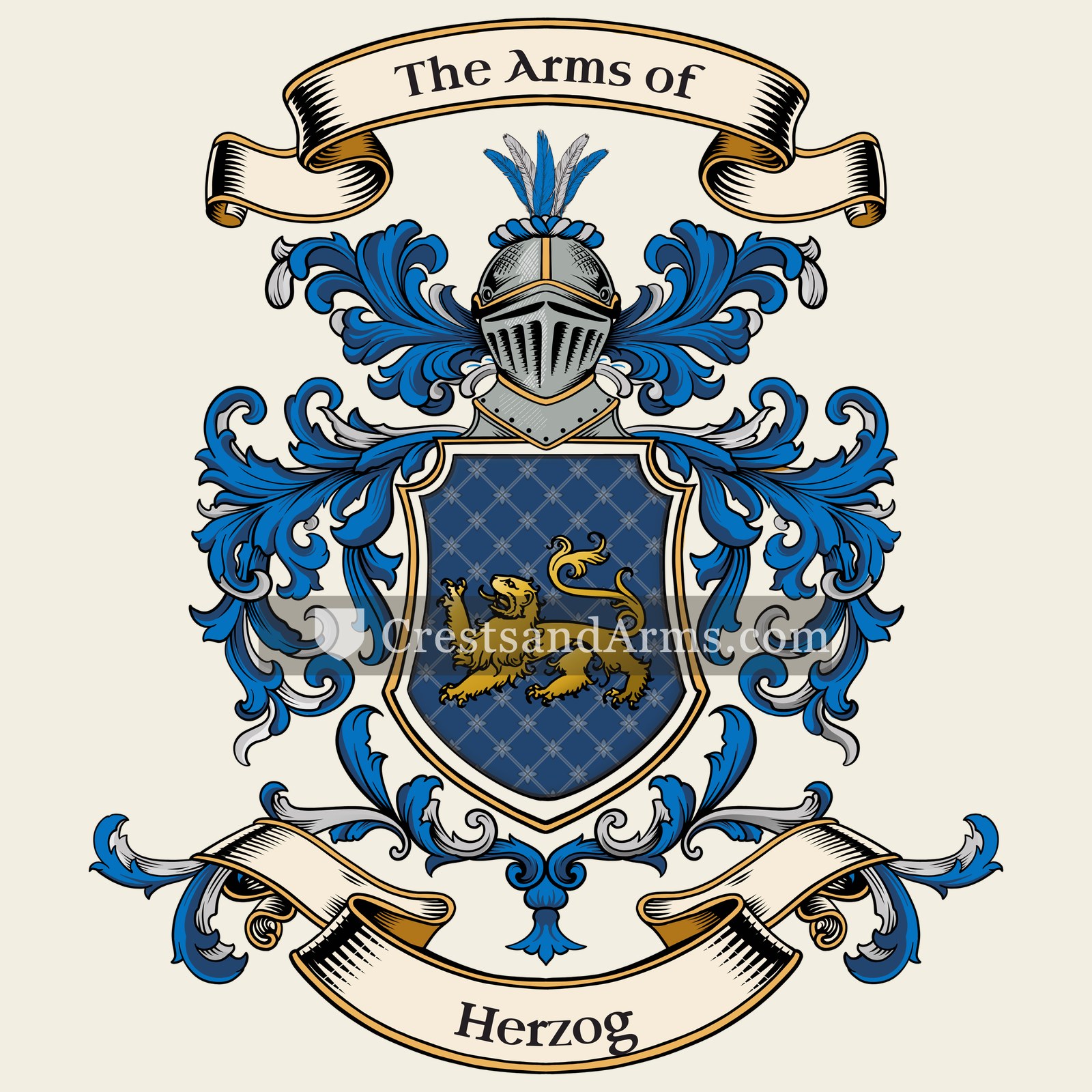
Symbols on this shield
lionCourage, strength and royalty
Colours
Blue (Azure)Means: Loyalty and truth
Gold (Or)Means: Generosity
Historical info
Source
J. B. Rietstap, Armorial Général, Gouda: G. B. van Goor Zonen, 1884–87
Blazon (the actual original written record)
“D'azur au lion d'or, tenant de ses pattes un maillet du même en pal.”
SwitzerlandBaden Argovie, c. 1745
Digital archive packCoat of arms PNG, gold border print PDF, vector SVG and the certificate of authenticity. Sent to your email in minutes.
Map of Switzerland showing where the Herzog arms are recorded
The Herzog arms were recorded in Baden Argovie, c. 1745.
This is where the arms were entered in the register. Families often moved to other parts of the country, so the same name can turn up in more than one region.
The body that granted and recorded arms in Switzerland in this period.
How Arms Worked in Switzerland
In Switzerland, coats of arms were not restricted to the nobility and were often adopted by common citizens and families. These symbols were passed down through generations to show family identity. When branches of a family grew, they often changed small details of the design to distinguish their own line from the original group.
Granting authority
Cantonal and civic authorities managed the use of coats of arms within their specific regions and local jurisdictions.
How they got arms
Families typically assumed their own coats of arms based on local custom rather than receiving them from a central monarch.
Where arms were recorded
Arms were recorded in various cantonal and civic registers starting from the fourteenth century throughout the Swiss region.
The family's standing
Recorded among the armigerous families of Switzerland.
Origin & History of the Herzog Family in Switzerland
The surname Herzog originated as a title of nobility, specifically the German word for a duke, and it was often bestowed as a nickname or a professional designation in the Middle Ages. In the context of Switzerland and the surrounding regions, families carrying this name were frequently established as prominent citizens or local officials long before the mid-eighteenth century. By 1745, records confirm that members of the Herzog family were well-settled in the Baden region, which was then a subject territory of the Swiss Confederacy. During this era, the family likely participated in the agricultural and civic life of the Aargau area, where they would have been subject to the administrative oversight of the Swiss cantonal authorities. As the family grew, they integrated into the local social fabric, moving from their origins as individuals associated with a high-ranking title to becoming deeply rooted members of the Swiss community.
Related Branches & Arms
Root word
herizogo
Old High German term for a leader of an army.
This name
HerzogA noble title denoting a duke or a military commander.
Documented Sources
J. B. Rietstap, Armorial Général, Gouda: G. B. van Goor Zonen, 1884–87
Bahlow, Hans. Deutsches Namenlexikon: Familien- und Vornamen nach Ursprung und Sinn erklärt. 1967
Stadtarchiv Nördlingen. Bürgerbuch der Stadt Nördlingen. 1765
Heintze, Albert. Die deutschen Familiennamen, geschichtlich, geographisch, sprachlich. 1903
Digital archive packCoat of arms PNG, gold border print PDF, vector SVG and the certificate of authenticity. Sent to your email in minutes.


 bendDefence, and the scarf of a commander
 mulletThe third son, and a divine quality from above
 bendDefence, and the scarf of a commander
 mulletThe third son, and a divine quality from above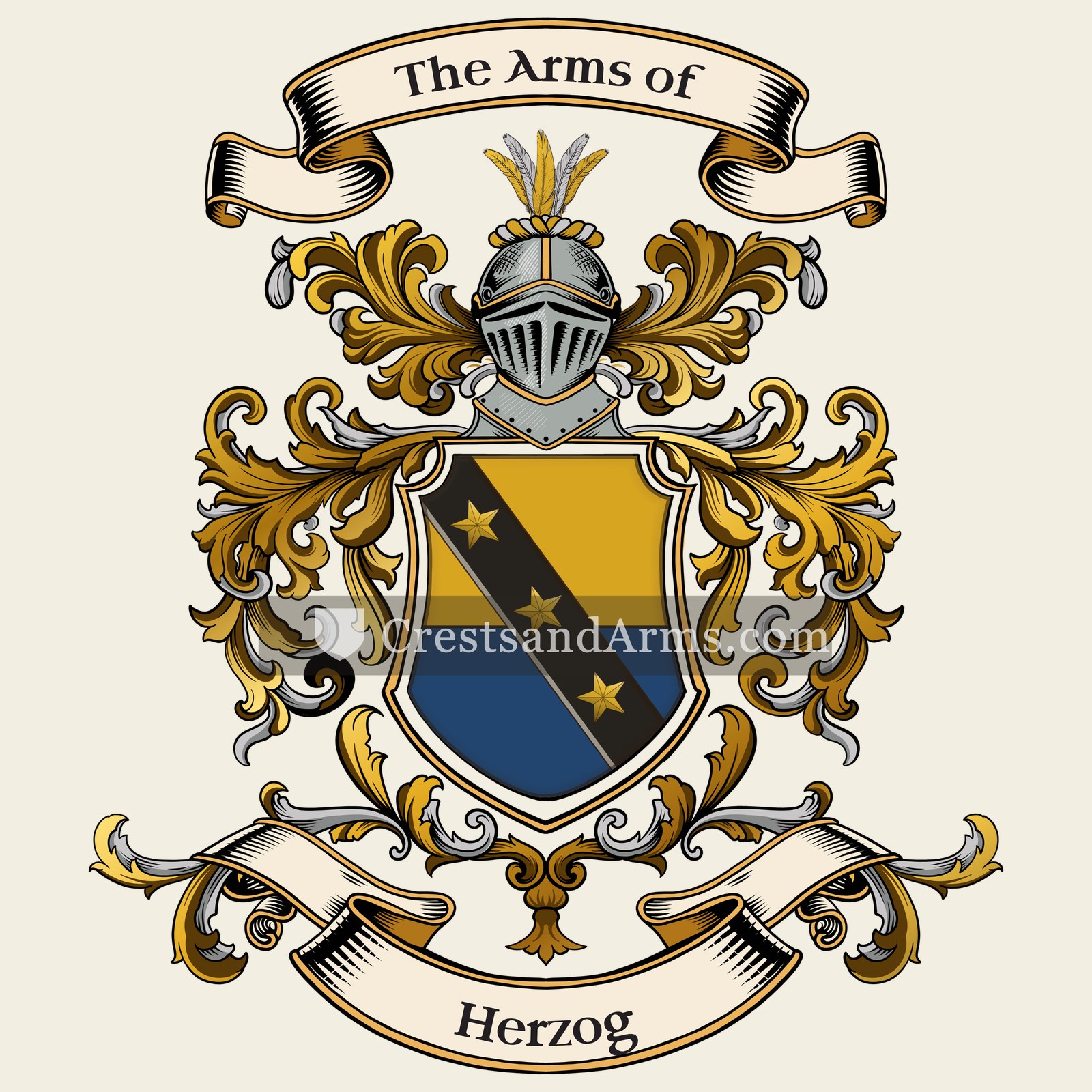


 lionCourage, strength and royalty
 fleur de lisPurity, light, and the sixth son