Map of Belgium showing where the Hesdin arms are recorded
The Hesdin arms were recorded in Brabant, c. 1737.
Brabant lay at the heart of the Low Countries, where the trade routes met. Its towns were wealthy and its landowners many, and both kinds of family kept arms, which is why the region is so heavily represented.
This is where the arms were entered in the register. Families often moved to other parts of the country, so the same name can turn up in more than one region.
The body that granted and recorded arms in Belgium in this period.
Charles VI, Holy Roman Emperor
Sovereign of the period
Charles VI, Holy Roman Emperor
1711–1740
Reigning in Belgium when the Hesdin arms are first recorded.
How Arms Worked in Belgium
In Belgium, a coat of arms is considered personal property that is passed down through the male line to legitimate descendants. Families often use the same shield design across generations to show their shared heritage. If a branch of the family wants to change the design, they must apply for an official update to their specific version of the arms.
Granting authority
The Conseil héraldique is the official body that regulates and approves all coats of arms in Belgium.
How they got arms
Families obtain their coats of arms through formal royal grants or by confirming their historical right to use existing designs.
Where arms were recorded
All approved coats of arms are officially recorded in the public registers of the Conseil héraldique since 1844.
The family's standing
Recorded among the armigerous families of Brabant.
Origin & History of the Hesdin Family in Belgium
The family name Hesdin is deeply rooted in the historical landscape of the Low Countries, with clear evidence of the family residing in the Duchy of Brabant by 1737. During this period, the region was a vibrant center of trade and agriculture under the rule of the Austrian Habsburgs. Families like the Hesdins often integrated into the local social fabric by working as skilled artisans or landholders within the rural parishes. The name itself likely originated as a locative surname, which was a common practice in the eighteenth century to identify individuals by the town or region from which they migrated. As the Hesdin family established their lives in Brabant, they became part of the steady demographic growth that defined the eighteenth-century Belgian provinces. Their presence in local parish registers suggests they were active members of their community who participated in the religious and civic life of the era.
Coat of Arms & Family Crest Details
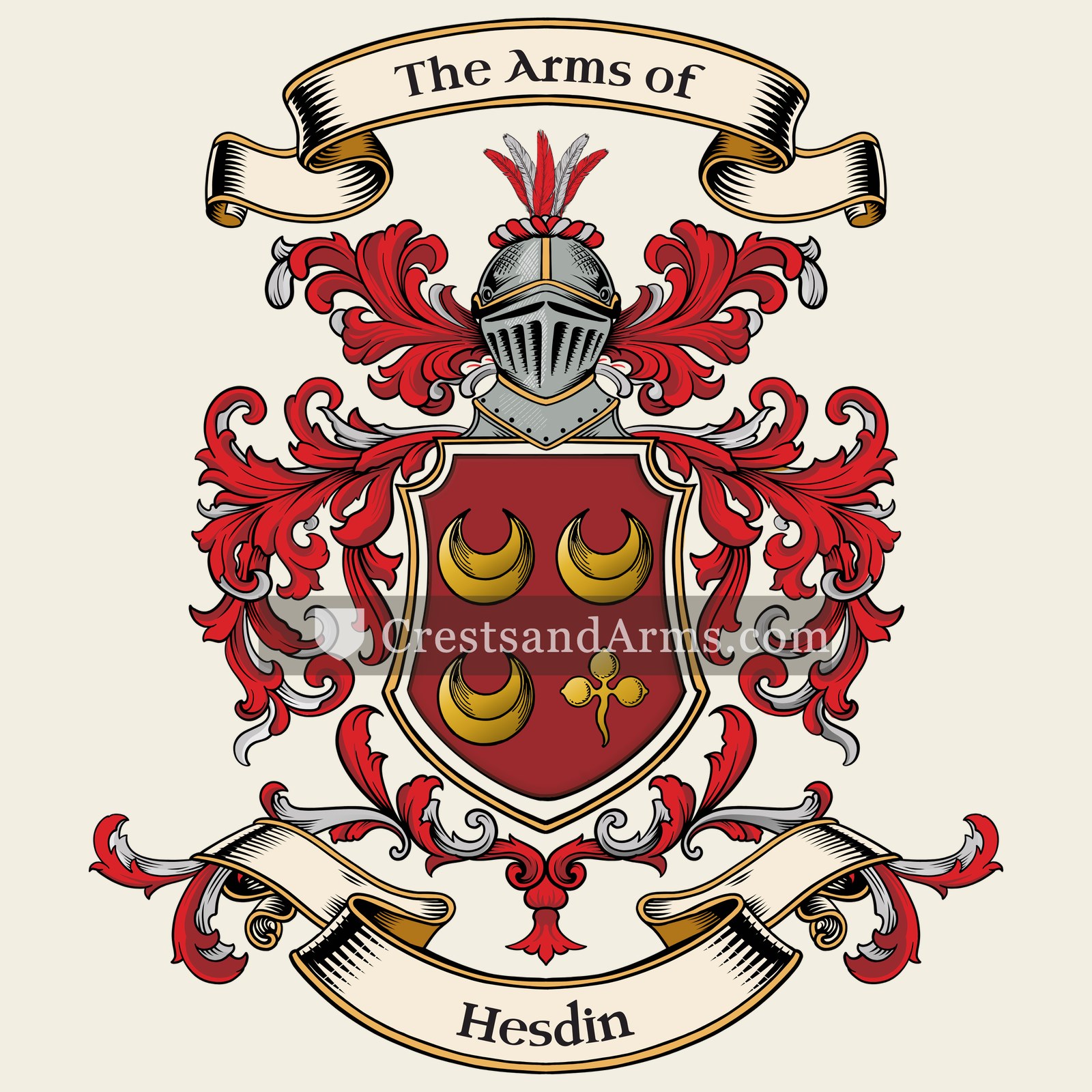
Symbols on this shield
crescentHonour by the sovereign, and the second son
trefoilPerpetuity, and the Trinity
Colours
Red (Gules)Means: Military strength
Gold (Or)Means: Generosity
Historical info
Source
J. B. Rietstap, Armorial Général, Gouda: G. B. van Goor Zonen, 1884–87
Blazon (the actual original written record)
“De gu. semé de trèfles d'or; à trois croiss. du même, br. sur le tout.”
PonthieuPonthieu, c. 1663
Digital archive packCoat of arms PNG, gold border print PDF, vector SVG and the certificate of authenticity. Sent to your email in minutes.
Map of France showing where the Hesdin arms are recorded
The Hesdin arms were recorded in Ponthieu, c. 1663.
Ponthieu was small coastal country in northern France, on the road armies took between the Channel and Paris. Its families held land in return for service, and men who served carried shields.
This is where the arms were entered in the register. Families often moved to other parts of the country, so the same name can turn up in more than one region.
The body that granted and recorded arms in France in this period.
Louis XIV of France
Sovereign of the period
Louis XIV of France
1643–1715
Reigning in Belgium when the Hesdin arms are first recorded.
How Arms Worked in France
In France, a coat of arms was a mark of honor that passed down through the male line to all legitimate descendants. Families often used the same shield without changes to show their shared heritage. If a branch wanted to stand out, they could add a small mark to their shield to show their specific place in the family tree.
Granting authority
The Juge d'armes de France acted as the official authority that regulated and verified coats of arms across the country.
How they got arms
Families typically inherited their arms from ancestors, though they could also receive them through royal grants or by proving their noble status.
Where arms were recorded
Coats of arms were officially recorded in the Armorial Général de France, which began its main collection in the year 1696.
The family's standing
Recorded among the armigerous families of Ponthieu.
Origin & History of the Hesdin Family in France
The family name Hesdin originates from the historic town of Hesdin in the northern region of France. During the medieval period, this area was a vital crossroads in the County of Ponthieu, which sat between the powerful territories of Flanders and Normandy. By the mid-seventeenth century, records confirm that members of the family were firmly established within the local society of Ponthieu. Because the town of Hesdin was frequently caught in the middle of territorial conflicts between French and Burgundian forces, the families living there were often resilient and deeply tied to the land. The name itself likely served as a topographical identifier, marking the family as people who hailed from this specific fortified settlement. As the seventeenth century progressed, the family became part of the administrative and social fabric of the region, maintaining their presence in the province long after the town had been rebuilt and relocated by royal decree.
Related Branches & Arms
Root word
Hesdinum
A Latinized toponym referring to a settlement or fortified place.
This name
HesdinA locative surname originating from the town of Hesdin in the Pas-de-Calais region.
also spelled
Hesdyne
Hesden
Documented Sources
J. B. Rietstap, Armorial Général, Gouda: G. B. van Goor Zonen, 1884–87
State Archives in Belgium (Rijksarchief), Parochieregisters van Brabant
State Archives in Belgium (Rijksarchief), Registers van de burgerlijke stand
De Smet, A., Geschiedenis van Brabant, 1970
Verhulst, A., Het sociaal-economisch leven in de Zuidelijke Nederlanden, 1990
Digital archive packCoat of arms PNG, gold border print PDF, vector SVG and the certificate of authenticity. Sent to your email in minutes.


 fessThe military belt, and readiness to serve
 mulletThe third son, and a divine quality from above
 fessThe military belt, and readiness to serve
 mulletThe third son, and a divine quality from above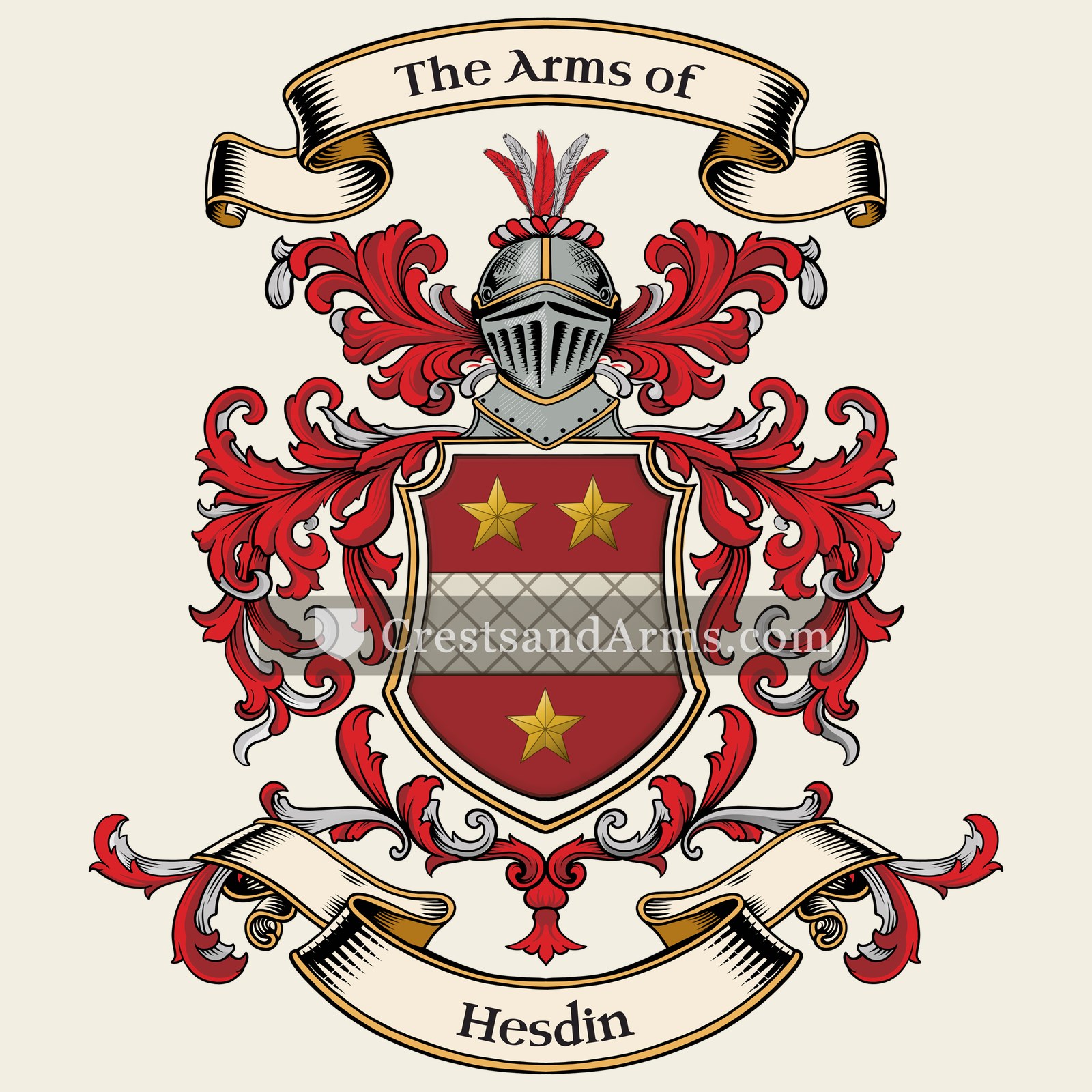


 crescentHonour by the sovereign, and the second son
 trefoilPerpetuity, and the Trinity