Map of France showing where the Hessel arms are recorded
The Hessel arms were recorded in Flandre, c. 1663.
Flandre grew rich on cloth, and its towns were among the busiest in Europe. Merchant families bought land with their profits and took arms to go with it, so trade put as many names in the registers here as land did.
This is where the arms were entered in the register. Families often moved to other parts of the country, so the same name can turn up in more than one region.
The body that granted and recorded arms in France in this period.
Louis XIV of France
Sovereign of the period
Louis XIV of France
1643–1715
Reigning in France when the Hessel arms are first recorded.
How Arms Worked in France
In France, a coat of arms was a mark of honor that passed down through the male line to all legitimate descendants. Families often used the same shield without changes to show their shared heritage. If a branch wanted to stand out, they could add a small mark to their shield to show their specific place in the family tree.
Granting authority
The Juge d'armes de France acted as the official authority that regulated and verified coats of arms across the country.
How they got arms
Families typically inherited their arms from ancestors, though they could also receive them through royal grants or by proving their noble status.
Where arms were recorded
Coats of arms were officially recorded in the Armorial Général de France, which began its main collection in the year 1696.
The family's standing
Recorded among the armigerous families of Flandre.
Origin & History of the Hessel Family in France
The history of the Hessel family in France is deeply tied to the shifting borders of the seventeenth century, particularly within the region of Flandre. By 1663, the family was established in this territory, which was then a complex crossroads of French and Spanish influence. During this era, the name Hessel functioned as a marker of identity for families living in the borderlands between modern-day France and Belgium. Because the region experienced frequent military campaigns and changes in administration, families like the Hessels often navigated a world where local customs and languages blended together. Their presence in Flandre during this time suggests they were part of a resilient community that maintained its roots despite the political instability of the period. This early history reflects the broader movement of people across European frontiers, where the Hessel name persisted through generations of agricultural and social life in the northern provinces.
Coat of Arms & Family Crest Details
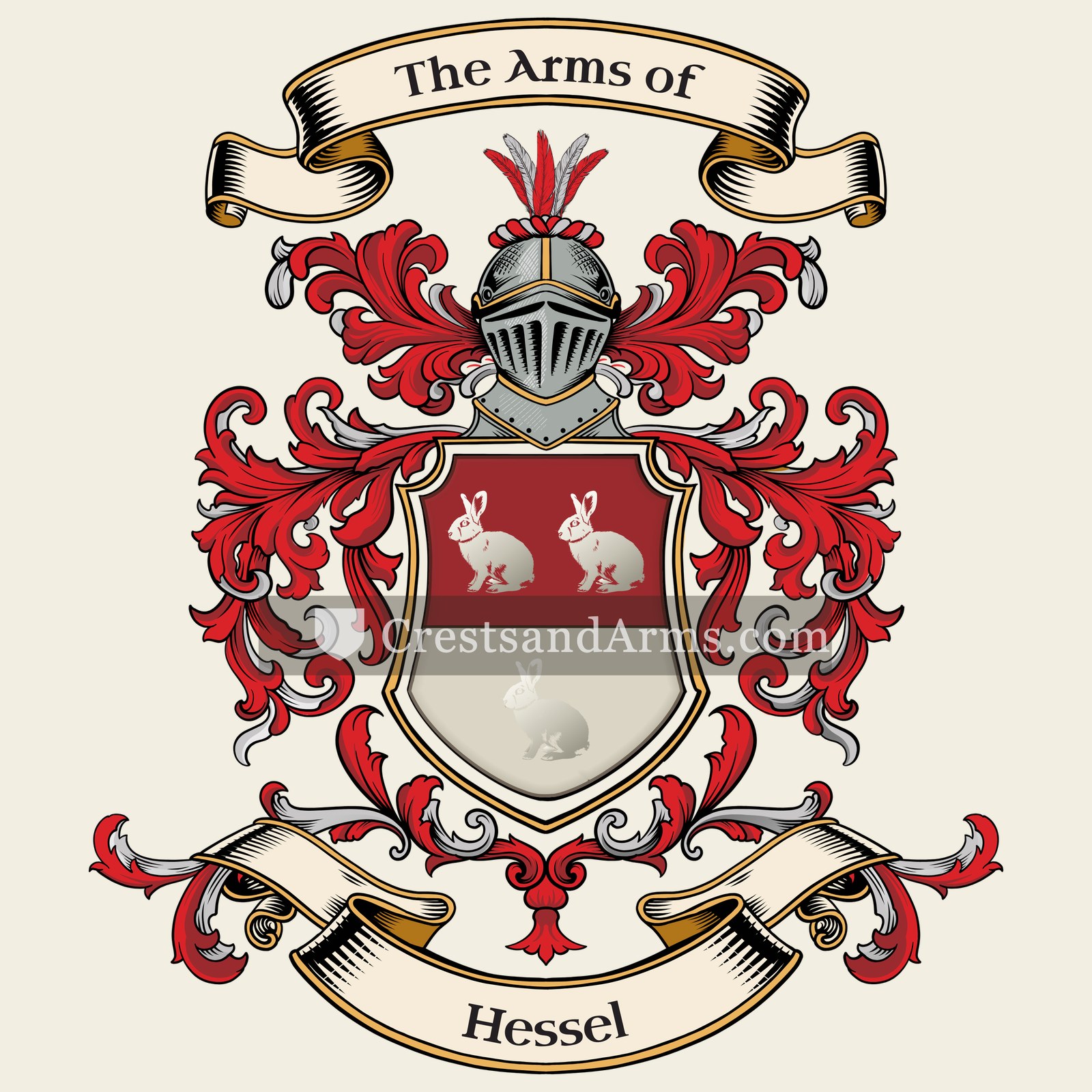
Symbols on this shield
rabbitOne who lives peaceably and well
Colours
Red (Gules)Means: Military strength
Silver (Argent)Means: Peace and sincerity
Historical info
Source
J. B. Rietstap, Armorial Général, Gouda: G. B. van Goor Zonen, 1884–87
Blazon (the actual original written record)
“Coupé de gu. sur arg.; à trois lièvres couchés de l'un à l'autre, les deux du chef affr. C.: un lièvre iss. de gu.; entre deux prob., coupées de gu. sur arg.”
GermanyNuremberg, c. 1765
Digital archive packCoat of arms PNG, gold border print PDF, vector SVG and the certificate of authenticity. Sent to your email in minutes.
Map of Germany showing where the Hessel arms are recorded
The Hessel arms were recorded in Nuremberg, c. 1765.
This is where the arms were entered in the register. Families often moved to other parts of the country, so the same name can turn up in more than one region.
The body that granted and recorded arms in Germany in this period.
Francis I, Holy Roman Emperor
Sovereign of the period
Francis I, Holy Roman Emperor
1745–1765
Reigning in France when the Hessel arms are first recorded.
How Arms Worked in Germany
In the Holy Roman Empire, coats of arms were often granted to individuals by the Emperor or his representatives. These arms were then passed down through the generations to all legitimate descendants of the original holder. Younger branches of a family usually kept the same shield design without needing to change it, as the arms belonged to the entire lineage.
Granting authority
The Holy Roman Emperor held the sole power to grant new coats of arms throughout his vast imperial territories.
How they got arms
Families typically obtained their coats of arms through a formal imperial grant or by proving their noble status to the authorities.
Where arms were recorded
These grants were officially recorded in the Imperial Chancery registers, which began keeping formal records of such honors during the Middle Ages.
The family's standing
Recorded among the armigerous families of Germany.
Origin & History of the Hessel Family in Germany
The surname Hessel is rooted in the Germanic linguistic tradition, likely originating as a shortened form of names like Hessilo or as a descriptive term for someone hailing from the region of Hesse. By the mid-eighteenth century, the family had established a notable presence in the imperial city of Nuremberg. During this era, Nuremberg served as a major hub for trade and craftsmanship, drawing in skilled families who contributed to the city's reputation for metalwork and clockmaking. Records from 1765 confirm that members of the Hessel family were integrated into this urban environment, living among a society defined by strict guild regulations and civic duty. As residents of such a prominent city, the Hessel family would have navigated the complex social hierarchies of the Holy Roman Empire, likely participating in the local merchant or artisan classes that defined the economic life of the region.
Related Branches & Arms
Root word
Hess
A Germanic personal name derived from the word for house or home.
This name
HesselA patronymic surname indicating a descendant of someone named Hess or a dweller of a house.
also spelled
Hesel
Related arms
Heselvariant spelling
Documented Sources
J. B. Rietstap, Armorial Général, Gouda: G. B. van Goor Zonen, 1884–87
Archives Départementales du Nord, Série G: Clergé séculier et paroisses
Archives Départementales du Nord, Série E: Familles et seigneuries
Derode, Victor, Histoire religieuse, diplomatique et littéraire de Lille, 1848
Lottin, Alain, Histoire des provinces françaises du Nord, 1989
Digital archive packCoat of arms PNG, gold border print PDF, vector SVG and the certificate of authenticity. Sent to your email in minutes.


 bendDefence, and the scarf of a commander
 bendDefence, and the scarf of a commander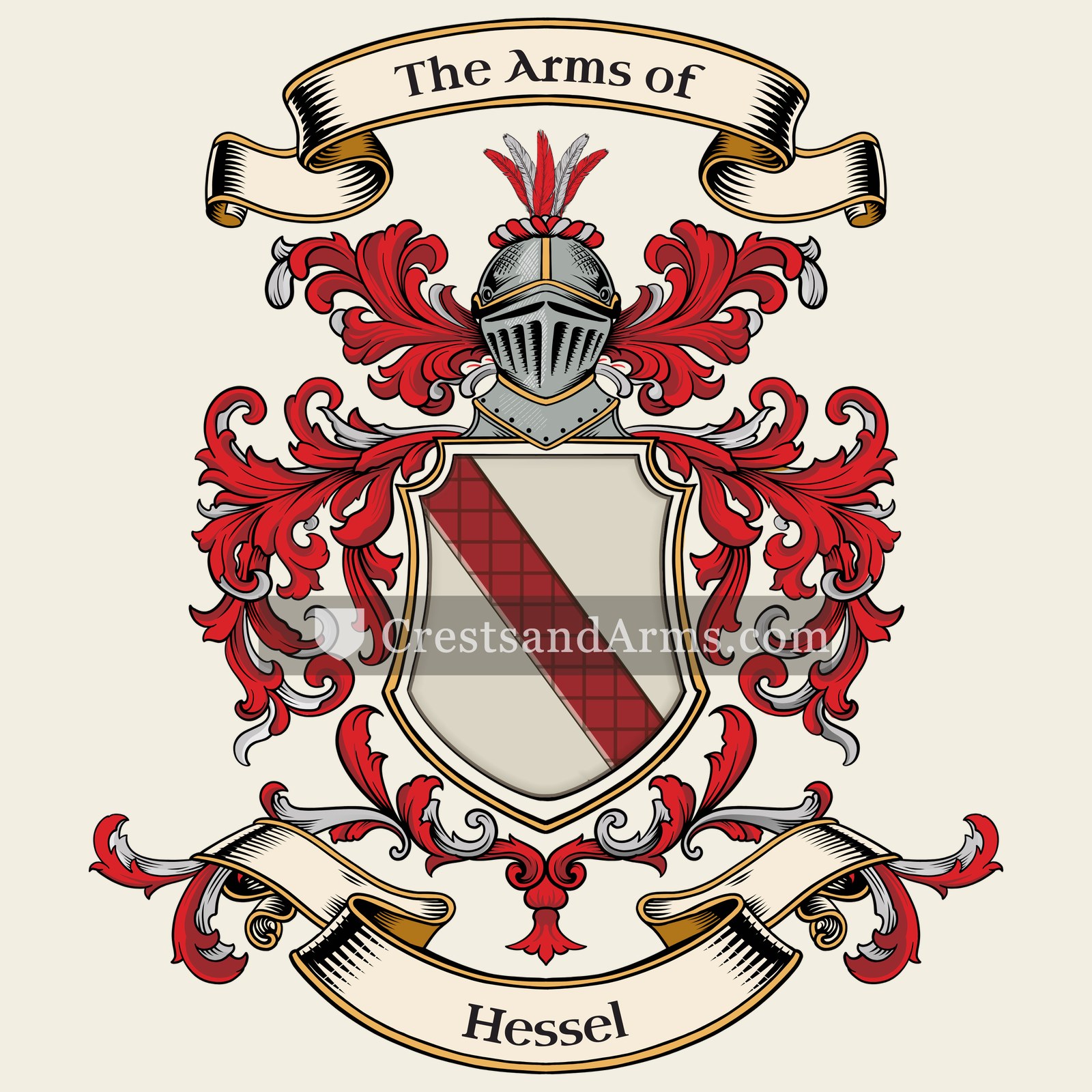


 rabbitOne who lives peaceably and well