Map of Netherlands showing where the Heys arms are recorded
The Heys arms were recorded in Netherlands, c. 1815.
Arms such as these were typically recorded in Friesland.
Friesland was low, wet country on the northern coast of the Netherlands, farmed by families who had held the same land for centuries. Free landholders were unusually common there, and a free landholder could carry arms.
This is where the arms were entered in the register. Families often moved to other parts of the country, so the same name can turn up in more than one region.
Region
Friesland
First recorded
1815
Granting Authority for the Heys Arms
Hoge Raad van Adel
Photograph made by me · CC BY-SA 3.0
The body that granted and recorded arms in Netherlands in this period.
William I of the Netherlands
Sovereign of the period
William I of the Netherlands
1815–1840
Reigning in Netherlands when the Heys arms are first recorded.
How Arms Worked in Netherlands
In the Netherlands, coats of arms were often used by noble families and those who held specific public offices. These arms were passed down through the generations to legitimate descendants. Younger branches of a family usually kept the original design without needing to add special marks. This system ensured that the family identity remained clear and consistent over many years.
Granting authority
The Hoge Raad van Adel is the official body that regulates and manages noble titles and coats of arms in the Netherlands.
How they got arms
Families typically obtained their coats of arms through official royal grants or by proving their long-standing historical use of the symbols.
Where arms were recorded
Coats of arms are officially recorded in the registers held by the Hoge Raad van Adel, which began its work in 1814.
The family's standing
Recorded among the armigerous families of Netherlands.
Origin & History of the Heys Family in Netherlands
The family name Heys, often associated with the northern regions of the Netherlands, has roots that reflect the naming traditions of the Frisian people. By the early nineteenth century, families in Friesland were formally registering their surnames as part of a national effort to standardize records under the Napoleonic administration. The name likely evolved from local geographic markers or descriptive terms used to identify individuals in tight-knit rural communities. When the family appears in official records in 1815, it marks a transition from traditional patronymic naming systems to the fixed hereditary surnames that we recognize today. This shift provides a clear window into the lives of ancestors who lived through a period of significant political and social change in the Dutch provinces. By studying these early civil registrations, we can trace the family’s presence in the Frisian landscape during a time when the modern Dutch state was first taking shape.
Coat of Arms & Family Crest Details
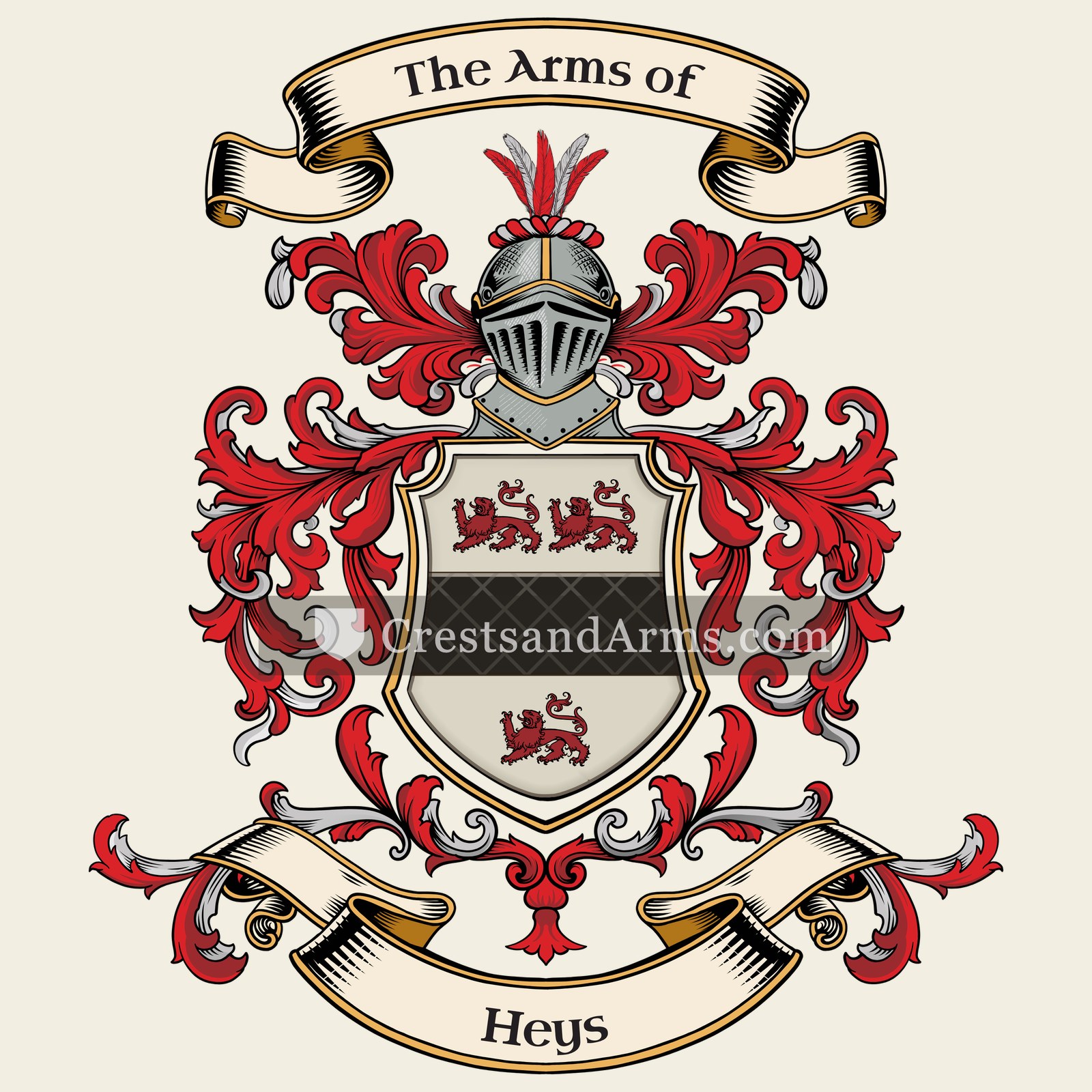
Symbols on this shield
fessThe military belt, and readiness to serve
lionCourage, strength and royalty
Colours
Silver (Argent)Means: Peace and sincerity
Black (Sable)Means: Constancy
Red (Gules)Means: Military strength
Historical info
Source
Sir Bernard Burke, The General Armory of England, Scotland, Ireland and Wales, London: Harrison & Sons, 1884
Blazon (the actual original written record)
“Ar. a fesse sa. betw. three lions ramp. gu”
Scotlandc. 1748
Digital archive packCoat of arms PNG, gold border print PDF, vector SVG and the certificate of authenticity. Sent to your email in minutes.
Map of Scotland showing where the Heys arms are recorded
The Heys arms were recorded in Scotland, c. 1748.
Arms such as these were typically recorded in Edinburgh.
Edinburgh was the seat of Scotland's government, its courts and its heralds. Families with business there settled nearby, and being close to where arms were recorded is exactly why so many of them appear.
This is where the arms were entered in the register. Families often moved to other parts of the country, so the same name can turn up in more than one region.
The body that granted and recorded arms in Scotland in this period.
George II of Great Britain
Sovereign of the period
George II of Great Britain
1727–1760
Reigning in Netherlands when the Heys arms are first recorded.
How Arms Worked in Scotland
Scottish heraldry is unique because it treats a coat of arms as a piece of personal property protected by law. Only one person can own a specific design at any given time. When a family grows, the head keeps the original shield while other relatives must apply for their own distinct version with slight changes to prove their specific identity.
Granting authority
The Court of the Lord Lyon acts as the official body that regulates and controls all heraldic matters throughout Scotland.
How they got arms
Individuals obtain a legal right to their arms through a formal petition process that confirms their identity and family connection.
Where arms were recorded
All valid coats of arms are officially entered into the Public Register of All Arms and Bearings starting from 1672.
The family's standing
Recorded among the armigerous families of Scotland.
Origin & History of the Heys Family in Scotland
The family name Heys has deep roots that connect to the urban growth of Scotland during the eighteenth century. While the name likely originated from geographical descriptions of land, such as an enclosed area or a hedge, its presence in Edinburgh by 1748 marks a significant chapter in the family story. During this period, Edinburgh was undergoing a major transformation as the city began to expand beyond its medieval walls. Families named Heys were part of this bustling environment, likely participating in the trades and professional life that defined the Scottish Enlightenment. As the city modernized, members of the family integrated into the local community, contributing to the social and economic fabric of the capital. This early documentation in city records provides a clear window into their lives as they established themselves in a rapidly changing Scottish society.
Related Branches & Arms
Root word
Heije
A Germanic personal name derived from the element haid meaning bright.
This name
HeysA patronymic surname indicating descent from a person named Heije or a variant of Heide.
also spelled
Heis
Hays
Hayes
Heas
Related arms
Hayesvariant spelling
Haysvariant spelling
Documented Sources
J. B. Rietstap, Armorial Général, Gouda: G. B. van Goor Zonen, 1884–87
Tresoar (Fries Historisch en Letterkundig Centrum), Burgerlijke Stand van Friesland
Netherlands National Archives (Nationaal Archief), Registers van de Burgerlijke Stand
Meertens Instituut, Nederlandse Familienamenbank
Digital archive packCoat of arms PNG, gold border print PDF, vector SVG and the certificate of authenticity. Sent to your email in minutes.


 treeLife, endurance and deep roots
 treeLife, endurance and deep roots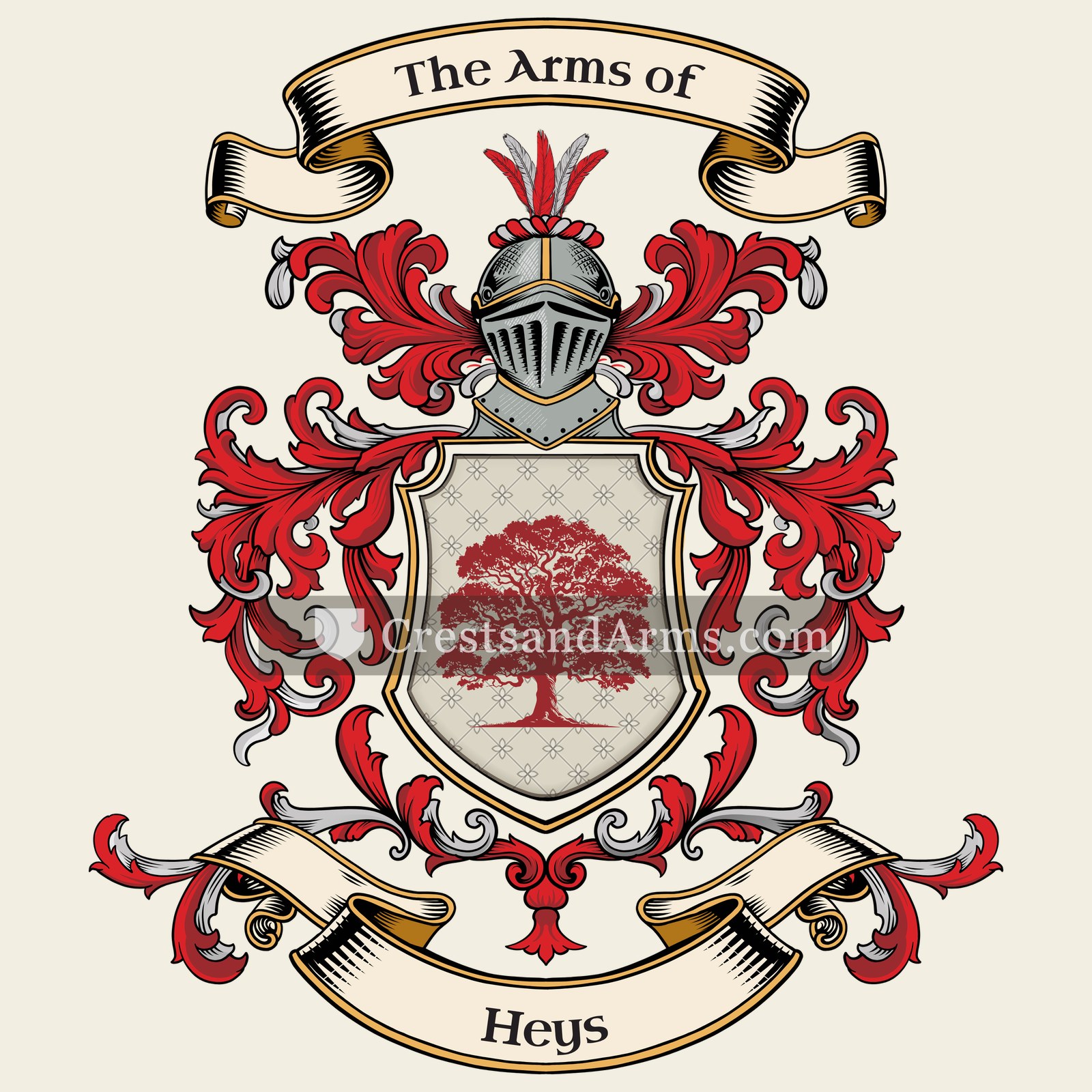


 fessThe military belt, and readiness to serve
 lionCourage, strength and royalty