Map of Netherlands showing where the High arms are recorded
The High arms were recorded in Leyde, c. 1815.
This is where the arms were entered in the register. Families often moved to other parts of the country, so the same name can turn up in more than one region.
Region
Leyde
Town
Leyde
First recorded
1815
Granting Authority for the High Arms
Hoge Raad van Adel
Photograph made by me · CC BY-SA 3.0
The body that granted and recorded arms in Netherlands in this period.
William I of the Netherlands
Sovereign of the period
William I of the Netherlands
1815–1840
Reigning in Netherlands when the High arms are first recorded.
How Arms Worked in Netherlands
In the Netherlands, coats of arms were often used by noble families and those who held specific public offices. These arms were passed down through the generations to legitimate descendants. Younger branches of a family usually kept the original design without needing to add special marks. This system ensured that the family identity remained clear and consistent over many years.
Granting authority
The Hoge Raad van Adel is the official body that regulates and manages noble titles and coats of arms in the Netherlands.
How they got arms
Families typically obtained their coats of arms through official royal grants or by proving their long-standing historical use of the symbols.
Where arms were recorded
Coats of arms are officially recorded in the registers held by the Hoge Raad van Adel, which began its work in 1814.
The family's standing
Recorded among the armigerous families of Netherlands.
Origin & History of the High Family in Netherlands
The family name High, while often associated with English origins, appears in the historical records of the Netherlands during the early nineteenth century. By 1815, members of the family were established in the city of Leiden, a prominent center of trade and education at the time. During this period, the Netherlands was undergoing significant administrative changes following the end of the Napoleonic era and the establishment of the United Kingdom of the Netherlands. Families living in cities like Leiden often navigated a society transitioning toward modern civil registration, which required more formal documentation of births, marriages, and deaths. The presence of the High family in this academic and industrial hub suggests they were part of the urban population that contributed to the local economy and social fabric of the city as it recovered from years of foreign occupation. Their integration into the Dutch landscape reflects the broader movement of people across European borders during a time of shifting political boundaries and new opportunities for residency.
Coat of Arms & Family Crest Details
Symbols on this shield
lionCourage, strength and royalty
Colours
Gold (Or)Means: Generosity
Red (Gules)Means: Military strength
Historical info
Source
J. B. Rietstap, Armorial Général, Gouda: G. B. van Goor Zonen, 1884–87
Blazon (the actual original written record)
“D'or au lion de gu. C.: cinq pl. d'aut., alt. d'or et de gu.”
Denmarkc. 1678
Digital archive packCoat of arms PNG, gold border print PDF, vector SVG and the certificate of authenticity. Sent to your email in minutes.
Map of Denmark showing where the High arms are recorded
The High arms were recorded in Denmark, c. 1678.
Arms such as these were typically recorded in Sjaælland.
Zealand held the Danish court, the crown's offices and Copenhagen itself. Families who served the king kept estates within reach of it, and royal service was the ordinary route to a coat of arms.
This is where the arms were entered in the register. Families often moved to other parts of the country, so the same name can turn up in more than one region.
The body that granted and recorded arms in Denmark in this period.
Christian V of Denmark
Sovereign of the period
Christian V of Denmark
1670–1699
Reigning in Netherlands when the High arms are first recorded.
How Arms Worked in Denmark
Danish heraldry during this period was closely tied to noble status and royal favor rather than being open to all citizens. Arms were typically granted by the monarch to individuals, and these symbols were then shared by all members of the noble house. If a family line died out, the right to use those specific arms ended with them.
Granting authority
The Danish royal chancery held the power to issue and regulate official coats of arms for the kingdom.
How they got arms
Families usually received their arms through a formal royal grant that confirmed their noble status and rights.
Where arms were recorded
These grants were officially recorded in the Danish Royal Chancery records starting in the sixteenth century.
The family's standing
Recorded among the armigerous families of Denmark.
Origin & History of the High Family in Denmark
The family name High, often recorded in historical Danish documents as Høegh or Hoegh, holds deep roots in the region of Sjælland. By the year 1678, records confirm that members of the family were well-established residents on this island, which served as the political and cultural heart of the Danish kingdom. During this period, the name was closely associated with the social structures of the time, as families often lived in small, tight-knit rural communities or near the growing urban centers of Copenhagen. Because the Danish naming system was transitioning toward fixed surnames during the late seventeenth century, the adoption of this name likely reflected the family’s connection to specific local geography or a particular family trait. These early ancestors lived through a transformative era in Denmark, marked by the consolidation of absolute monarchy and the expansion of administrative record-keeping, which allows us to trace their presence in the region today.
Coat of Arms & Family Crest Details
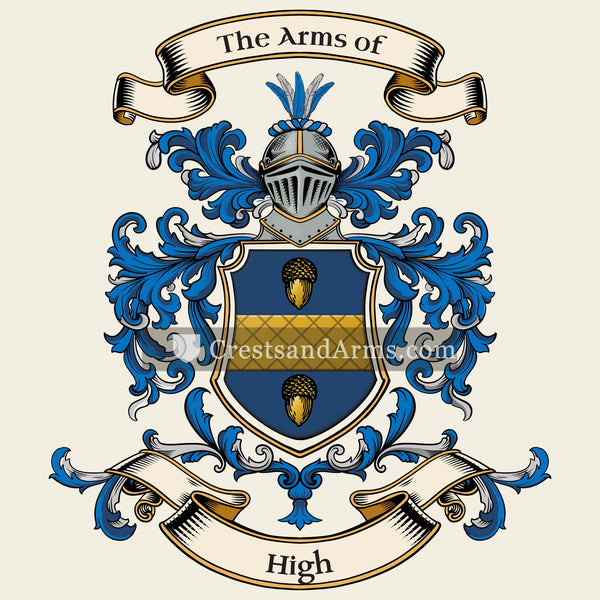
Symbols on this shield
fessThe military belt, and readiness to serve
acornAntiquity and strength from small beginnings
Colours
Blue (Azure)Means: Loyalty and truth
Gold (Or)Means: Generosity
Historical info
Source
J. B. Rietstap, Armorial Général, Gouda: G. B. van Goor Zonen, 1884–87
Blazon (the actual original written record)
“D'azur à la fasce, acc. de deux glands feuillés, les queues en bas, 1 en chef et 1 en p., le tout d'or.”
Francec. 1663
Digital archive packCoat of arms PNG, gold border print PDF, vector SVG and the certificate of authenticity. Sent to your email in minutes.
Map of France showing where the High arms are recorded
The High arms were recorded in France, c. 1663.
Arms such as these were typically recorded in Bretagne.
More families held coats of arms in Bretagne than anywhere else in France. The land was divided into many small estates rather than a few large ones, so far more households counted as gentry, and each needed a shield of its own to be told apart.
This is where the arms were entered in the register. Families often moved to other parts of the country, so the same name can turn up in more than one region.
The body that granted and recorded arms in France in this period.
Louis XIV of France
Sovereign of the period
Louis XIV of France
1643–1715
Reigning in Netherlands when the High arms are first recorded.
How Arms Worked in France
In France, a coat of arms was a mark of honor that passed down through the male line to all legitimate descendants. Families often used the same shield without changes to show their shared heritage. If a branch wanted to stand out, they could add a small mark to their shield to show their specific place in the family tree.
Granting authority
The Juge d'armes de France acted as the official authority that regulated and verified coats of arms across the country.
How they got arms
Families typically inherited their arms from ancestors, though they could also receive them through royal grants or by proving their noble status.
Where arms were recorded
Coats of arms were officially recorded in the Armorial Général de France, which began its main collection in the year 1696.
The family's standing
Recorded among the armigerous families of France.
Origin & History of the High Family in France
The history of the High family in France is deeply connected to the rugged landscape of Bretagne during the seventeenth century. Records confirm that members of the family were established in this region by 1663, living within a society defined by strong local traditions and the influence of the Catholic Church. During this era, families in Bretagne often lived in small rural communities where they worked the land or engaged in local trades. The name likely evolved as a reflection of the family’s social standing or their specific location within the province, as surnames at the time were frequently tied to geographical features or personal traits. Life in Bretagne was shaped by the unique Breton culture, which remained distinct from the rest of France due to its separate language and historical autonomy. By settling in this coastal region, the early High family became part of a resilient population that navigated the complex political and social changes occurring under the French monarchy during the reign of Louis XIV.
High Meaning & Related Branches
Root word
Hoog
A Dutch adjective meaning high, tall, or elevated.
This name
HighA topographic surname referring to someone who lived on high ground or a hill.
also spelled
Heie
Haye
High
Documented Sources
J. B. Rietstap, Armorial Général, Gouda: G. B. van Goor Zonen, 1884–87
Nationaal Archief, Burgerlijke Stand: Geboorte-, huwelijks- en overlijdensakten (Leiden)


 fessThe military belt, and readiness to serve
 fessThe military belt, and readiness to serve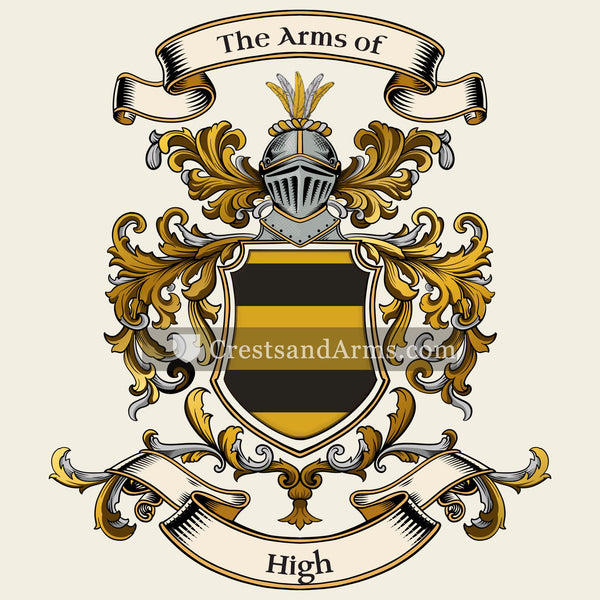


 lionCourage, strength and royalty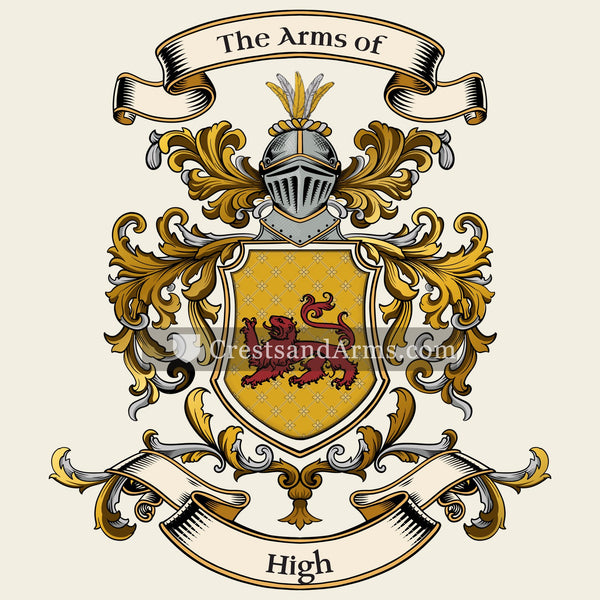


 acornAntiquity and strength from small beginnings