A record of documented arms, meaning and origin, researched for the Hille family lines. Documented in 2 countries.
Reg. 4499 · German, G–I
Coat of Arms & Family Crest Details
Symbols on this shield
mountThe ground held, and steadfastness upon it
fessThe military belt, and readiness to serve
lionCourage, strength and royalty
mulletThe third son, and a divine quality from above
Colours
Blue (Azure)Means: Loyalty and truth
Silver (Argent)Means: Peace and sincerity
Red (Gules)Means: Military strength
Gold (Or)Means: Generosity
Historical info
Source
J. B. Rietstap, Armorial Général, Gouda: G. B. van Goor Zonen, 1884–87
Blazon (the actual original written record)
“D'azur au lion d'arg., tenant de sa patte dextre une épée levée et appuyant sa sen. sur une ancre, le tout d'arg., soutenu d'une terrasse du même; le champ chapé d'arg., ch. à dextre et à sen. d'une fasce de gu., surch. d'une étoile d'or. Cq. cour. C.: le lion, iss., tenant l'épée et appuyant sa patte sen. sur l'ancre. L.: à dextre d'arg. et de gu., à sen. d'arg. et d'azur.”
GermanyHan, c. 1765
Digital archive packCoat of arms PNG, gold border print PDF, vector SVG and the certificate of authenticity. Sent to your email in minutes.
Map of Germany showing where the Hille arms are recorded
The Hille arms were recorded in Han, c. 1765.
This is where the arms were entered in the register. Families often moved to other parts of the country, so the same name can turn up in more than one region.
The body that granted and recorded arms in Germany in this period.
Francis I, Holy Roman Emperor
Sovereign of the period
Francis I, Holy Roman Emperor
1745–1765
Reigning in Germany when the Hille arms are first recorded.
How Arms Worked in Germany
In the Holy Roman Empire, coats of arms were often granted to individuals by the Emperor or his representatives. These arms were then passed down through the generations to all legitimate descendants of the original holder. Younger branches of a family usually kept the same shield design without needing to change it, as the arms belonged to the entire lineage.
Granting authority
The Holy Roman Emperor held the sole power to grant new coats of arms throughout his vast imperial territories.
How they got arms
Families typically obtained their coats of arms through a formal imperial grant or by proving their noble status to the authorities.
Where arms were recorded
These grants were officially recorded in the Imperial Chancery registers, which began keeping formal records of such honors during the Middle Ages.
The family's standing
Recorded among the armigerous families of Germany.
Origin & History of the Hille Family in Germany
The surname Hille is rooted in the linguistic traditions of Northern and Central Germany, where it likely originated as a shortened form of names like Hildebrand or Hilmar. By the middle of the eighteenth century, the family had established a documented presence in the region of Han, a small settlement near the Weser River. During this era, families in rural German territories were often deeply tied to the land and local parish structures. The Hille family members living in Han in 1765 were part of a society transitioning through the late stages of the Holy Roman Empire, where record-keeping was primarily managed by local churches. These early ancestors were likely farmers or skilled tradespeople who contributed to the local economy of the Weser uplands. Their presence in official records from that time reflects the growing importance of tracking family lineage for tax and religious purposes in German states.
Coat of Arms & Family Crest Details
Symbols on this shield
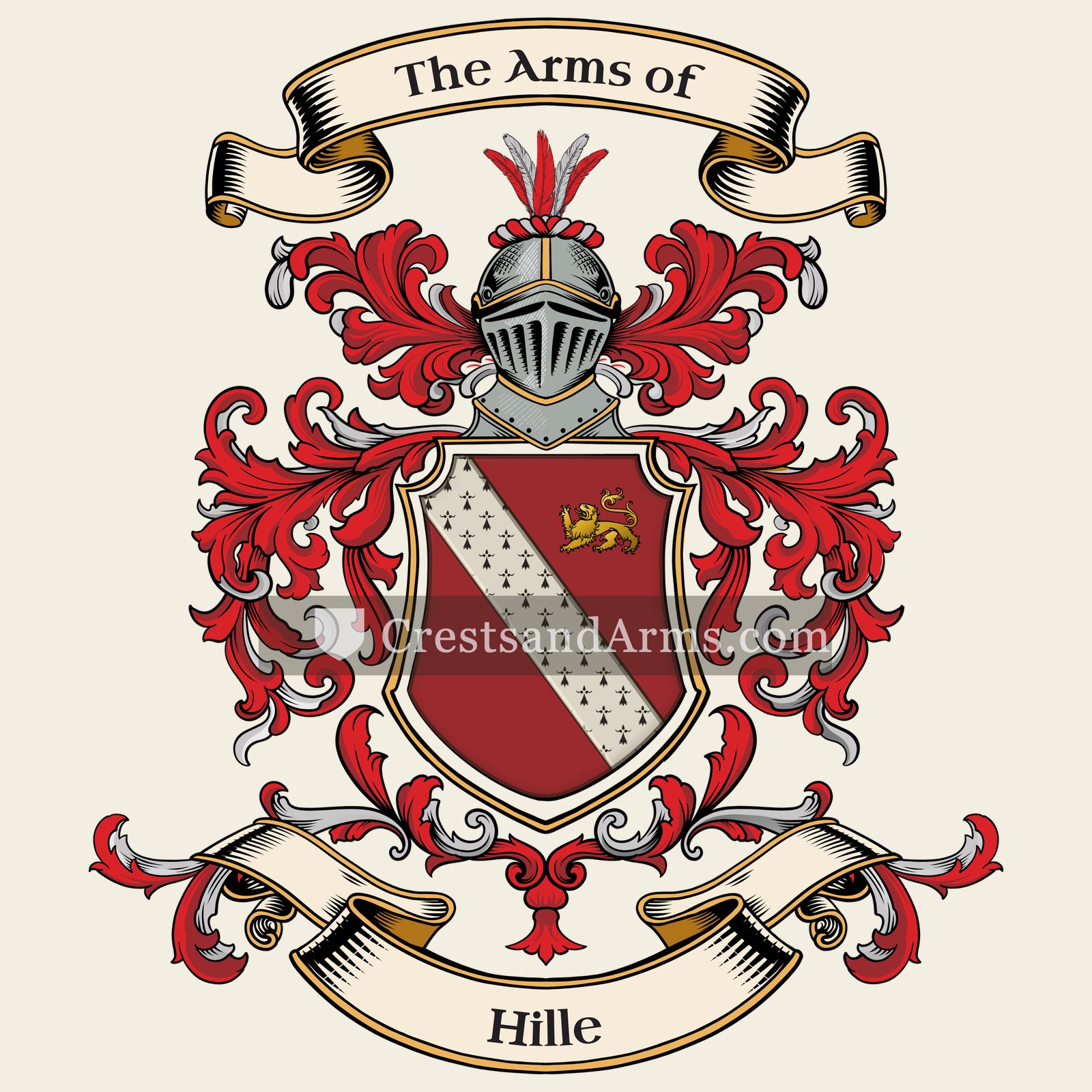
bendDefence, and the scarf of a commander
lionCourage, strength and royalty
Colours
Red (Gules)Means: Military strength
ErmineMeans: Dignity
Gold (Or)Means: Generosity
Historical info
Source
Sir Bernard Burke, The General Armory of England, Scotland, Ireland and Wales, London: Harrison & Sons, 1884
Blazon (the actual original written record)
“Gu. a lion ramp. or, debruised by a bend erm”
OxfordSpraxton · Oxford, c. 1566
Digital archive packCoat of arms PNG, gold border print PDF, vector SVG and the certificate of authenticity. Sent to your email in minutes.
Map of England showing where the Hille arms are recorded
The Hille arms were recorded in Oxford, c. 1566.
Oxfordshire was farming country with the university at its centre, and both produced families of standing. Scholars and lawyers who did well bought manors nearby, and holding a manor was the ordinary route to a coat of arms.
This is where the arms were entered in the register. Families often moved to other parts of the country, so the same name can turn up in more than one region.
The body that granted and recorded arms in England in this period.
Elizabeth I of England
Sovereign of the period
Elizabeth I of England
1558–1603
Reigning in Germany when the Hille arms are first recorded.
How Arms Worked in England
English heraldry allowed arms to be shared by all legitimate descendants of the original owner. These symbols were treated as personal property that moved through the generations to all children. While the eldest son kept the original design, other family members could use the same shield without needing to change it or register their own unique versions.
Granting authority
The College of Arms in London has regulated the use of coats of arms throughout England and Wales since 1484.
How they got arms
Families typically obtained their coats of arms through a formal grant from the Crown or by proving their ancient right to them.
Where arms were recorded
All official coats of arms are recorded in the registers kept at the College of Arms, which date back to the fifteenth century.
The family's standing
Recorded among the armigerous families of Oxford.
Origin & History of the Hille Family in England
The name Hille has deep roots in the English landscape, serving as a descriptive surname for families who lived near a prominent hill or elevated piece of land. By the middle of the sixteenth century, the family had established a notable presence in the university city of Oxford. Records from 1566 confirm that members of the Hille family were active residents in this intellectual hub during the reign of Queen Elizabeth I. At that time, Oxford was a center of rapid social and academic change, and families like the Hilles were often involved in the local trades and civic life that supported the growing university. Because the name was tied to the physical geography of the English countryside, it likely emerged independently in several different regions before becoming a fixed family identity in places like Oxfordshire. This early history reflects the broader trend of how common people adopted surnames based on their surroundings to distinguish themselves within their local communities.
Related Branches & Arms
Root word
Hilde
Old High German word meaning battle or strife.
This name
HilleA diminutive form of names beginning with the element battle, often used as a nickname for Hildebrand.
also spelled
Hillee
Hilles
Hilla
Hylle
Hyl
Related arms
Radetsimilar arms
Hillvariant spelling
van Hilvariant spelling
Hillsvariant spelling
Documented Sources
J. B. Rietstap, Armorial Général, Gouda: G. B. van Goor Zonen, 1884–87
Bahlow, Hans, Deutsches Namenlexikon: Familien- und Vornamen nach Ursprung und Sinn erklärt, 1967
Heintze, Albert, Die deutschen Familien-Namen: geschichtlich, geographisch, sprachlich, 1903
Landesarchiv Nordrhein-Westfalen, Kirchenbücher der evangelischen Kirchengemeinden in Westfalen
Digital archive packCoat of arms PNG, gold border print PDF, vector SVG and the certificate of authenticity. Sent to your email in minutes.


 mountThe ground held, and steadfastness upon it
 fessThe military belt, and readiness to serve
 lionCourage, strength and royalty
 mulletThe third son, and a divine quality from above
 mountThe ground held, and steadfastness upon it
 fessThe military belt, and readiness to serve
 lionCourage, strength and royalty
 mulletThe third son, and a divine quality from above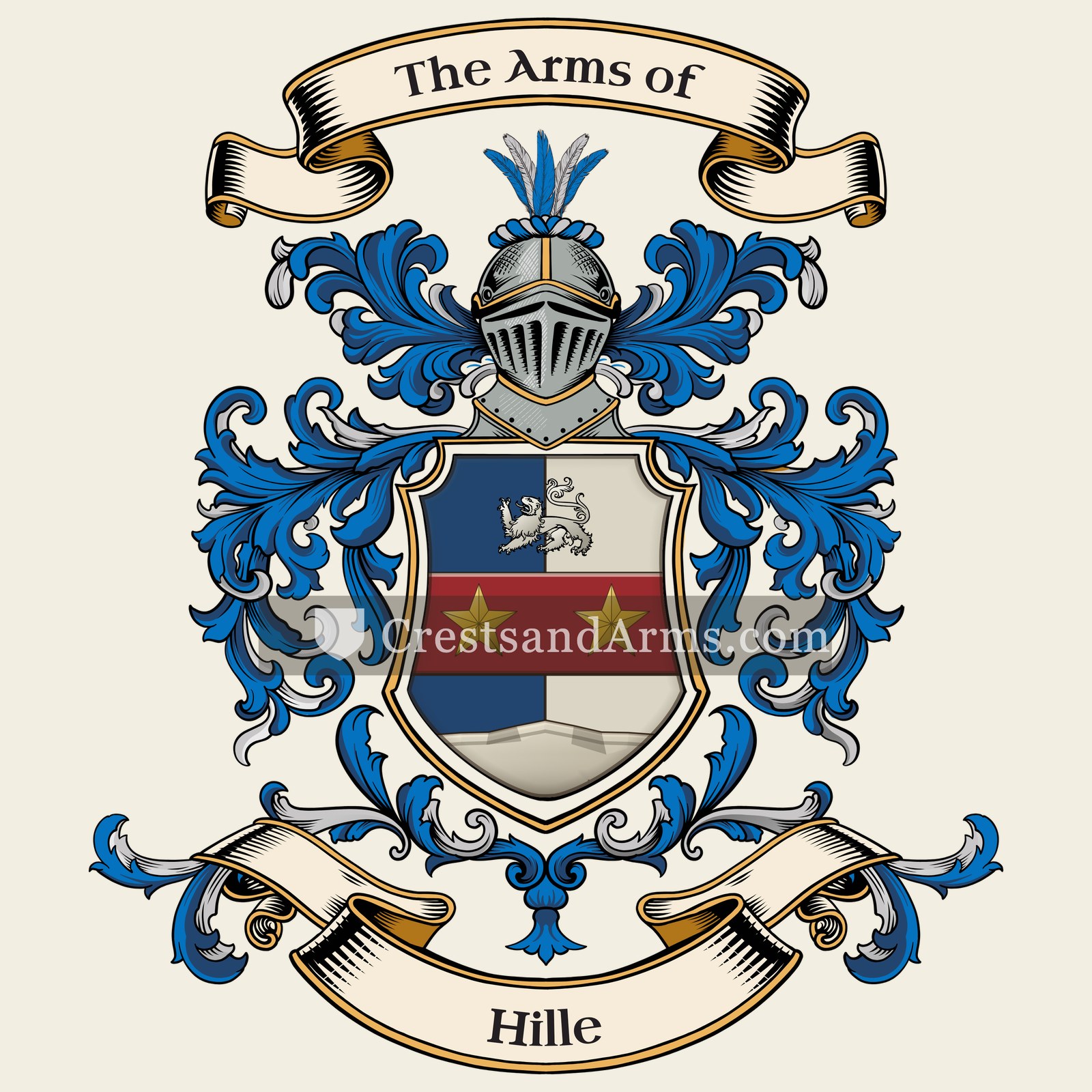


 bendDefence, and the scarf of a commander