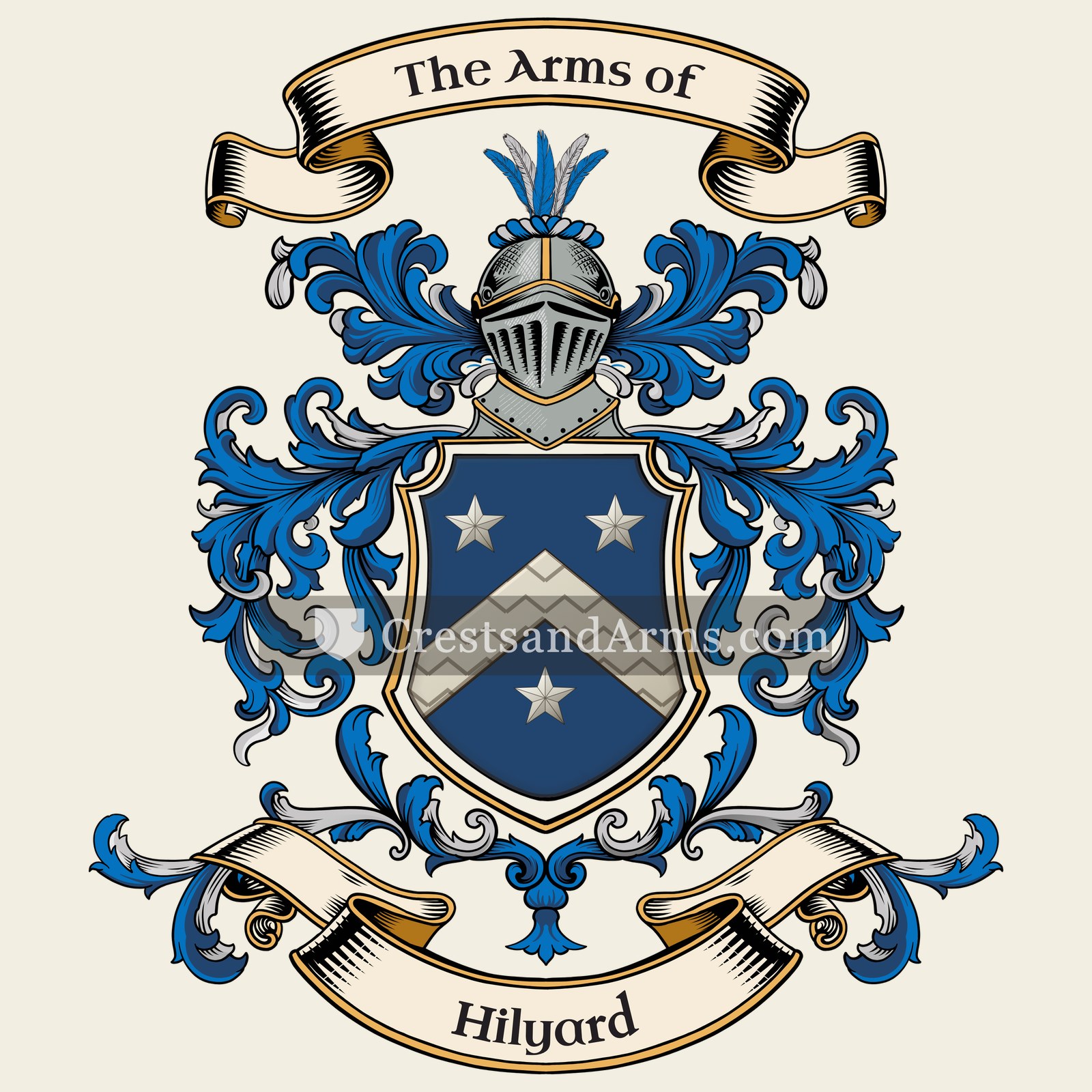
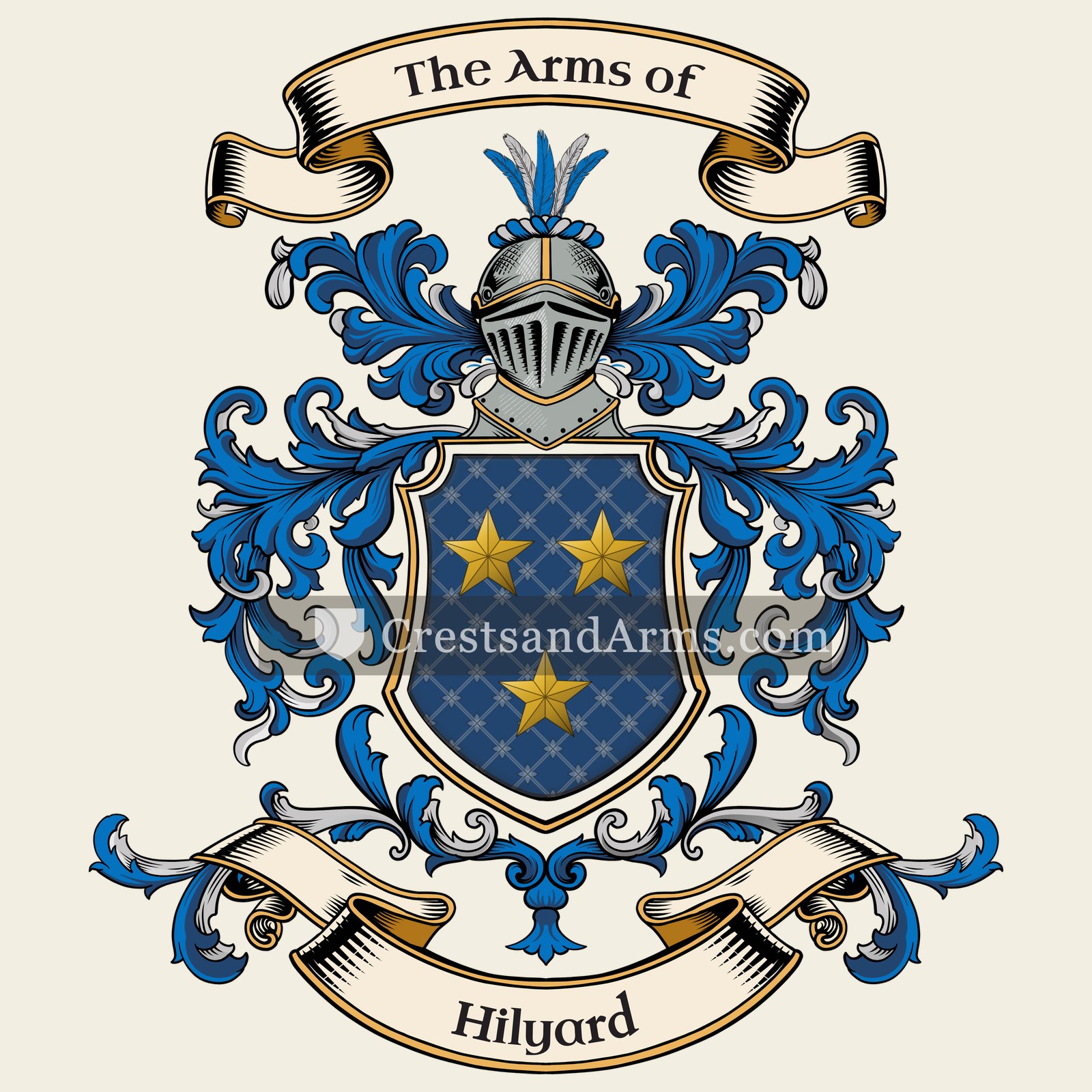
Map of England showing where the Hilyard arms are recorded
The Hilyard arms were recorded in Durham, c. 1620.
Durham was governed by its bishop rather than the crown for most of its history, with its own courts and its own landed class. That separate world produced a tight group of families, nearly all of whom held arms.
This is where the arms were entered in the register. Families often moved to other parts of the country, so the same name can turn up in more than one region.
The body that granted and recorded arms in England in this period.
James VI and I
Sovereign of the period
James VI and I
1603–1625
Reigning in England when the Hilyard arms are first recorded.
How Arms Worked in England
English heraldry allowed arms to be shared by all legitimate descendants of the original owner. These symbols were treated as personal property that moved through the generations to all children. While the eldest son kept the original design, other family members could use the same shield without needing to change it or register their own unique versions.
Granting authority
The College of Arms in London has regulated the use of coats of arms throughout England and Wales since 1484.
How they got arms
Families typically obtained their coats of arms through a formal grant from the Crown or by proving their ancient right to them.
Where arms were recorded
All official coats of arms are recorded in the registers kept at the College of Arms, which date back to the fifteenth century.
The family's standing
Recorded among the armigerous families of Durham.
Origin & History of the Hilyard Family in England
The Hilyard name has deep roots in the northern landscape of England, with historical records confirming the family’s presence in the County of Durham by the early seventeenth century. The name is generally considered a topographic surname, likely derived from the Old English words for a hill or a sheltered yard, suggesting that the earliest ancestors were individuals who lived near a specific hillside enclosure or a protected piece of farmland. During the 1600s, the region around Durham was a center for coal mining and agricultural development, and families like the Hilyards were often tied to the local land through tenant farming or trade. As the family established itself in this rugged northern terrain, they became part of the local social fabric that defined the borderlands between England and Scotland. By 1620, the name was already well-integrated into the local parish systems, which served as the primary way for the government and the church to track the movement and growth of families in the region.
Coat of Arms & Family Crest Details
Symbols on this shield
mulletThe third son, and a divine quality from above
Colours
Blue (Azure)Means: Loyalty and truth
Gold (Or)Means: Generosity
Historical info
Source
Sir Bernard Burke, The General Armory of England, Scotland, Ireland and Wales, London: Harrison & Sons, 1884
Blazon (the actual original written record)
“Az. three mullets or”
KerryCaherslee · Kerry, c. 1645
Digital archive packCoat of arms PNG, gold border print PDF, vector SVG and the certificate of authenticity. Sent to your email in minutes.
Map of Ireland showing where the Hilyard arms are recorded
The Hilyard arms were recorded in Kerry, c. 1645.
Kerry was mountain and coast country in the far south-west of Ireland. Its land was poor and held by a few families for a very long time, and long unbroken holding fills a register.
This is where the arms were entered in the register. Families often moved to other parts of the country, so the same name can turn up in more than one region.
The body that granted and recorded arms in Ireland in this period.
Charles I of England
Sovereign of the period
Charles I of England
1625–1649
Reigning in England when the Hilyard arms are first recorded.
How Arms Worked in Ireland
The Ulster King of Arms granted coats of arms to individuals who proved their social standing and good character. These symbols were typically inherited by all legitimate descendants of the original holder. If a family branch wanted a unique look, they could apply for a specific change to their design through the office to ensure their identity remained distinct.
Granting authority
The Ulster King of Arms acted as the official body that regulated and issued all coats of arms throughout Ireland.
How they got arms
Families obtained their arms through formal grants issued by the office after proving their eligibility and paying the required fees.
Where arms were recorded
All official grants were recorded in the registers held by the Ulster King of Arms starting from the year 1552.
The family's standing
Recorded among the armigerous families of Kerry.
Origin & History of the Hilyard Family in Ireland
The Hilyard family name in Ireland is deeply connected to the turbulent landscape of County Kerry during the mid-seventeenth century. By 1645, members of the family were established in this region, a time when Ireland was undergoing significant political and social upheaval due to the Irish Confederate Wars. The name likely arrived in Ireland through English settlers who were encouraged to relocate during the plantation periods of the early 1600s. Once in Kerry, the Hilyards integrated into the local administrative and landholding structures of the era. They often served as minor officials or land managers, which allowed them to maintain a stable presence despite the frequent conflicts that defined life in the province of Munster. Over the following decades, the family became a recognized part of the local community, leaving behind records of their property dealings and legal standing in the region.
Related Branches & Arms
Root word
Hildegard
Derived from Germanic elements meaning battle and enclosure or protection.
This name
HilyardAn English habitational surname referring to someone who lived in a protected enclosure or garden.
also spelled
Hildyard
Hillyard
Hilyard
Documented Sources
Sir Bernard Burke, The General Armory of England, Scotland, Ireland and Wales, London: Harrison & Sons, 1884
Bardsley, Charles Wareing, A Dictionary of English and Welsh Surnames, 1901
Reaney, P.H., A Dictionary of British Surnames, 1958
Durham County Record Office, Durham Bishop's Transcripts, 1620
Digital archive packCoat of arms PNG, gold border print PDF, vector SVG and the certificate of authenticity. Sent to your email in minutes.


 chevronProtection, and faithful service completed
 mulletThe third son, and a divine quality from above
 chevronProtection, and faithful service completed
 mulletThe third son, and a divine quality from above