Map of Belgium showing where the Hives arms are recorded
The Hives arms were recorded in Brabant, c. 1737.
Brabant lay at the heart of the Low Countries, where the trade routes met. Its towns were wealthy and its landowners many, and both kinds of family kept arms, which is why the region is so heavily represented.
This is where the arms were entered in the register. Families often moved to other parts of the country, so the same name can turn up in more than one region.
The body that granted and recorded arms in Belgium in this period.
Charles VI, Holy Roman Emperor
Sovereign of the period
Charles VI, Holy Roman Emperor
1711–1740
Reigning in Belgium when the Hives arms are first recorded.
How Arms Worked in Belgium
In Belgium, a coat of arms is considered personal property that is passed down through the male line to legitimate descendants. Families often use the same shield design across generations to show their shared heritage. If a branch of the family wants to change the design, they must apply for an official update to their specific version of the arms.
Granting authority
The Conseil héraldique is the official body that regulates and approves all coats of arms in Belgium.
How they got arms
Families obtain their coats of arms through formal royal grants or by confirming their historical right to use existing designs.
Where arms were recorded
All approved coats of arms are officially recorded in the public registers of the Conseil héraldique since 1844.
The family's standing
Recorded among the armigerous families of Brabant.
Origin & History of the Hives Family in Belgium
The family name Hives is deeply rooted in the historical landscape of the Low Countries, with documented evidence placing the family in the Duchy of Brabant by the year 1737. During this era, the region was a center for trade and agriculture, and families often adopted surnames based on their specific location or their professional trade within the local community. The name likely evolved as a localized identifier for individuals living near specific landmarks or those involved in the management of rural estates. As the family moved through the eighteenth century, they became part of the social fabric of Brabant, navigating the complex administrative and religious shifts that defined the territory under the rule of the Austrian Habsburgs. By maintaining a presence in this region, early members of the Hives family contributed to the local labor force and the steady development of village life before later generations began to migrate further across Europe.
Related Branches & Arms
Root word
Hieve
A Middle Dutch term referring to a beehive or container.
This name
HivesA topographic or occupational name for someone who kept bees or lived near a beehive.
also spelled
Hovs
Documented Sources
J. B. Rietstap, Armorial Général, Gouda: G. B. van Goor Zonen, 1884–87
State Archives in Belgium (Rijksarchief te België), Parochieregisters van Brabant (Parish Registers of Brabant)
State Archives in Belgium (Rijksarchief te België), Registers van de Burgerlijke Stand (Civil Registry Records)
De Flines, A., Geschiedenis van de Brabantse Gemeenten, 1968
Van der Essen, L., Étude sur les origines et les développements de la vie rurale en Brabant, 1912
Digital archive packCoat of arms PNG, gold border print PDF, vector SVG and the certificate of authenticity. Sent to your email in minutes.


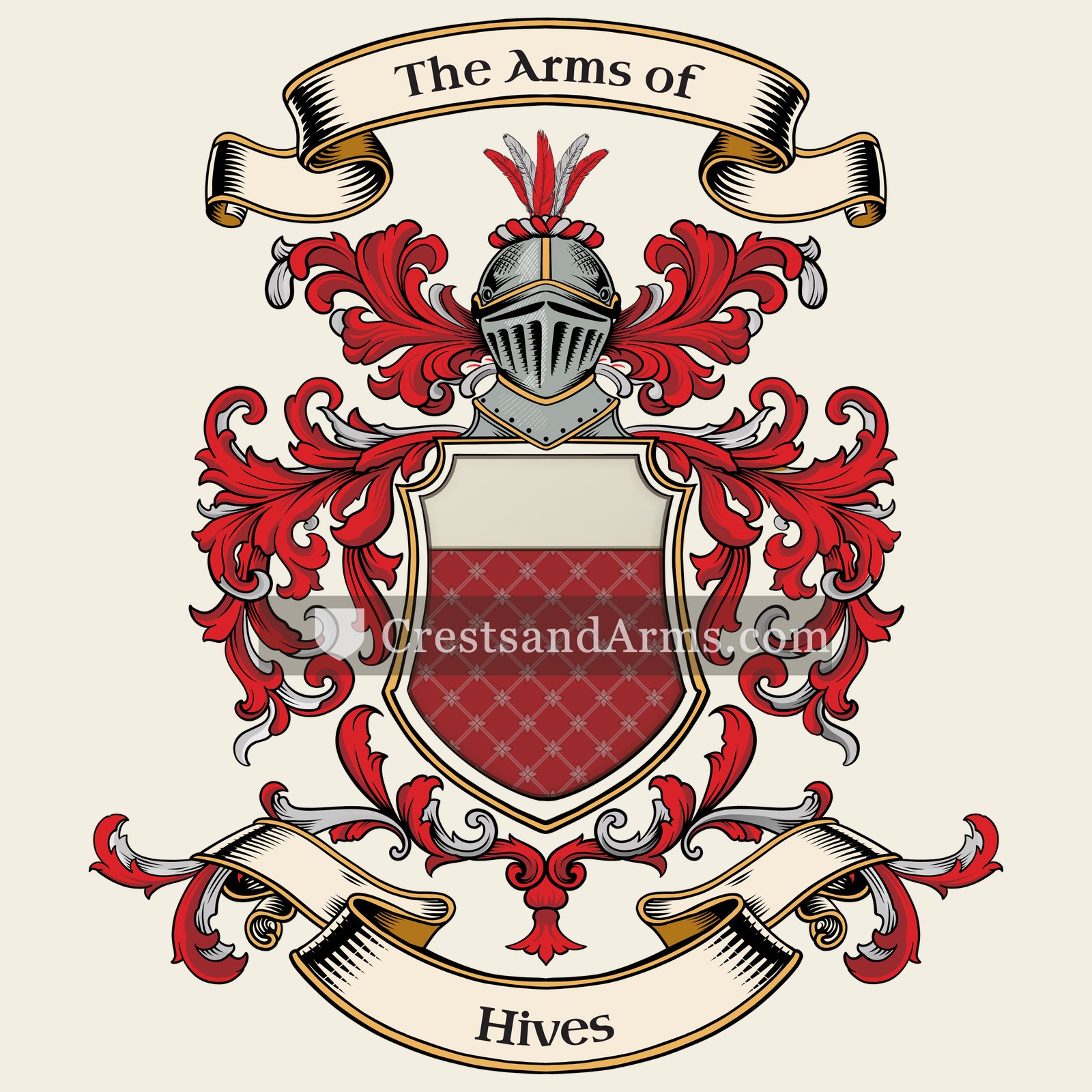
 chiefAuthority, wisdom and dominion
 chiefAuthority, wisdom and dominion