A record of documented arms, meaning and origin, researched for the Hjelm family lines. Documented in 2 countries.
Reg. 1343 · Polish, G–I
Coat of Arms & Family Crest Details
Symbols on this shield
proboscides trunksGreat strength and long memory
Colours
Red (Gules)Means: Military strength
Silver (Argent)Means: Peace and sincerity
Historical info
Source
J. B. Rietstap, Armorial Général, Gouda: G. B. van Goor Zonen, 1884–87
Blazon (the actual original written record)
“De gu. à un casque fermé, taré de profil, portant deux cornes de buffle avec les oreilles et la peau, le tout d'arg. Cq. cour. C.: trois pl. d'aut. d'arg.”
Polandc. 1772
Digital archive packCoat of arms PNG, gold border print PDF, vector SVG and the certificate of authenticity. Sent to your email in minutes.
Map of Poland showing where the Hjelm arms are recorded
The Hjelm arms were recorded in Poland, c. 1772.
Arms such as these were typically recorded in Mazovia.
Mazovia held Warsaw, the Polish court and the assemblies where the szlachta met. Poland's nobles were unusually numerous and every one of them bore arms, and Warsaw is where those arms were argued over and recorded.
This is where the arms were entered in the register. Families often moved to other parts of the country, so the same name can turn up in more than one region.
Region
Mazovia
First recorded
1772
Granting Authority for the Hjelm Arms
Ennoblement by the Sejm
Author: Olek Remesz · CC BY-SA 3.0
The body that granted and recorded arms in Poland in this period.
Stanisław August Poniatowski
Sovereign of the period
Stanisław August Poniatowski
1764–1795
Reigning in Poland when the Hjelm arms are first recorded.
How Arms Worked in Poland
Polish noble families shared a single coat of arms across many different surnames, creating large clans rather than individual designs. These symbols were held collectively by all members of the clan regardless of their specific family name. When a new family joined the nobility, they were adopted into an existing clan and began using that group's established shield.
Granting authority
The Sejm, which was the Polish parliament, held the power to grant noble status and the right to bear arms.
How they got arms
Families typically received their coat of arms through a formal act of ennoblement granted by the Sejm for distinguished service.
Where arms were recorded
These grants were officially recorded in the Crown Metrica, which served as the central archive for state documents starting in the sixteenth century.
The family's standing
Recorded among the armigerous families of Poland.
Origin & History of the Hjelm Family in Poland
The Hjelm family name carries a history deeply rooted in the shifting landscapes of northern Europe, with a notable presence in the Mazovia region of Poland by 1772. The name itself originates from Old Norse, where it refers to a helmet or a protective covering, suggesting that the earliest ancestors may have been associated with military service or craftsmanship. By the late 18th century, members of the family had established themselves within the social and administrative structures of the Polish-Lithuanian Commonwealth. During this period, Mazovia served as a vital crossroads for trade and cultural exchange, allowing families like the Hjelms to integrate into local communities while maintaining their distinct ancestral identity. As they settled into the region, they became part of the local fabric, contributing to the agricultural and civic life of the area during a time of significant political transition in Polish history.
Coat of Arms & Family Crest Details
Symbols on this shield
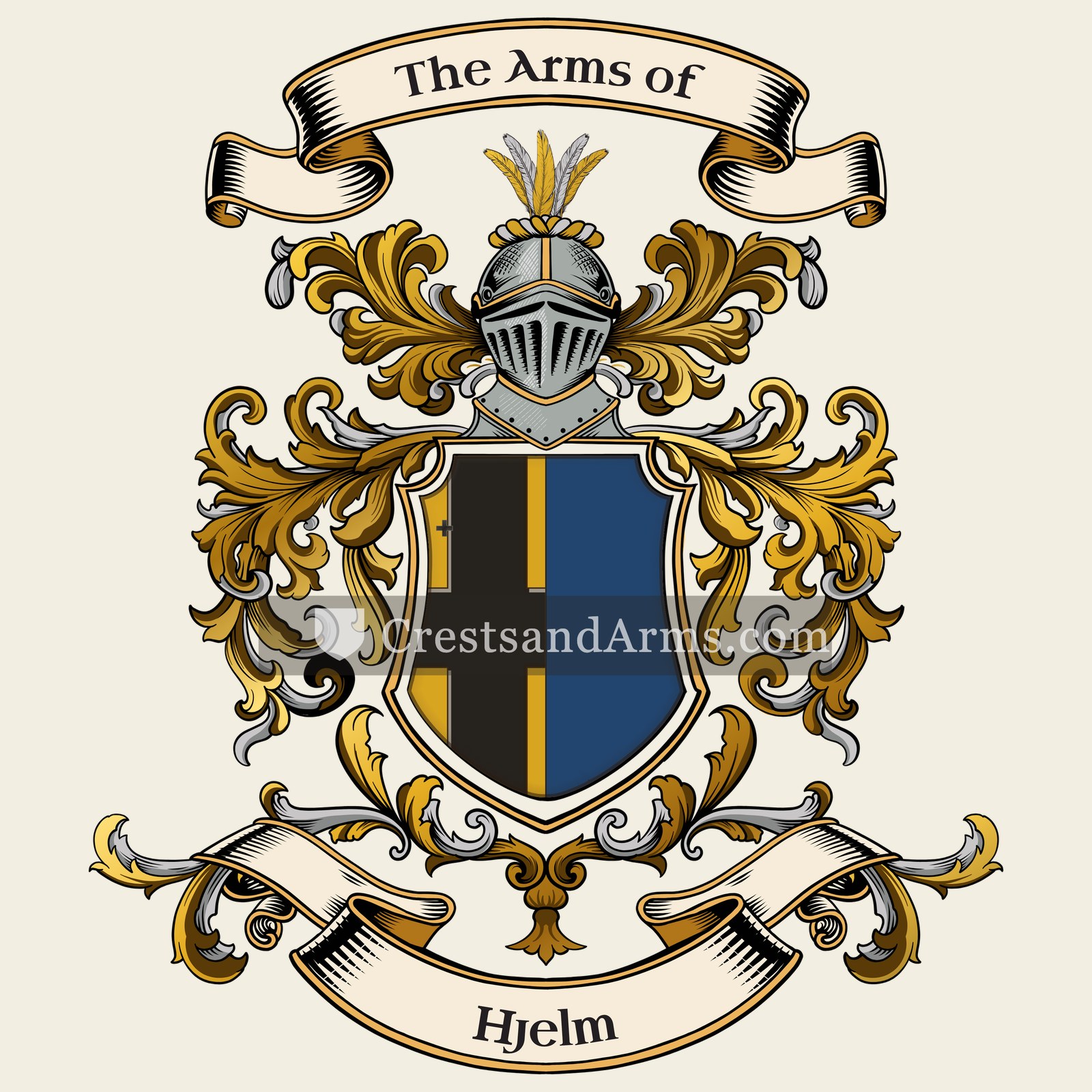
cross symbolChristian faith and service
Colours
Gold (Or)Means: Generosity
Blue (Azure)Means: Loyalty and truth
Black (Sable)Means: Constancy
Historical info
Source
J. B. Rietstap, Armorial Général, Gouda: G. B. van Goor Zonen, 1884–87
Blazon (the actual original written record)
“Parti: au 1 d'or à la croix ancrée de sa.; au 2 d'azur à une”
Austriac. 1763
Digital archive packCoat of arms PNG, gold border print PDF, vector SVG and the certificate of authenticity. Sent to your email in minutes.
Map of Austria showing where the Hjelm arms are recorded
The Hjelm arms were recorded in Austria, c. 1763.
Arms such as these were typically recorded in Tyrol.
Tyrol was mountain country in western Austria, where the valleys were held by families who had been there a very long time. Old tenure counted for more than money, and old families carried arms.
This is where the arms were entered in the register. Families often moved to other parts of the country, so the same name can turn up in more than one region.
Region
Tyrol
First recorded
1763
Granting Authority for the Hjelm Arms
Imperial and Royal chancery
Sodacan · CC BY-SA 3.0
The body that granted and recorded arms in Austria in this period.
Francis I, Holy Roman Emperor
Sovereign of the period
Francis I, Holy Roman Emperor
1745–1765
Reigning in Poland when the Hjelm arms are first recorded.
How Arms Worked in Austria
Austrian coats of arms were often linked directly to noble titles granted by the Emperor. These symbols belonged to the entire family line rather than just one individual. When a family grew, new branches kept the original design without needing to change it. This system allowed all members of a noble house to share the same identity across many generations.
Granting authority
The Imperial and Royal chancery managed all heraldic matters and controlled the official granting of arms throughout the Austrian lands.
How they got arms
Families typically received their arms through a formal imperial decree that often accompanied the elevation of a person to noble status.
Where arms were recorded
Official records of these grants were kept in the Imperial Register of Nobility which began its formal documentation process in 1453.
The family's standing
Recorded among the armigerous families of Austria.
Origin & History of the Hjelm Family in Austria
The history of the Hjelm family in Austria is deeply connected to the rugged landscape of the Tyrol region. By 1763, members of the family were already established within these alpine communities, likely working as skilled laborers or craftsmen who relied on the natural resources of the mountains. During the eighteenth century, Tyrol served as a vital crossroads for trade and travel between the Germanic north and the Italian south. Families like the Hjelms often adapted to these shifting economic conditions by maintaining strong ties to their local parishes and village networks. Because the name suggests a connection to protective gear or sturdy construction, it is probable that early ancestors were valued for their practical contributions to the development of these mountain settlements. Their presence in the historical record during this era highlights a period of steady growth and integration into the unique social fabric of the Austrian Alps.
Related Branches & Arms
Root word
hjelmr
Old Norse term for a protective head covering or helmet.
This name
HjelmRefers to a person who wore a helmet or served as a guard.
also spelled
Helme
Helmm
Helms
Documented Sources
J. B. Rietstap, Armorial Général, Gouda: G. B. van Goor Zonen, 1884–87
Dworzaczek, Włodzimierz. Teki Dworzaczka: Materiały historyczno-genealogiczne do dziejów szlachty wielkopolskiej XV-XX wieku. 1995
Archiwum Główne Akt Dawnych (AGAD), Metryka Koronna
Digital archive packCoat of arms PNG, gold border print PDF, vector SVG and the certificate of authenticity. Sent to your email in minutes.


 proboscides trunksGreat strength and long memory
 proboscides trunksGreat strength and long memory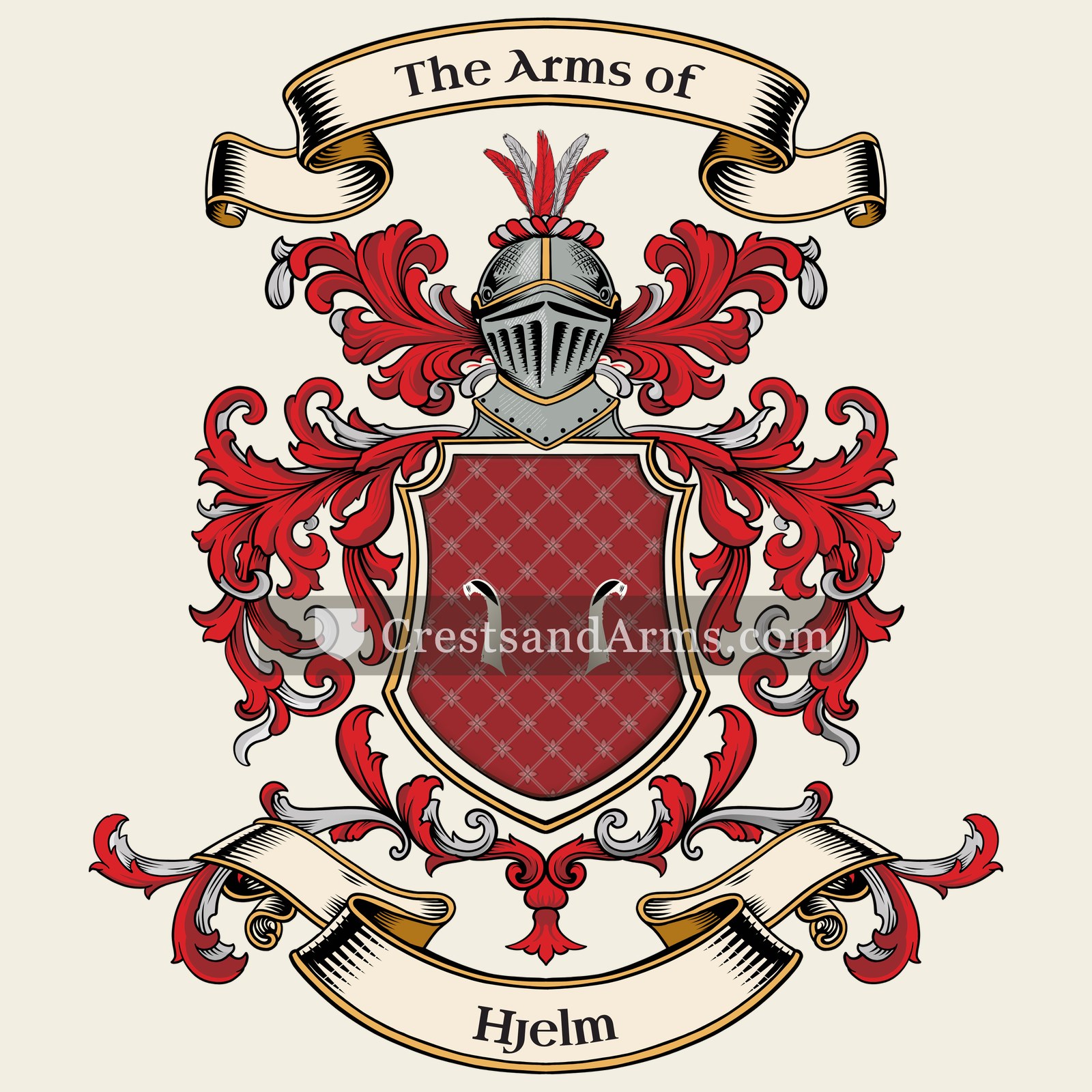


 cross symbolChristian faith and service