A record of documented arms, meaning and origin, researched for the Ho family lines. Documented in 2 countries.
Reg. 4914 · German, G–I
Coat of Arms & Family Crest Details
Symbols on this shield
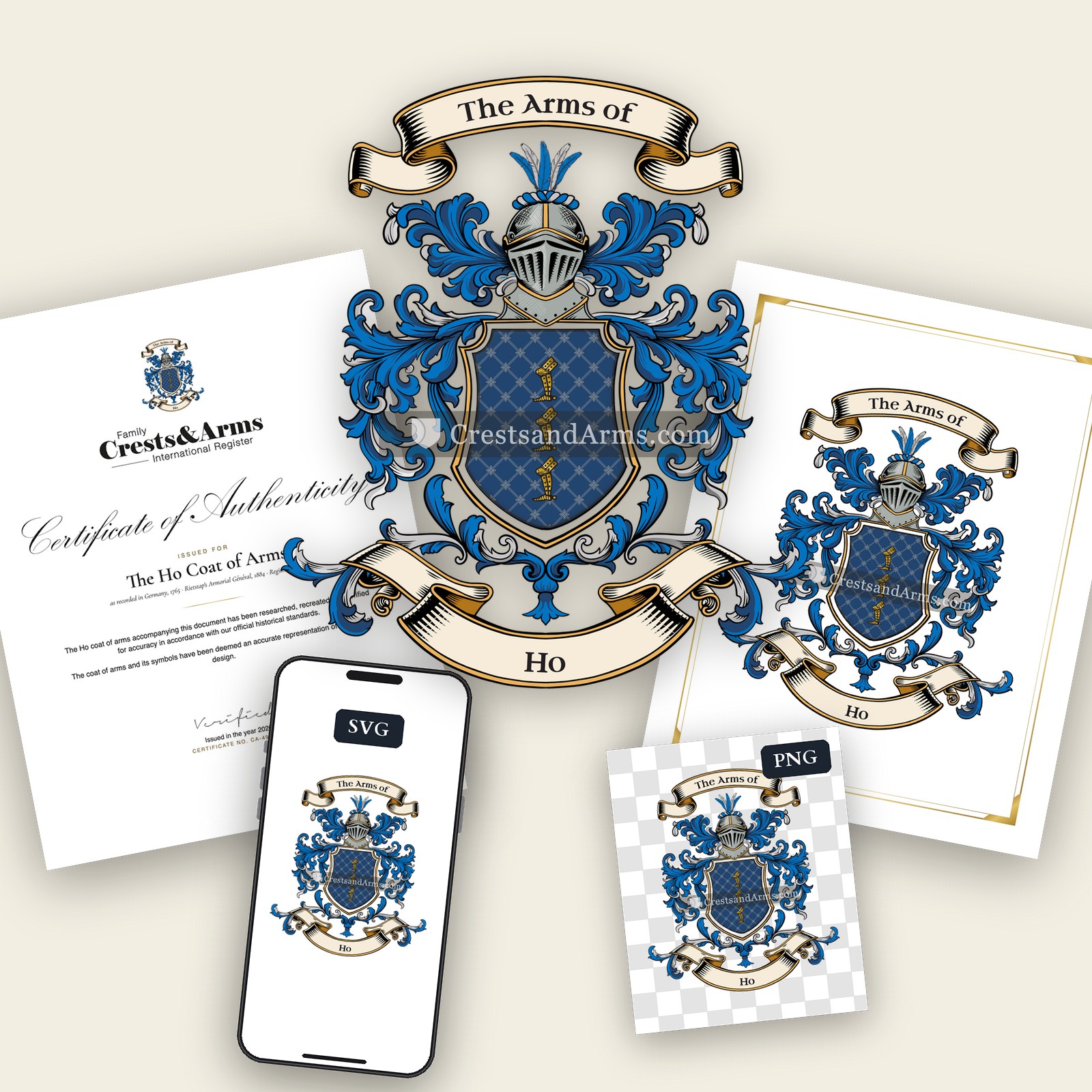
legStrength and swiftness
Colours
Blue (Azure)Means: Loyalty and truth
Gold (Or)Means: Generosity
Historical info
Source
J. B. Rietstap, Armorial Général, Gouda: G. B. van Goor Zonen, 1884–87
Blazon (the actual original written record)
“D'azur à trois pattes d'aigle d'or, posées en fasces, l'une sur l'autre, les ongles à dextre. Cq. cour. C.: une patte d'aigle d'or, en pal, les ongles en bas; entre un vol, coupé alt. d'azur et d'or.”
Germanyc. 1765
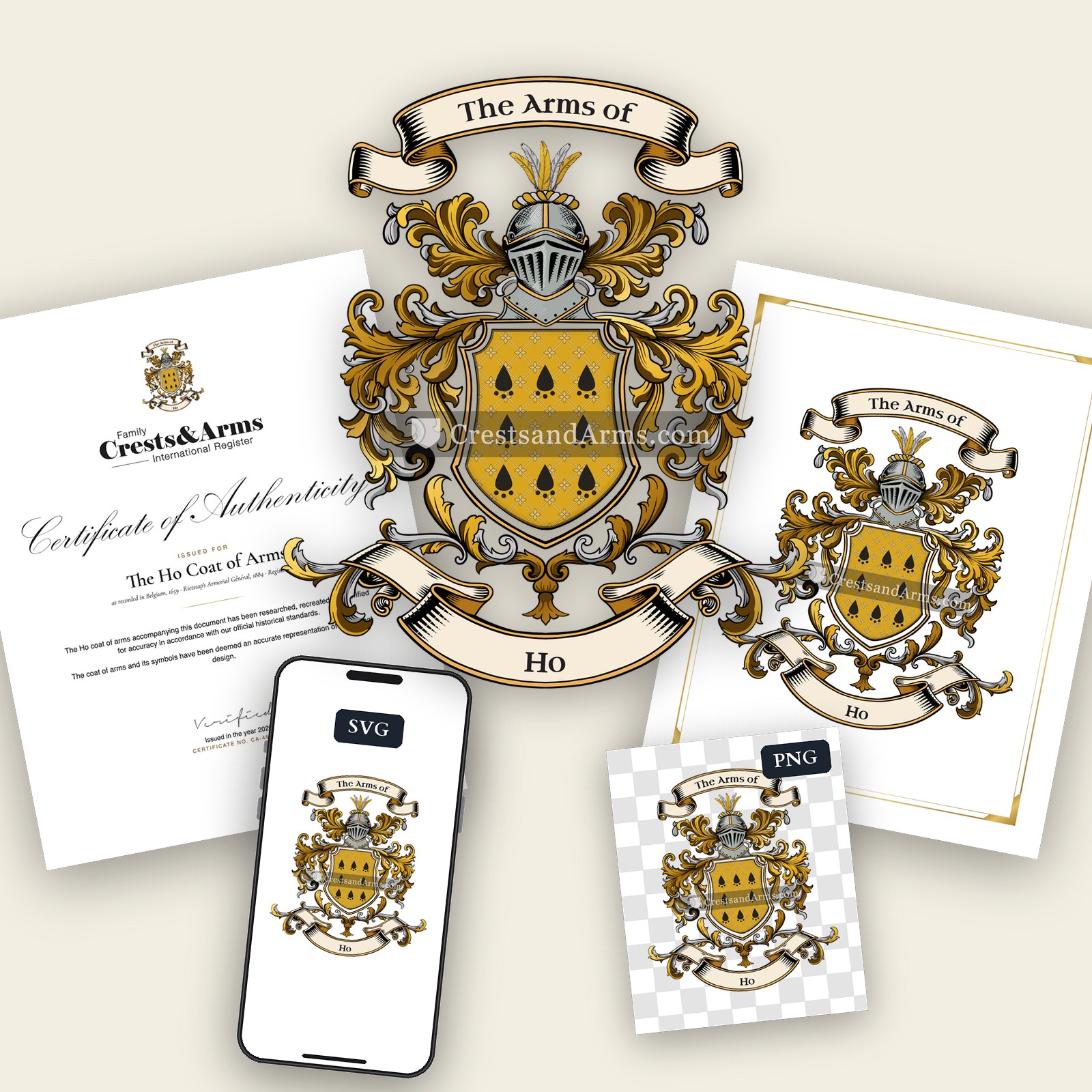
Digital archive packCoat of arms PNG, gold border print PDF, vector SVG and the certificate of authenticity. Sent to your email in minutes.
Map of Germany showing where the Ho arms are recorded
The Ho arms were recorded in Germany, c. 1765.
Arms such as these were typically recorded in Bavaria.
Bavaria was a country of old landed families and walled market towns. Estates passed down the same line for centuries, and both the landowners and the leading townsmen kept arms, which is why so many Bavarian names sit in the registers.
This is where the arms were entered in the register. Families often moved to other parts of the country, so the same name can turn up in more than one region.
The body that granted and recorded arms in Germany in this period.
Francis I, Holy Roman Emperor
Sovereign of the period
Francis I, Holy Roman Emperor
1745–1765
Reigning in Germany when the Ho arms are first recorded.
How Arms Worked in Germany
In the Holy Roman Empire, coats of arms were often granted to individuals by the Emperor or his representatives. These arms were then passed down through the generations to all legitimate descendants of the original holder. Younger branches of a family usually kept the same shield design without needing to change it, as the arms belonged to the entire lineage.
Granting authority
The Holy Roman Emperor held the sole power to grant new coats of arms throughout his vast imperial territories.
How they got arms
Families typically obtained their coats of arms through a formal imperial grant or by proving their noble status to the authorities.
Where arms were recorded
These grants were officially recorded in the Imperial Chancery registers, which began keeping formal records of such honors during the Middle Ages.
The family's standing
Recorded among the armigerous families of Germany.
Origin & History of the Ho Family in Germany
The surname Ho is deeply rooted in the historical landscape of Bavaria, where records confirm the presence of the family as early as 1765. In the German language, the name often functions as a topographic identifier, typically used to describe individuals who lived on or near a high piece of land or a prominent hill. During the eighteenth century, rural families in southern Germany were frequently identified by their connection to the local geography, which helped neighbors distinguish between different households in small farming villages. As the family established itself in the Bavarian region, they likely participated in the traditional agricultural life of the era, contributing to the local economy through farming or trade. Over time, the name became a permanent marker of their identity, reflecting a long history of settlement in the rolling terrain of the German countryside.
Coat of Arms & Family Crest Details
Symbols on this shield
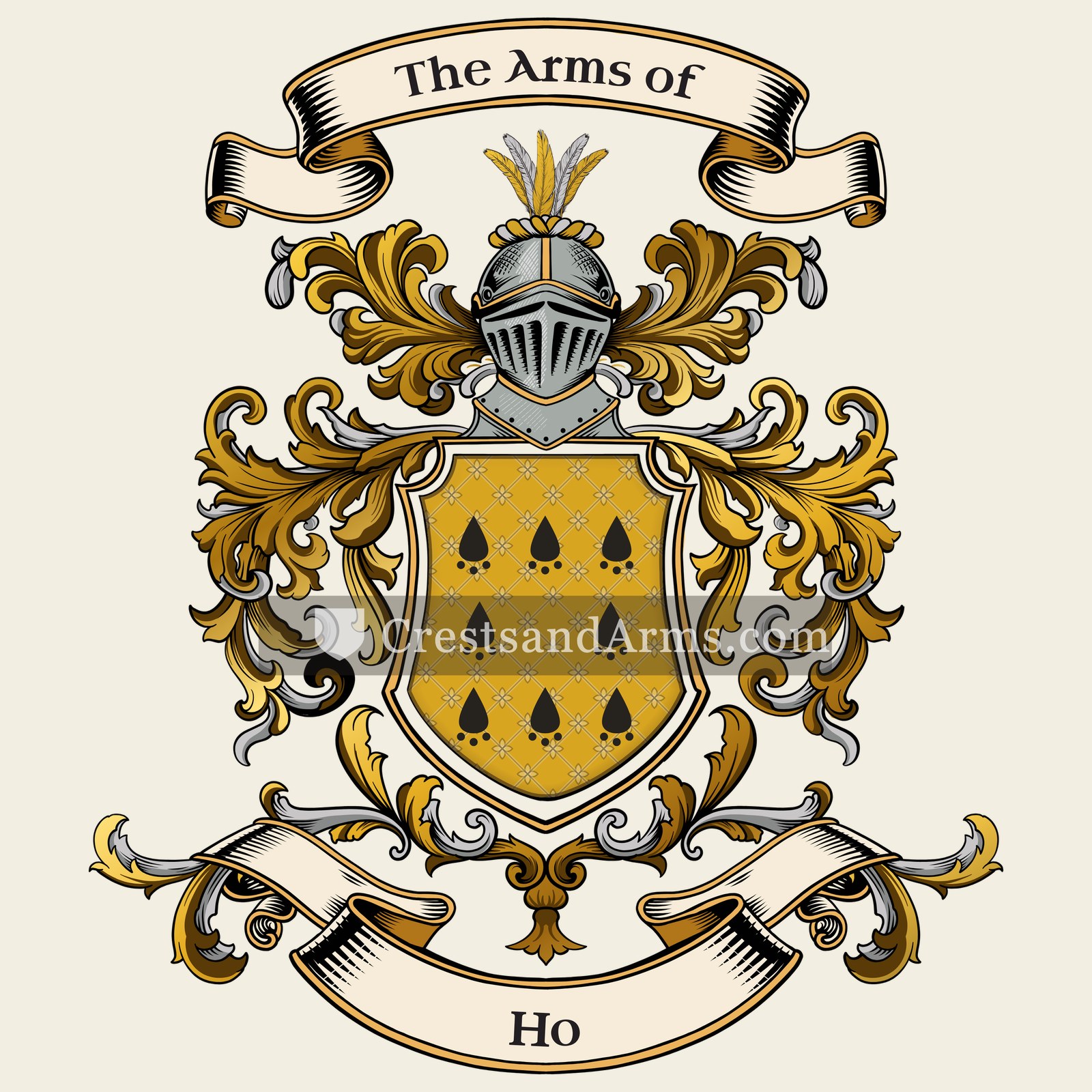
ermineDignity and rank
Colours
Gold (Or)Means: Generosity
Black (Sable)Means: Constancy
Historical info
Source
J. B. Rietstap, Armorial Général, Gouda: G. B. van Goor Zonen, 1884–87
Blazon (the actual original written record)
“D'or à huit mouch. d'herm. de sa., rangées en orle.”
BrabantBrabant, c. 1659
Digital archive packCoat of arms PNG, gold border print PDF, vector SVG and the certificate of authenticity. Sent to your email in minutes.
Map of Belgium showing where the Ho arms are recorded
The Ho arms were recorded in Brabant, c. 1659.
Brabant lay at the heart of the Low Countries, where the trade routes met. Its towns were wealthy and its landowners many, and both kinds of family kept arms, which is why the region is so heavily represented.
This is where the arms were entered in the register. Families often moved to other parts of the country, so the same name can turn up in more than one region.
The body that granted and recorded arms in Belgium in this period.
Philip IV of Spain
Sovereign of the period
Philip IV of Spain
1621–1665
Reigning in Germany when the Ho arms are first recorded.
How Arms Worked in Belgium
In Belgium, a coat of arms is considered personal property that is passed down through the male line to legitimate descendants. Families often use the same shield design across generations to show their shared heritage. If a branch of the family wants to change the design, they must apply for an official update to their specific version of the arms.
Granting authority
The Conseil héraldique is the official body that regulates and approves all coats of arms in Belgium.
How they got arms
Families obtain their coats of arms through formal royal grants or by confirming their historical right to use existing designs.
Where arms were recorded
All approved coats of arms are officially recorded in the public registers of the Conseil héraldique since 1844.
The family's standing
Recorded among the armigerous families of Brabant.
Origin & History of the Ho Family in Belgium
The history of the Ho family in Belgium is rooted in the historical region of Brabant, where records confirm their presence as early as 1659. During the seventeenth century, Brabant was a central hub for trade and administration within the Southern Netherlands, and families living in this area were often deeply connected to the local agricultural or merchant economies. The name itself reflects a linguistic evolution common to the region, as families frequently adapted their surnames to fit the phonetic patterns of the local Dutch and French dialects spoken in the bustling towns near Brussels and Leuven. By establishing themselves in this territory during the mid-1600s, the early members of the Ho family became part of the complex social fabric of a region defined by its transition between different European powers. Their survival and growth during this period suggest they were well-integrated into the local community, likely participating in the traditional guilds or land-management systems that defined life in the seventeenth-century Low Countries.
Ho Meaning & Related Branches
Root word
Hoh
Derived from the Middle High German word for high or tall.
This name
HoA topographic name for someone who lived on or near a hill or high ground.
also spelled
Haul
Ho
Halt
Documented Sources
J. B. Rietstap, Armorial Général, Gouda: G. B. van Goor Zonen, 1884–87
Bahlow, Hans, Deutsches Namenlexikon: Familien- und Vornamen nach Ursprung und Sinn erklärt, 1967
Heintze, Albert, Die deutschen Familiennamen: geschichtlich, geographisch, sprachlich, 1903
Bayerisches Hauptstaatsarchiv, Kurbayern Hofkammer: Steuer- und Katasterwesen
Digital archive packCoat of arms PNG, gold border print PDF, vector SVG and the certificate of authenticity. Sent to your email in minutes.


 legStrength and swiftness
 legStrength and swiftness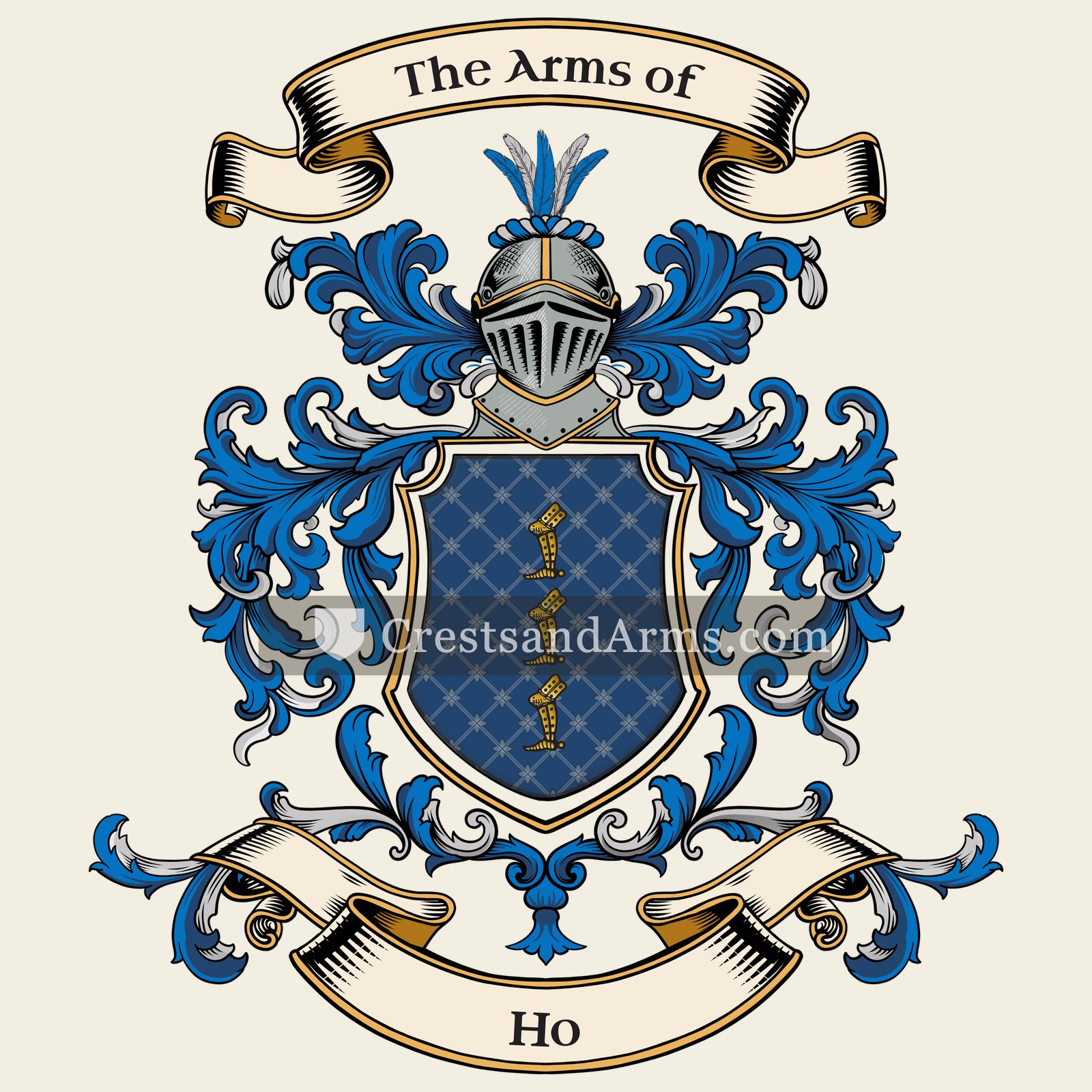


 ermineDignity and rank