A record of documented arms, meaning and origin, researched for the Hoback family lines. Documented in 2 countries.
Reg. 4899 · German, G–I
Meaning of the Hoback family crest colors & symbols
Symbols on this shield
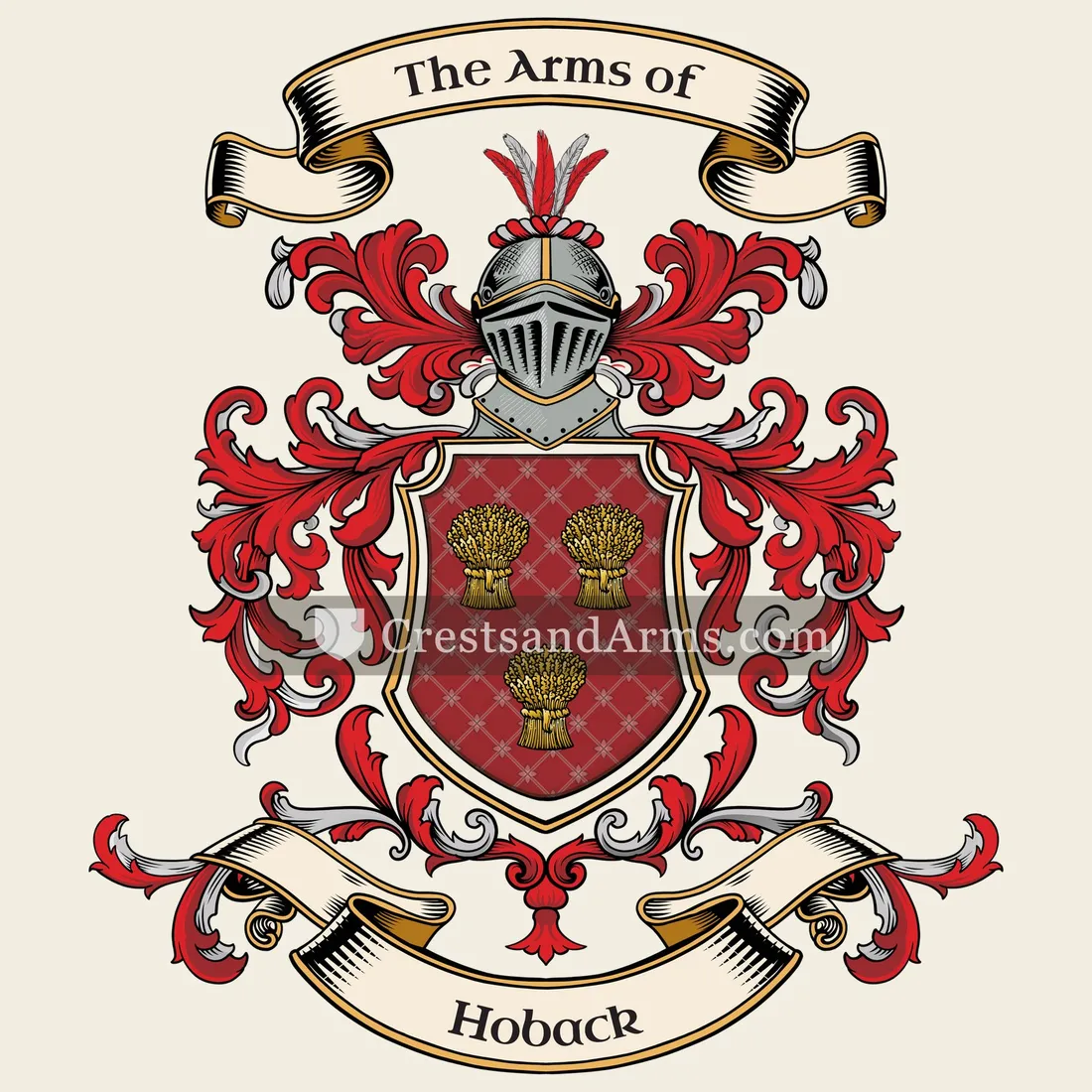
wheatsheafPlenty, and the harvest of one's own labour
Colours
Red (Gules)Means: Military strength
Gold (Or)Means: Generosity
Historical info
Source
J. B. Rietstap, Armorial Général, Gouda: G. B. van Goor Zonen, 1884–87
Blazon (the actual original written record)
“De gu. à trois graines de froment d'or, posées chacune en pal, rangées en fasce. C.: les trois graines, entre un vol de sa., chaque aile ornée à l'ext. de trois trèfles d'or. - Ou: D'azur à trois annelets ovales d'or, posés debout, rangés en fasce. C.: un annelet de l'écu, entre un vol d'azur, chaque aile ch. d'un annelet pareil.”
BrandenburgBrandenburg, c. 1765
Digital archive packCoat of arms PNG, gold border print PDF, vector SVG and the certificate of authenticity. Sent to your email in minutes.
Map of Germany showing where the Hoback arms are recorded
The Hoback arms were recorded in Brandenburg, c. 1765.
Brandenburg was sandy farming country around Berlin, held in large estates by families who served as officers. Land and military service each brought arms, and most families there had both.
This is where the arms were entered in the register. Families often moved to other parts of the country, so the same name can turn up in more than one region.
The body that granted and recorded arms in Germany in this period.
Francis I, Holy Roman Emperor
Sovereign of the period
Francis I, Holy Roman Emperor
1745–1765
Reigning in Germany when the Hoback arms are first recorded.
How Arms Worked in Germany
In the Holy Roman Empire, coats of arms were often granted to individuals by the Emperor or his representatives. These arms were then passed down through the generations to all legitimate descendants of the original holder. Younger branches of a family usually kept the same shield design without needing to change it, as the arms belonged to the entire lineage.
Granting authority
The Holy Roman Emperor held the sole power to grant new coats of arms throughout his vast imperial territories.
How they got arms
Families typically obtained their coats of arms through a formal imperial grant or by proving their noble status to the authorities.
Where arms were recorded
These grants were officially recorded in the Imperial Chancery registers, which began keeping formal records of such honors during the Middle Ages.
The family's standing
Recorded among the armigerous families of Brandenburg.
Origin & History of the Hoback Family in Germany
The name Hoback traces its roots to the historical landscape of Germany, where families often adopted surnames based on their trade, location, or physical characteristics. By the middle of the eighteenth century, the name was firmly established within the region of Brandenburg. During this period, Brandenburg was a central part of the Kingdom of Prussia, a time marked by significant agricultural development and social organization under the influence of the Prussian state. Families living in this area were often deeply connected to the local soil and the evolving administrative structures of the German territories. As the family grew in Brandenburg, they participated in the daily life of a region undergoing rapid political and social change. This early presence in the Prussian heartland suggests that the ancestors of the Hoback line were part of the hardworking population that helped shape the rural and social identity of eastern Germany before many families began their eventual migrations to other parts of the world.
Meaning of the Hoback family crest colors & symbols
Symbols on this shield
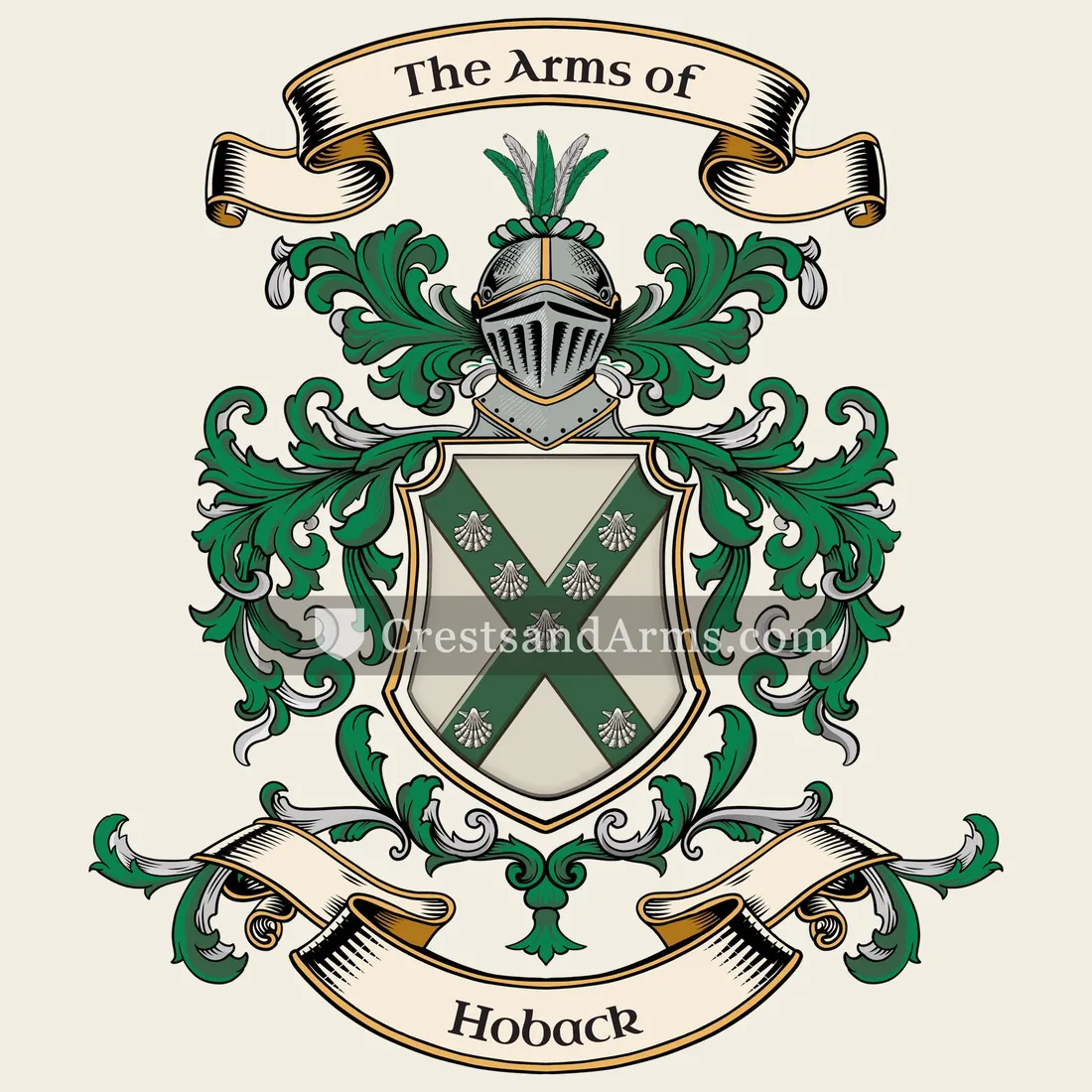
saltireResolution, and St Andrew's cross
escallopThe pilgrim's shell, and a long journey made
Colours
Silver (Argent)Means: Peace and sincerity
Green (Vert)Means: Hope
Historical info
Source
Sir Bernard Burke, The General Armory of England, Scotland, Ireland and Wales, London: Harrison & Sons, 1884
Blazon (the actual original written record)
“Ar. on a saltire vert seven escallops of the first”
NorfolkWickingham · Norfolk, c. 1613
Digital archive packCoat of arms PNG, gold border print PDF, vector SVG and the certificate of authenticity. Sent to your email in minutes.
Map of England showing where the Hoback arms are recorded
The Hoback arms were recorded in Norfolk, c. 1613.
Norfolk grew rich on wool and grain, and its wealth was spread among many middling families rather than a few great ones. Households of that kind bought land and took arms, and the county holds a large share of English names.
This is where the arms were entered in the register. Families often moved to other parts of the country, so the same name can turn up in more than one region.
The body that granted and recorded arms in England in this period.
James VI and I
Sovereign of the period
James VI and I
1603–1625
Reigning in Germany when the Hoback arms are first recorded.
How Arms Worked in England
English heraldry allowed arms to be shared by all legitimate descendants of the original owner. These symbols were treated as personal property that moved through the generations to all children. While the eldest son kept the original design, other family members could use the same shield without needing to change it or register their own unique versions.
Granting authority
The College of Arms in London has regulated the use of coats of arms throughout England and Wales since 1484.
How they got arms
Families typically obtained their coats of arms through a formal grant from the Crown or by proving their ancient right to them.
Where arms were recorded
All official coats of arms are recorded in the registers kept at the College of Arms, which date back to the fifteenth century.
The family's standing
Recorded among the armigerous families of Norfolk.
Origin & History of the Hoback Family in England
The family name Hoback traces its early roots to the coastal region of Norfolk, England, where records confirm the presence of family members as early as 1613. During this period, Norfolk was a bustling center for agriculture and trade, and the name likely emerged as a localized identifier for people living near specific geographic features or working in traditional rural trades. The name itself suggests a connection to the linguistic patterns of East Anglia, where surnames often evolved from nicknames or descriptions of a person's home environment. As the family established itself in these English parishes, they became part of the local community fabric, participating in the daily life of the region before some members eventually sought new opportunities across the Atlantic. This early history reflects the broader movement of English families who were deeply rooted in their local landscapes and contributed to the growth of their home counties through generations of steady labor and community involvement.
Hoback Meaning & Related Branches
Root word
Hohbach
A high or elevated stream or brook.
This name
HobackRefers to someone who lived near a stream located on high ground.
also spelled
Hobek
Hobecke
Hobbeck
Documented Sources
J. B. Rietstap, Armorial Général, Gouda: G. B. van Goor Zonen, 1884–87
Brandenburgisches Landeshauptarchiv, Rep. 2, Kurmärkische Stände und Kreditinstitute
Genealogisches Handbuch des Adels, Band 1, 1951
Kulturstiftung der deutschen Vertriebenen, Die Geschichte der deutschen Siedlungsgebiete, 1985
Digital archive packCoat of arms PNG, gold border print PDF, vector SVG and the certificate of authenticity. Sent to your email in minutes.


 wheatsheafPlenty, and the harvest of one's own labour
 wheatsheafPlenty, and the harvest of one's own labour


 saltireResolution, and St Andrew's cross
 escallopThe pilgrim's shell, and a long journey made