Map of Britain showing where the Hockman arms are recorded
The Hockman arms were recorded in Lincolnshire, c. 1643.
This is where the arms were entered in the register. Families often moved to other parts of the country, so the same name can turn up in more than one region.
The body that granted and recorded arms in Britain in this period.
Charles I of England
Sovereign of the period
Charles I of England
1625–1649
Reigning in Britain when the Hockman arms are first recorded.
How Arms Worked in Britain
English heraldry allowed arms to be shared by all legitimate descendants of the original owner. These symbols were treated as personal property that moved through the generations to all children. While the eldest son kept the original design, other family members could use the same shield without needing to change it or register their own unique versions.
Granting authority
The College of Arms in London has regulated the use of coats of arms throughout England and Wales since 1484.
How they got arms
Families typically obtained their coats of arms through a formal grant from the Crown or by proving their ancient right to them.
Where arms were recorded
All official coats of arms are recorded in the registers kept at the College of Arms, which date back to the fifteenth century.
The family's standing
Recorded among the armigerous families of Lincolnshire.
Origin & History of the Hockman Family in Britain
The family name Hockman is rooted in the linguistic traditions of medieval England, where surnames often evolved from a person’s occupation, physical traits, or the specific location where they lived. The name is generally understood to be a variation of the occupational name Hookman, which historically referred to someone who worked with hooks, such as a fisherman or a person who harvested crops using a reaping hook. By the time the family was firmly established in the county of Lincolnshire in 1643, the name had likely transitioned from a direct job description into a hereditary family identifier. During this period, the residents of Lincolnshire were deeply involved in the social and religious shifts of the English Civil War. Families like the Hockmans were part of a rural society that relied on agriculture and local trade, meaning their surname served as a practical way to distinguish them within their parish communities. As the name moved through generations, it became a permanent record of the family’s long-standing connection to the English landscape.
Coat of Arms & Family Crest Details
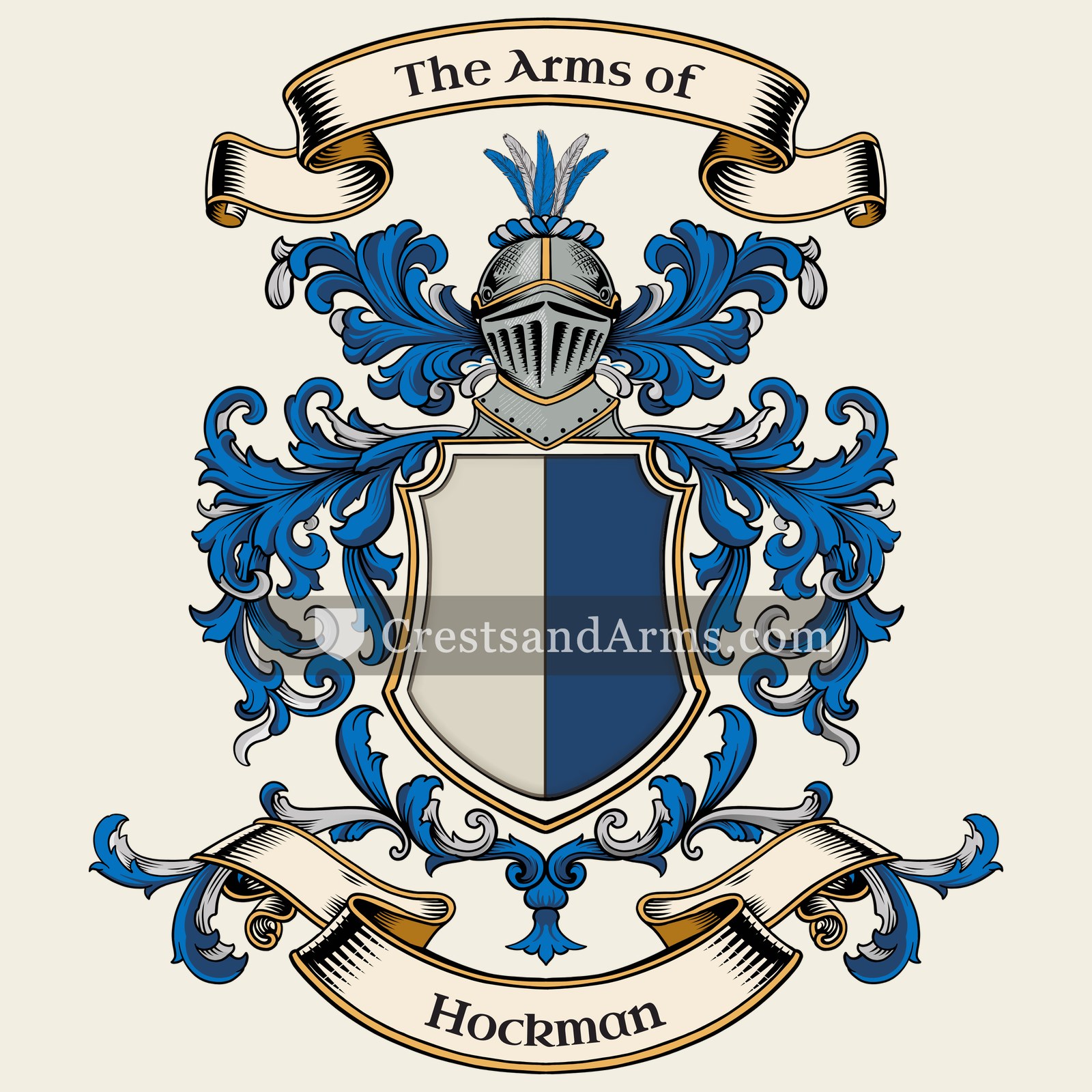
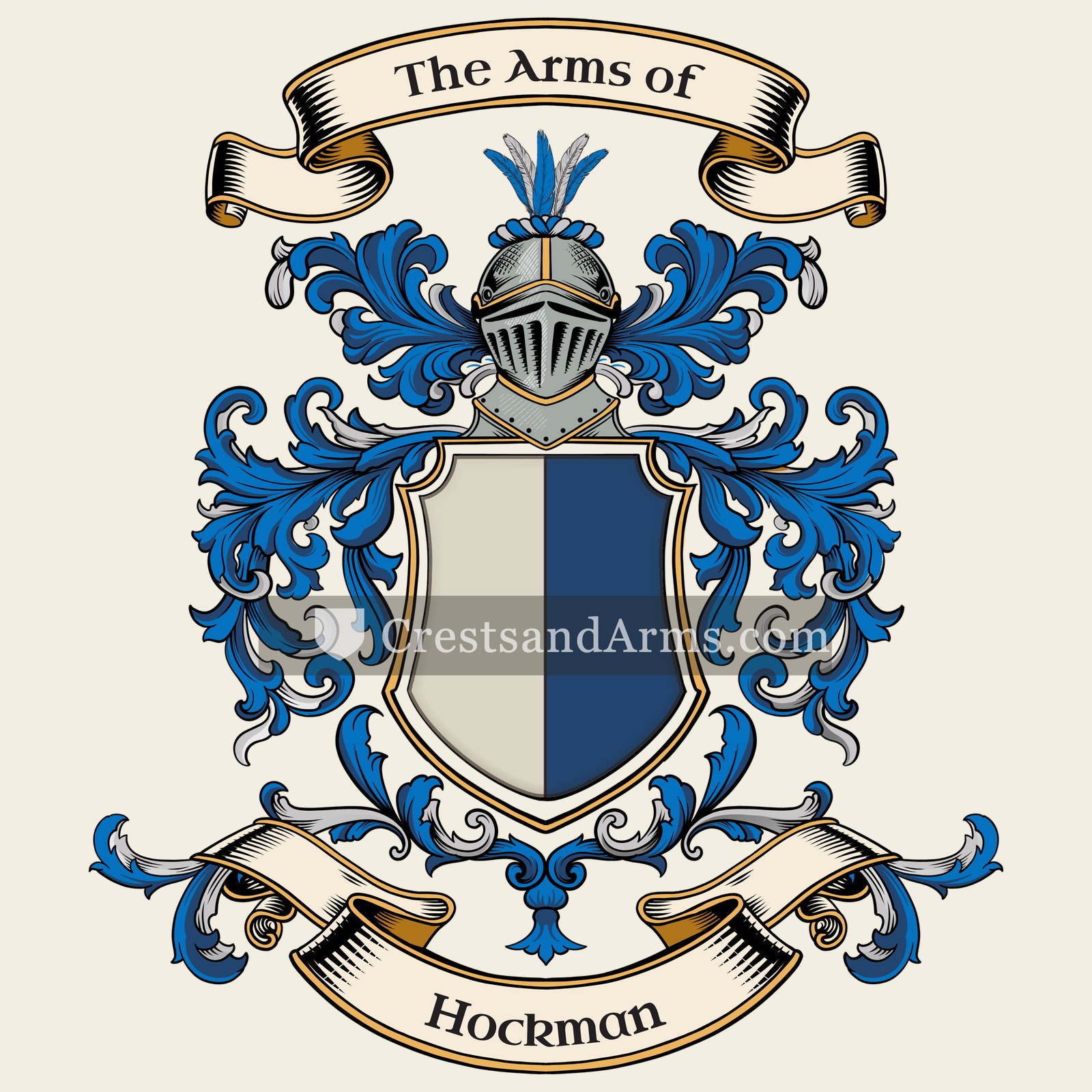
Symbols on this shield
paleMilitary strength, and a fortified defence
Colours
Silver (Argent)Means: Peace and sincerity
Blue (Azure)Means: Loyalty and truth
Historical info
Source
Sir Bernard Burke, The General Armory of England, Scotland, Ireland and Wales, London: Harrison & Sons, 1884
Blazon (the actual original written record)
“Per pale indented ar. and az”
LincolnGainsborough · Lincoln, c. 1272
Digital archive packCoat of arms PNG, gold border print PDF, vector SVG and the certificate of authenticity. Sent to your email in minutes.
Map of England showing where the Hockman arms are recorded
The Hockman arms were recorded in Lincoln, c. 1272.
Lincolnshire was rich farming country, and its wealth was spread across many middling families. Households of that size bought land and took arms, and the county holds a large share of English names.
This is where the arms were entered in the register. Families often moved to other parts of the country, so the same name can turn up in more than one region.
The body that granted and recorded arms in England in this period.
Henry III of England
Sovereign of the period
Henry III of England
1216–1272
Reigning in Britain when the Hockman arms are first recorded.
How Arms Worked in England
English heraldry allowed arms to be shared by all legitimate descendants of the original owner. These symbols were treated as personal property that moved through the generations to all children. While the eldest son kept the original design, other family members could use the same shield without needing to change it or register their own unique versions.
Granting authority
The College of Arms in London has regulated the use of coats of arms throughout England and Wales since 1484.
How they got arms
Families typically obtained their coats of arms through a formal grant from the Crown or by proving their ancient right to them.
Where arms were recorded
All official coats of arms are recorded in the registers kept at the College of Arms, which date back to the fifteenth century.
The family's standing
Recorded among the armigerous families of Lincoln.
Origin & History of the Hockman Family in England
The family name Hockman traces its roots back to the medieval period in England, with early records confirming the presence of family members in Lincoln by 1272. During the thirteenth century, surnames were becoming increasingly common as a way to distinguish individuals in growing towns and cities. The name likely originated as a locative or occupational descriptor, reflecting the specific environment or trade of the family’s ancestors in the East Midlands. Living in a major administrative and religious center like Lincoln suggests that these early individuals were likely involved in the bustling trade or civic life of the city. As the family moved through the generations, the name evolved alongside the English language, eventually solidifying into the spelling recognized today. This history highlights how a simple name can serve as a link to the social and economic landscape of medieval England.
Coat of Arms & Family Crest Details
Symbols on this shield
paleMilitary strength, and a fortified defence
Colours
Silver (Argent)Means: Peace and sincerity
Blue (Azure)Means: Loyalty and truth
Historical info
Source
Sir Bernard Burke, The General Armory of England, Scotland, Ireland and Wales, London: Harrison & Sons, 1884
Blazon (the actual original written record)
“Per pale indented ar. and az”
ClareFenloe · Clare, c. 1645
Digital archive packCoat of arms PNG, gold border print PDF, vector SVG and the certificate of authenticity. Sent to your email in minutes.
Map of Ireland showing where the Hockman arms are recorded
The Hockman arms were recorded in Clare, c. 1645.
Clare was rocky western Irish country, poor in farmland but held tightly by a few old families. Land there changed hands rarely, and families who stayed put ended up in the records.
This is where the arms were entered in the register. Families often moved to other parts of the country, so the same name can turn up in more than one region.
The body that granted and recorded arms in Ireland in this period.
Charles I of England
Sovereign of the period
Charles I of England
1625–1649
Reigning in Britain when the Hockman arms are first recorded.
How Arms Worked in Ireland
The Ulster King of Arms granted coats of arms to individuals who proved their social standing and good character. These symbols were typically inherited by all legitimate descendants of the original holder. If a family branch wanted a unique look, they could apply for a specific change to their design through the office to ensure their identity remained distinct.
Granting authority
The Ulster King of Arms acted as the official body that regulated and issued all coats of arms throughout Ireland.
How they got arms
Families obtained their arms through formal grants issued by the office after proving their eligibility and paying the required fees.
Where arms were recorded
All official grants were recorded in the registers held by the Ulster King of Arms starting from the year 1552.
The family's standing
Recorded among the armigerous families of Clare.
Origin & History of the Hockman Family in Ireland
The history of the Hockman name in Ireland is deeply connected to the turbulent landscape of County Clare during the mid-seventeenth century. By 1645, members of the family were already established in the region, a time when Ireland was undergoing significant political and social upheaval due to the Irish Confederate Wars. The name likely arrived in the area as part of the broader movement of settlers and soldiers who navigated the shifting power structures between local Gaelic lords and the expanding influence of the English administration. Living in Clare during this era meant existing in a frontier environment where land ownership and social status were constantly being renegotiated. While the name itself possesses roots that stretch into Germanic or English linguistic traditions, its presence in the west of Ireland suggests a family that adapted to a unique cultural environment. These early Hockmans were part of a small but resilient group that managed to maintain a foothold in the rugged landscape of the Burren and the surrounding plains during a period of intense historical transition.
Related Branches & Arms
Root word
Hoc
Old English term for a mallow plant or a hook shape
This name
HockmanA dweller near a hook-shaped piece of land or a mallow patch
also spelled
Hickmann
Hickmane
Hickeman
Hickmon
Documented Sources
J. B. Rietstap, Armorial Général, Gouda: G. B. van Goor Zonen, 1884–87
Bardsley, Charles Wareing, A Dictionary of English and Welsh Surnames, 1901
Reaney, P.H., A Dictionary of British Surnames, 1958
Lincolnshire Archives, Bishop's Transcripts of Parish Registers, 1643
Digital archive packCoat of arms PNG, gold border print PDF, vector SVG and the certificate of authenticity. Sent to your email in minutes.


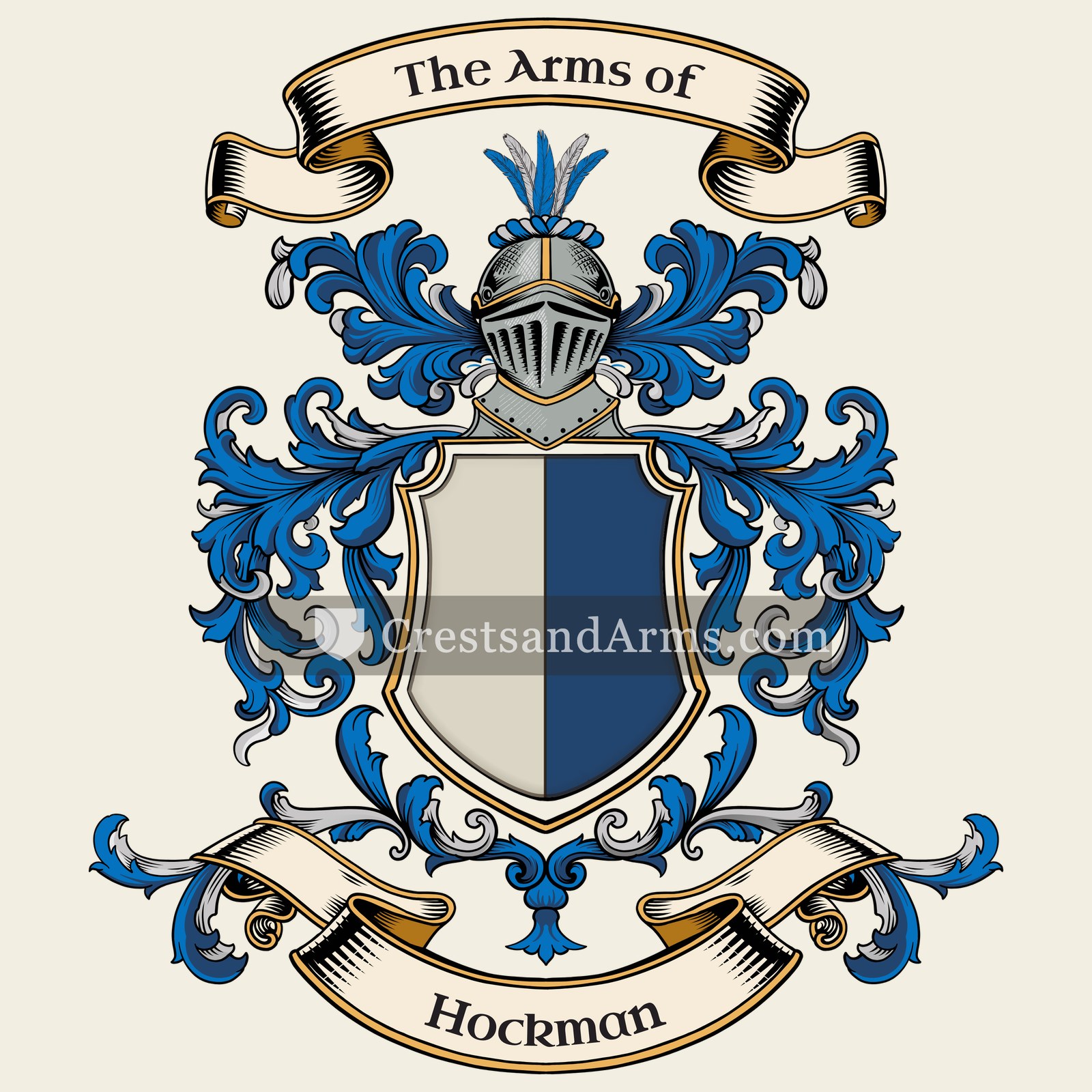


 paleMilitary strength, and a fortified defence