Map of Netherlands showing where the Holst arms are recorded
The Holst arms were recorded in Netherlands, c. 1815.
Arms such as these were typically recorded in Friesland.
Friesland was low, wet country on the northern coast of the Netherlands, farmed by families who had held the same land for centuries. Free landholders were unusually common there, and a free landholder could carry arms.
This is where the arms were entered in the register. Families often moved to other parts of the country, so the same name can turn up in more than one region.
Region
Friesland
First recorded
1815
Granting Authority for the Holst Arms
Hoge Raad van Adel
Photograph made by me · CC BY-SA 3.0
The body that granted and recorded arms in Netherlands in this period.
William I of the Netherlands
Sovereign of the period
William I of the Netherlands
1815–1840
Reigning in Netherlands when the Holst arms are first recorded.
How Arms Worked in Netherlands
In the Netherlands, coats of arms were often used by noble families and those who held specific public offices. These arms were passed down through the generations to legitimate descendants. Younger branches of a family usually kept the original design without needing to add special marks. This system ensured that the family identity remained clear and consistent over many years.
Granting authority
The Hoge Raad van Adel is the official body that regulates and manages noble titles and coats of arms in the Netherlands.
How they got arms
Families typically obtained their coats of arms through official royal grants or by proving their long-standing historical use of the symbols.
Where arms were recorded
Coats of arms are officially recorded in the registers held by the Hoge Raad van Adel, which began its work in 1814.
The family's standing
Recorded among the armigerous families of Netherlands.
Origin & History of the Holst Family in Netherlands
The surname Holst is deeply connected to the geography of Northern Europe, as the name itself is derived from the Middle Low German word for a wood or a forest. While the name is often associated with the region of Holstein in Germany, it also became established in the Netherlands through migration and local settlement patterns. By the early nineteenth century, records confirm that members of the Holst family were living in the province of Friesland. This region has a unique cultural history, as it was historically shaped by its proximity to the North Sea and its distinct Frisian language. Families living in Friesland during this period were often involved in agriculture, trade, or maritime industries, which were the primary drivers of the local economy. The presence of the Holst name in Dutch civil records from 1815 suggests that these individuals were well integrated into the administrative life of the Netherlands during the transition into the modern Kingdom of the Netherlands.
Coat of Arms & Family Crest Details
Symbols on this shield
fessThe military belt, and readiness to serve
Colours
Blue (Azure)Means: Loyalty and truth
Red (Gules)Means: Military strength
Historical info
Source
J. B. Rietstap, Armorial Général, Gouda: G. B. van Goor Zonen, 1884–87
Blazon (the actual original written record)
“D'azur à deux pointes d'or; à la fasce de gu., br. sur le tout et percée en rond. Cq. cour. C.: deux bras, celui à dextre paré d'azur et celui à sen. paré de gu., les mains de carn. supp. ensemble une boule d'azur. L. d'or, de gu. et d'azur.”
BrandenburgBrandenburg, c. 1765
Digital archive packCoat of arms PNG, gold border print PDF, vector SVG and the certificate of authenticity. Sent to your email in minutes.
Map of Germany showing where the Holst arms are recorded
The Holst arms were recorded in Brandenburg, c. 1765.
Brandenburg was sandy farming country around Berlin, held in large estates by families who served as officers. Land and military service each brought arms, and most families there had both.
This is where the arms were entered in the register. Families often moved to other parts of the country, so the same name can turn up in more than one region.
The body that granted and recorded arms in Germany in this period.
Francis I, Holy Roman Emperor
Sovereign of the period
Francis I, Holy Roman Emperor
1745–1765
Reigning in Netherlands when the Holst arms are first recorded.
How Arms Worked in Germany
In the Holy Roman Empire, coats of arms were often granted to individuals by the Emperor or his representatives. These arms were then passed down through the generations to all legitimate descendants of the original holder. Younger branches of a family usually kept the same shield design without needing to change it, as the arms belonged to the entire lineage.
Granting authority
The Holy Roman Emperor held the sole power to grant new coats of arms throughout his vast imperial territories.
How they got arms
Families typically obtained their coats of arms through a formal imperial grant or by proving their noble status to the authorities.
Where arms were recorded
These grants were officially recorded in the Imperial Chancery registers, which began keeping formal records of such honors during the Middle Ages.
The family's standing
Recorded among the armigerous families of Brandenburg.
Origin & History of the Holst Family in Germany
The surname Holst is a topographic name that originated in Northern Germany, serving as a descriptive label for people who hailed from the region of Holstein. During the medieval period, it was common for individuals moving to new towns to be identified by their place of origin, which eventually solidified into a permanent family name. By the mid-eighteenth century, the family had established a documented presence in the Brandenburg region, specifically appearing in local records by 1765. At this time, Brandenburg was a central part of the Kingdom of Prussia, a period marked by significant agricultural development and internal migration. Families like the Holsts often integrated into these rural communities as farmers or tradespeople, contributing to the steady growth of the Prussian state. This transition from a regional identifier to a settled family name reflects the broader movement of people across German lands during the eighteenth century.
Coat of Arms & Family Crest Details
Symbols on this shield
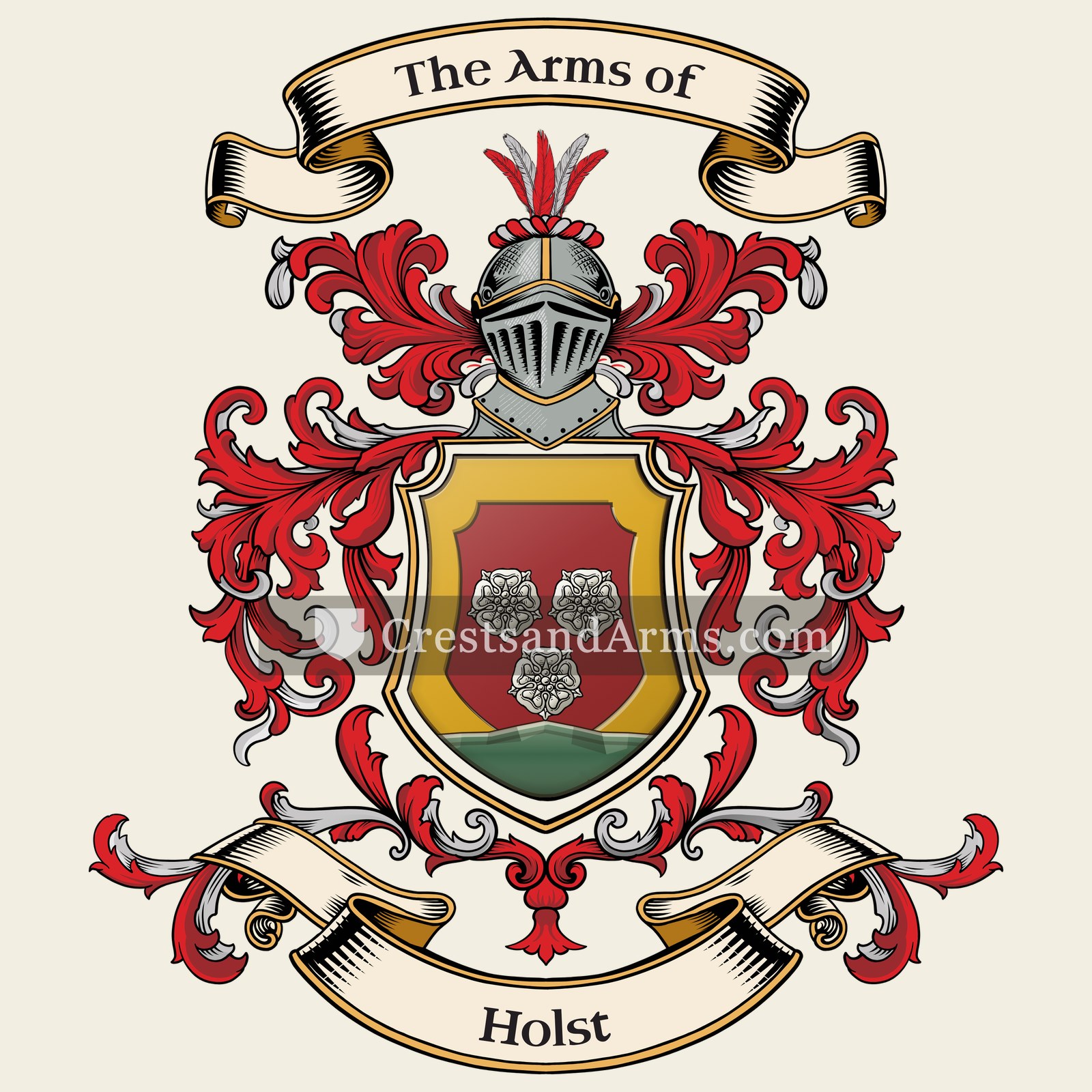
mountThe ground held, and steadfastness upon it
roseThe seventh son, and beauty with grace
Colours
Red (Gules)Means: Military strength
Gold (Or)Means: Generosity
Green (Vert)Means: Hope
Silver (Argent)Means: Peace and sincerity
Historical info
Source
J. B. Rietstap, Armorial Général, Gouda: G. B. van Goor Zonen, 1884–87
Blazon (the actual original written record)
“De gu. à trois tulipes d'arg., tigées et feuillées de sin., mouv. d'un tertre du même; l'écu bordé d'or. C.: les tulipes, entre un vol de gu. L. de gu. et d'or.”
Swedenc. 1700
Digital archive packCoat of arms PNG, gold border print PDF, vector SVG and the certificate of authenticity. Sent to your email in minutes.
Map of Sweden showing where the Holst arms are recorded
The Holst arms were recorded in Sweden, c. 1700.
Arms such as these were typically recorded in Stockholm.
Stockholm held the Swedish court and the House of Nobility, where every noble family's arms were entered and kept. Families ennobled for service registered there, which is why so many are recorded around the city.
This is where the arms were entered in the register. Families often moved to other parts of the country, so the same name can turn up in more than one region.
The body that granted and recorded arms in Sweden in this period.
Carl XII of Sweden
Sovereign of the period
Carl XII of Sweden
1697–1718
Reigning in Netherlands when the Holst arms are first recorded.
How Arms Worked in Sweden
In Sweden, a coat of arms belonged to a noble family as a whole rather than just one individual. These arms were passed down through the generations to all legitimate descendants. Younger branches of the family used the same shield without needing to change it. This system ensured that the entire lineage shared the same identity and status under the law.
Granting authority
The Riddarhuset, or House of Nobility, regulated all noble coats of arms in Sweden under royal authority.
How they got arms
Families received their coats of arms through royal grants of nobility which were then officially registered with the House.
Where arms were recorded
Coats of arms were officially recorded in the Swedish House of Nobility register starting in the year 1626.
The family's standing
Recorded among the armigerous families of Sweden.
Origin & History of the Holst Family in Sweden
The family name Holst has deep roots in the urban landscape of eighteenth-century Sweden. By the year 1700, members of the family were already established residents of Stockholm, a city that served as the bustling heart of the Swedish Empire. During this period, the name was often associated with individuals who moved within the professional and administrative circles of the capital. Because the name is linked to the German word for a wood or a grove, it likely originated as a descriptive term for ancestors who lived near a prominent forest. As these early family members settled in Stockholm, they contributed to the city’s growth during a time of significant social and political change. Their presence in the capital suggests they were part of the rising class of citizens who helped shape the identity of Sweden during the early modern era.
Related Branches & Arms
Root word
Holt
A Middle Dutch or Middle Low German term for a wood or forest.
This name
HolstA topographic name for someone who lived near or worked in a wooded area.
also spelled
Holster
Documented Sources
J. B. Rietstap, Armorial Général, Gouda: G. B. van Goor Zonen, 1884–87
Tresoar (Fries Historisch en Letterkundig Centrum), Burgerlijke Stand van de provincie Friesland
Van der Meer, G., Nederlandse Familienamen: Herkomst en Betekenis, 2005
Nederlands Instituut voor Genealogie, Nederlandse Familienamenbank, 2010
Digital archive packCoat of arms PNG, gold border print PDF, vector SVG and the certificate of authenticity. Sent to your email in minutes.


 lionCourage, strength and royalty
 lionCourage, strength and royalty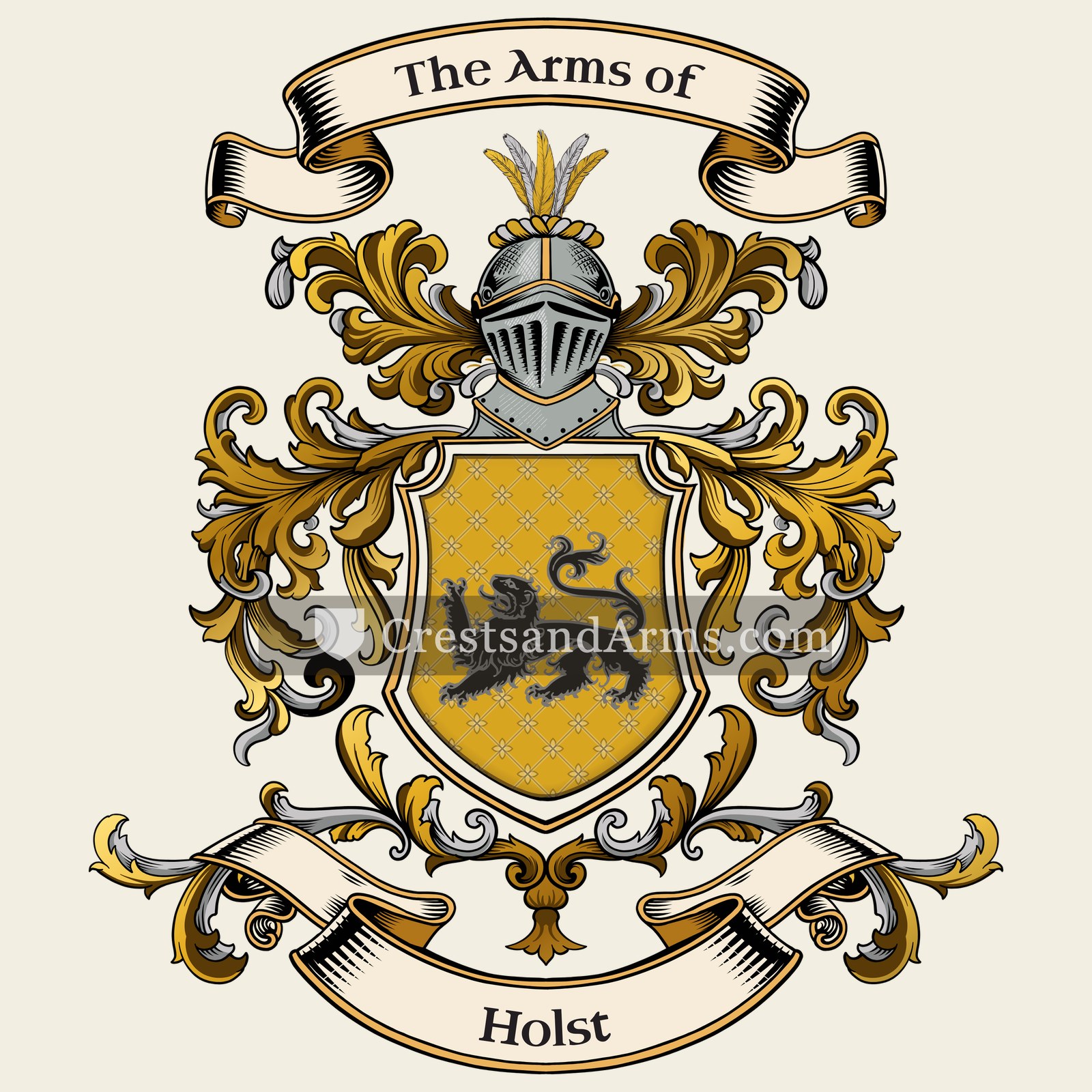


 fessThe military belt, and readiness to serve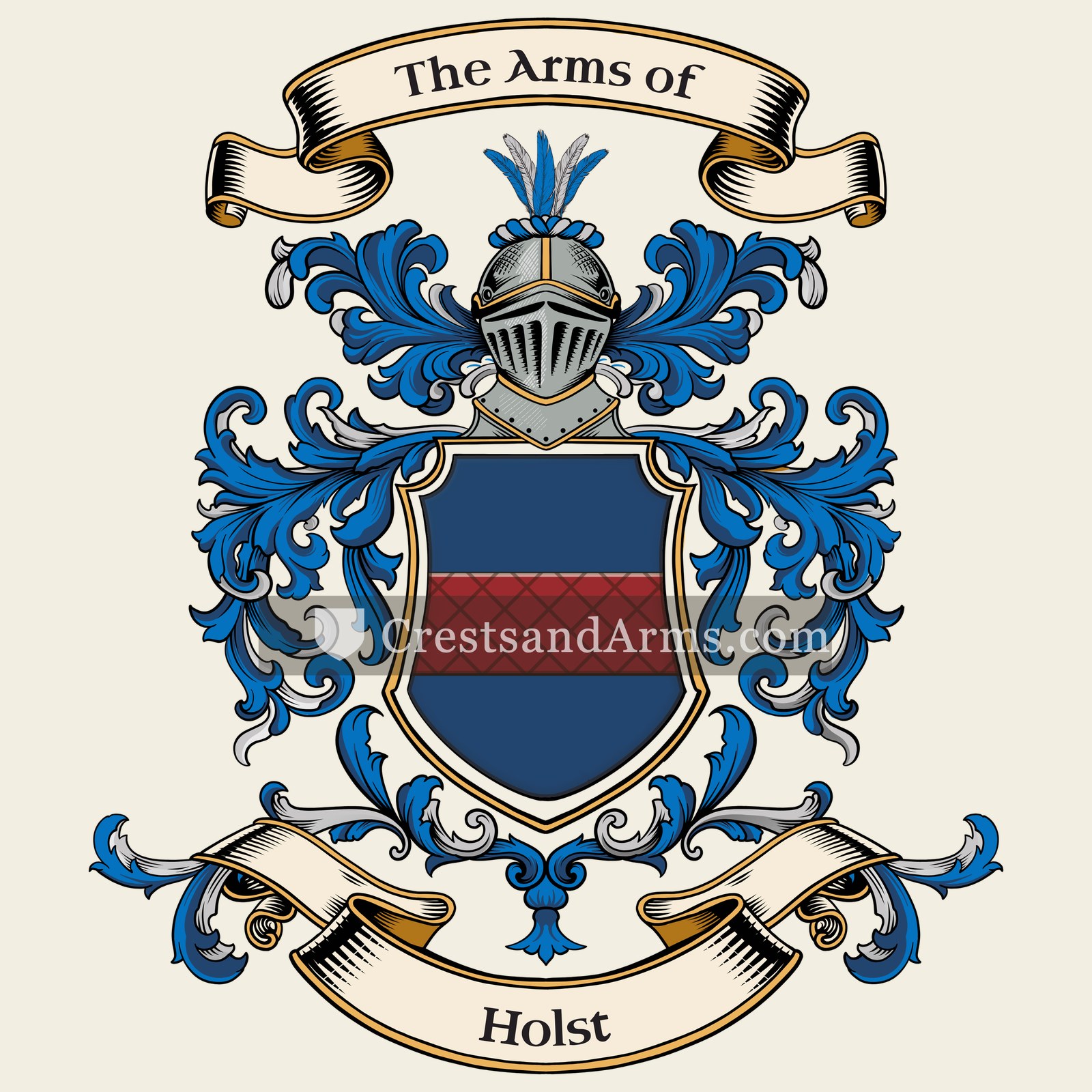


 mountThe ground held, and steadfastness upon it
 roseThe seventh son, and beauty with grace