Map of Netherlands showing where the Hooper arms are recorded
The Hooper arms were recorded in Zeeland, c. 1815.
Zeeland was a scatter of islands in the south-west of the Netherlands, living on the sea and on land reclaimed from it. Families who drained and held that land were counted among the gentry, and gentry carried arms.
This is where the arms were entered in the register. Families often moved to other parts of the country, so the same name can turn up in more than one region.
Region
Zeeland
First recorded
1815
Granting Authority for the Hooper Arms
Hoge Raad van Adel
Photograph made by me · CC BY-SA 3.0
The body that granted and recorded arms in Netherlands in this period.
William I of the Netherlands
Sovereign of the period
William I of the Netherlands
1815–1840
Reigning in Netherlands when the Hooper arms are first recorded.
How Arms Worked in Netherlands
In the Netherlands, coats of arms were often used by noble families and those who held specific public offices. These arms were passed down through the generations to legitimate descendants. Younger branches of a family usually kept the original design without needing to add special marks. This system ensured that the family identity remained clear and consistent over many years.
Granting authority
The Hoge Raad van Adel is the official body that regulates and manages noble titles and coats of arms in the Netherlands.
How they got arms
Families typically obtained their coats of arms through official royal grants or by proving their long-standing historical use of the symbols.
Where arms were recorded
Coats of arms are officially recorded in the registers held by the Hoge Raad van Adel, which began its work in 1814.
The family's standing
Recorded among the armigerous families of Zeeland.
Origin & History of the Hooper Family in Netherlands
The surname Hooper is traditionally associated with the trade of a cooper, or a person who made wooden barrels and casks. While the name is often linked to English origins, records confirm that families bearing this name were well-established in the Zeeland province of the Netherlands by 1815. During this period, Zeeland was a region defined by its complex relationship with the sea and its reliance on maritime trade. Families in this area often moved between coastal towns to support the shipping industry, where the skills of a barrel maker were essential for transporting goods like salted fish, grain, and wine. The presence of the Hooper name in Dutch civil registries from the early nineteenth century suggests that these individuals were likely integrated into the local merchant class or the skilled labor force that kept the Dutch economy moving during the post-Napoleonic era. As they settled into these communities, they became part of the local fabric of Zeeland, contributing to the specific trade traditions that defined life in the Dutch delta.
Coat of Arms & Family Crest Details
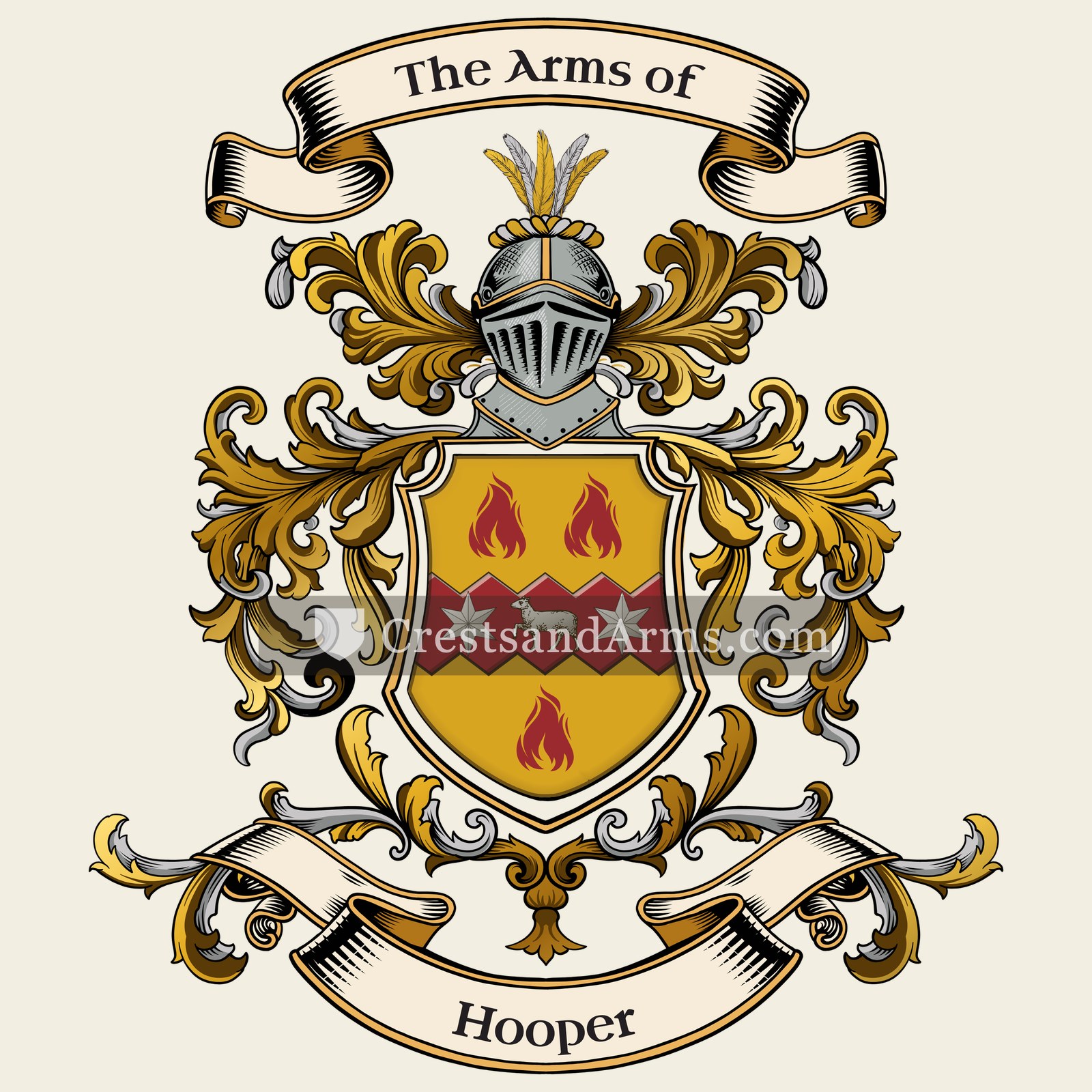
Symbols on this shield
fessThe military belt, and readiness to serve
lambGentleness, patience and faith
fireZeal and purification
starThe celestial goddess, and nobility
Colours
Gold (Or)Means: Generosity
Red (Gules)Means: Military strength
Silver (Argent)Means: Peace and sincerity
Historical info
Source
Sir Bernard Burke, The General Armory of England, Scotland, Ireland and Wales, London: Harrison & Sons, 1884
Blazon (the actual original written record)
“Or, on a fess dancettée betw. three flames of fire gu. proceeding from clouds ar. a lamb couchant betw. two estoiles of the last”
GloucesterGloucester, c. 1550
Digital archive packCoat of arms PNG, gold border print PDF, vector SVG and the certificate of authenticity. Sent to your email in minutes.
Map of England showing where the Hooper arms are recorded
The Hooper arms were recorded in Gloucester, c. 1550.
Gloucestershire had good farmland, a cloth trade in its valleys and a river carrying goods to Bristol. All three made money, and money bought the estates that brought arms with them.
This is where the arms were entered in the register. Families often moved to other parts of the country, so the same name can turn up in more than one region.
The body that granted and recorded arms in England in this period.
Edward VI of England
Sovereign of the period
Edward VI of England
1547–1553
Reigning in Netherlands when the Hooper arms are first recorded.
How Arms Worked in England
English heraldry allowed arms to be shared by all legitimate descendants of the original owner. These symbols were treated as personal property that moved through the generations to all children. While the eldest son kept the original design, other family members could use the same shield without needing to change it or register their own unique versions.
Granting authority
The College of Arms in London has regulated the use of coats of arms throughout England and Wales since 1484.
How they got arms
Families typically obtained their coats of arms through a formal grant from the Crown or by proving their ancient right to them.
Where arms were recorded
All official coats of arms are recorded in the registers kept at the College of Arms, which date back to the fifteenth century.
The family's standing
Recorded among the armigerous families of Gloucester.
Origin & History of the Hooper Family in England
The surname Hooper originated as an occupational name, identifying an ancestor who worked as a cooper. In medieval England, a cooper was a skilled craftsman responsible for making wooden casks, barrels, and buckets. Because these containers were essential for storing and transporting goods like ale, wine, and salted meat, the trade was vital to the local economy. By the mid-sixteenth century, records confirm that members of the Hooper family were well-established in the city of Gloucester. During this period, the family likely integrated into the bustling trade networks of the region, as Gloucester served as an important inland port and market center. Over time, the name transitioned from a description of a person’s daily labor into a permanent family identifier that was passed down through generations.
Hooper Meaning & Related Branches
Root word
hupa
A Germanic term referring to a hoop or a wooden container.
This name
HooperAn occupational surname for a maker of wooden hoops, barrels, or casks.
also spelled
Hoopar
Hooperr
Hopere
Documented Sources
J. B. Rietstap, Armorial Général, Gouda: G. B. van Goor Zonen, 1884–87
Centraal Bureau voor Genealogie, Bevolkingsregister van Zeeland, 1815
Zeeuws Archief, Burgerlijke Stand Zeeland, 1811–1815
Van der Aa, A.J., Biographisch Woordenboek der Nederlanden, 1852–1878
Digital archive packCoat of arms PNG, gold border print PDF, vector SVG and the certificate of authenticity. Sent to your email in minutes.


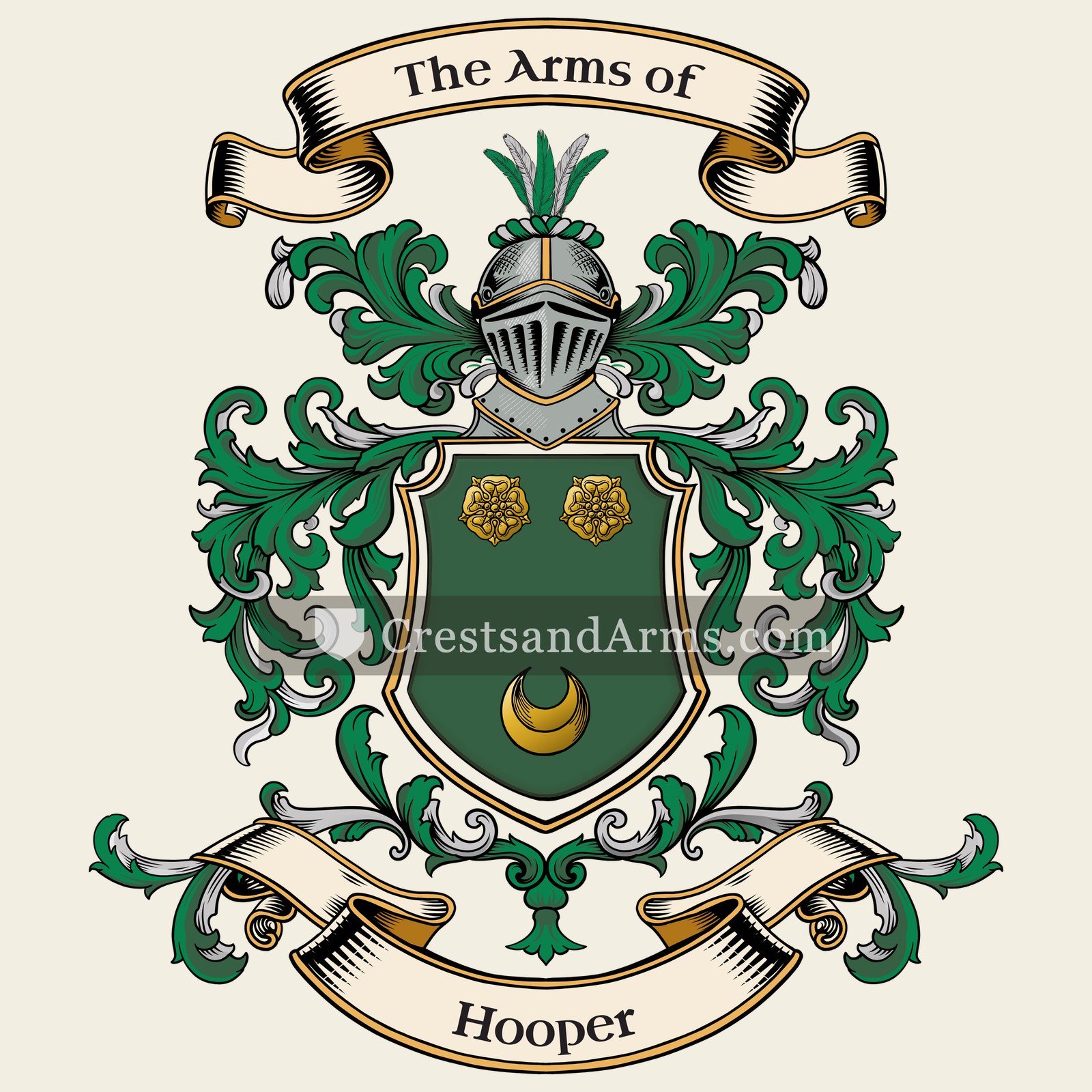
 roseThe seventh son, and beauty with grace
 crescentHonour by the sovereign, and the second son
 roseThe seventh son, and beauty with grace
 crescentHonour by the sovereign, and the second son


 fessThe military belt, and readiness to serve
 lambGentleness, patience and faith
 fireZeal and purification
 starThe celestial goddess, and nobility