Map of Netherlands showing where the Hovious arms are recorded
The Hovious arms were recorded in Amsterdam, c. 1815.
This is where the arms were entered in the register. Families often moved to other parts of the country, so the same name can turn up in more than one region.
Region
Amsterdam
Town
Amsterdam
First recorded
1815
Granting Authority for the Hovious Arms
Hoge Raad van Adel
Photograph made by me · CC BY-SA 3.0
The body that granted and recorded arms in Netherlands in this period.
William I of the Netherlands
Sovereign of the period
William I of the Netherlands
1815–1840
Reigning in Netherlands when the Hovious arms are first recorded.
How Arms Worked in Netherlands
In the Netherlands, coats of arms were often used by noble families and those who held specific public offices. These arms were passed down through the generations to legitimate descendants. Younger branches of a family usually kept the original design without needing to add special marks. This system ensured that the family identity remained clear and consistent over many years.
Granting authority
The Hoge Raad van Adel is the official body that regulates and manages noble titles and coats of arms in the Netherlands.
How they got arms
Families typically obtained their coats of arms through official royal grants or by proving their long-standing historical use of the symbols.
Where arms were recorded
Coats of arms are officially recorded in the registers held by the Hoge Raad van Adel, which began its work in 1814.
The family's standing
Recorded among the armigerous families of Netherlands.
Origin & History of the Hovious Family in Netherlands
The Hovious family name carries a distinct history rooted in the urban landscape of the Netherlands during the early nineteenth century. By 1815, records confirm that family members were established in Amsterdam, a city that served as a bustling hub of trade and social transition following the Napoleonic era. During this period, the Netherlands underwent significant administrative changes, including the formal registration of surnames under the Napoleonic civil code. Families like the Hovious clan often navigated this era of modernization by integrating into the professional and merchant classes of the capital. While the name remains relatively rare, its presence in Amsterdam suggests that early ancestors were part of the city’s vibrant population of artisans or laborers who helped rebuild the Dutch economy after years of political upheaval. This early residency in Amsterdam provides a clear starting point for tracing the family’s evolution as they moved through the changing social structures of the Dutch kingdom.
Coat of Arms & Family Crest Details
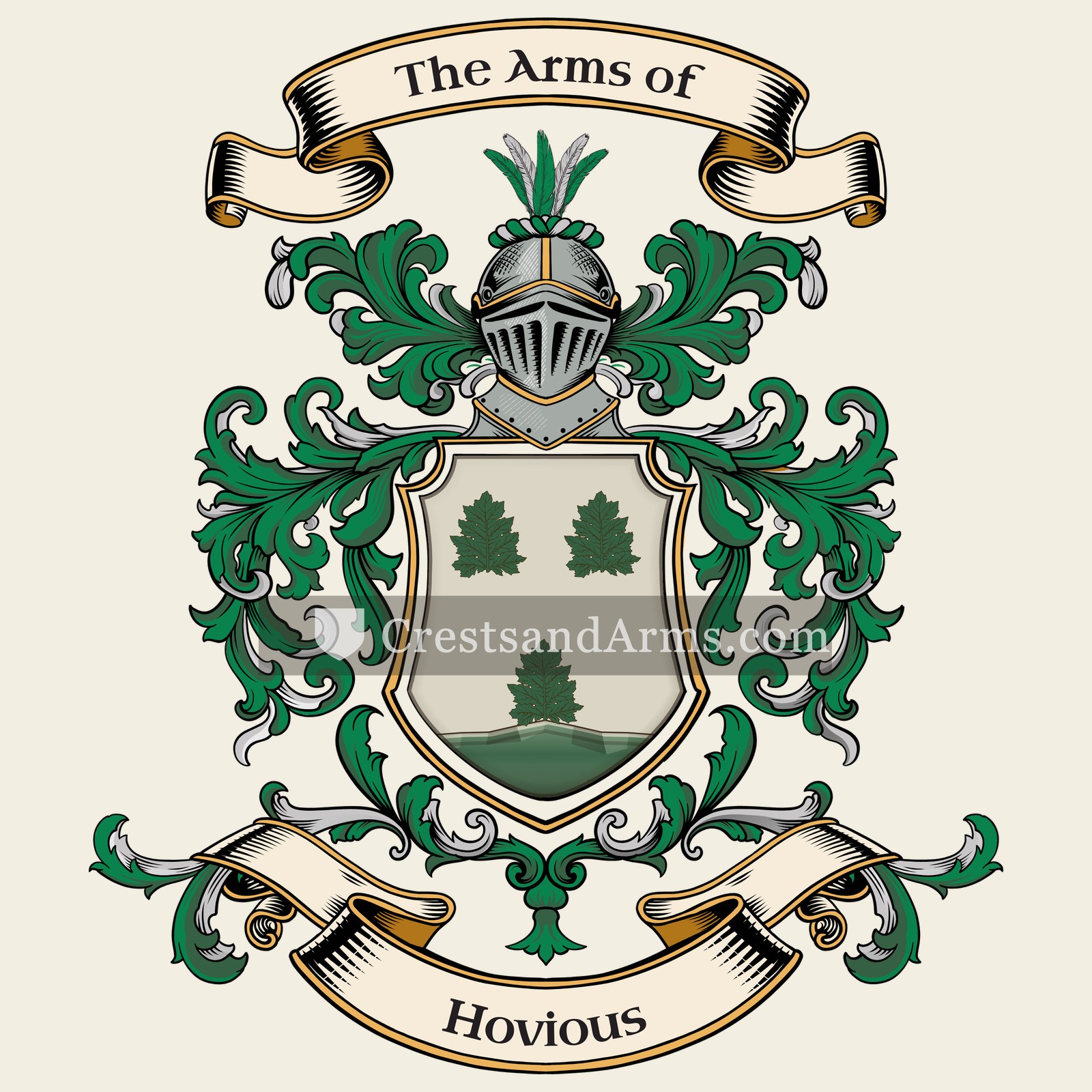
Symbols on this shield
mountThe ground held, and steadfastness upon it
leafHappiness and abundance
Colours
Silver (Argent)Means: Peace and sincerity
Green (Vert)Means: Hope
Historical info
Source
J. B. Rietstap, Armorial Général, Gouda: G. B. van Goor Zonen, 1884–87
Blazon (the actual original written record)
“D'arg. à trois feuilles de tilleul de sin., mouv. d'une terrasse isolée du même.”
BrabantBrabant, c. 1737
Digital archive packCoat of arms PNG, gold border print PDF, vector SVG and the certificate of authenticity. Sent to your email in minutes.
Map of Belgium showing where the Hovious arms are recorded
The Hovious arms were recorded in Brabant, c. 1737.
Brabant lay at the heart of the Low Countries, where the trade routes met. Its towns were wealthy and its landowners many, and both kinds of family kept arms, which is why the region is so heavily represented.
This is where the arms were entered in the register. Families often moved to other parts of the country, so the same name can turn up in more than one region.
The body that granted and recorded arms in Belgium in this period.
Charles VI, Holy Roman Emperor
Sovereign of the period
Charles VI, Holy Roman Emperor
1711–1740
Reigning in Netherlands when the Hovious arms are first recorded.
How Arms Worked in Belgium
In Belgium, a coat of arms is considered personal property that is passed down through the male line to legitimate descendants. Families often use the same shield design across generations to show their shared heritage. If a branch of the family wants to change the design, they must apply for an official update to their specific version of the arms.
Granting authority
The Conseil héraldique is the official body that regulates and approves all coats of arms in Belgium.
How they got arms
Families obtain their coats of arms through formal royal grants or by confirming their historical right to use existing designs.
Where arms were recorded
All approved coats of arms are officially recorded in the public registers of the Conseil héraldique since 1844.
The family's standing
Recorded among the armigerous families of Brabant.
Origin & History of the Hovious Family in Belgium
The history of the Hovious family in Belgium is rooted in the historical region of Brabant, where records confirm their presence by 1737. During the eighteenth century, Brabant was a central hub for trade and agriculture within the Austrian Netherlands. Families living in this area often identified themselves through their local parish communities and their specific roles in the regional economy. The name likely evolved as a localized variation of surnames common to the Low Countries, reflecting the linguistic blend of Dutch and French influences prevalent in the region at the time. By settling in Brabant, the early members of the family became part of a society defined by its complex legal systems and strong ties to the land. This period was marked by significant administrative record-keeping, which allowed families to establish a documented presence in local church registers and municipal census documents. These early ancestors lived through a time of transition as the region navigated shifting political powers and the growth of urban centers.
Related Branches & Arms
Root word
Hove
A farmstead, manor, or enclosed piece of land.
This name
HoviousDerived from a topographic name for someone living near a farmstead or manor.
also spelled
Hovious
Documented Sources
J. B. Rietstap, Armorial Général, Gouda: G. B. van Goor Zonen, 1884–87
Stadsarchief Amsterdam, Bevolkingsregister van Amsterdam (1815)
Nationaal Archief, Burgerlijke Stand van de provincie Noord-Holland (1811–1815)
Fokkens, A., De bevolking van Amsterdam in de negentiende eeuw (1998)
Van Dillen, J.G., Van rijkdom en regenten: Handboek tot de economische en sociale geschiedenis van Nederland tijdens de Republiek (1970)
Digital archive packCoat of arms PNG, gold border print PDF, vector SVG and the certificate of authenticity. Sent to your email in minutes.


 sickleThe harvest, and the reaping of what was sown
 sickleThe harvest, and the reaping of what was sown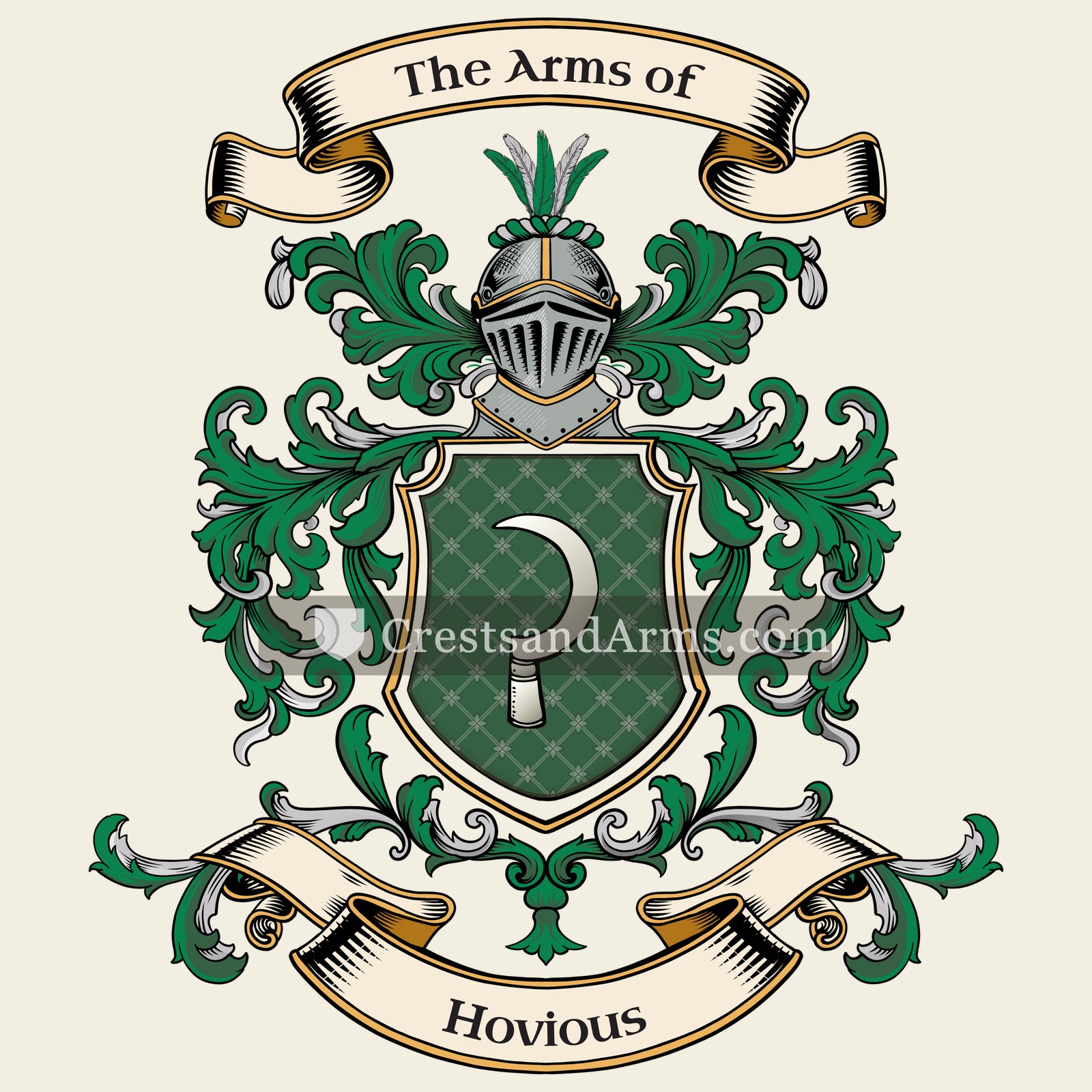


 mountThe ground held, and steadfastness upon it
 leafHappiness and abundance