Map of Netherlands showing where the Hubbert arms are recorded
The Hubbert arms were recorded in Netherlands, c. 1815.
Arms such as these were typically recorded in Friesland.
Friesland was low, wet country on the northern coast of the Netherlands, farmed by families who had held the same land for centuries. Free landholders were unusually common there, and a free landholder could carry arms.
This is where the arms were entered in the register. Families often moved to other parts of the country, so the same name can turn up in more than one region.
Region
Friesland
First recorded
1815
Granting Authority for the Hubbert Arms
Hoge Raad van Adel
Photograph made by me · CC BY-SA 3.0
The body that granted and recorded arms in Netherlands in this period.
William I of the Netherlands
Sovereign of the period
William I of the Netherlands
1815–1840
Reigning in Netherlands when the Hubbert arms are first recorded.
How Arms Worked in Netherlands
In the Netherlands, coats of arms were often used by noble families and those who held specific public offices. These arms were passed down through the generations to legitimate descendants. Younger branches of a family usually kept the original design without needing to add special marks. This system ensured that the family identity remained clear and consistent over many years.
Granting authority
The Hoge Raad van Adel is the official body that regulates and manages noble titles and coats of arms in the Netherlands.
How they got arms
Families typically obtained their coats of arms through official royal grants or by proving their long-standing historical use of the symbols.
Where arms were recorded
Coats of arms are officially recorded in the registers held by the Hoge Raad van Adel, which began its work in 1814.
The family's standing
Recorded among the armigerous families of Netherlands.
Origin & History of the Hubbert Family in Netherlands
The family name Hubbert finds its roots in the Germanic naming traditions of Northern Europe, where it evolved from the personal name Hubert, meaning bright or shining mind. By the early 19th century, records confirm that members of the family were well-established in the province of Friesland. This region of the Netherlands is known for its distinct cultural identity and historical independence, which often influenced how families recorded their names during the transition to standardized civil registration. In 1815, the Dutch government began formalizing surnames across the country to improve administrative tracking. Families like the Hubberts in Friesland were part of this significant shift, moving from traditional patronymic naming systems to fixed hereditary surnames. This transition helped solidify the family identity within the local community as they navigated the changing social and political landscape of the post-Napoleonic era in the Netherlands.
Meaning of the Hubbert family crest colors & symbols
Symbols on this shield
cross symbolChristian faith and service
heartSincerity, charity and true affection
Colours
Blue (Azure)Means: Loyalty and truth
Silver (Argent)Means: Peace and sincerity
Red (Gules)Means: Military strength
Historical info
Source
J. B. Rietstap, Armorial Général, Gouda: G. B. van Goor Zonen, 1884–87
Blazon (the actual original written record)
“D'azur à la croix ancrée d'arg., ch. d'un coeur de gu.”
LorraineLorraine, c. 1626
Digital archive packCoat of arms PNG, gold border print PDF, vector SVG and the certificate of authenticity. Sent to your email in minutes.
Map of France showing where the Hubbert arms are recorded
The Hubbert arms were recorded in Lorraine, c. 1626.
Lorraine sat on the border between France and the German lands, and border country bred soldiers. Families here held small estates and served in arms, and a fighting man was exactly the sort who carried a shield of his own.
This is where the arms were entered in the register. Families often moved to other parts of the country, so the same name can turn up in more than one region.
The body that granted and recorded arms in France in this period.
Louis XIII of France
Sovereign of the period
Louis XIII of France
1617–1643
Reigning in Netherlands when the Hubbert arms are first recorded.
How Arms Worked in France
In France, a coat of arms was a mark of honor that passed down through the male line to all legitimate descendants. Families often used the same shield without changes to show their shared heritage. If a branch wanted to stand out, they could add a small mark to their shield to show their specific place in the family tree.
Granting authority
The Juge d'armes de France acted as the official authority that regulated and verified coats of arms across the country.
How they got arms
Families typically inherited their arms from ancestors, though they could also receive them through royal grants or by proving their noble status.
Where arms were recorded
Coats of arms were officially recorded in the Armorial Général de France, which began its main collection in the year 1696.
The family's standing
Recorded among the armigerous families of Lorraine.
Origin & History of the Hubbert Family in France
The family name Hubbert traces its roots to the northeastern region of France known as Lorraine. Records confirm that members of this family were established in the area by 1626, a time when the region was undergoing significant political and social upheaval due to the Thirty Years' War. The name itself is a variation of the Germanic name Hubert, which means bright mind or shining intellect. During the seventeenth century, families in Lorraine often lived in small agricultural communities where they were deeply connected to the land and local parish life. As the name spread through the region, it became associated with the hardworking people who navigated the complex shifts in power between the French crown and the Holy Roman Empire. These early ancestors were likely farmers or tradespeople who helped shape the cultural identity of the Lorraine borderlands before the region was fully integrated into the French state.
Meaning of the Hubbert family crest colors & symbols
Symbols on this shield
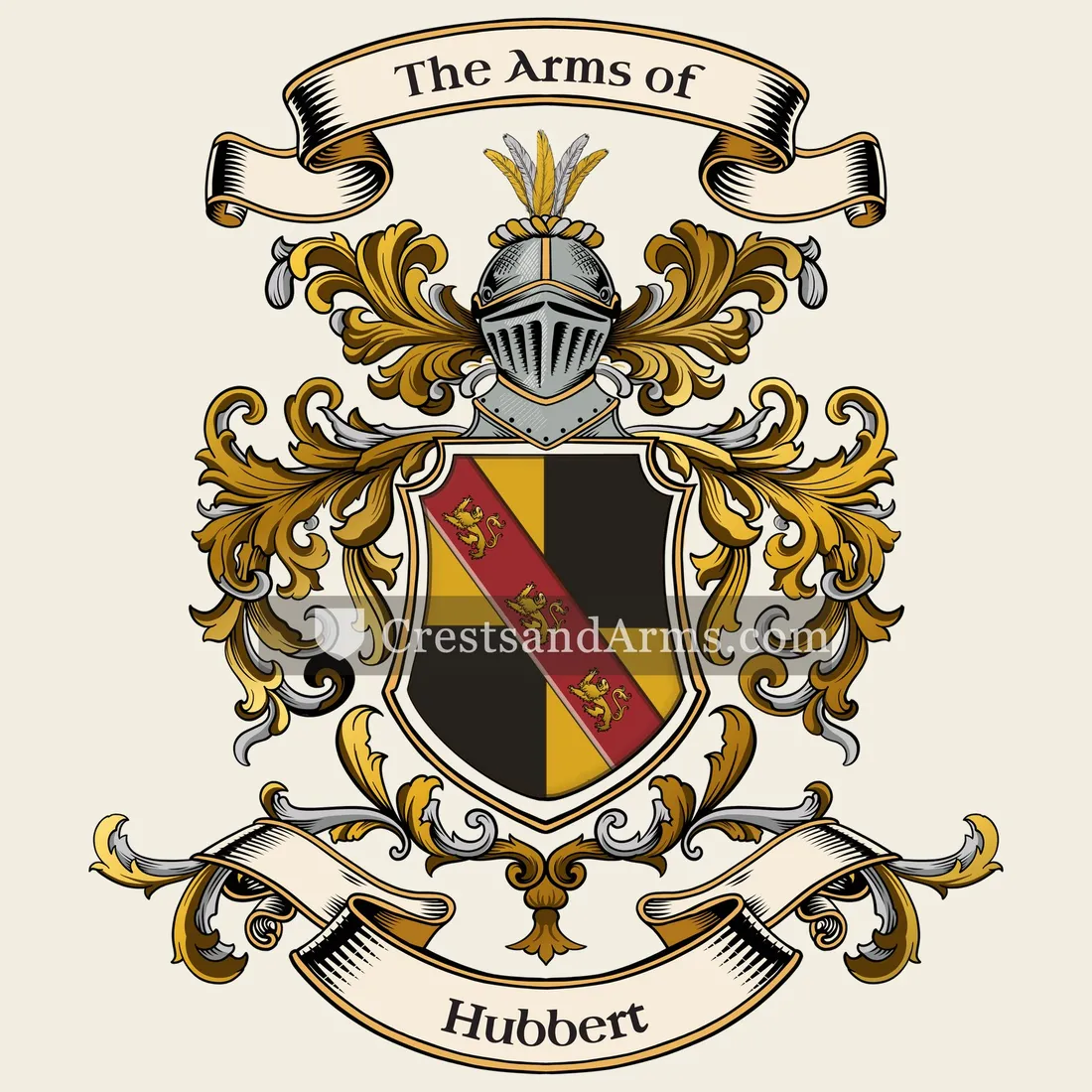
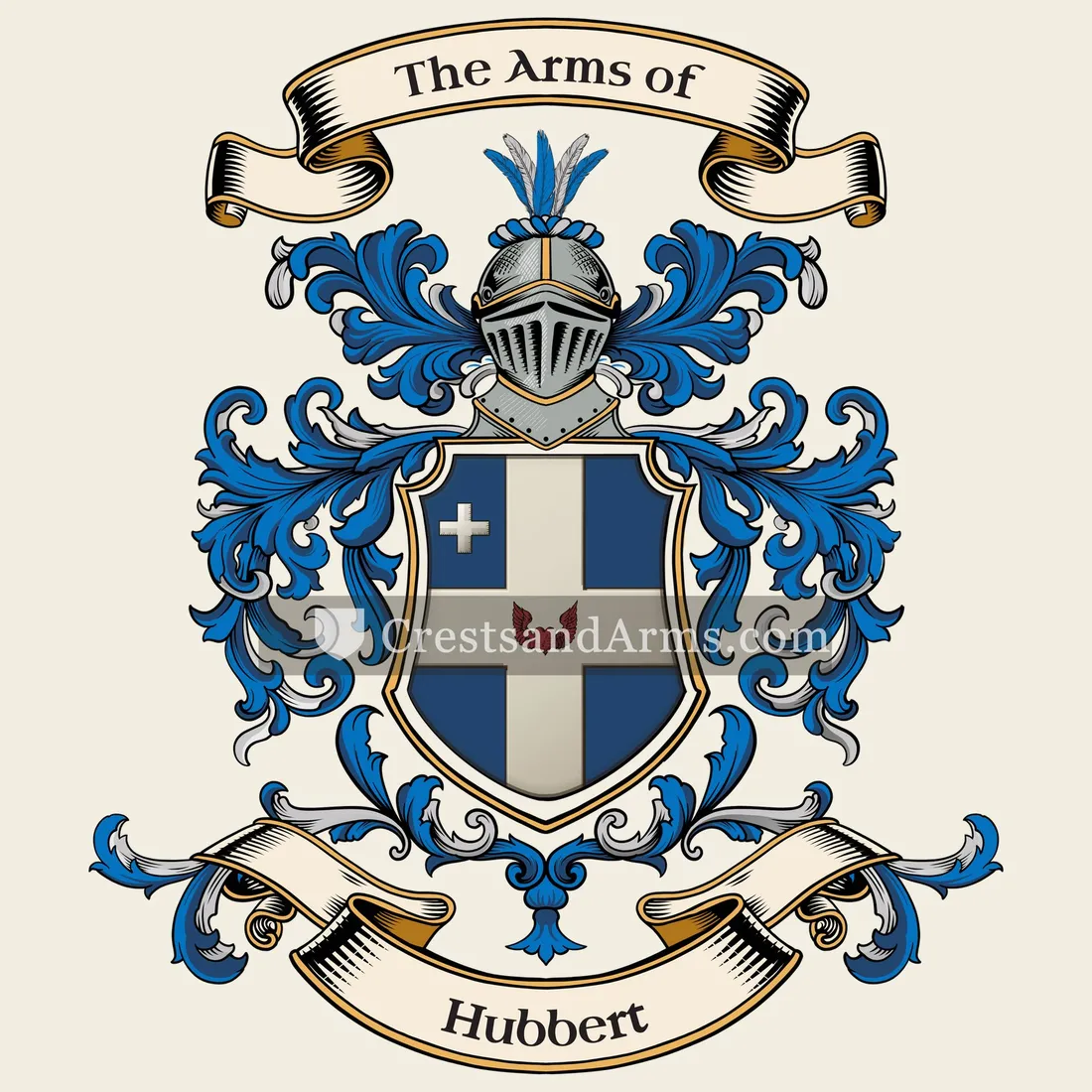
bendDefence, and the scarf of a commander
lionCourage, strength and royalty
Colours
Gold (Or)Means: Generosity
Black (Sable)Means: Constancy
Red (Gules)Means: Military strength
Historical info
Source
Sir Bernard Burke, The General Armory of England, Scotland, Ireland and Wales, London: Harrison & Sons, 1884
Blazon (the actual original written record)
“Quarterly, or and sa. on a bend gu. three lions ramp. of the first”
MiddlesexSunbury · Middlesex, c. 1620
Digital archive packCoat of arms PNG, gold border print PDF, vector SVG and the certificate of authenticity. Sent to your email in minutes.
Map of England showing where the Hubbert arms are recorded
The Hubbert arms were recorded in Middlesex, c. 1620.
Middlesex was the county around London, and City money flowed straight into it. Merchants and officials bought estates within reach of the capital, and a new estate brought a coat of arms with it.
This is where the arms were entered in the register. Families often moved to other parts of the country, so the same name can turn up in more than one region.
The body that granted and recorded arms in England in this period.
James VI and I
Sovereign of the period
James VI and I
1603–1625
Reigning in Netherlands when the Hubbert arms are first recorded.
How Arms Worked in England
English heraldry allowed arms to be shared by all legitimate descendants of the original owner. These symbols were treated as personal property that moved through the generations to all children. While the eldest son kept the original design, other family members could use the same shield without needing to change it or register their own unique versions.
Granting authority
The College of Arms in London has regulated the use of coats of arms throughout England and Wales since 1484.
How they got arms
Families typically obtained their coats of arms through a formal grant from the Crown or by proving their ancient right to them.
Where arms were recorded
All official coats of arms are recorded in the registers kept at the College of Arms, which date back to the fifteenth century.
The family's standing
Recorded among the armigerous families of Middlesex.
Origin & History of the Hubbert Family in England
The surname Hubbert is a variation of the ancient Germanic name Hubert, which translates to bright mind or bright spirit. By the time the name became established in England, it had evolved through various spellings as it moved from the continent into the British Isles. Records confirm that members of the Hubbert family were living in Middlesex by 1620, a period when the region was experiencing significant growth and social change. During the seventeenth century, families in this area were often involved in the bustling trade and agricultural life surrounding London. As the name took root in Middlesex, it became part of the local community fabric, reflecting the broader migration patterns of families who sought stability and opportunity in the English countryside. The presence of the family in this specific historical setting highlights their role in the local population during a time of transition for the English nation.
Hubbert Meaning & Related Branches
Root word
Hugubert
Derived from Germanic elements meaning bright or shining heart and mind.
This name
HubbertA surname signifying a person with a brilliant, intelligent, or spirited personality.
also spelled
Hubertt
Huberte
Hubbart
Hubberd
Hubbarde
Related arms
Hobartvariant spelling
Hoberd, or Hobertvariant spelling
Hubbardvariant spelling
Walshrecorded with Hubbert, same area
Documented Sources
J. B. Rietstap, Armorial Général, Gouda: G. B. van Goor Zonen, 1884–87
AlleFriezen, Burgerlijke Stand van Friesland (Civil Registry of Friesland)
Nationaal Archief, Registers van de Burgerlijke Stand (National Archives, Civil Registry Records)
Meertens, P.J., De betekenis van de Nederlandse familienamen (1965)
Van der Schaar, J., Woordenboek van voornamen (1964)
Digital archive packCoat of arms PNG, gold border print PDF, vector SVG and the certificate of authenticity. Sent to your email in minutes.




 cross symbolChristian faith and service
 heartSincerity, charity and true affection


 bendDefence, and the scarf of a commander
 lionCourage, strength and royalty