Map of Netherlands showing where the Huberty arms are recorded
The Huberty arms were recorded in Netherlands, c. 1815.
Arms such as these were typically recorded in Friesland.
Friesland was low, wet country on the northern coast of the Netherlands, farmed by families who had held the same land for centuries. Free landholders were unusually common there, and a free landholder could carry arms.
This is where the arms were entered in the register. Families often moved to other parts of the country, so the same name can turn up in more than one region.
Region
Friesland
First recorded
1815
Granting Authority for the Huberty Arms
Hoge Raad van Adel
Photograph made by me · CC BY-SA 3.0
The body that granted and recorded arms in Netherlands in this period.
William I of the Netherlands
Sovereign of the period
William I of the Netherlands
1815–1840
Reigning in Netherlands when the Huberty arms are first recorded.
How Arms Worked in Netherlands
In the Netherlands, coats of arms were often used by noble families and those who held specific public offices. These arms were passed down through the generations to legitimate descendants. Younger branches of a family usually kept the original design without needing to add special marks. This system ensured that the family identity remained clear and consistent over many years.
Granting authority
The Hoge Raad van Adel is the official body that regulates and manages noble titles and coats of arms in the Netherlands.
How they got arms
Families typically obtained their coats of arms through official royal grants or by proving their long-standing historical use of the symbols.
Where arms were recorded
Coats of arms are officially recorded in the registers held by the Hoge Raad van Adel, which began its work in 1814.
The family's standing
Recorded among the armigerous families of Netherlands.
Origin & History of the Huberty Family in Netherlands
The surname Huberty carries a rich history that traces back to the Germanic roots of the Low Countries. While the name is often associated with regions further south, historical records confirm that members of the family were firmly established in the northern province of Friesland by 1815. During this period, the Netherlands was undergoing significant social changes following the end of the Napoleonic era and the formation of the United Kingdom of the Netherlands. Families in Friesland often lived in close-knit agricultural communities where surnames became essential for tracking property ownership and tax obligations. The presence of the Huberty name in this region suggests that early ancestors were likely involved in the local trade or farming sectors that defined the Frisian economy at the start of the nineteenth century. As the family integrated into the local culture, they contributed to the unique linguistic and social landscape of the northern Netherlands, helping to shape the identity of the region during a time of national transition.
Coat of Arms & Family Crest Details
Symbols on this shield
cross symbolChristian faith and service
heartSincerity, charity and true affection
Colours
Blue (Azure)Means: Loyalty and truth
Silver (Argent)Means: Peace and sincerity
Red (Gules)Means: Military strength
Historical info
Source
J. B. Rietstap, Armorial Général, Gouda: G. B. van Goor Zonen, 1884–87
Blazon (the actual original written record)
“D'azur à la croix ancrée d'arg., ch. d'un coeur de gu.”
LorraineLorraine, c. 1626
Digital archive packCoat of arms PNG, gold border print PDF, vector SVG and the certificate of authenticity. Sent to your email in minutes.
Map of France showing where the Huberty arms are recorded
The Huberty arms were recorded in Lorraine, c. 1626.
Lorraine sat on the border between France and the German lands, and border country bred soldiers. Families here held small estates and served in arms, and a fighting man was exactly the sort who carried a shield of his own.
This is where the arms were entered in the register. Families often moved to other parts of the country, so the same name can turn up in more than one region.
The body that granted and recorded arms in France in this period.
Louis XIII of France
Sovereign of the period
Louis XIII of France
1617–1643
Reigning in Netherlands when the Huberty arms are first recorded.
How Arms Worked in France
In France, a coat of arms was a mark of honor that passed down through the male line to all legitimate descendants. Families often used the same shield without changes to show their shared heritage. If a branch wanted to stand out, they could add a small mark to their shield to show their specific place in the family tree.
Granting authority
The Juge d'armes de France acted as the official authority that regulated and verified coats of arms across the country.
How they got arms
Families typically inherited their arms from ancestors, though they could also receive them through royal grants or by proving their noble status.
Where arms were recorded
Coats of arms were officially recorded in the Armorial Général de France, which began its main collection in the year 1696.
The family's standing
Recorded among the armigerous families of Lorraine.
Origin & History of the Huberty Family in France
The family name Huberty finds its historical roots in the Lorraine region of northeastern France. By the year 1626, records confirm that members of the family were well established in this area. During the seventeenth century, Lorraine was a territory defined by shifting borders and frequent conflict between the French Crown and the Holy Roman Empire. Families living in this region often had to navigate complex political changes while maintaining their local ties to the land. The name itself is a variation of the Germanic name Hubert, which was popular across Western Europe due to the influence of Saint Hubert. As the family grew in Lorraine, they became part of the agricultural and social fabric of the rural villages. Their presence in the region during this era reflects the deep connections many families held to their ancestral towns despite the turbulent history of the borderlands.
Coat of Arms & Family Crest Details
Symbols on this shield
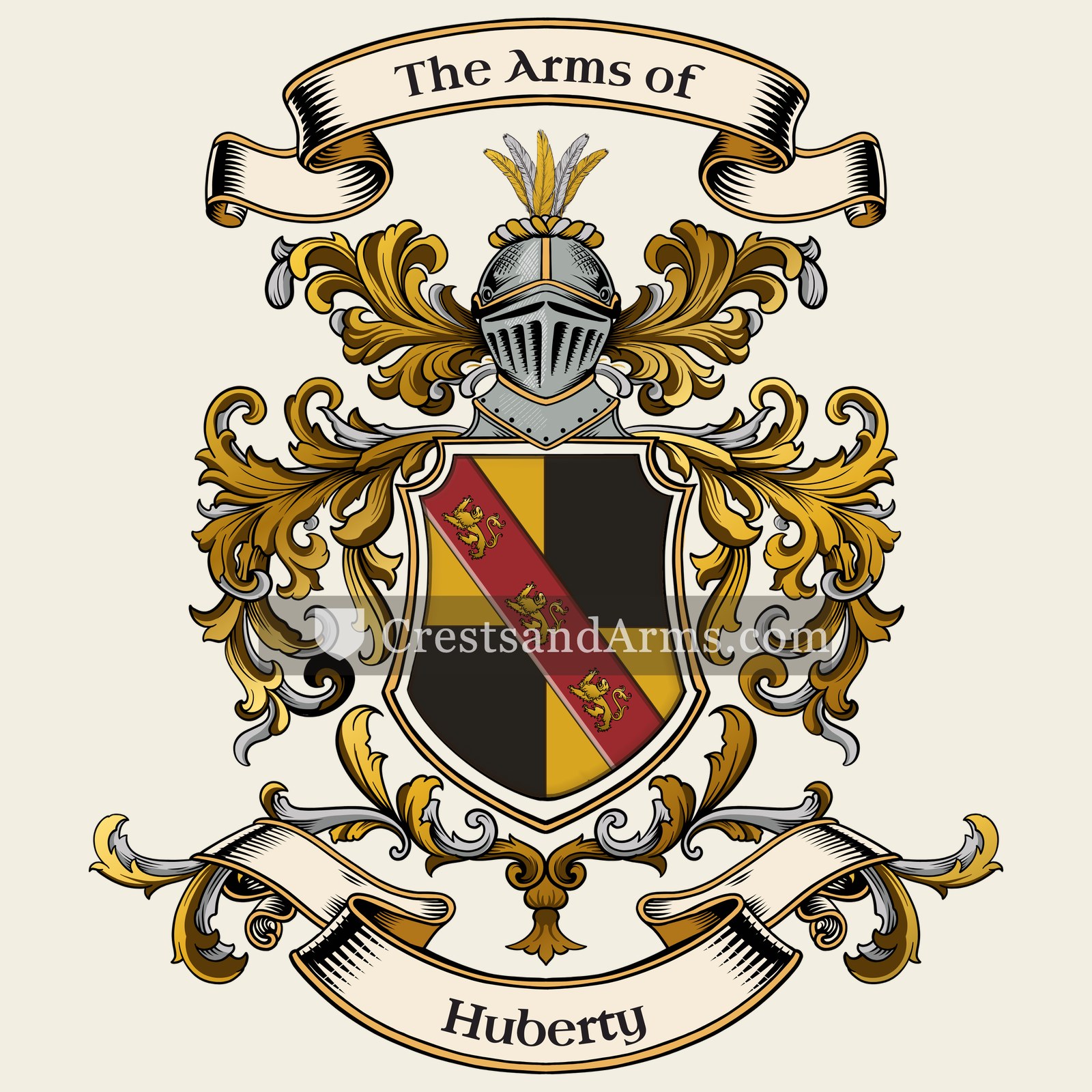
bendDefence, and the scarf of a commander
lionCourage, strength and royalty
Colours
Gold (Or)Means: Generosity
Black (Sable)Means: Constancy
Red (Gules)Means: Military strength
Historical info
Source
Sir Bernard Burke, The General Armory of England, Scotland, Ireland and Wales, London: Harrison & Sons, 1884
Blazon (the actual original written record)
“Quarterly, or and sa. on a bend gu. three lions ramp. of the first”
MiddlesexSunbury · Middlesex, c. 1620
Digital archive packCoat of arms PNG, gold border print PDF, vector SVG and the certificate of authenticity. Sent to your email in minutes.
Map of England showing where the Huberty arms are recorded
The Huberty arms were recorded in Middlesex, c. 1620.
Middlesex was the county around London, and City money flowed straight into it. Merchants and officials bought estates within reach of the capital, and a new estate brought a coat of arms with it.
This is where the arms were entered in the register. Families often moved to other parts of the country, so the same name can turn up in more than one region.
The body that granted and recorded arms in England in this period.
James VI and I
Sovereign of the period
James VI and I
1603–1625
Reigning in Netherlands when the Huberty arms are first recorded.
How Arms Worked in England
English heraldry allowed arms to be shared by all legitimate descendants of the original owner. These symbols were treated as personal property that moved through the generations to all children. While the eldest son kept the original design, other family members could use the same shield without needing to change it or register their own unique versions.
Granting authority
The College of Arms in London has regulated the use of coats of arms throughout England and Wales since 1484.
How they got arms
Families typically obtained their coats of arms through a formal grant from the Crown or by proving their ancient right to them.
Where arms were recorded
All official coats of arms are recorded in the registers kept at the College of Arms, which date back to the fifteenth century.
The family's standing
Recorded among the armigerous families of Middlesex.
Origin & History of the Huberty Family in England
The history of the Huberty name in England begins with roots that trace back to the early seventeenth century. Records indicate that members of the family were established in the county of Middlesex by 1620, a time when the region was undergoing significant social and economic shifts. The name itself is of Germanic origin, derived from the personal name Hubert, which combines the elements for mind or heart and bright. As families moved across borders during this era, they often adapted their surnames to fit the phonetic patterns of their new homes. In Middlesex, the Huberty family likely integrated into the local agricultural or merchant communities that defined the area outside of London. While the name remained relatively rare in England compared to its prevalence in continental Europe, its presence in early colonial-era records highlights the movement of families seeking new opportunities during a period of intense historical change.
Related Branches & Arms
Root word
Hugibert
Bright in mind and spirit
This name
HubertyDerived from a Germanic personal name meaning bright or shining intellect.
also spelled
Hubertt
Huberte
Hubbart
Hubberd
Hubbarde
Documented Sources
J. B. Rietstap, Armorial Général, Gouda: G. B. van Goor Zonen, 1884–87
Tresoar (Fries Historisch en Letterkundig Centrum), Burgerlijke Stand van Friesland (1811-1950)
Nationaal Archief, Registers van de Burgerlijke Stand
Meertens, P.J., De betekenis van de Nederlandse familienamen, 1950
Van der Schaar, J., Woordenboek van voornamen, 1964
Digital archive packCoat of arms PNG, gold border print PDF, vector SVG and the certificate of authenticity. Sent to your email in minutes.




 cross symbolChristian faith and service
 heartSincerity, charity and true affection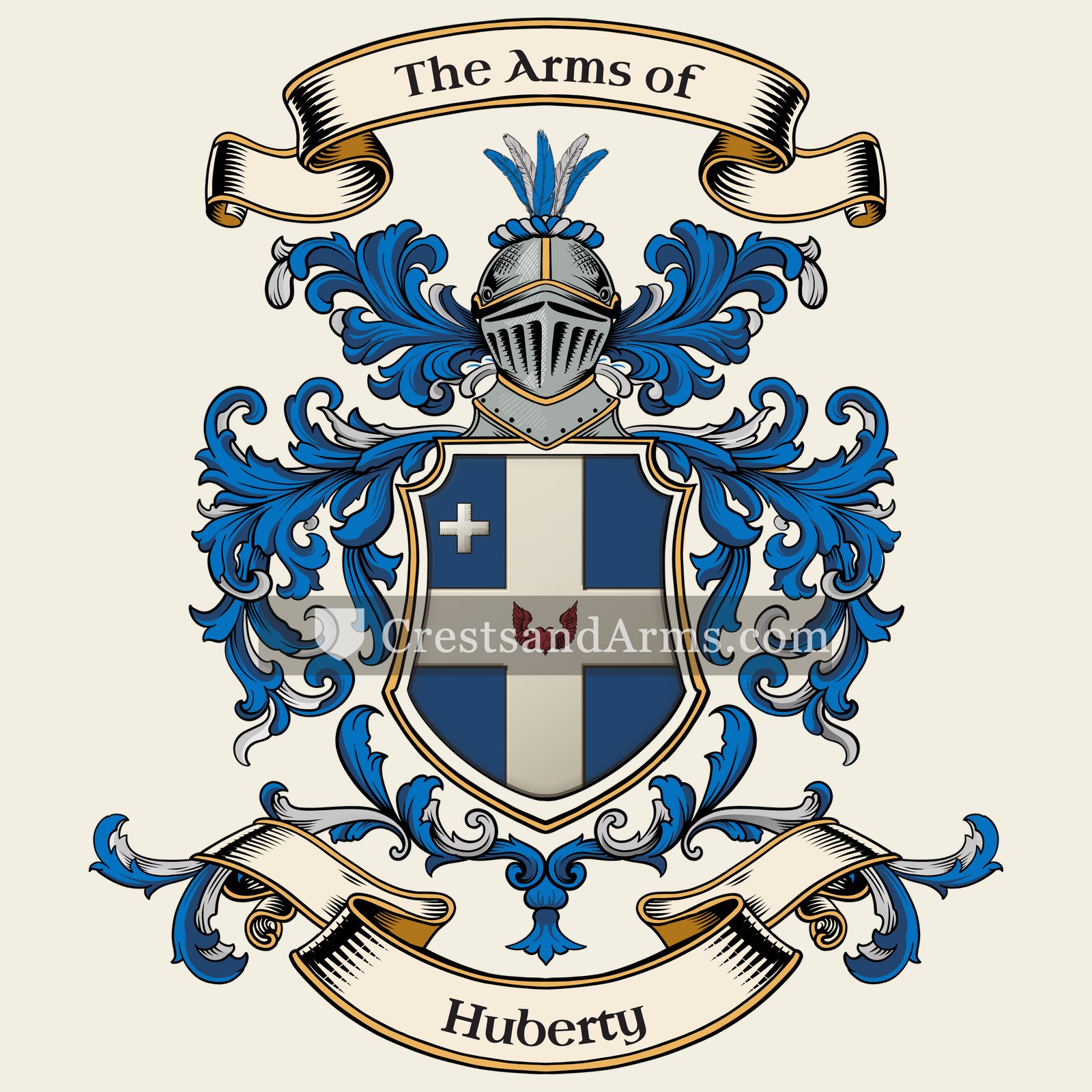


 bendDefence, and the scarf of a commander
 lionCourage, strength and royalty