Map of Denmark showing where the Huch arms are recorded
The Huch arms were recorded in Denmark, c. 1722.
Arms such as these were typically recorded in Sjaælland.
Zealand held the Danish court, the crown's offices and Copenhagen itself. Families who served the king kept estates within reach of it, and royal service was the ordinary route to a coat of arms.
This is where the arms were entered in the register. Families often moved to other parts of the country, so the same name can turn up in more than one region.
The body that granted and recorded arms in Denmark in this period.
Frederik IV of Denmark
Sovereign of the period
Frederik IV of Denmark
1699–1730
Reigning in Denmark when the Huch arms are first recorded.
How Arms Worked in Denmark
Danish heraldry during this period was closely tied to noble status and royal favor rather than being open to all citizens. Arms were typically granted by the monarch to individuals, and these symbols were then shared by all members of the noble house. If a family line died out, the right to use those specific arms ended with them.
Granting authority
The Danish royal chancery held the power to issue and regulate official coats of arms for the kingdom.
How they got arms
Families usually received their arms through a formal royal grant that confirmed their noble status and rights.
Where arms were recorded
These grants were officially recorded in the Danish Royal Chancery records starting in the sixteenth century.
The family's standing
Recorded among the armigerous families of Denmark.
Origin & History of the Huch Family in Denmark
The Huch family name has deep roots in the Danish landscape, with documented evidence placing members of the family on the island of Sjælland as early as 1722. During this period, Denmark was transitioning through a time of agricultural reform and strict social structures, meaning that families often stayed rooted in specific rural parishes for generations. The name likely emerged as a localized identifier within these tight-knit communities, where individuals were often known by their trade or their connection to a specific plot of land. As the eighteenth century progressed, the Huch family became part of the steady rhythm of Danish village life, navigating the challenges of the feudal system and the changing laws regarding land ownership. By remaining in the Sjælland region, the family contributed to the local history of the area, leaving behind traces in church registers and census records that document their growth and movement across the Danish countryside.
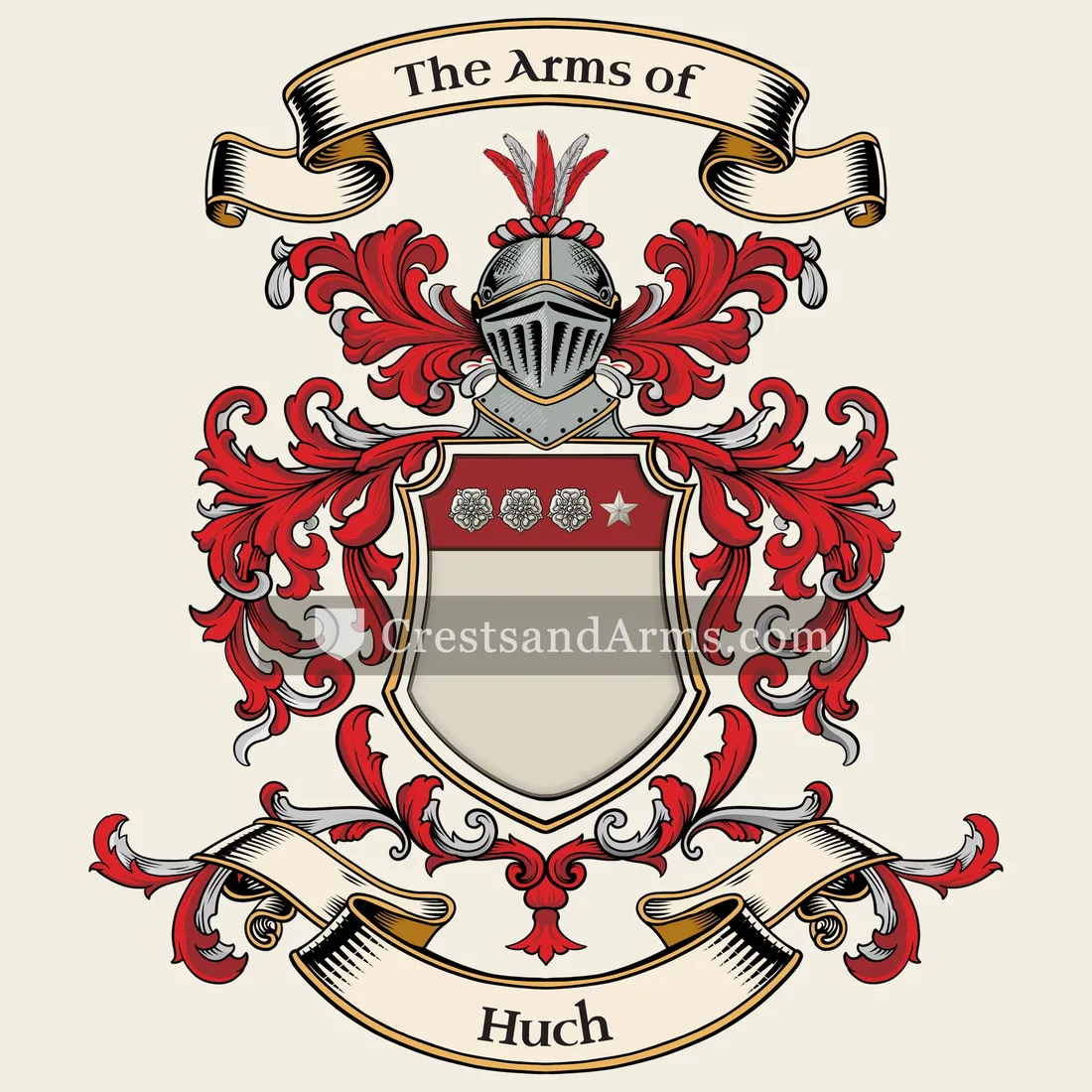
Meaning of the Huch family crest colors & symbols
Symbols on this shield
chiefAuthority, wisdom and dominion
roseThe seventh son, and beauty with grace
mulletThe third son, and a divine quality from above
Colours
Silver (Argent)Means: Peace and sincerity
Red (Gules)Means: Military strength
Historical info
Source
J. B. Rietstap, Armorial Général, Gouda: G. B. van Goor Zonen, 1884–87
Blazon (the actual original written record)
“D'arg. à deux pointes accostées de gu., acc. de trois roses de sept feuilles du même, bout. d'or, rangées en chef; au chef de gu., ch. d'une étoile (7) d'arg. Cq. cour. C.: un chamois iss. au nat., entre un vol, de gu. et d'arg. D.: ICH TRAW MEIN STERN.”
BavariaBavaria, c. 1765
Digital archive packCoat of arms PNG, gold border print PDF, vector SVG and the certificate of authenticity. Sent to your email in minutes.
Map of Germany showing where the Huch arms are recorded
The Huch arms were recorded in Bavaria, c. 1765.
Bavaria was a country of old landed families and walled market towns. Estates passed down the same line for centuries, and both the landowners and the leading townsmen kept arms, which is why so many Bavarian names sit in the registers.
This is where the arms were entered in the register. Families often moved to other parts of the country, so the same name can turn up in more than one region.
The body that granted and recorded arms in Germany in this period.
Francis I, Holy Roman Emperor
Sovereign of the period
Francis I, Holy Roman Emperor
1745–1765
Reigning in Denmark when the Huch arms are first recorded.
How Arms Worked in Germany
In the Holy Roman Empire, coats of arms were often granted to individuals by the Emperor or his representatives. These arms were then passed down through the generations to all legitimate descendants of the original holder. Younger branches of a family usually kept the same shield design without needing to change it, as the arms belonged to the entire lineage.
Granting authority
The Holy Roman Emperor held the sole power to grant new coats of arms throughout his vast imperial territories.
How they got arms
Families typically obtained their coats of arms through a formal imperial grant or by proving their noble status to the authorities.
Where arms were recorded
These grants were officially recorded in the Imperial Chancery registers, which began keeping formal records of such honors during the Middle Ages.
The family's standing
Recorded among the armigerous families of Bavaria.
Origin & History of the Huch Family in Germany
The family name Huch has deep roots in the southern German region of Bavaria, where records confirm members of the family were established by 1765. During the eighteenth century, Bavaria was a place of significant transition, and families like the Huchs were often tied to the local agricultural or craft-based economies that defined village life. The name itself likely originated as a short, descriptive nickname or a localized variation of a personal name common in the Germanic dialects of the time. As families in this era rarely traveled far from their home parishes, the Huch name became firmly embedded in the social fabric of the Bavarian countryside. These early generations lived through a period of strict record-keeping by local churches, which tracked births, marriages, and deaths to maintain order within the community. By studying these regional patterns, we can see how the Huch family helped shape the small-town history of southern Germany long before the modern era.
Huch Meaning & Related Branches
Root word
Hugo
Derived from the Germanic element hug meaning heart, mind, or spirit.
This name
HuchA patronymic surname indicating descent from a person named Hugo, signifying a thoughtful or intelligent individual.
also spelled
Hauck
Howk
Hauk
Documented Sources
J. B. Rietstap, Armorial Général, Gouda: G. B. van Goor Zonen, 1884–87
Rigsarkivet (Danish National Archives), Kirkebøger (Church Registers for the Diocese of Sjælland)
Rigsarkivet (Danish National Archives), Folketællinger (Census Records for the Kingdom of Denmark)
Trap, J.P., Statistisk-topographisk Beskrivelse af Kongeriget Danmark, 1858
Digital archive packCoat of arms PNG, gold border print PDF, vector SVG and the certificate of authenticity. Sent to your email in minutes.


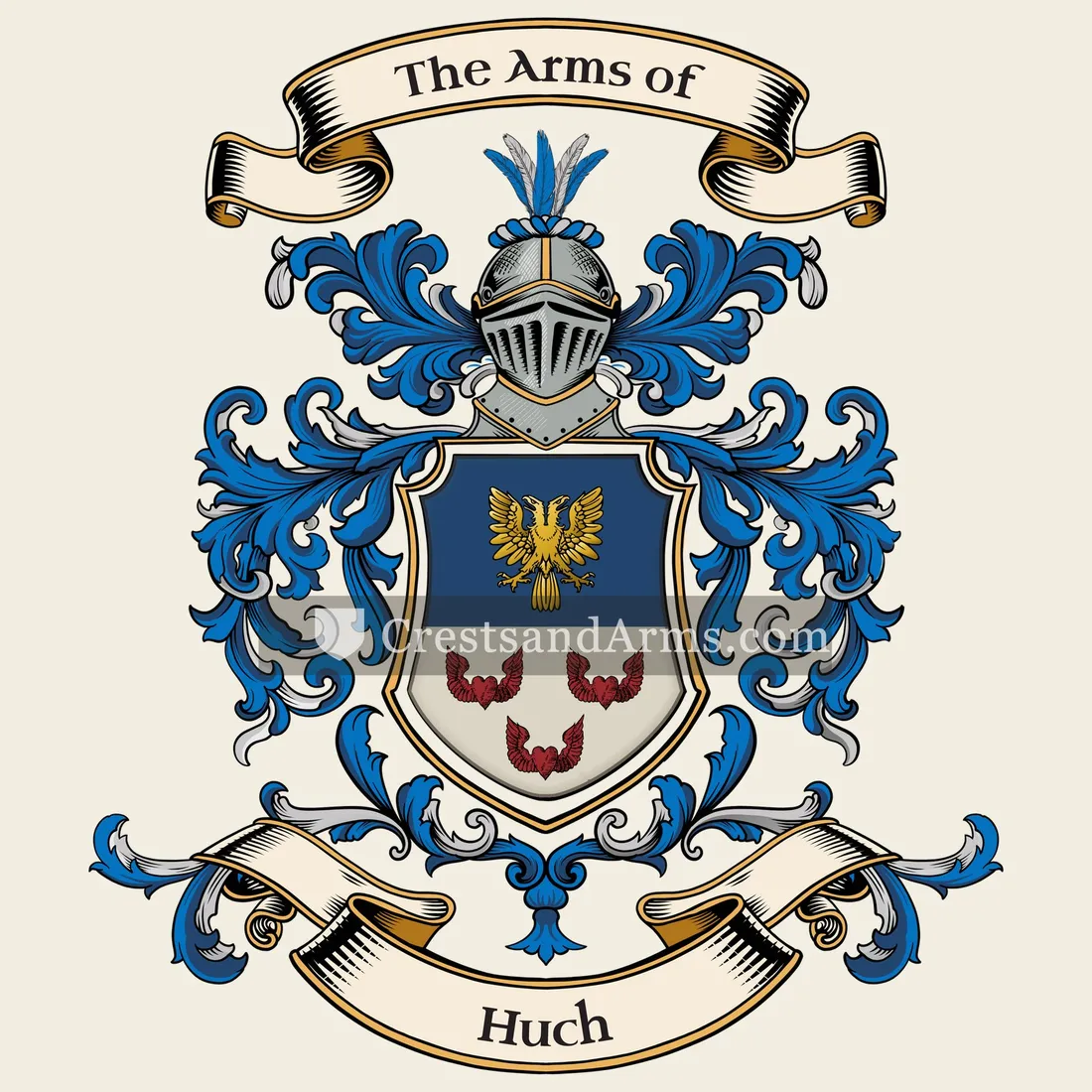
 eagleNobility, strength and a keen mind
 heartSincerity, charity and true affection
 eagleNobility, strength and a keen mind
 heartSincerity, charity and true affection


 chiefAuthority, wisdom and dominion
 roseThe seventh son, and beauty with grace
 mulletThe third son, and a divine quality from above