Map of Russia showing where the Huck arms are recorded
The Huck arms were recorded in Esthonie, c. 1784.
Arms such as these were typically recorded in Moscow.
Moscow held the Russian court, and rank there came from service rather than land. Families who served the Tsar were entered in the registers of nobility, and that entry is where their arms are recorded.
This is where the arms were entered in the register. Families often moved to other parts of the country, so the same name can turn up in more than one region.
The body that granted and recorded arms in Russia in this period.
Catherine II of Russia
Sovereign of the period
Catherine II of Russia
1762–1796
Reigning in Russia when the Huck arms are first recorded.
How Arms Worked in Russia
Russian heraldry was strictly tied to the nobility and the state service system. Families proved their ancient status or earned new rank to receive an official grant from the Tsar. These symbols were then inherited by all legitimate children of the noble line. If a family lacked proof of their status, they were often excluded from the official records entirely.
Granting authority
The Herald Master's Office acted as the central state body that strictly regulated and verified all noble heraldic symbols.
How they got arms
Families typically received their arms through a formal state grant or by proving their noble status to the government authorities.
Where arms were recorded
All approved coats of arms were officially recorded in the General Armorial of the Noble Families of the Russian Empire starting in 1797.
The family's standing
Recorded among the armigerous families of Russia.
Origin & History of the Huck Family in Russia
The history of the Huck family in Russia begins with their documented presence in Moscow by 1784, a time when the city was a growing center for international trade and professional expertise. During the late 18th century, many families of Germanic or Central European origin moved to the Russian Empire to serve as merchants, skilled craftsmen, or educators under the invitation of the imperial government. The name Huck likely arrived through these migration patterns, as individuals sought new economic opportunities in the rapidly modernizing Russian capital. Once settled in Moscow, these early family members integrated into the local social fabric, often working within the city’s specialized guilds or administrative sectors. Their presence in the 1780s suggests they were part of a wider movement of European families who helped shape the urban life and commercial landscape of Moscow during the reign of Catherine the Great.
Meaning of the Huck family crest colors & symbols
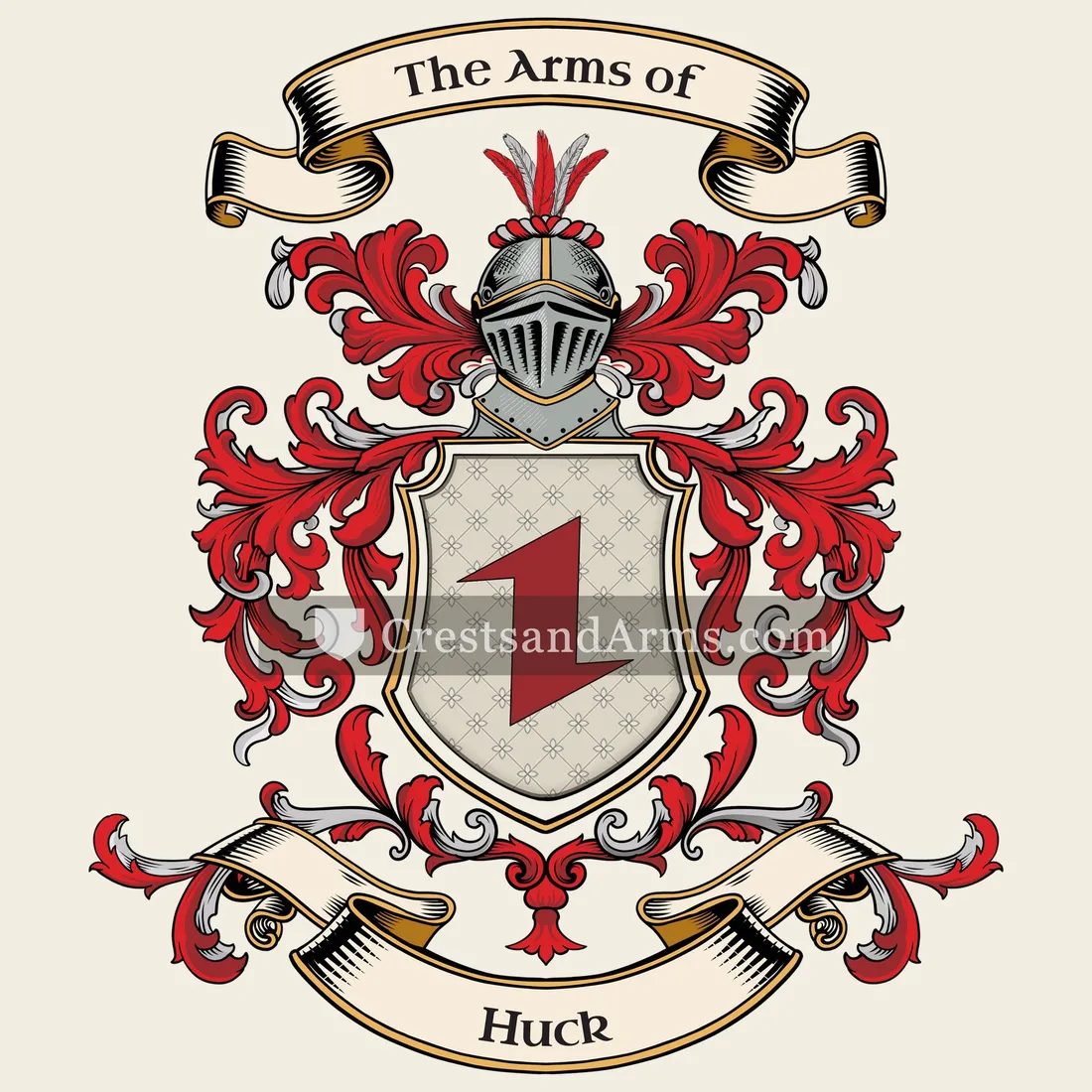
Symbols on this shield
cramponFirm hold on what has been gained
Colours
Silver (Argent)Means: Peace and sincerity
Red (Gules)Means: Military strength
Historical info
Source
J. B. Rietstap, Armorial Général, Gouda: G. B. van Goor Zonen, 1884–87
Blazon (the actual original written record)
“D'arg. à un crampon de gu., croisé d'une traverse du même sur le milieu du fût. C.: un vol.”
WestphaliaWestphalia, c. 1765
Digital archive packCoat of arms PNG, gold border print PDF, vector SVG and the certificate of authenticity. Sent to your email in minutes.
Map of Germany showing where the Huck arms are recorded
The Huck arms were recorded in Westphalia, c. 1765.
Westphalia was a land of small estates and fortified farmhouses in western Germany. Its families were numerous and not especially rich, but each held its own ground, and holding ground was what brought arms.
This is where the arms were entered in the register. Families often moved to other parts of the country, so the same name can turn up in more than one region.
The body that granted and recorded arms in Germany in this period.
Francis I, Holy Roman Emperor
Sovereign of the period
Francis I, Holy Roman Emperor
1745–1765
Reigning in Russia when the Huck arms are first recorded.
How Arms Worked in Germany
In the Holy Roman Empire, coats of arms were often granted to individuals by the Emperor or his representatives. These arms were then passed down through the generations to all legitimate descendants of the original holder. Younger branches of a family usually kept the same shield design without needing to change it, as the arms belonged to the entire lineage.
Granting authority
The Holy Roman Emperor held the sole power to grant new coats of arms throughout his vast imperial territories.
How they got arms
Families typically obtained their coats of arms through a formal imperial grant or by proving their noble status to the authorities.
Where arms were recorded
These grants were officially recorded in the Imperial Chancery registers, which began keeping formal records of such honors during the Middle Ages.
The family's standing
Recorded among the armigerous families of Westphalia.
Origin & History of the Huck Family in Germany
The surname Huck is deeply rooted in the historical landscape of Westphalia, a region in northwestern Germany known for its dense forests and strong agricultural traditions. Linguists generally categorize the name as a patronymic or a nickname derived from the Middle Low German word "hucke," which often referred to a person with a hunched posture or someone who carried a heavy load. By the mid-18th century, families bearing this name were well-established members of the local community, living as independent farmers or skilled laborers within the rigid social structure of the Holy Roman Empire. The presence of the Huck family in Westphalia by 1765 reflects a time when surnames were becoming permanent identifiers for tax records and church registries. During this era, families were often tied to specific plots of land or village parishes, meaning the name Huck likely evolved alongside the development of local farming villages in the Westphalian countryside.
Huck Meaning & Related Branches
Root word
Hucke
A Middle Low German term for a hook or a cloak.
This name
HuckA topographic name for someone living near a hook-shaped piece of land or a nickname for a cloak wearer.
also spelled
Huck
Heek
Documented Sources
J. B. Rietstap, Armorial Général, Gouda: G. B. van Goor Zonen, 1884–87
Amburger, Erik, Die ständige diplomatische Vertretung der Mächte in Moskau, 1966
Kappeler, Andreas, Rußland als Vielvölkerreich: Entstehung, Geschichte, Zerfall, 1992
Russian State Archive of Ancient Acts (RGADA), Fond 16, Records of the Moscow Police and Foreigner Registration
Digital archive packCoat of arms PNG, gold border print PDF, vector SVG and the certificate of authenticity. Sent to your email in minutes.


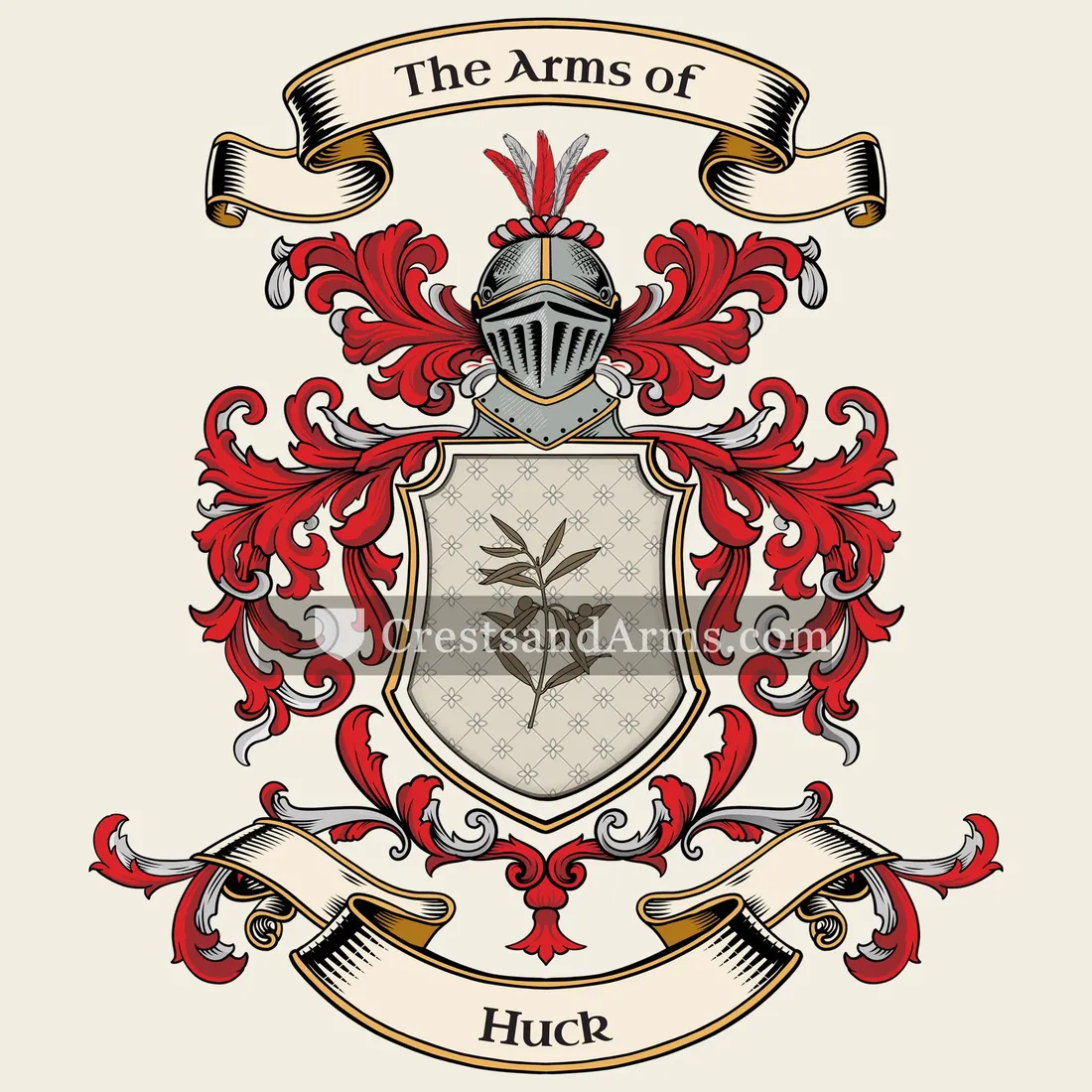
 branchPeace, and new growth
 branchPeace, and new growth


 cramponFirm hold on what has been gained