A record of documented arms, meaning and origin, researched for the Huebner family lines. Documented in 2 countries.
Reg. 3456 · German, G–I
Coat of Arms & Family Crest Details
Symbols on this shield
fessThe military belt, and readiness to serve
mulletThe third son, and a divine quality from above
Colours
Red (Gules)Means: Military strength
Silver (Argent)Means: Peace and sincerity
Historical info
Source
J. B. Rietstap, Armorial Général, Gouda: G. B. van Goor Zonen, 1884–87
Blazon (the actual original written record)
“Coupé: au 1 de gu. à trois étoiles d'arg.; au 2 d'arg. à deux fasces de gu. Cq. cour. C.: un chevalier, arm. de toutes pièces, le casque panaché, monté sur un cheval galopant d'arg., caparaçonné de gu., bridé de sa.; entre un vol, coupé alt. d'arg. et de gu.”
SaxonyAnhalt · Saxony, c. 1765
Digital archive packCoat of arms PNG, gold border print PDF, vector SVG and the certificate of authenticity. Sent to your email in minutes.
Map of Germany showing where the Huebner arms are recorded
The Huebner arms were recorded in Saxony, c. 1765.
Saxony had mines, trade and old landed families all at once. Silver made some fortunes and land held others, and both sorts of family kept arms, which is why Saxon names appear so often in the registers.
This is where the arms were entered in the register. Families often moved to other parts of the country, so the same name can turn up in more than one region.
The body that granted and recorded arms in Germany in this period.
Francis I, Holy Roman Emperor
Sovereign of the period
Francis I, Holy Roman Emperor
1745–1765
Reigning in Germany when the Huebner arms are first recorded.
How Arms Worked in Germany
In the Holy Roman Empire, coats of arms were often granted to individuals by the Emperor or his representatives. These arms were then passed down through the generations to all legitimate descendants of the original holder. Younger branches of a family usually kept the same shield design without needing to change it, as the arms belonged to the entire lineage.
Granting authority
The Holy Roman Emperor held the sole power to grant new coats of arms throughout his vast imperial territories.
How they got arms
Families typically obtained their coats of arms through a formal imperial grant or by proving their noble status to the authorities.
Where arms were recorded
These grants were officially recorded in the Imperial Chancery registers, which began keeping formal records of such honors during the Middle Ages.
The family's standing
Recorded among the armigerous families of Saxony.
Origin & History of the Huebner Family in Germany
The surname Huebner originated in the German-speaking regions of Central Europe as a status-based occupational name. It is derived from the Middle High German word "huobe," which referred to a specific unit of land that was large enough to support a single family. A "Huebner" was therefore a farmer who held and cultivated this land, often enjoying a higher social standing than a simple laborer because they were independent landowners. By the time your ancestors were documented in Saxony in 1765, the name had been established for centuries as a marker of agricultural stability and community involvement. As the population grew and people began to move from rural villages into expanding towns, the name transitioned from a description of a person’s job into a permanent family identifier passed down through generations. This history reflects the deep connection between the German people and the land they worked during the transition from the medieval period to the early modern era.
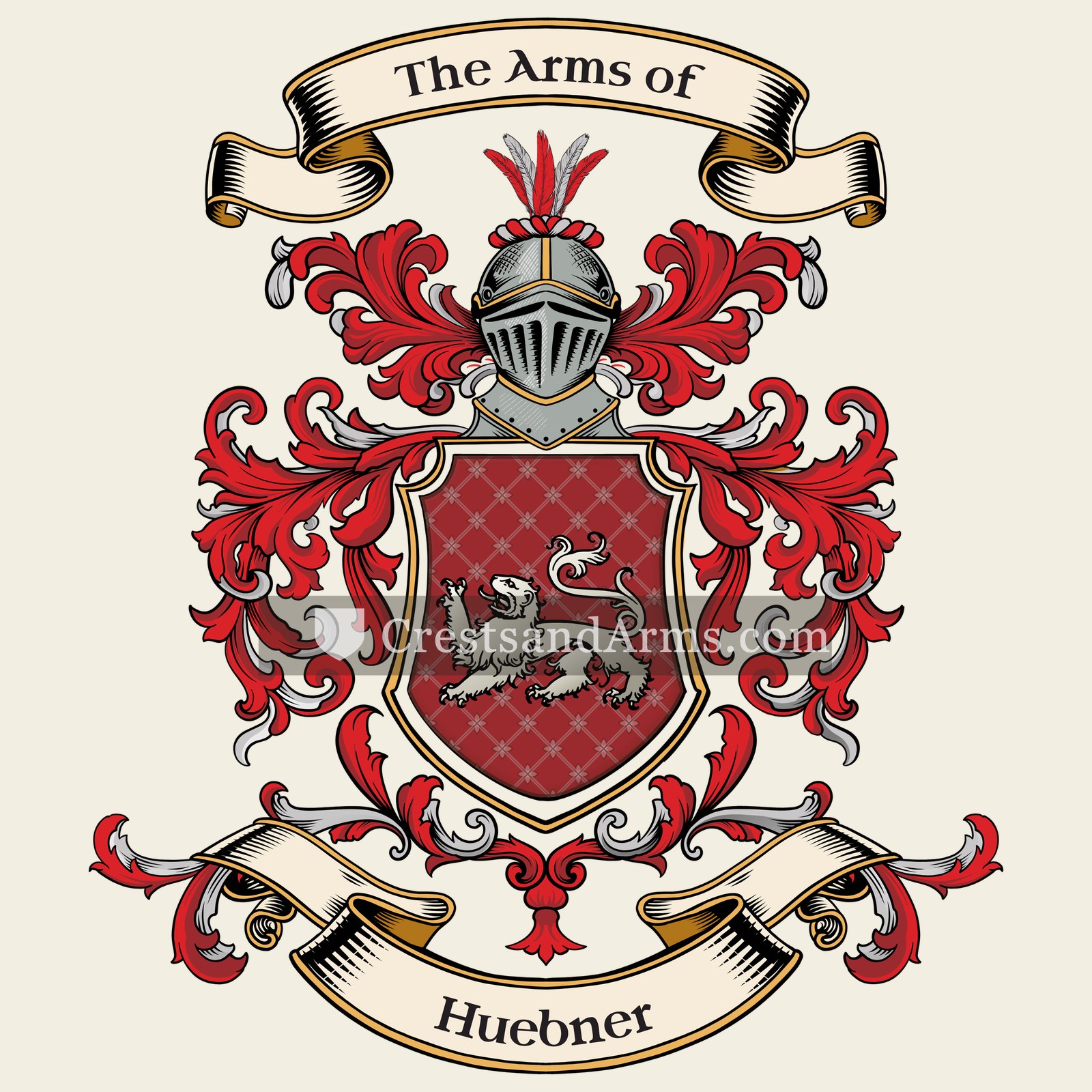
Coat of Arms & Family Crest Details
Symbols on this shield
lionCourage, strength and royalty
Colours
Red (Gules)Means: Military strength
Silver (Argent)Means: Peace and sincerity
Historical info
Source
J. B. Rietstap, Armorial Général, Gouda: G. B. van Goor Zonen, 1884–87
Blazon (the actual original written record)
“De gu. au lion d'arg., tenant de ses pattes un chicot au nat., en pal. Cq. cour. C.: le lion, iss. L. d'arg. et de gu. T.: deux sauvages. D.: TENACEM PROPOSITI.”
Austriac. 1854
Digital archive packCoat of arms PNG, gold border print PDF, vector SVG and the certificate of authenticity. Sent to your email in minutes.
Map of Austria showing where the Huebner arms are recorded
The Huebner arms were recorded in Austria, c. 1854.
Arms such as these were typically recorded in Tyrol.
Tyrol was mountain country in western Austria, where the valleys were held by families who had been there a very long time. Old tenure counted for more than money, and old families carried arms.
This is where the arms were entered in the register. Families often moved to other parts of the country, so the same name can turn up in more than one region.
Region
Tyrol
First recorded
1854
Granting Authority for the Huebner Arms
Imperial and Royal chancery
Sodacan · CC BY-SA 3.0
The body that granted and recorded arms in Austria in this period.
Franz Joseph I of Austria
Sovereign of the period
Franz Joseph I of Austria
1848–1916
Reigning in Germany when the Huebner arms are first recorded.
How Arms Worked in Austria
Austrian coats of arms were often linked directly to noble titles granted by the Emperor. These symbols belonged to the entire family line rather than just one individual. When a family grew, new branches kept the original design without needing to change it. This system allowed all members of a noble house to share the same identity across many generations.
Granting authority
The Imperial and Royal chancery managed all heraldic matters and controlled the official granting of arms throughout the Austrian lands.
How they got arms
Families typically received their arms through a formal imperial decree that often accompanied the elevation of a person to noble status.
Where arms were recorded
Official records of these grants were kept in the Imperial Register of Nobility which began its formal documentation process in 1453.
The family's standing
Recorded among the armigerous families of Austria.
Origin & History of the Huebner Family in Austria
The surname Huebner is rooted in the medieval German word *Hübner*, which historically referred to a farmer who owned a specific size of land known as a *Hufe*. In the mountainous region of Tyrol, this name identified families who were essential to the local agricultural economy. By the time members of the family were documented in Tyrol in 1854, the name had long been associated with independent landowners who held status within their village communities. These families often played a vital role in managing the rugged alpine terrain, which required both physical endurance and a deep knowledge of the land. As the family settled into the social structure of the Austrian Empire, the name evolved from a simple description of a farmer’s landholding into a permanent family identity passed down through generations. This history reflects the transition of rural families from being defined by their work to being recognized by their established lineage within the Austrian landscape.
Huebner Meaning & Related Branches
Root word
Hübner
A tenant farmer who holds a hide of land.
This name
HuebnerDerived from a Middle High German term for a small-scale farmer or landholder.
also spelled
Huebner
Documented Sources
J. B. Rietstap, Armorial Général, Gouda: G. B. van Goor Zonen, 1884–87
Bahlow, Hans, Deutsches Namenlexikon: Familien- und Vornamen nach Ursprung und Sinn erklärt, 1967
Heintze, Albert, Die deutschen Familien-Namen: geschichtlich, geographisch, sprachlich, 1903
Sächsisches Staatsarchiv, Kirchenbücher der evangelisch-lutherischen Landeskirche Sachsens, 1765
Digital archive packCoat of arms PNG, gold border print PDF, vector SVG and the certificate of authenticity. Sent to your email in minutes.


 fessThe military belt, and readiness to serve
 mulletThe third son, and a divine quality from above
 fessThe military belt, and readiness to serve
 mulletThe third son, and a divine quality from above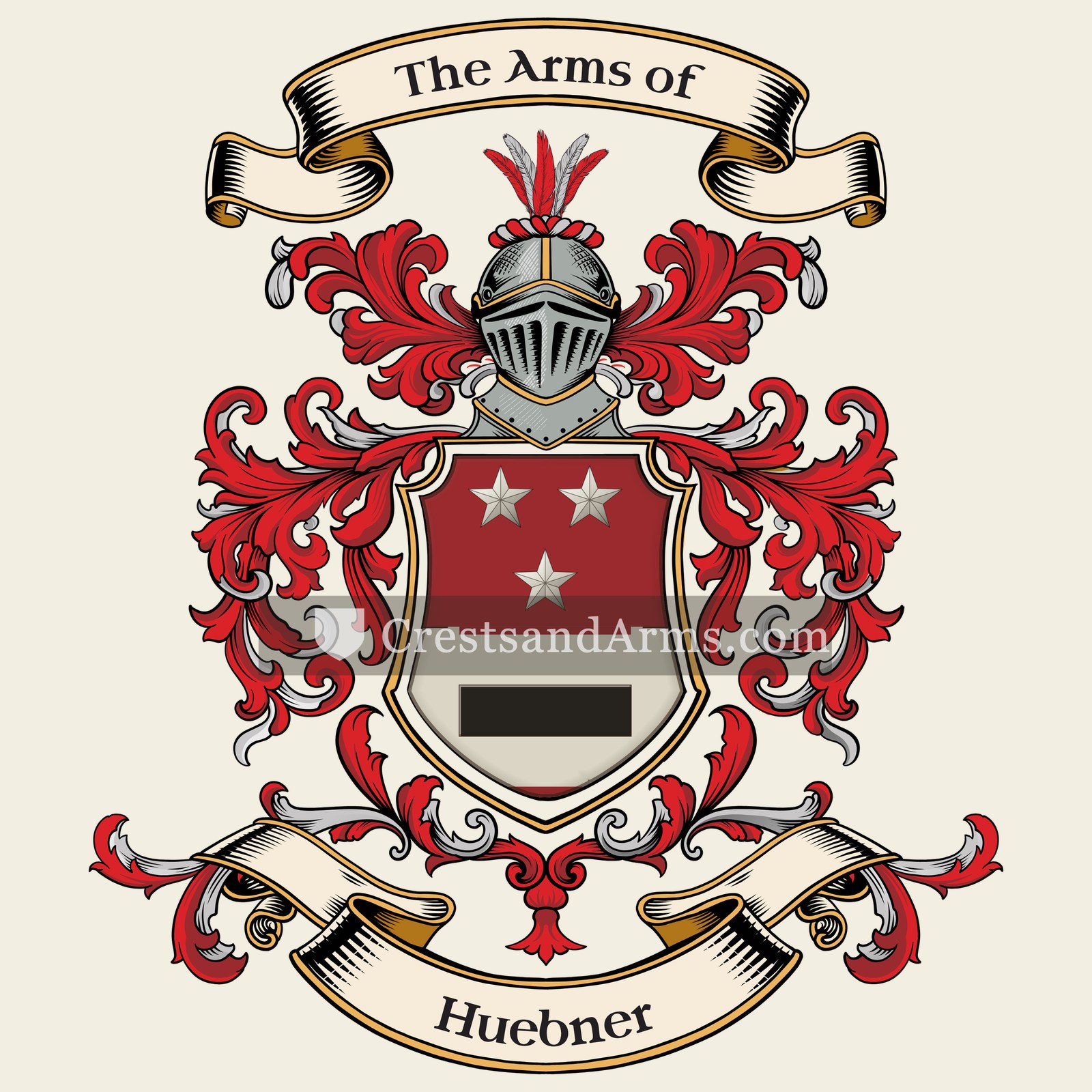


 lionCourage, strength and royalty