A record of documented arms, meaning and origin, researched for the Huth family lines. Documented in 2 countries.
Reg. 0034 · German, G–I
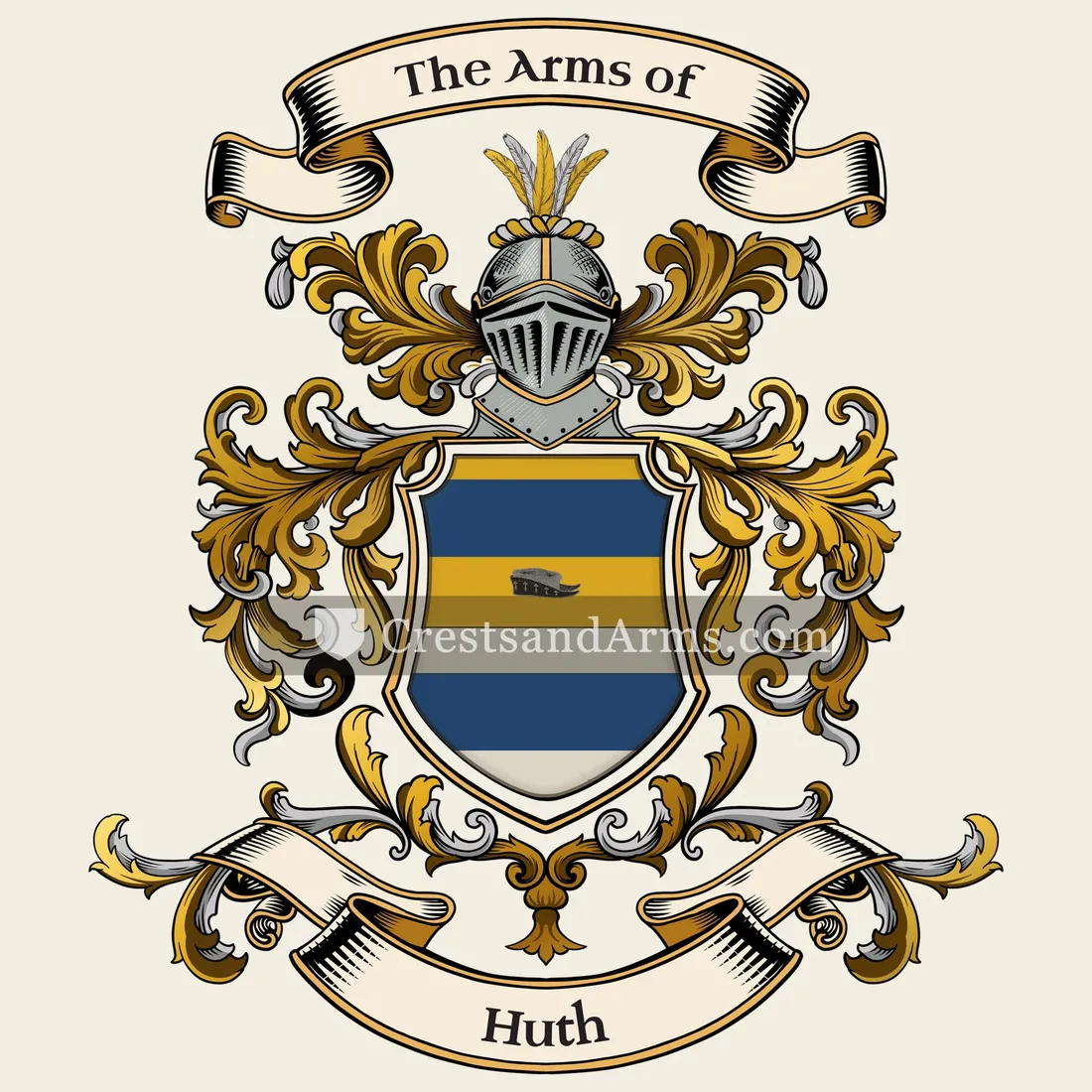
Meaning of the Huth family crest colors & symbols
Symbols on this shield
hat or capDignity, and the honour of office
Colours
Gold (Or)Means: Generosity
Silver (Argent)Means: Peace and sincerity
Blue (Azure)Means: Loyalty and truth
Black (Sable)Means: Constancy
Historical info
Source
J. B. Rietstap, Armorial Général, Gouda: G. B. van Goor Zonen, 1884–87
Blazon (the actual original written record)
“Coupé: au 1 d'or à trois chapeaux coniques de sa.; au 2 d'arg. à deux barres d'azur. C.: un buste d'homme de profil, hab. d'arg., coiffé d'un chapeau albanais de sa., retr. d'arg. L.: à dextre d'or et d'azur, à sen. d'or et de sa.”
GermanyFrancfort s, c. 1765
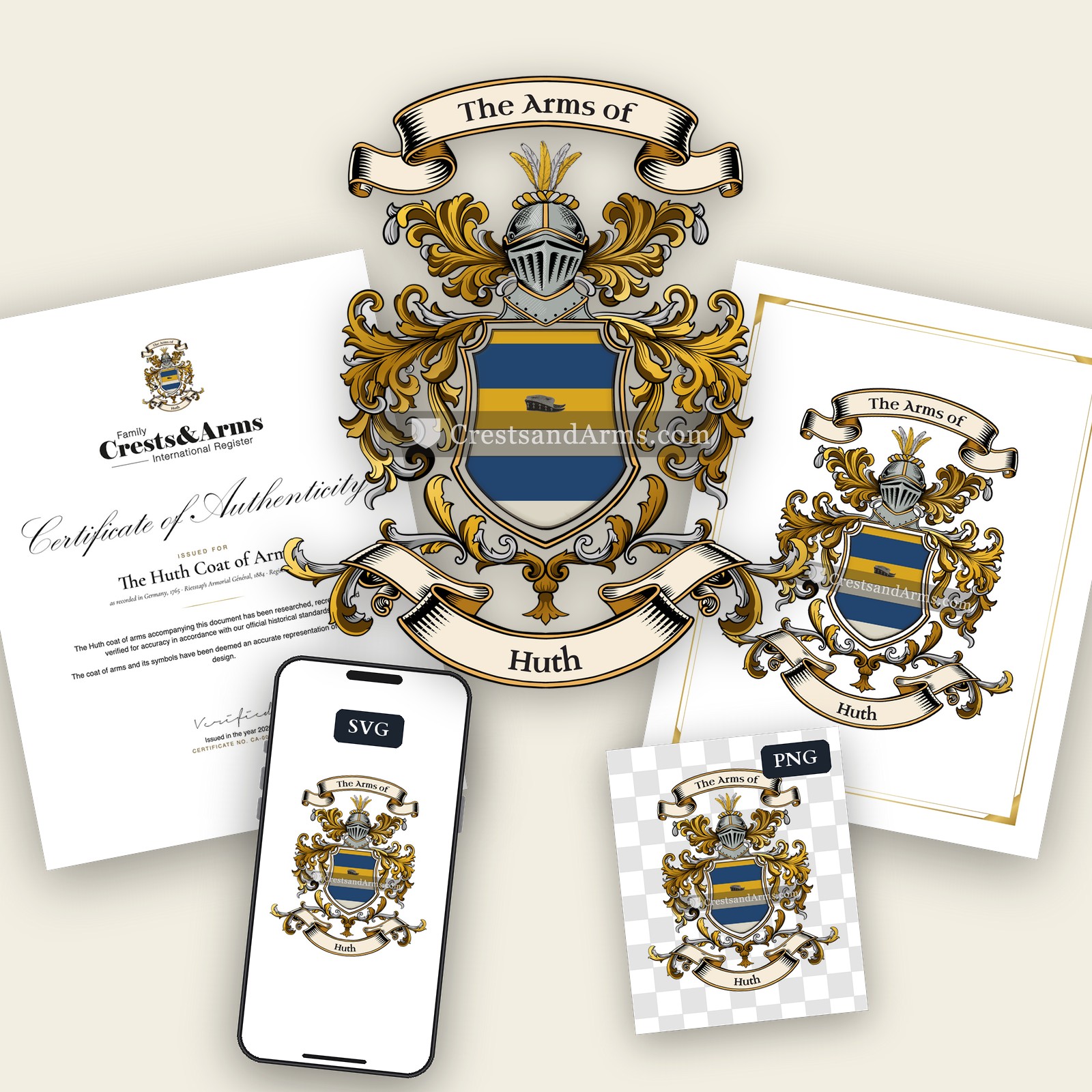
Digital archive packCoat of arms PNG, gold border print PDF, vector SVG and the certificate of authenticity. Sent to your email in minutes.
Map of Germany showing where the Huth arms are recorded
The Huth arms were recorded in Francfort s, c. 1765.
This is where the arms were entered in the register. Families often moved to other parts of the country, so the same name can turn up in more than one region.
The body that granted and recorded arms in Germany in this period.
Francis I, Holy Roman Emperor
Sovereign of the period
Francis I, Holy Roman Emperor
1745–1765
Reigning in Germany when the Huth arms are first recorded.
How Arms Worked in Germany
In the Holy Roman Empire, coats of arms were often granted to individuals by the Emperor or his representatives. These arms were then passed down through the generations to all legitimate descendants of the original holder. Younger branches of a family usually kept the same shield design without needing to change it, as the arms belonged to the entire lineage.
Granting authority
The Holy Roman Emperor held the sole power to grant new coats of arms throughout his vast imperial territories.
How they got arms
Families typically obtained their coats of arms through a formal imperial grant or by proving their noble status to the authorities.
Where arms were recorded
These grants were officially recorded in the Imperial Chancery registers, which began keeping formal records of such honors during the Middle Ages.
The family's standing
Recorded among the armigerous families of Germany.
Origin & History of the Huth Family in Germany
The surname Huth is deeply rooted in the German language and likely originated as a descriptive nickname or a reference to a specific occupation. In Middle High German, the word "huot" referred to a hat or a protective covering, suggesting that early ancestors may have been skilled hatmakers or merchants who sold headwear in bustling market towns. By the mid-18th century, the family had established a notable presence in the city of Frankfurt am Main, a major hub for trade and finance in the Holy Roman Empire. Records confirm that members of the Huth family were living and working in Frankfurt by 1765, where they contributed to the city's vibrant urban life. During this period, families like the Huths often moved between growing German cities to pursue opportunities in craftsmanship and commerce, helping to shape the social and economic landscape of the region.
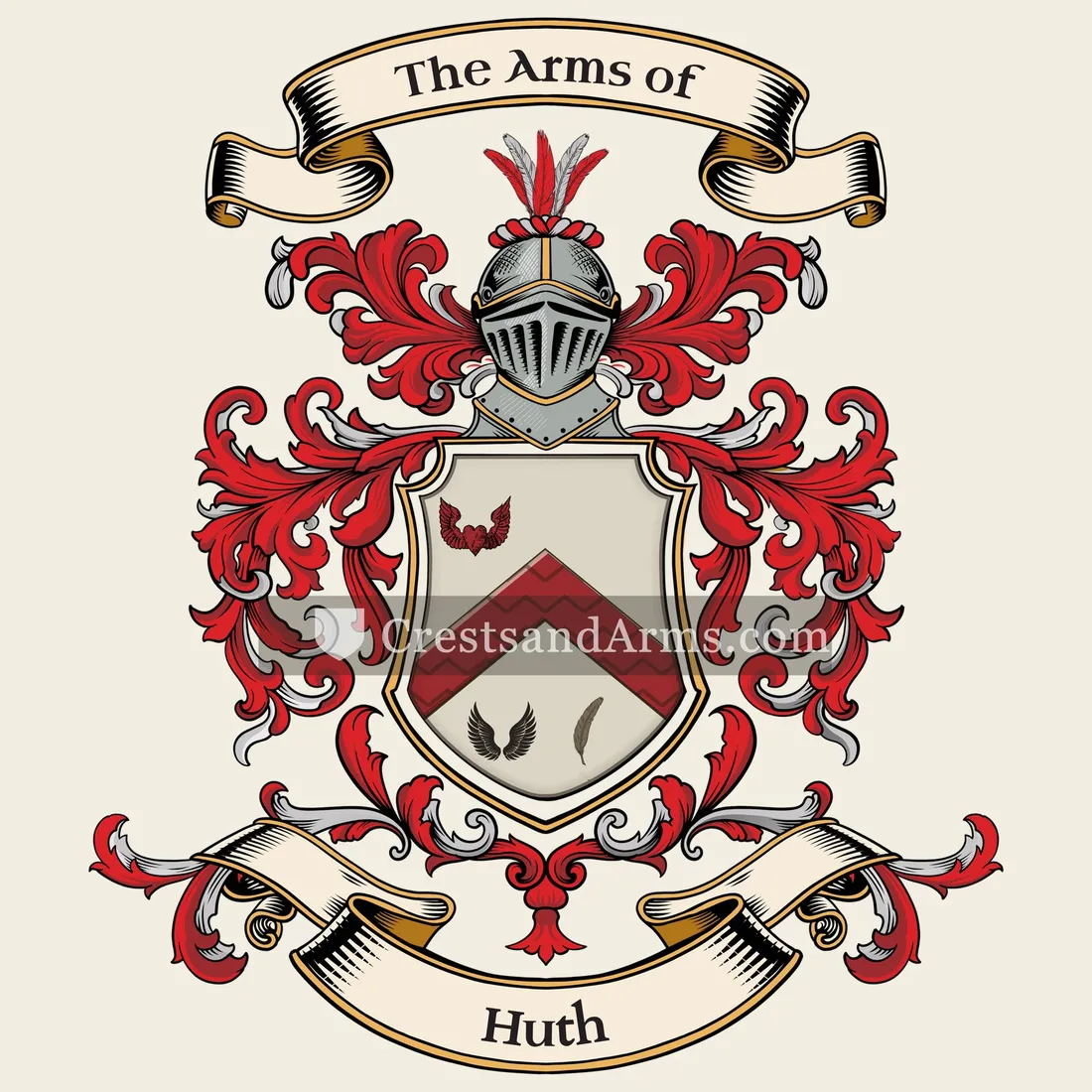
Meaning of the Huth family crest colors & symbols
Symbols on this shield
heartSincerity, charity and true affection
vol / wingsSwiftness and protection
feathersWilling obedience and serenity
Colours
Silver (Argent)Means: Peace and sincerity
Red (Gules)Means: Military strength
Black (Sable)Means: Constancy
Historical info
Source
Sir Bernard Burke, The General Armory of England, Scotland, Ireland and Wales, London: Harrison & Sons, 1884
Blazon (the actual original written record)
“Ar. two chevronels gu. in chief a human heart of the last and in base a bat sa. with ostrich feathers ppr”
EnglandTokenhouse Yard, c. 1620
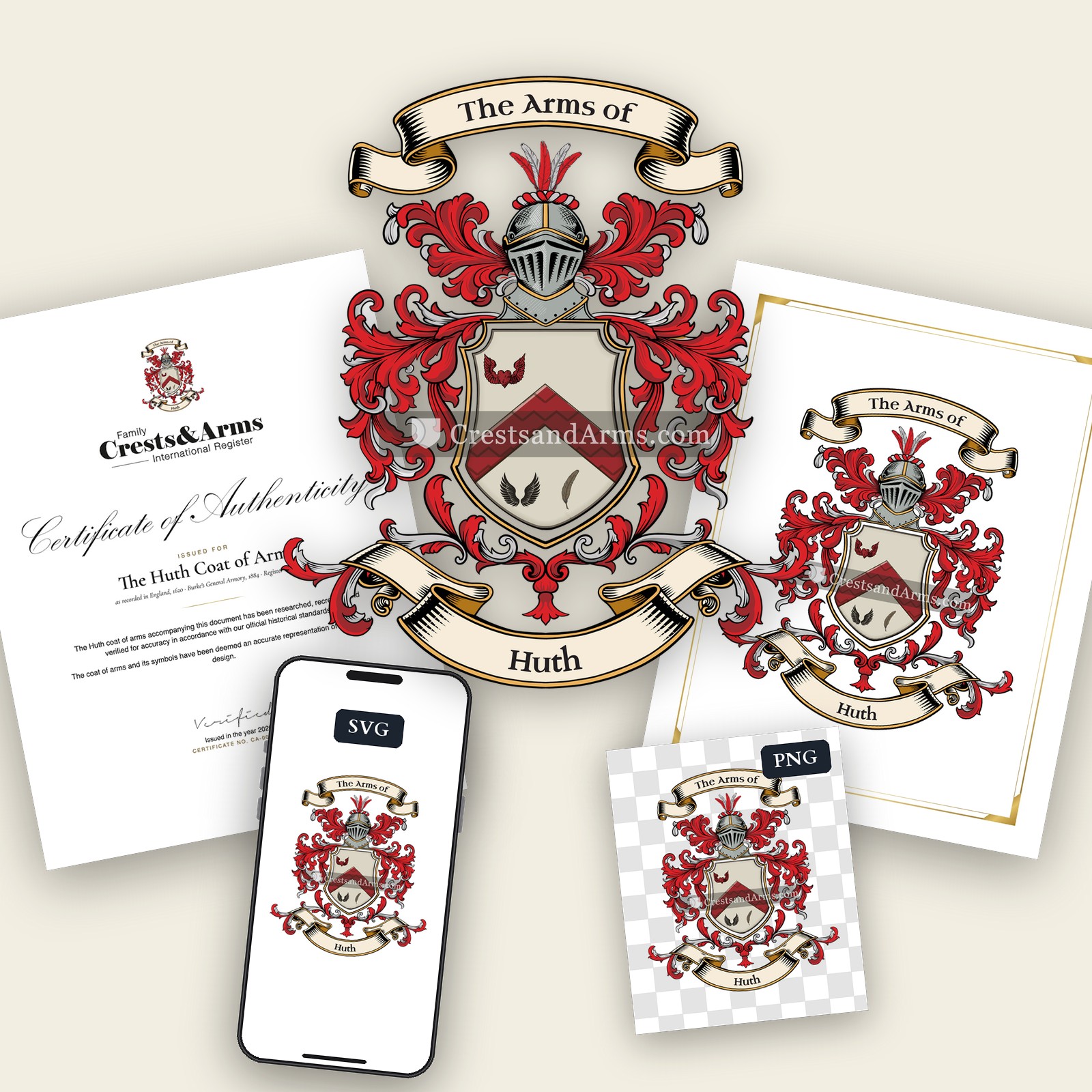
Digital archive packCoat of arms PNG, gold border print PDF, vector SVG and the certificate of authenticity. Sent to your email in minutes.
Map of England showing where the Huth arms are recorded
The Huth arms were recorded in Tokenhouse Yard, c. 1620.
Arms such as these were typically recorded in York.
Yorkshire is the largest of the English counties, and it held more gentry families than any other. Land there was split among a great many households rather than a few, so a great many of them carried arms.
This is where the arms were entered in the register. Families often moved to other parts of the country, so the same name can turn up in more than one region.
The body that granted and recorded arms in England in this period.
James VI and I
Sovereign of the period
James VI and I
1603–1625
Reigning in Germany when the Huth arms are first recorded.
How Arms Worked in England
English heraldry allowed arms to be shared by all legitimate descendants of the original owner. These symbols were treated as personal property that moved through the generations to all children. While the eldest son kept the original design, other family members could use the same shield without needing to change it or register their own unique versions.
Granting authority
The College of Arms in London has regulated the use of coats of arms throughout England and Wales since 1484.
How they got arms
Families typically obtained their coats of arms through a formal grant from the Crown or by proving their ancient right to them.
Where arms were recorded
All official coats of arms are recorded in the registers kept at the College of Arms, which date back to the fifteenth century.
The family's standing
Recorded among the armigerous families of England.
Origin & History of the Huth Family in England
The history of the Huth family in England is rooted in the northern city of York, where records confirm their presence as early as 1620. The name itself is likely derived from a Middle English or Germanic nickname, possibly referring to a person who lived near a specific landmark or possessed a distinct physical trait. During the seventeenth century, families like the Huths often settled in bustling urban centers like York to participate in the growing trade and craft industries that defined the region. As members of the local community, they would have been integrated into the social and economic fabric of the city, navigating the challenges of life in post-Reformation England. While the name remains relatively rare, its persistence in historical documents from this period suggests that the family established a stable foothold in the north of England long before the industrial shifts of later centuries.
Huth Meaning & Related Branches
Root word
Hudo
Old High German word meaning spirit, mind, or thought.
This name
HuthA nickname for a person with a sharp mind or a descendant of someone named Hugo.
also spelled
Huthe
Hutht
Huthz
Hut
Hutte
Documented Sources
J. B. Rietstap, Armorial Général, Gouda: G. B. van Goor Zonen, 1884–87
Bahlow, Hans, Deutsches Namenlexikon: Familien- und Vornamen nach Ursprung und Sinn erklärt, 1967
Institut für Stadtgeschichte Frankfurt am Main, Bürgerbücher der Stadt Frankfurt am Main, 1765
Heintze, Albert, Die deutschen Familien-Namen: geschichtlich, geographisch, sprachlich, 1903
Digital archive packCoat of arms PNG, gold border print PDF, vector SVG and the certificate of authenticity. Sent to your email in minutes.


 hat or capDignity, and the honour of office
 hat or capDignity, and the honour of office


 heartSincerity, charity and true affection
 vol / wingsSwiftness and protection
 feathersWilling obedience and serenity