Map of Spain showing where the Iñiguez arms are recorded
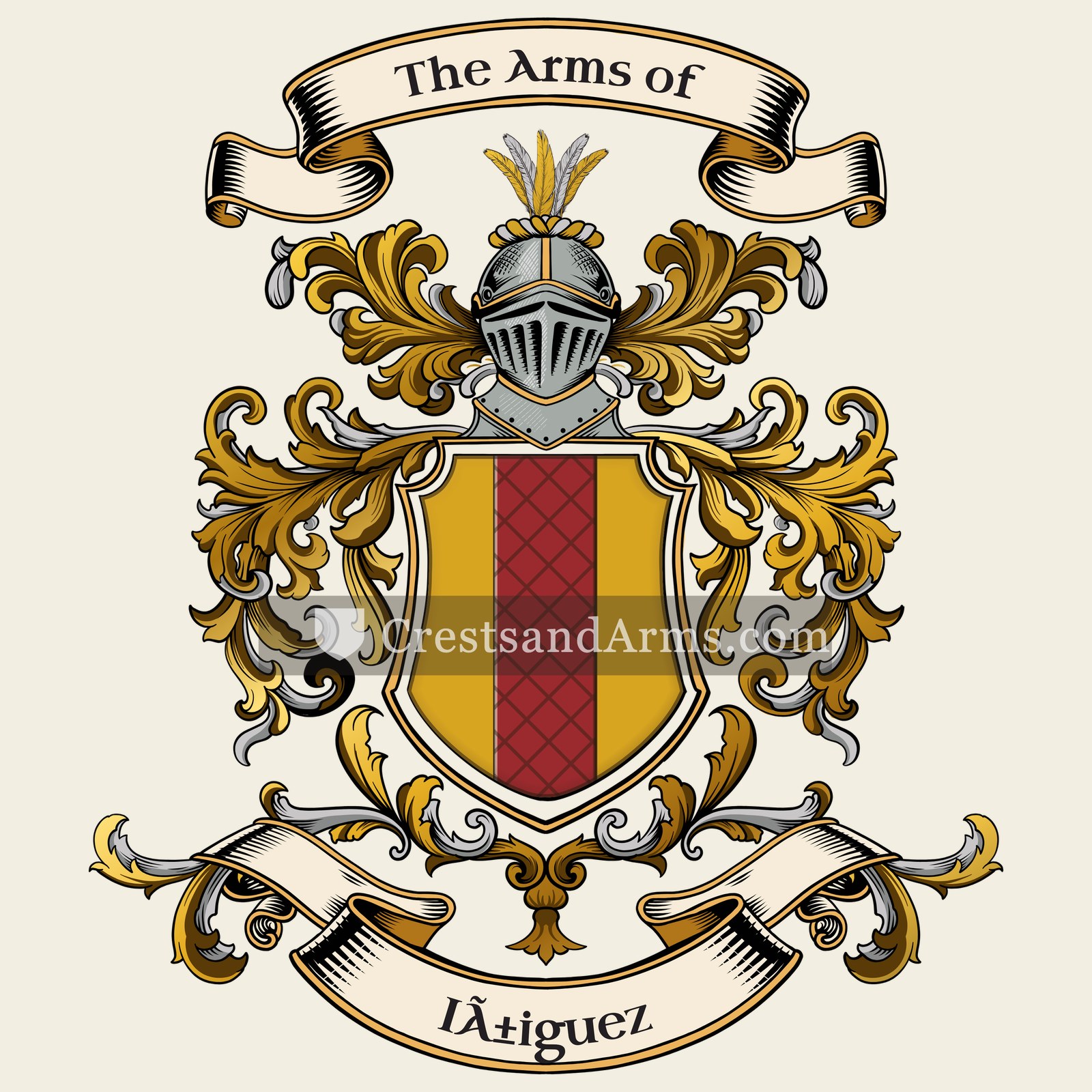
The Iñiguez arms were recorded in Aragon, c. 1722.
Aragon was mountain and river country in north-eastern Spain, with a strong tradition of small independent landholders. A great many families counted as gentry there, and each one needed a shield to be told apart.
This is where the arms were entered in the register. Families often moved to other parts of the country, so the same name can turn up in more than one region.
The body that granted and recorded arms in Spain in this period.
Philip V of Spain
Sovereign of the period
Philip V of Spain
1714–1724
Reigning in Spain when the Iñiguez arms are first recorded.
How Arms Worked in Spain
In Spain, a coat of arms was considered a form of property that belonged to the entire family line. These arms were passed down from a father to all his children equally. Younger branches of the family usually kept the original design without needing to add any special marks to distinguish their specific line.
Granting authority
The Cronista Rey de Armas was the official body that regulated and granted coats of arms throughout Spain.
How they got arms
Families often obtained their arms through royal grants or by proving their noble status to the official heraldic authority.
Where arms were recorded
Coats of arms were officially recorded in the registers of the Cronista Rey de Armas starting in 1496.
The family's standing
Recorded among the armigerous families of Aragon.
Origin & History of the Iñiguez Family in Spain
The surname Iñiguez is a patronymic name, which means it was originally created to identify a person as the son of someone named Iñigo. This name has deep roots in the northern regions of Spain, particularly within the Basque Country and the surrounding areas of Aragon. By the early 18th century, families carrying this name were well-established in the Aragonese landscape, where they often worked as farmers, landowners, or local officials. Because the name is tied to the ancient Basque name Eneko, it carries a sense of long-standing regional identity that predates the formal record-keeping of the 1700s. Families with this name were part of the social fabric that helped shape the rural communities of Aragon, contributing to the local economy and the development of village life during the Spanish Enlightenment.
Iñiguez Meaning & Related Branches
Root word
Eneko
Basque term meaning my little one or firstborn child.
This name
IñiguezPatronymic surname meaning son of Eneko, derived from the medieval Basque name.
also spelled
Inigues
Inigez
Related arms
Beasquirecorded with Iñiguez, same area
Pancorborecorded with Iñiguez, same area
Randarecorded with Iñiguez, same area
Ugarrachenarecorded with Iñiguez, same area
Documented Sources
J. B. Rietstap, Armorial Général, Gouda: G. B. van Goor Zonen, 1884–87
Mikel Belasko, Diccionario etimológico de los apellidos vascos, 1999
Endika de Mogrobejo, Diccionario hispano de apellidos y blasones, 1995
Archivo de la Corona de Aragón, Registros de la Real Audiencia de Aragón
Archivo Histórico Provincial de Zaragoza, Protocolos Notariales
Digital archive packCoat of arms PNG, gold border print PDF, vector SVG and the certificate of authenticity. Sent to your email in minutes.


 paleMilitary strength, and a fortified defence
 paleMilitary strength, and a fortified defence